
Views: 222 Author: Tina Publish Time: 2025-12-24 Origin: Site


Content Menu
● Main Types of Above Ground Pool Ladders
● Key Safety Features to Look For
● Weight Capacity, Height, and Materials
● Which Ladder Is “Best” For You?
>> Above Ground Pool Ladder Options
● Installation, Stability, and Maintenance Tips
● How OEM Buyers Can Choose the Best Ladder Supplier
● FAQs About Above Ground Pool Ladders
>> 1. What weight capacity should an above ground pool ladder have?
>> 2. Is resin or stainless steel better for an above ground pool ladder?
>> 3. Do I need a different ladder if I add a deck to my above ground pool?
>> 4. How can I make my above ground pool ladder safer for children?
>> 5. How often should I inspect or replace my above ground pool ladder?
>> 6. Can above ground pool ladders damage my liner?
The best above ground pool ladder is one that matches your pool type (with or without deck), offers strong weight capacity, corrosion‑resistant materials, and reliable safety features like non‑slip steps and handrails.[1][2]
Owning an above ground pool is all about convenient, safe access in and out of the water, and that starts with choosing the right ladder. The “best” ladder is not one single model, but the ladder that fits your pool structure, users' needs, and long‑term durability expectations.[2][3][4]
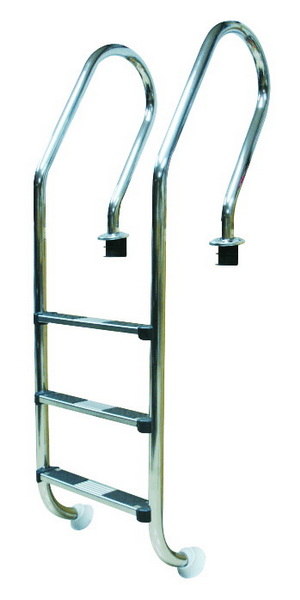
Different ladder types are designed for different pool setups, especially whether you have a deck or not.[5][2]
- A‑frame ladders
- Ideal for above ground pools without a deck, with steps on both the inside and outside.[1][5]
- Often used as economical, safe entry systems that are self‑supporting over the pool wall.[6][5]
- Many heavy‑duty A‑frame designs allow sand or gravel in the uprights to keep the ladder stable.[6]
- Deck‑mounted ladders
- Bolted directly to the pool deck or patio, providing very stable, permanent access.[2][6]
- Frequently include flip‑up or lockable steps to prevent unauthorized entry when the pool is not in use.[7][2]
- In‑pool steps / entry systems
- Wide, stair‑style steps installed inside the pool, often paired with a small outside ladder or deck.[3][6]
- Offer superior stability and comfort for kids, seniors, and larger swimmers thanks to larger treads and rails.[4][1]
Safety is the number‑one reason to upgrade an above ground pool ladder, especially if children or older adults use the pool. A heavy‑duty ladder with proper safety features prevents slips, falls, and dangerous wobbling.[7][1][2]
- Slip‑resistant steps
- Textured or treaded surfaces help prevent slipping when feet are wet.[2][7]
- All steps should have non‑slip surfaces and no sharp edges or exposed bolts.[7]
- Sturdy handrails and structure
- Dual handrails on both sides make climbing easier for kids and older adults.[1][7]
- The ladder should not flex, creak, or sway under normal use.[8][1]
- Child‑safety mechanisms
- Locking gates, removable outside steps, or flip‑up treads help block access when the pool is unattended.[2][7]
- For above ground pools, removable ladders or lockable systems are strongly recommended to reduce drowning risks.[7]
A top‑quality ladder must handle the right weight, reach the correct height, and survive harsh pool conditions.[8][2]
- Weight capacity
- Many consumer ladders are rated for 200–300 lb, which is the baseline for most families.[9][2]
- Heavy‑duty models can support 400–500 lb and are better for larger users or commercial settings.[8][1]
- Pool wall height and reach
- Measure your pool wall (for example, 48", 52", or 54") and choose a ladder designed for that height range.[4][2]
- The ladder should extend several inches above the wall and reach firmly to the pool floor for safe footing.[6][2]
- Best materials for durability
- Corrosion‑resistant resin is popular for above ground ladders because it will not rust and is easy to maintain.[10][1][8]
- Stainless steel looks premium and is very strong, but requires more care in chlorinated or salt water to prevent corrosion.[3][1]
Because every pool layout and family is different, the best ladder depends on how and where it will be used. Below is a simple comparison to match ladder style to user needs.[4][1][8][2]
| Ladder style | Best for | Key advantages | Typical limits / notes |
|---|---|---|---|
| A‑frame safety ladder | Pools without deck, families on a budget thepoolfactory | Self‑supporting, economical, outside steps removable thepoolfactory+1 | Needs added weight or pads to stay stable intheswim |
| Deck‑mounted ladder | Pools with full or partial deck watsons | Very stable, can include flip‑up or lockable steps watsons | Requires solid deck surface, permanent install |
| Wide in‑pool steps | Seniors, kids, limited mobility users vevor+1 | Extra‑wide treads, high comfort, good for long soaking mavaquadoc+1 | Takes more space inside pool, needs liner protection intheswim |
| Heavy‑duty resin ladder | High chlorine exposure, low maintenance vevor+1 | Corrosion‑free, easy to clean, UV‑resistant vevor+1 | May not look as “premium” as polished steel |
| Stainless steel ladder | Premium look, strong handrails vevor+1 | Very strong, sleek appearance, good on decks vevor+1 | Requires anti‑corrosion care in salt/chlorine water |
For most above ground pool owners without a deck, a heavy‑duty A‑frame safety ladder with lockable outside steps and a 300+ lb rating is often the best all‑round choice. For those with a stable deck and mixed‑age swimmers, a deck‑mounted stainless steel or resin ladder with wide, slip‑resistant steps is usually ideal.[5][3][1][8][6][2]
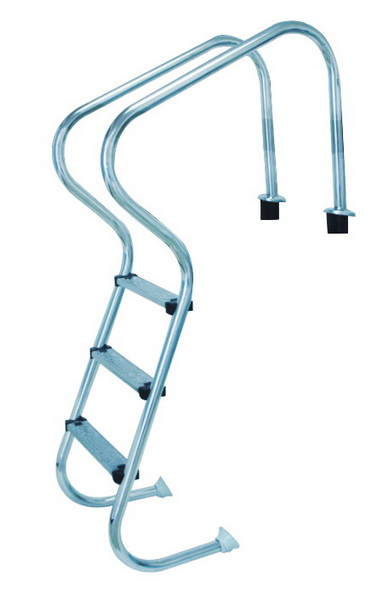
Even the best ladder performs poorly if installed or maintained incorrectly. Proper setup protects swimmers, your pool wall, and the liner.[10][6][7]
- Proper installation and anchoring
- For deck‑mounted ladders, bolts should be installed into structurally sound framing with appropriate anchors.[6][2]
- A‑frame ladders and step systems should be weighted using manufacturer‑approved sand or ballast to prevent floating and shifting.[4][6]
- Protecting liners and walls
- Use ladder pads or step pads under the feet of heavy ladders to avoid puncturing or scuffing the liner.[10][6]
- Check that bottom rails and feet are smooth and free of burrs or sharp edges before use.[7]
- Regular inspections and cleaning
- Inspect rungs, side rails, and fasteners for cracks, corrosion, or looseness at least once per month during the season.[11][7]
- Clean resin and metal surfaces to remove oils, algae, and chemical buildup, which can reduce traction and damage materials over time.[1][8]
For professional OEM clients, pairing the ladder with quality filtration systems, pumps, and LED lighting can create a complete, safer pool package that adds value to any brand.
If you are a brand, wholesaler, or pool equipment manufacturer, choosing the right OEM partner for ladders and accessories is just as important as choosing the ladder design. Consistent quality, safety compliance, and integrated equipment packages make your product line more competitive.[12][7]
- Safety and standards awareness
- Check that the OEM understands voluntary above ground ladder safety recommendations (e.g., non‑slip steps, child‑resistant access).[12][7]
- Ask for documented load tests and material certifications for resin or stainless components.[8][10]
- Integrated pool solutions
- Many international buyers prefer bundling ladders with sand filters, pumps, and LED lights to simplify procurement.
- A single OEM source for filters, pumps, lights, and ladders reduces logistics costs and improves branding consistency.
- Customization and branding
- Look for options like branded step plates, custom‑colored resin, and packaging tailored to your local market.[13][14]
- Stable OEM factories with smart production lines can provide consistent quality and flexible MOQs for growing brands.
The best above ground pool ladder is not a single product, but the one that safely matches your pool structure, swimmer profile, and long‑term maintenance plan. For most families, a heavy‑duty, corrosion‑resistant A‑frame safety ladder or a stable deck‑mounted ladder with non‑slip steps, strong handrails, and at least a 300 lb rating will deliver excellent safety and comfort.[1][2][8][4]
For OEM buyers and wholesalers, partnering with a professional Chinese factory that produces complete pool solutions—including ladders, sand filters, DE and cartridge filters, pumps, and LED lights—ensures consistent quality and branding across your entire product line.
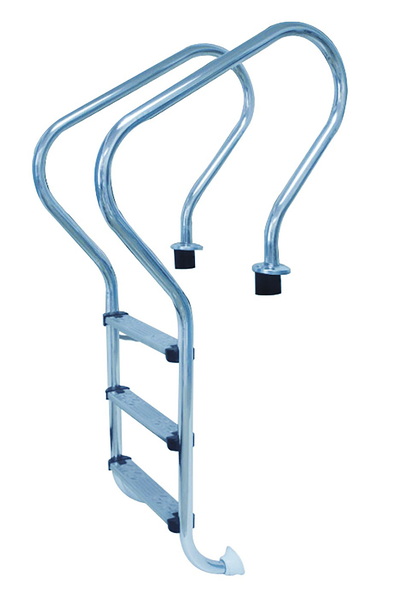
Most residential ladders support 200–300 lb, which is acceptable for many families, but heavy‑duty ladders rated at 400–500 lb provide better stability and future‑proofing.[9][2][1]
Resin ladders are corrosion‑resistant, easy to maintain, and ideal for harsh chemical or salt environments, while stainless steel offers premium looks and strength but requires more anti‑corrosion care.[3][10][1]
Yes; pools without decks usually use A‑frame ladders, but once you build a deck, a deck‑mounted ladder bolted to the structure gives better stability and cleaner access.[5][2][6]
Choose ladders with lockable gates, removable or flip‑up outside steps, and non‑slip treads, and remove or lock the ladder whenever the pool is unsupervised.[2][7]
Inspect it at least monthly during the season for cracks, rust, loose fasteners, and worn treads, and replace the ladder immediately if structural damage is found or if it fails load tests.[11][7]
Yes, heavy steps or ladders with sharp feet can scuff or puncture liners, so using protective ladder pads or step pads under the feet is strongly recommended.[10][6]
[1](https://www.vevor.com/diy-ideas/heavy-duty-above-ground-pool-ladder/)
[2](https://blog.watsons.com/blog/best-ladder-for-above-ground-pool)
[3](https://www.mavaquadoc.com/blogs/pool-maintenance-blog/different-types-of-pool-ladders)
[4](https://sternspools.com.au/blogs/help-advice/easy-access-a-guide-to-above-ground-pool-ladders)
[5](https://www.thepoolfactory.com/blogs/new-pool-buyers/how-to-choose-the-correct-ladder-or-step-for-your-above-ground-swimming-pool)
[6](https://intheswim.com/above-ground-pool-ladders-steps/)
[7](https://www.poolfencediy.com/blogs/blog/pool-ladder-safety)
[8](https://www.thepoolfactory.com/blogs/equipment/scaling-new-heights-above-ground-pool-ladders)
[9](https://poolzilla.com/blogs/blog/the-simple-guide-selecting-the-right-pool-steps-and-ladders-for-your-swimming-pool)
[10](https://www.poolsupplies.com/page/ladders-buyers-guide--faq)
[11](https://www.workerslaw.com/legal-articles/osha-regulations-for-ladder-safety/)
[12](https://www.ehs.com/blogs/oshas-top-10-list-of-most-frequently-cited-standards-ladder-safety/)
[13](https://www.familypoolfun.com/shop/above-ground-pool-ladders-41)
[14](https://www.poolsupplies.com/shop/accessories-ladders)
[15](https://www.facebook.com/groups/637529959937311/posts/2300152403675050/)
[16](https://vacbagz.com/blogs/news/dive-into-safety-choosing-the-perfect-pool-ladder)
[17](https://safesitehq.com/osha-ladder-safety/)
[18](https://www.facebook.com/groups/637529959937311/posts/2576536166036671/)
[19](http://www.osha.gov/laws-regs/regulations/standardnumber/1926/1926.1053)
[20](https://www.govinfo.gov/content/pkg/CFR-2012-title16-vol2/pdf/CFR-2012-title16-vol2-part1207.pdf)


