
Views: 227 Author: Poolking Filter Equipment Publish Time: 2026-07-04 Origin: Site


Content Menu
● Understanding Sand Filters and Cartridge Filters in Commercial Operations
● Core Filtration Performance – Clarity, Turnover, and Micron Ratings
>> Filtration Quality Over Time
>> Hydraulic Efficiency and Energy Impact
● 5‑Year Maintenance Cost Breakdown – Sand vs Cartridge
>> Labor and Service Cost Trends Over Five Years
● Water Consumption – Backwash vs Cartridge Cleaning
>> Backwash Water Use for Sand Filters
>> Cartridge Cleaning Water Use
● Comparative 5‑Year Cost Scenario (Illustrative)
>> Illustrative Cost Comparison Table
● Industry Case Insight – Large Commercial vs Boutique Facilities
>> Smaller Hotels, Wellness Centers, and Renovations
● Expert Maintenance Strategy – How to Optimize 5‑Year Costs
● Emerging Trends – Sustainability and Smart Monitoring
>> Water and Energy Efficiency Pressure
>> Data‑Driven Filtration Decisions
● How Poolking's 20+ Years of Expertise Supports Your Decision
● Practical Selection Guide – When to Choose Sand vs Cartridge
● Actionable Next Steps and CTA
● FAQs
Sand filters and cartridge filters deliver very different long‑term ownership experiences, especially when you look closely at 5‑year maintenance and water consumption costs for commercial pools. Framing your choice through this cost lens helps protect operating budgets, sustainability goals, and swimmer satisfaction while leveraging Guangdong Poolking's two decades of manufacturing expertise in pool filtration systems. [poolking]
Commercial pool operators often ask whether a sand filters or cartridge filters will be cheaper and more sustainable over the next five years, not just on day one. From an industry expert perspective, the answer depends on pool size, bather load, water prices, labor costs, and how disciplined your maintenance schedule is. In this guide, we will compare both options using practical scenarios, operational data, and professional field experience from Poolking's projects in hotels, water parks, and public facilities. [poolkingfilter]

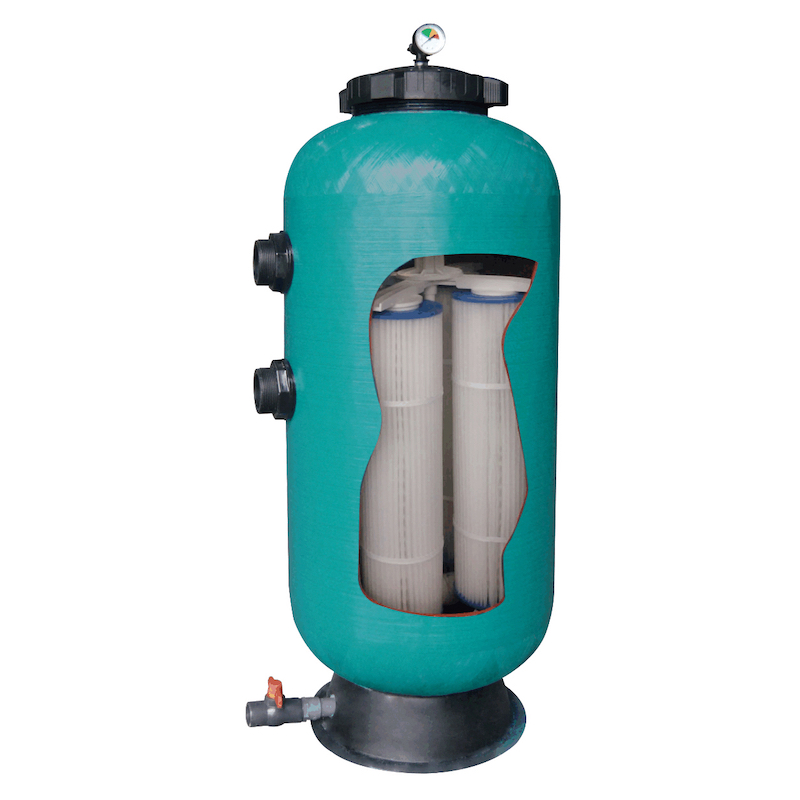
Sand filters force water through a bed of silica, glass, or specialty media, trapping particles as water flows downward and exits through laterals at the bottom. Cartridge filters use pleated polyester cartridges to create a large filtration surface area, capturing fine debris without needing a multiport valve or backwash line. [maygopool]
From a commercial operator's viewpoint:
- Sand filters are generally preferred for large pools with high bather loads.
- Cartridge filters are often used for smaller pools, spas, or renovation projects where backwash infrastructure is limited.
- Both can achieve clear water, but their cost and UX profiles diverge strongly over five years.
A sand filter typically captures particles in the 20–40 micron range, depending on media type, flow rate, and system design. Cartridge filters commonly reach 10–20 micron performance, providing slightly finer filtration without chemical flocculants in many cases. [maygopool]
For a heavy‑use commercial pool:
- Sand filters deliver robust clarity when paired with correct turnover rates and regular backwashing.
- Cartridge filters can produce noticeably "polished" water but are more sensitive to sudden contamination events and neglect.
Sand filters, especially large fiberglass or commercial steel models, are designed for high flow rates and integration with variable‑speed pumps. Cartridge filters generally run at lower flow rates and may require more pump tuning to avoid pressure spikes as cartridges clog. [poolking]
Over five years, operators typically see:
- Slightly higher average pump head with sand filters due to multiport valves and media bed depth.
- Rising energy costs with cartridge filters if cartridges are not cleaned frequently and pressure creeps above recommended limits.
From a hands‑on maintenance perspective, the daily and weekly tasks define how each system feels to operate:
For sand filters:
- Backwash when pressure rises (commonly 0.7–1.0 bar over clean pressure).
- Inspect and replace media every 3–5 years, depending on load and water chemistry.
- Periodic valve and lateral inspection.
For cartridge filters:
- Remove and hose down cartridges at defined pressure thresholds.
- Deep cleaning with specific chemical solutions several times per year.
- Cartridge replacement typically every 1–3 years in commercial environments. [maygopool]
From an industry consultant viewpoint, labor patterns often look like this for a busy commercial pool:
- Sand filter maintenance is short but frequent (backwash cycles), with medium‑intensity media changes every few years.
- Cartridge filter maintenance is more hands‑on, involving physical removal, cleaning, drying, and reinstallation, plus planned replacements.
If we assume stable wages and a consistent schedule, many commercial sites report lower total labor hours with large commercial sand filters compared to multiple cartridge housings over a five‑year period, especially in high‑traffic venues such as hotels and aquatic centers. [maygopool]
A key UX and sustainability factor is backwash water. Sand filters rely on reversing the flow to flush trapped debris to waste:
- Typical commercial backwash cycles can use hundreds to thousands of liters per cycle, depending on filter diameter and piping. [maygopool]
- Over five years, frequent backwashing in high‑load pools creates a substantial water bill and increased chemical rebalancing needs.
However, many operators accept this as the price of reliability, especially where water costs are moderate and sewer access is convenient.
Cartridge filters do not backwash, but they still consume water during manual cleaning:
- Each cleaning requires hose rinsing and sometimes soaking in tanks or tubs.
- Water use per cleaning is typically lower than a full backwash on large commercial filters, but cleaning frequency can be high in busy venues. [maygopool]
Over five years, cartridge systems often show lower direct water‑to‑waste volumes but higher labor involvement. In regions where water prices are high or sustainability targets are strict, this can tilt the cost‑benefit equation towards well‑designed cartridge systems, especially for smaller commercial pools.
From a strategic planning standpoint, it helps to visualize how sand vs cartridge filters behave in a typical commercial case. Consider an indoor hotel pool with steady but moderate use:
| Cost Dimension | Sand Filter (5‑Year Trend) | Cartridge Filter (5‑Year Trend) |
|---|---|---|
| Initial equipment investment | Medium to high (larger vessel, valve, media) | Medium (multiple cartridges, housings) |
| Routine labor hours | Low to medium (backwash, inspections) | Medium to high (frequent cartridge handling) |
| Water‑to‑waste volume | High (regular backwashing) | Low to medium (cleaning water only) |
| Media / cartridge replacement cost | Medium every 3–5 years | Medium to high every 1–3 years |
| Chemical rebalancing after service | Frequent after backwash | Less frequent, lower volume adjustments |
| Operational reliability in heavy use | High with correct design | Medium to high, but more sensitive to neglect |
This table reflects industry patterns rather than exact numbers; real‑world values vary by local water tariffs, wages, and pool design, but the trend lines are consistent across many commercial sites and manufacturer case studies. [poolking]
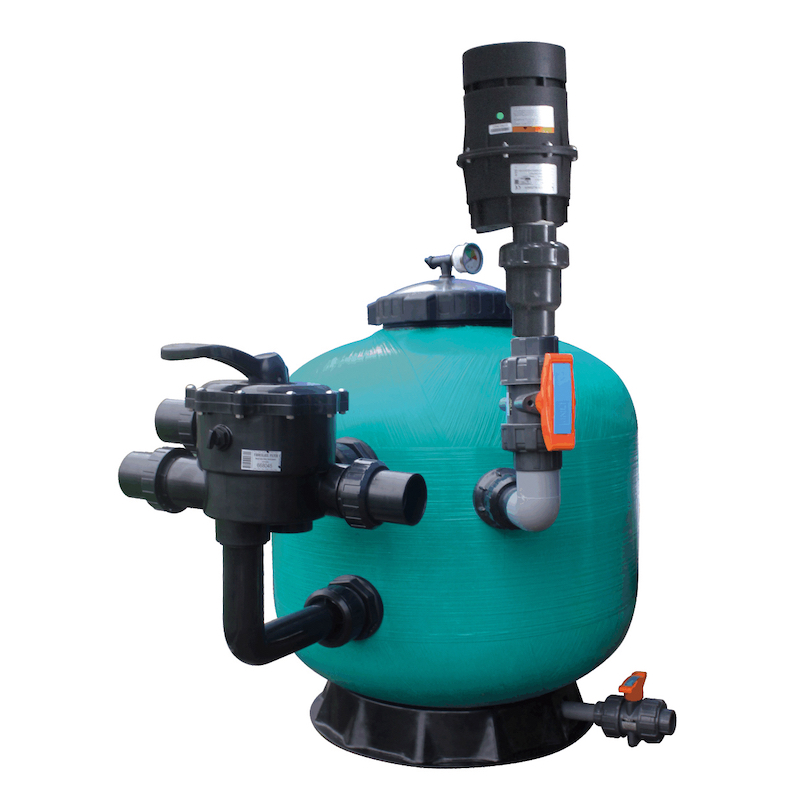
In large, high‑load facilities (water parks, competition venues, public leisure centers), experienced operators often standardize on large sand filters:
- These systems are built for high turnover and continuous duty, with clear backwash procedures and predictable media cycles.
- Over five years, the combination of durability, scalability, and known maintenance patterns tends to outweigh the water‑to‑waste penalty.
Poolking's commercial fiberglass and plastic sand filters are designed specifically to serve these environments, integrating with industrial‑grade pumps, valves, and LED‑monitored systems for operational stability. [poolkingfilter]
Boutique hotels, wellness centers, and renovation projects often gravitate toward cartridge filters:
- Limited plant‑room space and constraints on adding backwash plumbing can make cartridge systems attractive.
- Lower water loss and quieter operation align well with premium guest experience goals.
In these contexts, the 5‑year picture often shows competitive total cost of ownership, provided cartridges are replaced on schedule and cleaning procedures are followed rigorously. [maygopool]
To keep 5‑year maintenance and water costs under control with sand filters:
1. Right‑size the filter and pump for realistic bather load, not just design drawings.
2. Implement a pressure‑based backwash schedule, avoiding unnecessary backwashing.
3. Use modern filter media (e.g., refined glass media) where appropriate to improve filtration and extend media life.
4. Train staff on consistent valve operation to avoid mechanical damage and leaks.
When combined with smart automation and precise dosing, these steps can significantly reduce wasted water and operational headaches while preserving sand filter reliability.
To optimize cartridge filter costs over five years:
1. Standardize cleaning intervals based on pressure readings and visual inspection.
2. Keep a documented rotation plan for cartridges to avoid premature wear on specific elements.
3. Use manufacturer‑approved cleaning solutions to maintain pore structure and prevent fabric damage.
4. Monitor flow rate and pump speed to protect cartridges from excessive differential pressure.
From a UX standpoint, operators should schedule cleaning tasks during low‑traffic hours, minimizing disruption and maintaining consistently clear water for guests.
Global sustainability pressure is pushing commercial pools to reduce both water waste and energy consumption. This trend is reshaping the sand vs cartridge conversation:
- Sand filters are evolving with improved internals and more efficient backwash strategies.
- Cartridge systems are being integrated with smart sensors to predict cleaning needs and extend intervals.
Forward‑looking facility managers are increasingly modeling 5‑year scenarios that include potential future water price increases and environmental compliance costs, not just today's tariffs. [maygopool]
Modern filtration plants use:
- Pressure and flow sensors to track filter performance daily.
- Cloud‑based logging to correlate clarity, chemical use, and maintenance events.
- Predictive maintenance algorithms to forecast when media or cartridges will need attention.
This shift enables more accurate estimation of 5‑year maintenance and water consumption costs, making the sand vs cartridge decision more evidence‑based and less reliant on guesswork.
As a manufacturer with over 20 years of experience, Poolking designs and supplies commercial sand filters, fiberglass sand filters, plastic sand filters, cartridge filters, pumps, LED lights, and fittings from two advanced production bases in Guangzhou and Taishan City. This combination of scale and specialization allows Poolking to tailor filtration solutions to the real‑world constraints of hotels, water parks, public pools, and wellness centers. [poolkingfilter]
Working with Poolking, you gain:
- Application‑driven system design, matching sand or cartridge solutions to your pool's usage patterns.
- Access to proven case experience across multiple commercial segments.
- Integrated support for pumps, lighting, and fittings, ensuring system compatibility and long‑term stability.
From a user experience and cost‑control standpoint, a simple decision framework can help:
Choose sand filters when:
- Your pool is large or experiences heavy daily bather loads.
- You have reliable access to backwash discharge and manageable water costs.
- You want robust, predictable operation with minimal manual handling of filter elements.
Choose cartridge filters when:
- Plant‑room space is limited or backwash plumbing is not feasible.
- You prioritize lower water‑to‑waste volumes over minimal labor.
- Your pool is small to medium‑size with moderate, stable usage.
In many multi‑pool facilities, a hybrid approach is optimal: sand filters for main pools and cartridge systems for spas or wellness pools.
If you are planning a new commercial pool or upgrading an existing filtration plant, now is the right time to:
- Audit your current 5‑year maintenance records (water bills, labor logs, replacement invoices).
- Map future usage scenarios (events, seasonal peaks, occupancy trends).
- Engage a filtration manufacturer with proven commercial expertise to model sand and cartridge options side by side.
To explore a tailored 5‑year maintenance and water consumption cost analysis for your project, contact Poolking's technical team to review your pool specifications, operating constraints, and sustainability goals. A well‑designed system today can save significant budget and deliver a better guest experience over the next five years. [poolkingfilter]
Q1: Are sand filters always cheaper than cartridge filters over five years?
Not always. Sand filters often win in large, high‑load pools, while cartridge filters can be competitive or cheaper in smaller installations with high water prices and disciplined maintenance.
Q2: How often should I replace sand filter media in a commercial pool?
In many commercial applications, filter media is replaced every 3–5 years, depending on bather load, backwash quality, and water chemistry.
Q3: Do cartridge filters really save water compared to sand filters?
Cartridge filters usually send less water to waste because they do not backwash, but total savings depend on cleaning frequency and local water prices.
Q4: Which filter type provides clearer water?
Cartridge filters often achieve finer nominal micron ratings, but properly sized and maintained sand filters can deliver excellent clarity for heavy‑use pools.
Q5: Can I combine sand and cartridge filters in the same facility?
Yes. Many operators use sand filters for main pools and cartridge systems for spas or smaller specialty pools to balance performance, cost, and space constraints.
1. Poolking – Swimming Pool Sand Filter System. Available at: [https://www.poolking.co/pool-sand-filter.html]
2. Poolking – Top 10 Sand Filter Manufacturers in China. Available at: [https://www.poolkingfilter.com/top-10-sand-filter-manufacturers-in-china.html]
3. Poolking – Top 10 Pool Filter Manufacturers in China. Available at: [https://www.poolkingfilter.com/top-10-pool-filter-manufacturers-in-china.html]
4. Maygo Pool Equipment – Pool Filters Overview. Available at: [https://www.maygopool.com/products2119909/Pool-Filters.htm]
5. Maygo Pool Equipment – Sand Filter Systems. Available at: [https://www.maygopool.com/products2119930/Sand-Filter-Systems.htm]
1. Golden Bake – "What Are the Different Types of Biscuits You Can Make?" https://www.foodsmachine.net/a-news-what-are-the-different-types-of-biscuits-you-can-make.html
2. Wenva Machine – Company and Biscuit Production Line Overview https://www.wenvamachine.com
3. Wenva Machine – "Automated Biscuit Production Lines: How Wenva Machine Helps Bakeries Scale With Confidence" https://www.wenvamachine.com/automated-biscuit-production-lines-how-wenva-machine-helps-bakeries-scale-with-confidence.html
4. Wenva New Style Sweet Soft Biscuit Production Line – Made‑in‑China https://wenva668.en.made-in-china.com/product/wFZJkbPoQGcd/China-Wenva-New-Style-Sweet-Soft-Biscuit-Production-Line.html
5. Wenva Biscuit Production Line – Alibaba Listings https://www.alibaba.com/showroom/wenva-biscuit-production-line.html
6. Reading Bakery Systems – Automated Bakery Equipment (Process Insight) https://www.readingbakery.com/resources/automated-bakery-equipment.html
7. CFAB Global – "How to Improve Bakery Production" https://cfabglobal.com/how-to-improve-bakery-production/
8. PY Food Machine – "How to Choose the Best Biscuit Making Production Line" https://www.py-foodmachine.com/blog/2026-best-biscuit-making-production-line/
9. LinkedIn – Automatic Wafer Biscuit Production Line Market Forecast https://www.linkedin.com/pulse/automatic-wafer-biscuit-production-line-market-forecast-strategic-asbbc


