
Views: 242 Author: Poolking Filter Equipment Publish Time: 2026-07-07 Origin: Site


Content Menu
● Understanding Saltwater Pool Chemistry and Corrosion Risks
● How Stainless Steel Performs in Saltwater Pool Heat Exchangers
>> Corrosion Resistance and Operating Limits
>> Advantages of Stainless Steel Heat Exchangers
>> Limitations of Stainless Steel in High-Saline Saltwater Pools
● Why Titanium Excels in Saltwater Pool Heat Exchangers
>> Superior Passive Film and Corrosion Immunity
>> Practical Benefits in High-Saline Saltwater Pools
● Stainless Steel vs Titanium — Side‑by‑Side Comparison for Pool Projects
>> Key Technical and Operational Differences
● Real-World Perspective from a Commercial Pool Manufacturer (Poolking)
>> What We See Across 20+ Years of Projects
>> Integration with Commercial Filtration and Equipment
● Step-by-Step Selection Guide for Pool Owners and Engineers
>> 5 Practical Steps to Choose Between Stainless Steel and Titanium
● When Titanium Becomes Non‑Negotiable
>> Scenarios Where Stainless Steel Is a Hidden Risk
>> Why Titanium Aligns Better with Long-Term Quality and Brand Positioning
● Which Heat Exchanger Survives Better?
● Design Your Next Commercial Saltwater Pool with the Right Heat Exchanger
● FAQ
Stainless steel heat exchangers can work in lightly salted pools, but titanium almost always survives better in high‑saline saltwater systems and long‑life commercial projects. [hontitan]
Choosing the right heat exchanger material is one of the most important decisions for any commercial or high-end residential saltwater pool. For facilities using high-saline systems, stainless steel and titanium heat exchangers behave very differently over time in terms of corrosion, maintenance, and lifecycle cost. [carlsonhx]
As a manufacturer with 20+ years of experience in commercial pool filtration and equipment, Guangdong Poolking sees first-hand how material choices impact downtime, warranty claims, and user satisfaction across global installations. In this article, we take a practical expert view: when should you specify stainless steel, and when does titanium become a non‑negotiable requirement for saltwater pools? [poolkingfilter]
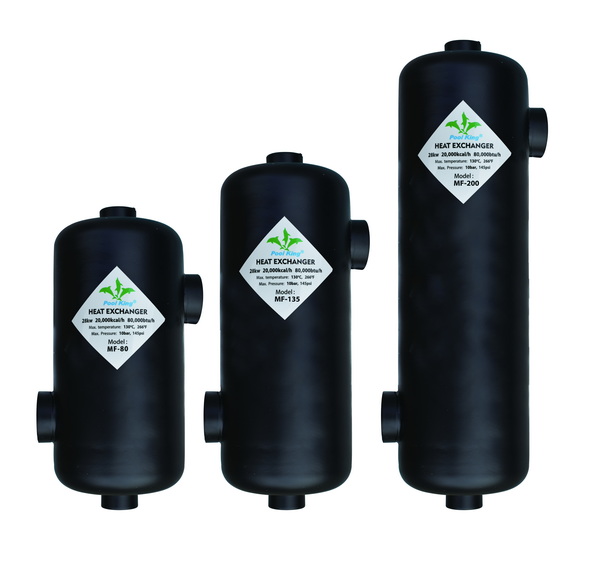
Saltwater pools still rely on chlorine, but they generate it via salt electrolysis in water typically containing 3,000–4,000 ppm of salt—far above the levels of standard chlorinated pools. This saline, electrolytic environment is aggressive to metals, especially where high temperatures, flow, and turbulence are present inside heat exchangers. [hontitan]
Two effects matter most for heat exchangers:
- Chloride-induced pitting and crevice corrosion in metals such as stainless steel. [benchchem]
- Erosion corrosion from high-velocity salt particles and air bubbles in heat exchanger tubes and shells. [carlsonhx]
For commercial projects running year‑round with precise temperature control, ignoring these mechanisms often translates into leaks, warranty issues, and emergency shutdowns.
Common pool heat exchangers use 316L stainless steel, an alloy known for good corrosion resistance in many water applications. Stainless steel maintains its protection through a thin passive chromium oxide film on the surface, which usually prevents rapid attack in low‑salt environments. [shalco]
However, in saltwater pools with high chloride content, that protective film can be damaged by salt particles and electrochemical reactions. Once the film breaks locally, the exposed area becomes "active" and less noble, allowing pitting and crevice corrosion to propagate quickly under deposits or in tight gaps. Industry guidance typically recommends not using stainless steel heat exchangers above roughly 200 ppm salt if you want to avoid accelerated corrosion. [benchchem]
From a practical project perspective, stainless steel still has clear strengths in the right environment:
- Lower initial cost: Stainless units are usually cheaper than titanium, especially in large capacities. [sdecoice.en.made-in-china]
- Good performance in standard chlorinated pools with low salt content and proper chemistry control. [carlsonhx]
- Mechanical strength and availability: 316L stainless components are widely available, easy to fabricate, and familiar to installers. [shalco]
For indoor hotels using conventional chlorine dosing and low salinity, stainless steel can be a cost‑effective choice when combined with good water treatment and monitoring.
In high-saline systems, stainless steel heat exchangers face critical limitations:
- High risk of pitting and leakage once the passive film is breached in chloride-rich water. [benchchem]
- Susceptibility to galvanic corrosion when stainless components are coupled with more noble metals through an electrolyte. [carlsonhx]
- Shorter service life and more frequent replacement in heavily used commercial saltwater pools. [sdecoice.en.made-in-china]
For operators, that means unscheduled downtime, emergency repairs, and higher total cost of ownership—even if the upfront purchase looked attractive.
Titanium also relies on a passive oxide film—titanium oxide—to protect the base metal, but that film is significantly more stable than the chromium oxide layer on stainless steel in chloride environments. Tested in seawater and high-saline media, titanium resists pitting, crevice, and erosion corrosion better than most stainless steels, even at elevated temperatures. [cl-titanium]
Because the passive film on titanium is extremely robust, titanium behaves as a highly noble material and is generally not prone to internal galvanic corrosion across its own surface. This is one key reason why marine and offshore applications—including shipboard heat exchangers—rely on titanium for long-term exposure to warm seawater. [cl-titanium]
In saltwater pool heat exchangers, titanium offers several practical benefits that directly translate into operational stability:
- Longer service life in high-saline or near‑seawater conditions, even with continuous operation. [hontitan]
- Very low risk of tube perforation from localized pitting, reducing leak incidents in critical plant rooms. [carlsonhx]
- Better tolerance of chemistry fluctuations, such as temporary oversalting or imbalance, without catastrophic damage. [hontitan]
While the upfront cost of titanium is higher, many OEMs and operators report lower lifecycle cost once they factor in replacement intervals, downtime, and labour. [sdecoice.en.made-in-china]
| Factor | Stainless steel heat exchanger | Titanium heat exchanger |
|---|---|---|
| Corrosion resistance in high-saline pools | Moderate to poor beyond ~200 ppm salt; prone to pitting and crevice corrosion. (carlsonhx) | Excellent; highly resistant to pitting, crevice, and erosion corrosion even at high salinity. (hontitan) |
| Galvanic behaviour | Passive film can break locally, creating active areas and internal galvanic cells. (carlsonhx) | Generally noble behaviour; passive film is very stable and not easily disrupted. (carlsonhx) |
| Typical service life in harsh marine-like pools | Shorter; may require earlier replacement under aggressive conditions. (carlsonhx) | Longer; designed for long-term exposure to saline and chloride media. (hontitan) |
| Initial purchase cost | Lower; attractive for budget-sensitive standard pools. (sdecoice.en.made-in-china) | Higher; investment grade for critical saltwater sites. (sdecoice.en.made-in-china) |
| Best-fit applications | Low-salt hotel pools, conventional chlorinated systems, cost-sensitive retrofits. (carlsonhx) | High-saline saltwater pools, coastal resorts, wellness centres, and heavy-duty commercial installations. (hontitan) |
For pool engineers and specifiers, this table highlights a simple rule: the higher the salinity and duty cycle, the stronger the case for titanium.
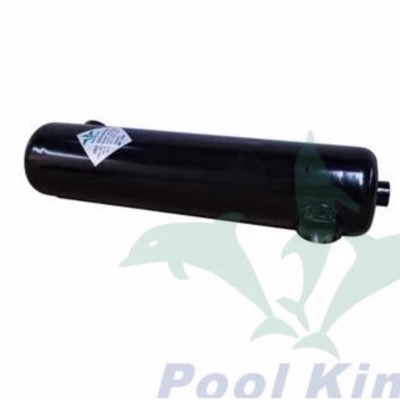
With two intelligent production bases in Guangzhou and Taishan totalling about 60,000 sqm, Poolking manufactures commercial filters, pumps, LED lights, fittings, and integrated filtration solutions for customers in more than 50 countries. Our equipment is installed in Olympic pools and other large-scale projects where reliability and uptime are non‑negotiable. [poolking]
Across these projects, we consistently observe that saltwater pools using titanium heat exchangers experience fewer unplanned shutdowns, leak incidents, and emergency part replacements, especially in coastal climates or resorts offering high‑end wellness experiences. Stainless steel units can still perform well where salinity is controlled and operating conditions are milder, but they demand more frequent inspection and stricter chemistry discipline. [cl-titanium]
Heat exchangers do not work in isolation—they interact with sand filters, cartridge filters, pumps, and chemical dosing systems. In Poolking's commercial filtration setups, we design systems to minimize turbulence and sediment load entering the exchanger, but salt content and temperature remain key drivers of corrosion risk. [poolking.en.made-in-china]
Pairing titanium heat exchangers with robust commercial sand filters, correctly sized pumps, and stable salt chlorination results in a more predictable maintenance schedule and clearer total ownership costs over the asset life. [poolkingfilter]
1. Confirm your pool salinity and chlorination method
Measure typical and peak salinity levels and document whether you use a salt chlorination system. [carlsonhx]
2. Assess operating profile and duty cycle
Map how many hours per day your pool runs heated circulation, and whether you operate year‑round. [hontitan]
3. Evaluate risk tolerance and downtime impact
For hotels, resorts, public facilities, or training centres, ask how costly one week of downtime would be. [sdecoice.en.made-in-china]
4. Compare lifecycle cost, not just purchase price
Include expected replacement intervals, labour, lost revenue, and compliance inspections when comparing stainless vs titanium. [sdecoice.en.made-in-china]
5. Align material with long-term project strategy
For high-saline, flagship, or mission‑critical pools, treat titanium as the default; use stainless steel only where data shows low risk. [cl-titanium]
From an industry expert standpoint, there are specific scenarios where specifying stainless steel in high-saline saltwater pools becomes a hidden liability:
- Coastal resorts marketing "ocean-like" salt levels and warm temperatures for spa pools. [cl-titanium]
- Public facilities where budget constraints lead to under‑maintained chemistry and limited corrosion monitoring. [benchchem]
- Multi‑pool complexes running high salinity and long daily operating hours to satisfy heavy usage. [hontitan]
In these cases, the probability of stainless steel tube failure and leakage rises sharply, often within a fraction of the expected equipment life. [sdecoice.en.made-in-china]
Titanium heat exchangers send a clear quality signal in specification documents and tender bids: the project is engineered for long-term reliability under aggressive salt conditions. Resorts and facility owners protecting a premium brand image often prefer titanium because it reduces visible failures, emergency shutdowns, and negative guest experiences. [cl-titanium]
When combined with well-designed filtration like Poolking's commercial sand and cartridge filters, titanium supports a holistic reliability strategy, aligning capital expenditure with the pool's long-term revenue role rather than short-term savings. [poolking]
For high-saline saltwater pools, titanium heat exchangers generally survive better, deliver longer service life, and justify their higher upfront investment through reduced corrosion failures and maintenance. Stainless steel can still be justified in low-salt, well-controlled chlorinated pools where budget is limited and downtime risk is small. [hontitan]
A practical rule of thumb for specifiers is: if your pool salinity is closer to seawater or if heat exchanger failure would seriously damage your business, choose titanium. For standard hotel pools with low salt, stainless steel remains a viable, economical option provided you manage chemistry carefully and accept a shorter potential lifetime. [cl-titanium]
If you are planning or upgrading a commercial saltwater pool, involve your equipment manufacturer early and share your salinity, temperature, and operating data. Poolking's engineering team can help you match titanium or stainless steel heat exchangers to our sand filters, pumps, and LED fittings, so your system is optimized for both reliability and performance. [poolking.en.made-in-china]
For high-saline or coastal projects, treat titanium as your baseline and use stainless steel only where data proves it is safe. The right material choice will protect your investment, your brand, and your guests' experience for years to come. [carlsonhx]
Q1: Can I use stainless steel heat exchangers in any saltwater pool?
A1: Stainless steel is generally not recommended above about 200 ppm salt due to increased risk of pitting and crevice corrosion in chloride-rich environments. [carlsonhx]
Q2: Why are titanium heat exchangers more expensive than stainless steel?
A2: Titanium raw material costs and fabrication are higher, but titanium delivers longer service life and lower failure rates in high-saline systems, reducing lifecycle cost. [sdecoice.en.made-in-china]
Q3: Do titanium heat exchangers need special maintenance in saltwater pools?
A3: They still require standard inspection and cleaning, but their stable passive film means they are less sensitive to minor chemistry fluctuations than stainless steel units. [hontitan]
Q4: Are titanium heat exchangers only for large commercial projects?
A4: No. High-end residential saltwater pools with high salinity or coastal exposure also benefit from titanium, especially where failure would be costly or disruptive. [cl-titanium]
Q5: How does Poolking support material selection for new pools?
A5: Poolking leverages over 20 years of experience, its 60,000 sqm production bases, and global project data to advise on material choice and system design. [poolkingfilter]
1. HonTitan – *Titanium vs Stainless Steel: Marine Application Guide* — corrosion immunity and lifecycle cost in marine environments. [https://hontitan.com/titanium-marine-applications-guide/] [hontitan]
2. CL Titanium – *How does pure titanium plate resist seawater corrosion better than stainless steel?* — technical explanation of titanium's superior passive film. [https://www.cl-titanium.com/knowledge/how-does-pure-titanium-plate-resist-seawater-corrosion-better-than-stainless-steel] [cl-titanium]
3. Carlson Heat Exchanger – *Titanium for Salt Water Pools* (PDF) — detailed discussion of stainless vs titanium in salt pools and recommended salt limits. [http://www.carlsonhx.com/pdf/ti_for_salt_pools.pdf] [carlsonhx]
4. Poolking Filter – *About Us* — company profile, production bases, and product range. [https://www.poolkingfilter.com/about-us.html] [poolkingfilter]
5. Poolking – *Swimming Pool Equipment Manufacturers & Suppliers* — overview of intelligent production base and core product portfolio. [https://www.poolking.co] [poolking]
6. Made‑in‑China – *Guangdong Poolking Filtration Equipment Manufacturing Co., Ltd.* — company introduction and export profile. [https://poolking.en.made-in-china.com] [poolking.en.made-in-china]
7. Shalco – *Titanium vs. Stainless Steel: A Comprehensive Material Comparison* — general mechanical and corrosion characteristics of stainless and titanium alloys. [https://www.shalco.com/blog/titanium-vs-stainless-steel-a-comprehensive-material-comparison] [shalco]
8. BenchChem (PDF) – *Comparative Corrosion Resistance of Cu-Ti Alloys and Stainless Steel in Marine Environments* — comparative data on chloride-induced corrosion. [benchchem]
9. Made‑in‑China – *Stainless Steel / Titanium Tube and Shell Heat Exchanger for Saltwater Pools/Spas* — market pricing and typical warranty structures. [sdecoice.en.made-in-china]


