
Views: 268 Author: Poolking Filter Equipment Publish Time: 2026-07-09 Origin: Site


Content Menu
● Foam Fractionator vs Bead Filter: Why This Comparison Matters
● Understanding Foam Fractionators (Protein Skimmers)
● Understanding Bead Filters as Mechanical–Biological Units
● Mechanical vs Biological Filtration: Core Concepts
● How Foam Fractionators Work in Marine Systems
● How Bead Filters Deliver Mechanical and Biological Filtration
● Side-by-Side: Foam Fractionator vs Bead Filter
>> Functional Comparison in Marine and RAS Applications
● From an Industry Expert's Perspective: When Each Filter Wins
● Practical Design Scenarios: How Systems Are Actually Built
>> Scenario 1: High-Density Marine Holding System
>> Scenario 2: Compact Recirculating Aquaculture System (RAS)
● Key Performance Metrics That Actually Matter
● Integrating Foam Fractionators and Bead Filters with Poolking Systems
● Expert Tips for Choosing Between Foam Fractionator and Bead Filter
● Step-by-Step: How to Evaluate Your Filtration Setup
● Actionable Recommendations from a Manufacturer's View
● FAQ
Foam fractionators and bead filters play very different yet complementary roles in marine and recirculating systems, and choosing between them—or combining them—directly affects water clarity, fish health, and operating costs. From the perspective of a manufacturer and long-term system designer like Guangdong Poolking, understanding this balance is the key to building stable, efficient, and scalable filtration solutions for both commercial pools and marine applications. [uapb]
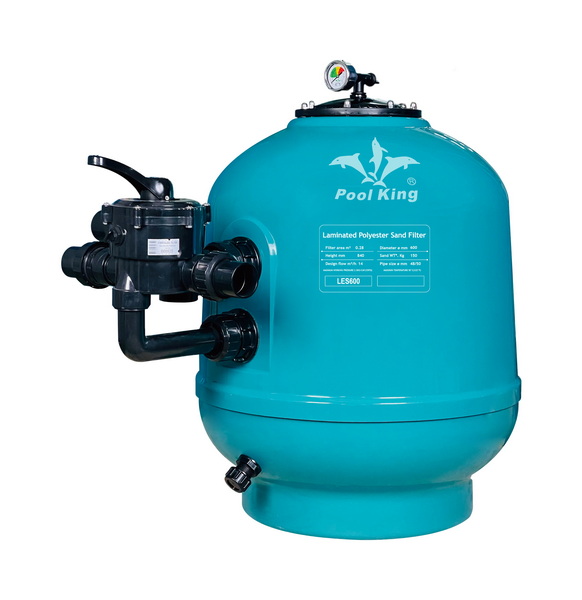
Foam fractionators (often called protein skimmers) are primarily mechanical-organic removal devices, stripping dissolved and fine particulate organics before they can break down. Bead filters, by contrast, are combined mechanical and biological filters, capturing solids while providing high-surface-area media for nitrifying bacteria. [sciencedirect]
From a practical engineering and operations standpoint:
- Foam fractionators excel at exporting organics early, reducing the load on downstream filters. [pentairaes]
- Bead filters excel at biofiltration and solids capture in compact, high-density systems. [ag.arizona]
For a manufacturer with more than 20 years in filtration, like Guangdong Poolking, this comparison is not academic; it guides how we integrate sand filters, cartridge filters, and auxiliary equipment into complete pool and marine filtration solutions that can be realistically installed, operated, and maintained in the field. [freshbydesign.com]
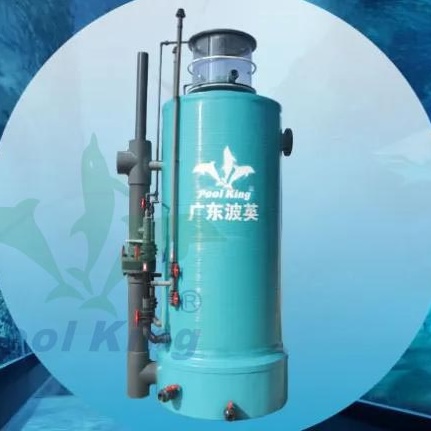
Foam fractionators use a column of fine air bubbles to strip dissolved organic compounds (DOCs) and fine particulates from water before they mineralize into ammonia and nitrate. The core idea is simple: hydrophobic organic molecules adhere to bubble surfaces, rise to the top of the column, and are removed as foam. [pentairaes]
Key design features:
- Contact chamber where air and water mix
- Air injection system (venturi, needle wheel, air stone, or ozone injection)
- Foam collection cup for export of concentrated waste
In marine and RAS applications, this technology reduces organic load, stabilizes oxidation–reduction potential (ORP), and improves water clarity—often making downstream filters more efficient. [pentairaes]
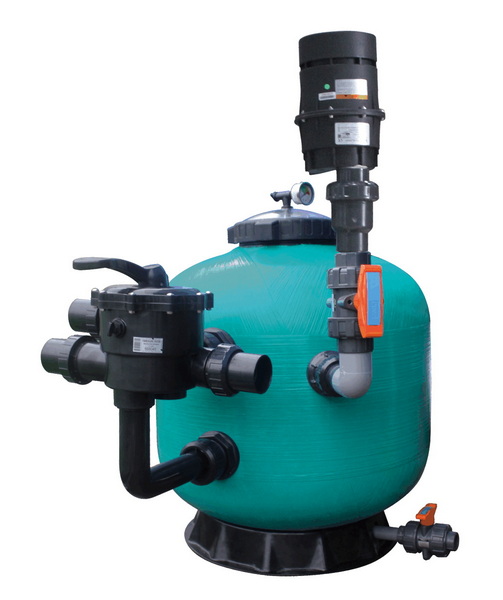
Bead filters are pressurized vessels filled with floating plastic beads that both trap suspended solids and support biofilm growth for nitrifying bacteria. Water passes through the packed bed of beads; solids are mechanically trapped, while bacteria on bead surfaces oxidize ammonia to nitrite and nitrate. [ars.usda]
Key design characteristics:
- High surface area to volume ratio due to small bead size (often 1–3 mm) [scribd]
- Compact footprint compared with traditional sand filters in high-density RAS [freshbydesign.com]
- Backwash capability for solids removal and bed fluidization [uapb]
Studies in warmwater aquaculture systems show bead filters can maintain acceptable total ammonia nitrogen (TAN) levels in commercial tilapia production when properly sized and managed. This dual role—clarification plus nitrification—makes bead filters particularly attractive for integrated marine and aquaculture systems. [sciencedirect]
To compare foam fractionators and bead filters, we need to clarify what is meant by mechanical vs biological filtration in marine systems. [uapb]
- Mechanical filtration: Physical removal of suspended particles (uneaten feed, feces, detritus) through sieving, sedimentation, or foam capture. [uapb]
- Biological filtration: Microbial conversion of dissolved nitrogenous wastes (ammonia, nitrite) into less toxic forms, primarily nitrate, via nitrifying bacteria. [ars.usda]
Foam fractionators live mainly on the mechanical-organic side, while bead filters inhabit the mechanical–biological overlap. [sciencedirect]
As someone who has designed and operated marine systems, I see foam fractionators as organic load managers rather than classic filters. Their performance depends on bubble size, contact time, and the chemistry of the water itself. [pentairaes]
Operating principles:
1. Fine bubble generation increases total air–water interface area. [pentairaes]
2. Contact time in a vertical or counter-current column allows organics to adhere to bubbles. [pentairaes]
3. Foam rise and collection physically exports concentrated waste from the system. [pentairaes]
In commercial setups, fractionators are often paired with:
- Sand filters or cartridge filters for polish filtration
- Biofilters (e.g., moving bed or bead filters) for nitrification
- Ozone systems to improve foam formation and disinfection
From a design perspective, manufacturers like Poolking can adapt existing fiberglass pressure vessels and clear columns to support different skimmer geometries and capacities, aligning with pool- and marine-grade standards. [freshbydesign.com]
Bead filters act as pressurized packed-bed bioclarifiers in recirculating systems, combining solids capture and nitrification within a single footprint. [ag.arizona]
Mechanisms inside the bead bed:
- Solids capture: Particles are trapped between beads and within the developing biofilm. [freshbydesign.com]
- Biofilm growth: Nitrifying bacteria colonize bead surfaces, oxidizing ammonia to nitrate. [ars.usda]
- Backwash events: Fluidization and air scour remove trapped solids and restore flow, while leaving sufficient biofilm. [uapb]
Research on floating microbead filters indicates high nitrification capacity per unit volume when organic loading and backwashing frequency are properly managed. This aligns well with Poolking's experience in compact commercial filter designs where footprint and hydraulic integration with pumps, valves, and LEDs are critical. [scribd]
| Aspect | Foam Fractionator (Protein Skimmer) | Bead Filter |
|---|---|---|
| Primary function | Mechanical-organic removal via foam stripping (pentairaes) | Mechanical + biological filtration in one vessel (sciencedirect) |
| Main target | Dissolved and fine particulate organics, surfactants, proteins (pentairaes) | Suspended solids and ammonia/nitrogen compounds (sciencedirect) |
| Mechanism | Air bubbles capture organics; foam exported from system (pentairaes) | Bead bed traps solids, biofilm nitrifies ammonia (sciencedirect) |
| Location in system | Typically upstream of biofilters and polish filters (pentairaes) | Often central biofilter in recirculating loops (sciencedirect) |
| Maintenance | Cup cleaning, air injector checks, occasional body cleaning (pentairaes) | Regular backwash, air scour, valve/pump checks (uapb) |
| Impact on ORP and clarity | Increases ORP, improves clarity and foam control (pentairaes) | Stabilizes TAN and nitrite, improves clarity via solids removal (sciencedirect) |
This table reflects what we see in the field: foam fractionators excel at pre-removing organics, while bead filters provide backbone biofiltration and solids management in compact, pressurized form. [sciencedirect]
Drawing on both published data and practical installations, the "winner" in the mechanical vs biological battle is not a single device, but the combination that matches your system goals. [ars.usda]
Foam fractionators tend to win when:
- You are managing high-protein marine feeds and want to export organics early.
- Visual water clarity and foam control on the surface are priorities.
- You integrate ozone for advanced oxidation and disinfection. [pentairaes]
Bead filters tend to win when:
- You need a compact, pressurized biofilter that also captures solids. [ag.arizona]
- You operate high-density recirculating systems (e.g., RAS or intensive holding systems). [sciencedirect]
- You want integration with existing pump and valve manifolds similar to sand filters. [freshbydesign.com]
For a manufacturer like Poolking, this means designing product lines and system packages where both technologies can be offered as modular options, allowing integrators and operators to match equipment to their bio-load, space, and regulatory constraints. [ars.usda]
In a high-density marine holding or public aquarium system, we often see:
1. Coarse mechanical filtration (screens or drum filters).
2. Foam fractionator to export dissolved organics. [pentairaes]
3. Bead filter providing combined solids polishing and nitrification. [ag.arizona]
4. Sand or cartridge filters for final polish, often in Poolking-style fiberglass housings. [freshbydesign.com]
5. Disinfection (UV or ozone) and heating/chilling loops. [pentairaes]
Here, the foam fractionator reduces organic loading on the bead filter, while the bead filter stabilizes ammonia levels and provides additional mechanical polishing.
In smaller warmwater systems, research has shown bead filters alone can maintain acceptable TAN levels when correctly sized and managed. Operators often: [ars.usda]
- Use bead filters as the primary biofilter,
- Supplement with simple mechanical prefilters, and
- Add or retrofit a foam fractionator later if organics or foaming become an issue. [sciencedirect]
This staged approach suits budget-sensitive facilities while still leaving room for future upgrades—a pattern manufacturers can support by offering modular bead filter and skimmer packages.
From a technical and buyer's standpoint, system selection should be based on quantifiable performance metrics rather than simple device labels. [sciencedirect]
For foam fractionators:
- Foam production rate and stability (indicator of organic loading).
- Contact time and air–water ratio, which influence DOC removal. [pentairaes]
- Impact on ORP and visible water clarity.
For bead filters:
- Volumetric TAN removal rate (VTR) per cubic meter of media per day, as measured in aquaculture trials. [scribd]
- Hydraulic loading rate and head loss at design flow.
- Backwash frequency and water use during cleaning. [uapb]
By aligning these metrics with real-world data, Poolking and similar manufacturers can specify filter size, pump capacity, and auxiliary equipment more accurately, improving both system reliability and customer satisfaction. [ars.usda]
While Poolking's core portfolio focuses on commercial pool sand filters, fiberglass sand filters, plastic sand filters, and cartridge filters, the same engineering principles apply when integrating bead filters and foam fractionators into marine and recirculating systems. [freshbydesign.com]
Synergies with Poolking hardware:
- Fiberglass pressure vessels designed for sand filters can be adapted as housings for bead media under appropriate engineering design. [freshbydesign.com]
- Existing pump, valve, and manifold designs simplify integration of fractionators as side-stream or full-flow components.
- LED lighting and fittings improve inspection, maintenance visibility, and user experience in equipment rooms and plant rooms.
With two production bases totaling 60,000 sqm, a manufacturer can standardize components while offering customized system layouts for projects ranging from commercial pools to marine exhibits and RAS facilities. [ars.usda]
From both a designer's and operator's perspective, the decision rarely comes down to "either/or"; instead, it is about sequence and priority.
If you must choose only one initially:
- Start with a bead filter if your primary risk is ammonia control and you operate at high stocking densities. [sciencedirect]
- Start with a foam fractionator if your primary concern is organic load and foaming in a marine display with moderate stocking densities. [pentairaes]
When budget and space allow:
- Use both: foam fractionator upstream, bead filter downstream in the recirculation loop, followed by sand or cartridge polishing and disinfection. [sciencedirect]
This staged, modular approach aligns well with Poolking's B2B clients, who often upgrade systems over time as stocking densities and operational priorities evolve. [freshbydesign.com]
To make this actionable, here is a simple decision workflow you can apply:
1. Quantify your bioload
Estimate feed input, stocking density, and target TAN, nitrite, and nitrate levels. [ars.usda]
2. Measure current performance
Track TAN, nitrite, nitrate, ORP, and visual clarity over several days. [sciencedirect]
3. Identify the dominant problem
- High TAN or nitrite: indicates insufficient biofiltration.
- High organics, foaming, yellowing: indicates insufficient organic export. [ars.usda]
4. Match solution to problem
- Add or upgrade bead filter for biofiltration issues. [sciencedirect]
- Add or upgrade foam fractionator for organic and foam issues. [pentairaes]
5. Plan for integration
Coordinate with a manufacturer or system integrator to ensure pumps, valves, sand filters, and cartridge filters are sized and plumbed for future additions. [freshbydesign.com]
This structured approach supports both technical due diligence and budget planning, which is essential in B2B procurement cycles.
For Poolking and similar manufacturers serving both pool and marine markets, the most effective strategy is to position foam fractionators and bead filters as complementary modules within a broader filtration portfolio. [freshbydesign.com]
Key recommendations:
- Offer standardized bead filter and fractionator packages sized to match existing pump and sand filter lines.
- Provide application guidelines based on VTR, hydraulic loading, and ORP targets referenced from peer-reviewed and industry studies. [scribd]
- Educate integrators and end users on system-level thinking, emphasizing that mechanical and biological filtration must be balanced, not treated as isolated add-ons. [sciencedirect]
With more than two decades of manufacturing experience and dual production bases, this positioning reinforces both technical authority and practical reliability in the eyes of engineers, consultants, and operators. [ars.usda]
Q1: Is a foam fractionator enough on its own for marine systems?
A foam fractionator can significantly reduce organics and improve clarity, but it does not replace the need for dedicated biological filtration for ammonia and nitrite control. [ars.usda]
Q2: Can a bead filter replace my existing sand filter?
In many RAS and intensive systems, bead filters are used instead of sand filters because they provide both solids capture and biofiltration, but final polishing and redundancy may still benefit from sand or cartridge filters. [ag.arizona]
Q3: How often should I backwash a bead filter?
Backwash frequency depends on feed rates and solids loading, but research suggests that regular backwashing is essential to maintain both flow and high TAN removal rates. [uapb]
Q4: Do foam fractionators work in freshwater systems?
They are most effective in saltwater because salinity promotes foam formation, although certain freshwater setups can still benefit with adjusted design and chemistry. [pentairaes]
Q5: Can I retrofit a foam fractionator into my existing Poolking filter system?
In many cases, foam fractionators can be installed as side-stream units using existing pumps and manifolds, particularly when the system already employs fiberglass sand filters and cartridge filters. [freshbydesign.com]
1. Fresh By Design – Introduction to Bead Filters (overview of bead filter design and advantages in RAS). https://freshbydesign.com.au/wp-content/uploads/2015/11/Introduction-to-Bead-Filters.pdf
2. ScienceDirect – Use of floating bead filters to recondition recirculating waters in warmwater aquaculture production systems. https://www.sciencedirect.com/science/article/abs/pii/S0144860900000327
3. University of Arkansas at Pine Bluff – Understanding and Maintaining Older Classroom Recirculating Aquaculture Systems (FSA9620). https://uapb.edu/wp-content/uploads/2024/10/fsa-9620.pdf
4. USDA ARS / Global Aquaculture Advocate – Bead filter enhances recirculating aquaculture systems for tilapia production. https://www.ars.usda.gov/research/publications/publication/?seqNo115=132812
5. Pentair Aquatic Eco-Systems – Protein Skimmers & Foam Fractionators. https://pentairaes.com/products/water-filtration/specialty
6. University of Arizona – Application of microbead biological filters in aquaculture. https://ag.arizona.edu/azaqua/ista/ISTA7/RecircWorkshop/Workshop%20PP%20Presentations%20&%20Misc%20Papers%202006/Application%20of%20microbead%20filters.pdf
7. Timmons et al. – Microbead biological filters (PDF summary). https://www.scribd.com/document/422744151/2005-Aqu-Eng-Microbead-Filter-Timmons-July-5-05


