
Views: 242 Author: Poolking Filter Equipment Publish Time: 2026-06-28 Origin: Site


Content Menu
● Understanding Koi Pond Filtration Fundamentals
● What Is a Traditional Sand Filter?
● How Bead Filters Work in High-Density Koi Ponds
● How Traditional Sand Filters Perform in Koi Systems
● Direct Comparison: Bead Filter vs Traditional Sand Filter
>> Filtration Performance and Water Quality
>> Maintenance and Backwashing
>> Energy Efficiency and Hydraulics
>> Long-Term Ownership Experience
>> Practical Side-by-Side Overview
● Why High-Density Koi Ponds Need More Than Just a Filter
● Expert Case Insight: Bead Filters in Recirculating Koi Systems
● Where Traditional Sand Filters Still Make Sense
● Practical Design Steps for Choosing Between Bead and Sand Filters
● Professional Opinion: Which Is the "Ultimate" Solution?
● How a Manufacturer Like Poolking Fits Into This Picture
● FAQs About Bead Filters and Sand Filters for Koi Ponds
Bead filters and traditional sand filters can both keep koi ponds clear, but bead filters are usually the more robust, low‑maintenance choice for high‑density koi systems, while sand filters still excel as "polishing" filters when fines removal is the primary goal. [koipondhq]
High‑density koi ponds are not decorative water features; they are recirculating aquatic life-support systems where filtration design directly affects fish survival, growth, and disease resistance. From my experience helping commercial facilities and serious hobbyists scale their filtration, the most common failure point is undersized or poorly matched filters, not the koi themselves. In this article, I'll compare bead filters vs traditional sand filters specifically in high‑stocking koi environments, and share insights backed by field practice and current industry consensus. [clearpond.com]
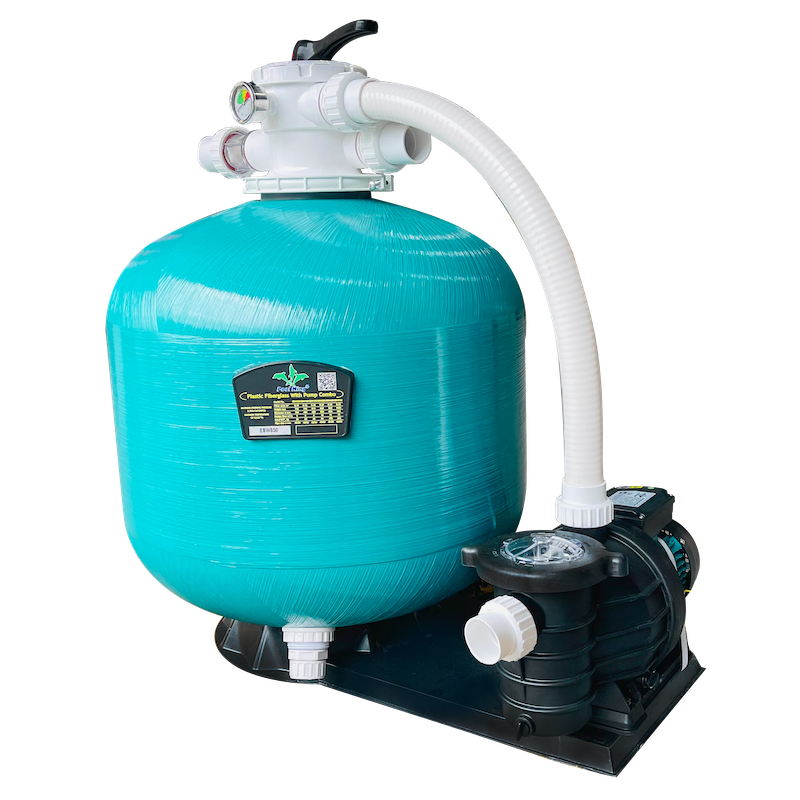
Before comparing bead and sand, it's critical to understand what a high‑density koi pond demands from filtration. [koiquanta]
- Koi produce significantly more waste than goldfish or ornamental pond species, driving up solids and dissolved nitrogen. [clearpond.com]
- High stocking levels require mechanical filtration (for solids) and biological filtration (for ammonia, nitrites) working 24/7. [koipondhq]
- Modern best practice is to design filtration capacity at up to three times the pond volume for serious koi collections or commercial displays. [clearpond.com]
From a system designer's perspective, this means the filter is not just a "clarifier"; it is a continuous load handler for feces, uneaten feed, biofilm slough, and plant debris. [clearpond.com]
A bead filter is a pressurized mechanical–biological filter that uses thousands of small plastic beads packed inside a closed vessel. [koicarp.co]
- Water is pushed through the bed of beads, which trap fine particles while providing surface area for beneficial nitrifying bacteria. [nextdaykoi]
- The media does not need regular replacement, because the beads are inert and act only as mechanical support for solids and biofilm. [koipondhq]
- Backwashing releases accumulated waste and also performs small but regular water changes, which are a major health benefit often overlooked. [facebook]
From a practitioner's view, bead filters emerged specifically to solve problems traditionally seen in sand filters—clogging, channeling, and sand drifting back into the pond. [koipondhq]
A traditional sand filter uses a bed of selected silica sand (or similar media) in a pressurized tank, forcing water through the sand to trap particles. [koiphen]
- Sand filters have long been used for swimming pools and adapted to ponds because they are very effective at removing fines. [koiphen]
- With proper grade sand, maintenance, and backwash routine, they can deliver crystal‑clear water and are relatively cost‑effective compared to some proprietary pond filters. [koiphen]
- However, they clog more readily and can require frequent backwashing when used in koi ponds with heavy solid loading. [nextdaykoi]
Experienced koi keepers often reposition sand filters as end‑stage polishers, not primary waste handlers, to avoid constant clogging under high solids loads. [nextdaykoi]
In high‑density koi systems, bead filters play a dual role: fines removal and biological support. [koicarp.co]
1. Mechanical Filtration for Fines
- Koi are bottom feeders that stir up sediment; bead filters are very good at capturing those suspended fine particles. [koipondhq]
- The dense bead bed traps debris while maintaining relatively low head loss, allowing use of energy‑efficient pumps with bypass designs. [shop.sacramentokoi]
2. Biological Filtration Capacity
- Beads host nitrifying bacteria that convert ammonia and nitrites, stabilizing water chemistry in heavily stocked ponds. [koicarp.co]
- This makes bead filters attractive for recirculating systems where space is limited but biological load is high. [shop.sacramentokoi]
3. Operation and Backwashing
- Cleaning is usually via a multi‑port valve and backwash cycle; you do not open the tank or handle media. [sacramentokoi]
- Each backwash often triggers small water changes, which support long‑term koi health and dilute accumulated toxins. [facebook]
From a UX and operations standpoint, bead filters align well with busy commercial or residential users who want strong performance with predictable weekly routines. [sacramentokoi]
Traditional sand filters can work in koi ponds, but they are less forgiving in high‑density setups. [koiphen]
- They are excellent mechanical filters for fines, often delivering exceptionally clear water when maintained properly. [koiphen]
- However, when used as primary filtration, they clog quickly, slowing flow and requiring frequent backwashing—sometimes daily in heavy‑load ponds. [nextdaykoi]
- Some experienced pond managers successfully run large commercial sand filters with weekly backwashing and good results, but they typically combine them with other biological units and pre‑filters. [nextdaykoi]
If you treat sand filters as "polishers" at the end of a multi‑stage filtration train, they can be extremely effective; as standalone solutions for high‑density koi, they are more problematic. [koiphen]
- Bead filters provide combined mechanical and biological filtration in a single housing, supporting dense bacteria populations and keeping water consistently clear. [shop.sacramentokoi]
- Sand filters primarily provide mechanical filtration, with limited and less controlled biological surface area. [nextdaykoi]
- Bead filters are designed for easy backwashing without opening the tank, often requiring only minutes per week. [sacramentokoi]
- Sand filters, especially in koi setups, may need frequent backwashing due to clogging, and are more sensitive to sand grade and loading. [koiphen]
- Bead systems often incorporate bypass designs allowing for low‑pressure pumps and lower energy consumption. [shop.sacramentokoi]
- Sand filters can create higher head loss when dirty, impacting flow stability and energy use in heavily loaded ponds. [koiphen]
- Bead media does not need replacement; you mainly manage backwash schedules and occasional internal inspections. [koipondhq]
- Sand sometimes needs periodic replacement and can migrate into the pond if the system is poorly controlled or aging, adding maintenance overhead. [koipondhq]
| Aspect | Bead Filter | Traditional Sand Filter |
|---|---|---|
| Filtration type | Mechanical + biological in one unit (koipondhq) | Primarily mechanical, limited biological (koiphen) |
| Best use case | High‑density koi ponds, recirculating systems (koipondhq) | Fines polishing, pool‑style clarity (koiphen) |
| Solids handling | Better resistance to clogging with proper pre-filtering (koipondhq) | Tends to clog quickly under heavy koi waste (koiphen) |
| Media | Plastic beads, non‑degrading, no regular replacement (koipondhq) | Silica sand, may need replacement and can drift into pond (koiphen) |
| Maintenance | Simple backwash, hands‑free, weekly or as needed (koipondhq) | Backwash often, more sensitive to load and sand grade (koiphen) |
| Energy | Lower head loss with bypass setups, suitable for efficient pumps (koipondhq) | Higher head loss when dirty, can strain pumps (koiphen) |
| Role in system | Core bio‑mechanical unit; often paired with pre-filter and UV (koipondhq) | End‑stage fines filter or secondary polisher (koiphen) |
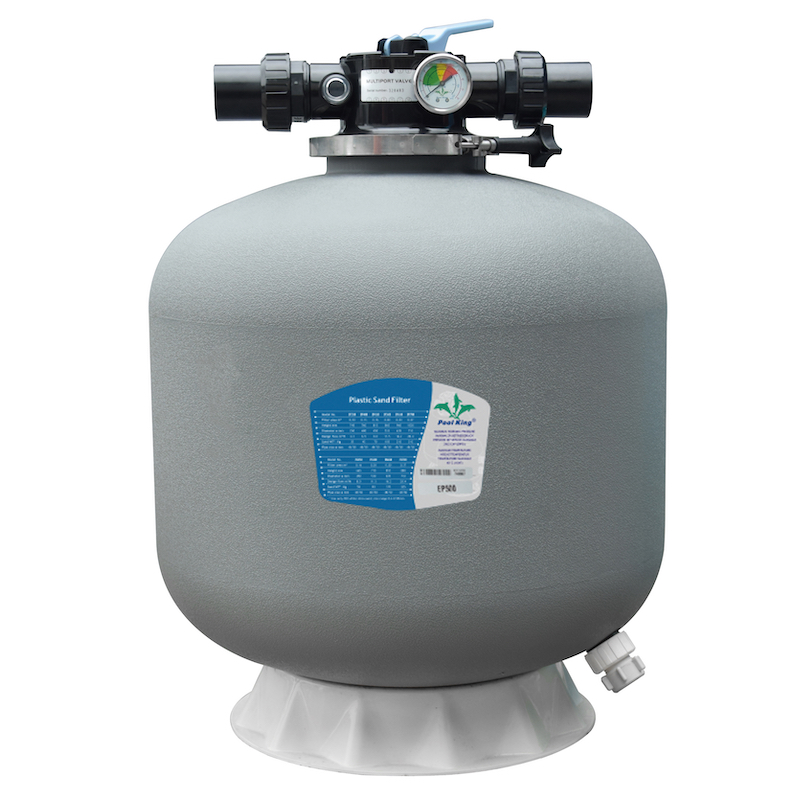
In consulting work with serious koi keepers, one of the most important mindset shifts is: "Your filter is life support, not decoration." [clearpond.com]
Key design principles for high‑density koi ponds include: [koiquanta]
- Oversized filtration: Design for at least 2–3× pond volume in filtration capacity. [clearpond.com]
- Pre‑filtration first: Use mechanical pre‑filters (like sieves, RDF, or dedicated pre‑filter units) to remove large solids before bead or sand filters. [reddit]
- Stable biological load: Protect biofilters from constant cleaning; pre‑filters should handle most solids so you only deep‑clean biological units a few times per year. [nextdaykoi]
- Integrated UV and oxygenation: Combine mechanical–biological filtration with UV clarifiers and good aeration (e.g., Bakki shower or waterfalls) for balanced ecosystems. [youtube]
Bead filters fit naturally into this multi‑stage philosophy, while sand filters are best treated as specialized mechanical stages when you want extremely polished water. [koipondhq]
Industry data and practitioner experience show bead filters being widely used in high‑density recirculation systems, from serious hobby ponds to commercial displays. [koicarp.co]
- Products like Aquabiome and Advantage bead filters are marketed specifically for dense nitrifying bacteria support and easy maintenance, targeting koi ponds and water gardens. [sacramentokoi]
- Operators report combining bead filters with drum filters or Bakki showers to balance mechanical fines removal with strong aerobic biological activity. [reddit]
From a system designer's perspective, bead filters shine in projects where:
- Space is limited but biological and mechanical performance must be high.
- The owner wants clear operating procedures (weekly backwash, periodic inspections) instead of ad‑hoc sand replacement.
- Stocking density is aggressive, and ammonia control is non‑negotiable. [koicarp.co]
Despite their limitations, traditional sand filters still have valid roles in koi pond design when used strategically. [nextdaykoi]
- As a final polishing stage: Positioned after pre‑filters and biological units to remove the last fines and achieve "swimming‑pool clarity." [koiphen]
- In lightly stocked ponds: Where solids load is modest and maintenance tolerance is high, sand filters can perform well with weekly backwash routines. [koiphen]
- For budget‑sensitive upgrades: Re‑using swimming pool sand filter housings with alternative media (e.g., sinking plastic media) can be a cost‑effective mechanical option for some keepers. [nextdaykoi]
However, in genuinely high‑density koi environments, relying solely on sand filtration is usually a compromise that increases operational risk and workload. [koiquanta]
For pond owners upgrading or designing filtration for high‑density koi, a simple stepwise approach helps avoid costly mistakes. [koiquanta]
1. Define your stocking target
- List how many koi, expected adult size, and planned growth rate.
- High‑density generally means large, fast‑growing koi with frequent feeding.
2. Estimate filtration capacity needs
- Aim for filtration sized to 2–3× pond volume, especially for serious collections. [clearpond.com]
- Include mechanical, biological, and UV stages in this capacity analysis. [koiquanta]
3. Decide on your mechanical–biological split
- If space is tight and maintenance must be simplified, bead filters are strong candidates as combined mechanical–biological units. [koicarp.co]
- If you already have robust biofilters (moving bed, Bakki shower), you might use sand or bead filters primarily for fines polishing. [reddit]
4. Plan pre‑filtration upfront
- Always budget for pre‑filters to intercept leaves, large solids, and string algae before they reach bead or sand beds. [reddit]
5. Lock in maintenance routines
- Choose equipment that matches the reality of your schedule: weekly backwash and periodic deep cleaning should be realistic, not aspirational. [sacramentokoi]
From a high‑density koi pond and UX‑driven perspective, the "ultimate solution" is rarely a single filter—it is a well‑designed system. That said:
- For most high‑density koi ponds aiming at clear water, stable chemistry, and manageable maintenance, a quality bead filter with proper pre‑filtration and auxiliary bio‑stages is usually the best core solution. [koiquanta]
- Traditional sand filters are best treated as optional polishing units, not the main life‑support device, especially in ponds with large, heavily fed koi. [clearpond.com]
In other words, if your goal is long‑term koi health and operational reliability, lead with bead filtration and system design, and let sand play a supporting role when ultra‑fine clarity is required.
For facility owners and serious hobbyists, working with a manufacturer that understands both pool and pond hydraulics is a major advantage. [sacramentokoi]
Companies producing commercial pool sand filters, fiberglass sand filters, plastic sand filters, and cartridge filters can:
- Provide properly engineered pressure vessels and valve sets suited for koi applications.
- Help size systems with pump, filter, and fitting combinations that balance flow, energy use, and backwash efficiency. [koicarp.co]
- Offer LED lights, fittings, and compatible accessories that integrate aesthetically with the filtration pit and water features.
When these manufacturing capabilities are combined with koi‑specific design knowledge, the result is filtration systems that deliver both performance and usability at scale. [koiquanta]
Q1: Are bead filters enough on their own for a high‑density koi pond?
A: In many cases, yes—provided you size the unit correctly, use pre‑filtration, and maintain regular backwash cycles, bead filters can act as the primary mechanical–biological filter for dense koi populations. [shop.sacramentokoi]
Q2: Can I convert my existing pool sand filter for koi use?
A: You can adapt pool sand filter housings with alternative media or revised plumbing, but you must account for waste loading, clogging risk, and appropriate backwash frequency; many keepers repurpose them as polishing filters instead of main bio units. [nextdaykoi]
Q3: Do bead filters require a separate biofilter?
A: Not strictly; bead filters support nitrifying bacteria themselves, but adding dedicated bio stages (moving bed, Bakki shower, bio‑falls) often improves resilience and oxygenation in high‑density ponds. [reddit]
Q4: How often should I backwash a bead or sand filter?
A: Frequency depends on solids loading and equipment, but many owners aim at weekly backwashing as a baseline, with higher frequency in very heavily stocked ponds or during peak feeding periods. [koipondhq]
Q5: Is clearer water always better for koi health?
A: Not always; ultra‑clear water can coexist with poor chemistry if filtration is focused only on fines removal. For koi health, ammonia, nitrite, and oxygen levels are as important as visual clarity, which is why mechanical and biological capacity must be considered together. [koiquanta]
1. Koi Pond HQ – “Bead Filters for Koi Ponds: What They Are, How They Work”. https://koipondhq.com/bead-filter-for-koi-pond/
2. Koiphen Forum – “Does a sand filter make any sense for koi pond?”. https://www.koiphen.com/forums/showthread.php?81229-does-a-sand-filter-make-any-sense-for-koi-pond
3. Next Day Koi – “The Importance of a Pre-filter in a Koi Pond”. https://nextdaykoi.com/koi-fish-facts/koi-pre-filter-importance/
4. Clear Waters – “Why Your Koi Keep Dying (And How the Right Filtration Saves Them)”. https://clearpond.com.au/core-pond-construction-and-design/why-your-koi-keep-dying-and-how-the-right-filtration-saves-them/
5. KoiQuanta – “Koi Pond Filtration: Bead Filter vs Drum Filter vs Bog…”. https://koiquanta.com/koi-pond-filtration-guide/
6. Waterco Aquabiome Bead Filter – Product page. https://www.koicarp.co.uk/waterco-aquabiome-bead-filter-1507/
7. Sacramento Koi – Advantage Bead Filters. https://www.sacramentokoi.com/advantage-filter
8. Sacramento Koi – Advantage Bead Filter Collection. https://shop.sacramentokoi.com/collections/advantage-bead-filters
9. Next Day Koi – “Definitive Guide to Pond Maintenance”. https://nextdaykoi.com/pond-maintenance/definitive-guide-to-pond-maintenance/
10. Facebook discussion – “Pros and cons of bead filters for pond maintenance”. https://www.facebook.com/groups/520073555720360/posts/1066546804406363/


