
Views: 227 Author: Poolking Filter Equipment Publish Time: 2026-06-27 Origin: Site


Content Menu
● Understanding Your Pool Heating Options
● Manufacturer's Perspective: How Heating Integrates with Filtration and Circulation
● Upfront Cost: Gas Heater vs Pool Heat Pump
● Monthly Payment and Financing View
● Operating Cost Reality: What You Actually Pay to Swim
● Efficiency: COP vs Fuel Burn
● ROI and Payback Period: When Does a Heat Pump "Win"?
● Climate, Usage Pattern, and Comfort
● Environmental Impact and Sustainability
● Integrating Heaters with Commercial Pool Filtration Systems
● Practical Decision Framework for Pool Owners and Operators
● Example Cost Comparison Table
● Expert Insight: When a Hybrid Approach Makes Sense
● Practical Installation and Maintenance Tips
● Clear Recommendation and Next Step
● FAQs
As a pool equipment manufacturer with over 20 years in commercial filtration and circulation systems, I've seen how choosing between a pool heat pump and a gas heater directly impacts total ownership cost, user comfort, and long‑term ROI. In this guide, I'll compare upfront cost, monthly payment, and operating cost from both a personal user perspective and an industry expert viewpoint, helping you select the heater that truly fits your pool, budget, and climate. [poolking.en.made-in-china]
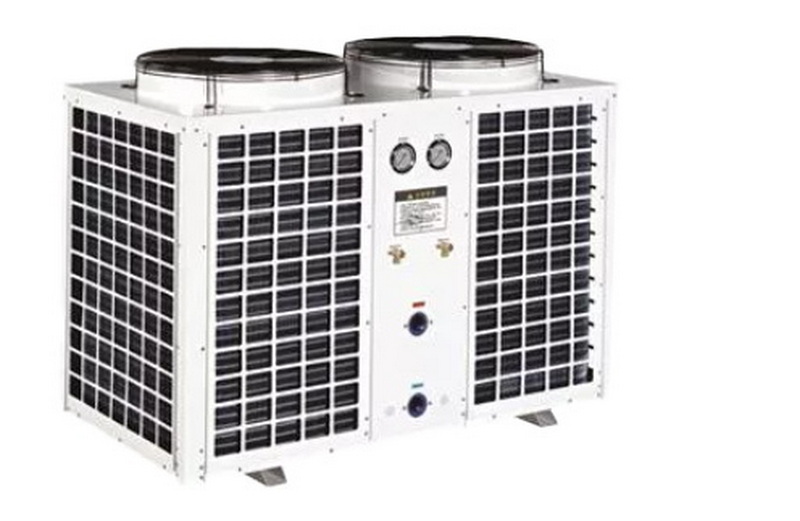
Before looking at costs, you need to understand how each technology works, because the way it generates heat determines how much you'll pay over the years. [turbro]
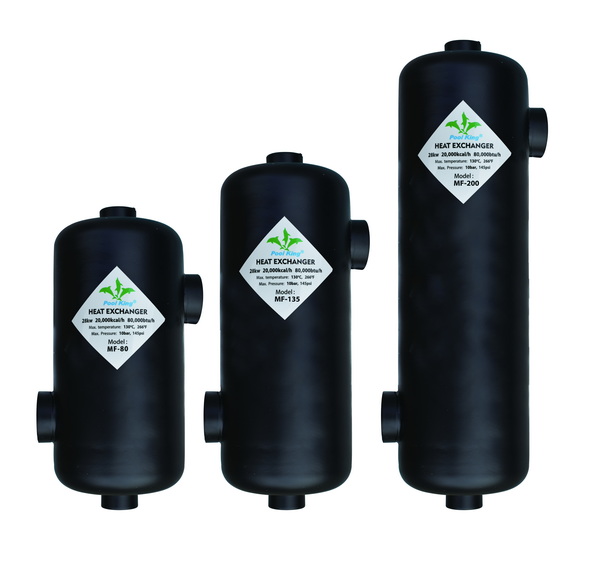
- Gas pool heaters burn natural gas or propane in a combustion chamber, send hot exhaust through a heat exchanger, and warm the pool water as it passes through. [lahomes]
- Pool heat pumps do not create heat directly; they use a refrigerant circuit to pull heat from the ambient air and transfer it into the pool water, achieving much higher efficiency in mild and warm climates. [pickhvac]
From an engineering standpoint, this difference is crucial: gas heaters convert fuel into heat with relatively low efficiency, while heat pumps "move" free heat from the air, which is why their running costs are dramatically lower in suitable climates. [turbro]
As Guangdong Poolking, we design complete circulation systems—filters, pumps, lights, and fittings—around stable hydraulic performance and energy efficiency. [poolking]
- Hydraulic integration: A heater, whether gas or heat pump, sits in the same loop as your sand filter, cartridge filter, and pump; a correctly sized pump and low‑resistance filter help keep heating times and energy use under control. [poolkingfilter]
- Commercial pools: In hotels, water parks, and competition pools, we often pair high‑capacity sand filters and precision circulation pumps with either heat pumps or gas boilers, depending on climate and usage pattern, to keep lifecycle cost predictable. [poolking]
From an OEM and project side, heating choice is always made together with filtration and flow rate—fast heating on an undersized circulation system is a recipe for inefficiency and uneven temperatures. [pickhvac]
For most buyers, upfront cost is the first decision point, and it's where gas heaters often look more attractive—at least initially. [modaoutdoorliving]
- Typical gas heater unit cost ranges roughly from around $1,500 to $4,000, with total installed costs commonly cited in the $2,500 to $4,500 range once labor and standard gas connections are included. [modaoutdoorliving]
- Typical pool heat pump unit cost ranges around $2,000 to $5,000 for many residential models, with some smaller units starting near $800, and full installed systems frequently quoted in the $4,500 to $8,000 bracket. [lahomes]
Installation details matter: running new gas lines or installing a propane tank can push a gas project higher, while a heat pump installation usually involves electrical work and plumbing but no fuel infrastructure. So in many markets, you'll see lower initial outlay for gas heaters, but the heat pump "price gap" has narrowed significantly over the last few years. [modaoutdoorliving]
From a buyer's UX and cash‑flow perspective, what really matters isn't just the ticket price but how the heater fits into your monthly budget. [arcticheatpumps]
If you finance your equipment (for example, as part of a full pool build or a commercial upgrade):
- A lower‑cost gas heater usually means smaller monthly hardware payments, especially on short‑term financing. [pickhvac]
- However, the higher monthly energy bill for gas can quickly erase any advantage in the financed equipment cost. [shastapoolsupply]
From a financial modeling standpoint, when you add loan repayment plus utility spending, a heat pump often delivers a lower total monthly outlay after the first couple of seasons, particularly in mild‑to‑warm climates where it operates at high efficiency. [turbro]
Operating cost is where the "headline" comparison of pool heat pump vs gas heater becomes very clear. [shastapoolsupply]
Industry and homeowner guides report ranges that are broadly consistent:
- In many real‑world examples, gas pool heaters are reported at roughly $150–$400 per month for a typical season, with some cases showing $300–$500 per month, depending on gas prices, usage, and geography. [arcticheatpumps]
- Heat pumps are often cited around $50–$150 per month, with some data points closer to $50–$100 per month for typical residential use. [shastapoolsupply]
These ranges vary with pool size, target temperature, run time, and energy tariffs, but the trend is robust: heat pumps usually cost a fraction of gas heaters to run, especially when the air temperature stays above roughly 50°F during the swimming season. [lahomes]
To understand why the operating costs differ so sharply, you can look at the Coefficient of Performance (COP) and combustion efficiency. [turbro]
- A gas heater typically achieves an effective efficiency of around 0.8–0.95, meaning roughly 80–95% of the fuel energy becomes pool heat and the rest is lost through exhaust. [turbro]
- A heat pump can reach COP values around 5.0–6.5, meaning each unit of electricity draws about 5–6.5 units of heat from the air, delivering far more heat for the same input energy. [pickhvac]
From an engineering and lifecycle standpoint, this efficiency gap is what drives lower monthly operating costs and shorter payback periods for heat pumps in suitable climates. [modaoutdoorliving]
The key financial question is: "When does the higher upfront cost of a heat pump pay itself back?" [eliteconciergeaz]
- In example scenarios with moderate climates, case studies show annual savings with heat pumps on the order of $1,200–$2,600, depending on usage and utility rates. [shastapoolsupply]
- Payback periods of around 2–4 years are commonly cited, after which the heat pump continues to generate savings over a typical 10–15 year service life. [modaoutdoorliving]
From a manufacturer's project view, for commercial pools with long operating seasons and stable usage, this ROI curve is even steeper: continuous operation multiplies the energy savings compared with intermittent residential use. [eliteconciergeaz]
Choosing between a pool heat pump and gas heater isn't just about money—it's also about climate and how you use your pool. [lahomes]
- Heat pump advantages
- Best in mild or warm regions where air temperatures stay above about 50°F during most of the swimming season. [lahomes]
- Ideal if you want a stable, always‑ready water temperature and lower monthly bills. [pickhvac]
- Gas heater advantages
- Better suited for cold climates or situations where you need rapid temperature boosts, such as weekend hot‑tub sessions or occasional shoulder‑season swims. [turbro]
- Can raise water temperature several degrees in a few hours, acting like a "sprinter" compared with the heat pump's "marathon runner" profile. [turbro]
From a UX standpoint, a heat pump favors consistency and cost control, while a gas heater favors speed and flexibility in harsh conditions. [lahomes]
For many buyers—especially hotels, resorts, and wellness facilities—environmental impact is now part of the purchase decision. [pickhvac]
- Gas heaters rely on fossil fuels and emit direct greenhouse gases, with some estimates indicating several tons of CO₂ per active season for a typical unit. [turbro]
- Heat pumps run on electricity and benefit as grids incorporate more renewable energy, making the carbon footprint of pool heating progressively lower over time. [pickhvac]
When paired with efficient sand filters, pumps, and smart controls, a heat‑pump‑based system can significantly reduce both energy consumption and environmental impact compared with traditional gas setups. [poolkingfilter]
From our experience building commercial pool sand filters, fiberglass filters, plastic filters, and cartridge systems, the heater choice affects more than just energy bills—it influences system design. [poolking.en.made-in-china]
- Large commercial pools often use high‑rate sand filters combined with variable‑speed pumps and heat pumps or gas boilers, sized together to ensure stable flow and temperature. [poolking]
- For projects with strict operating budgets, we frequently model filter resistance, pump curves, and heater efficiency together, optimizing for low lifetime energy cost per cubic meter of water treated and heated. [poolkingfilter]
This integrated view is where a manufacturer adds real value: we're not just comparing two heaters, we're designing an entire water treatment and heating ecosystem around your business goals. [poolking.en.made-in-china]
To make this comparison actionable, use a simple decision framework focusing on cost, climate, and usage. [lahomes]
1. Define your climate and season length
- If your swimming season mostly sits in moderate or warm temperatures, a heat pump will usually deliver better long‑term value. [pickhvac]
- If you regularly face near‑freezing weather and demand fast heat‑up times, gas may be more practical. [lahomes]
2. Estimate annual run time
- Continuous, daily use pushes the balance toward heat pumps, as their efficiency yields larger savings. [turbro]
- Occasional, high‑intensity use (for spas or sporadic pool parties) may justify the fast response of gas heaters. [lahomes]
3. Combine hardware and energy in one budget
- Calculate or estimate upfront cost + annual energy cost over at least 5–10 years to see the real total cost of ownership. [modaoutdoorliving]
The table below uses approximate ranges drawn from multiple industry sources to illustrate how pool heat pumps vs gas heaters differ across key dimensions. [shastapoolsupply]
| Aspect | Pool Heat Pump | Gas Pool Heater |
|---|---|---|
| Typical installed upfront cost | Around $4,500–$8,000 for common residential systems (modaoutdoorliving) | Around $2,500–$4,500 for many gas setups (modaoutdoorliving) |
| Typical monthly operating cost | Roughly $50–$150 per month in many scenarios (arcticheatpumps) | Roughly $150–$400+ per month depending on fuel and usage (arcticheatpumps) |
| Efficiency (COP or equivalent) | COP about 5.0–6.5, very high efficiency (turbro) | Effective efficiency around 0.8–0.95, lower conversion of fuel to heat (turbro) |
| Lifespan | Often 10–15 years with proper maintenance (turbro) | Often 5–10 years, depending on use and care (turbro) |
| Best suited for | Mild to warm climates, consistent daily heating (turbro) | Colder climates, rapid or occasional heating needs (turbro) |
For some commercial and high‑end residential projects, a hybrid solution—combining a heat pump with a gas heater—delivers the best balance of comfort and cost. [eliteconciergeaz]
- The heat pump handles base‑load heating during typical weather and daily usage, keeping operating costs low. [modaoutdoorliving]
- The gas heater acts as a backup for extreme cold, sudden events, or rapid temperature boosts, avoiding oversizing the heat pump for rare conditions. [eliteconciergeaz]
From a systems engineering and UX perspective, hybrid setups take advantage of both technologies, ensuring guests or family always have warm water while the owner maintains predictable energy spending. [eliteconciergeaz]
From a manufacturer's operational experience, installation quality and maintenance standards heavily influence real‑world efficiency for both heat pumps and gas heaters. [poolkingfilter]
- Correct sizing: Match heater capacity to pool volume, desired temperature rise, and filtration flow rate to avoid underperformance and wasted energy. [pickhvac]
- Clean filtration: Keep sand filters, cartridge filters, and circulation lines clean and correctly backwashed, because restricted flow increases heating time and operating costs. [poolking]
Attention to these details ensures that whichever technology you choose actually delivers the efficiency the spec sheet promises. [turbro]
From both a manufacturer and pool owner perspective, if your pool is in a moderate or warm climate and you value lower monthly costs and long‑term ROI, a pool heat pump is usually the stronger choice. If you operate in a cold climate or need fast, occasional heating—for spas or luxury pools in winter—then a gas heater or hybrid solution may better match your needs. [eliteconciergeaz]
Ready to design a complete heating and filtration solution for your pool or commercial facility?
Contact our engineering team to specify the ideal combination of pool heat pump or gas heater, sand or cartridge filters, and circulation pumps tailored to your climate, budget, and usage profile, so you can keep your water perfectly warm and crystal clear all season.
1. Is a pool heat pump always cheaper to run than a gas heater?
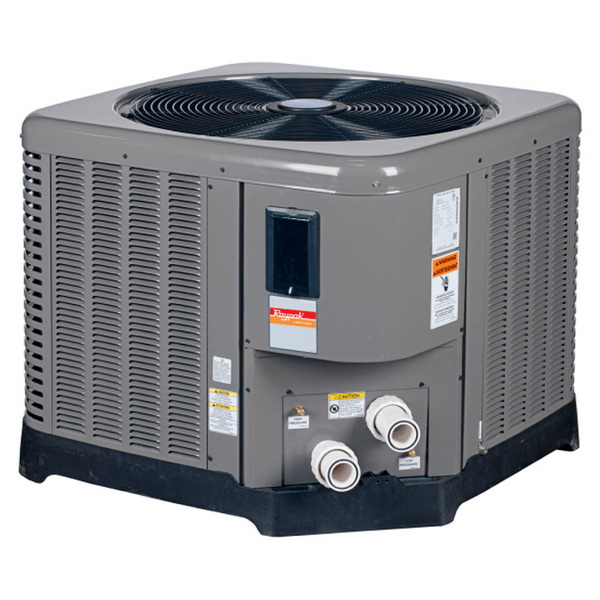
In most mild and warm climates, yes—a heat pump's higher COP means you get more heat per unit of electricity than you get from burning gas, which usually results in lower monthly bills. [pickhvac]
2. How long does it take for a heat pump to pay back its higher upfront cost?
Typical case studies suggest payback periods of around 2–4 years, after which the heat pump continues to deliver annual savings over its remaining 10–15 year lifespan. [modaoutdoorliving]
3. Does climate really make that much difference in choosing between heat pump and gas?
Yes, climate is central: heat pumps perform best when air temperatures are comfortably above freezing, while gas heaters retain more of their performance even in very cold weather. [lahomes]
4. Can I combine a heat pump with a gas heater on the same pool?
Many high‑value projects use a hybrid setup, letting the heat pump handle everyday heating while the gas unit provides rapid backup in extreme conditions or for special events. [eliteconciergeaz]
5. How does my filtration system affect heater performance?
A well‑designed filtration system—properly sized sand or cartridge filter, correctly matched pump, and clean lines—stabilizes flow, reduces heating time, and helps both heat pumps and gas heaters operate closer to their rated efficiency. [poolking]
1. Arctic Heat Pumps – “Pool Heat Pump vs Gas Heater: Which Saves More in 2026”. https://www.arcticheatpumps.com/blog/pool-heat-pump-vs-gas-heater-which-one-actually-saves-you-money-in-2026.html
2. TURBRO – “Heat Pump Vs Gas Pool Heater”. https://www.turbro.com/blogs/blogs/pool-heat-pump-vs-gas-heater-which-is-better-for-your-pool
3. Moda Outdoor Living – “Heat Pump vs Gas Pool Heater in 2026”. https://modaoutdoorliving.com/blog/heat-pump-vs-gas-pool-heater-2026
4. Shasta Pool Supply – “Heat Pump vs Gas Pool Heater: Which Saves More Money in 2025?”. https://shastapoolsupply.com/blogs/news/heat-pump-vs-gas-pool-heater
5. LAHomes – “Pool Heat Pump Guide: Pros & Cons of Heat Pumps & Gas Heaters”. https://www.lahomes.com/blog/pool-heat-pump-guide
6. PICKHVAC – “Pool Heat Pump vs Gas Heater: Costs, Efficiency, Sizing, and Climate Guide”. https://www.pickhvac.com/pool-heat-pump-gas-heater-costs-efficiency-sizing-climate/
7. Elite Concierge AZ – “Pool Heat Pump vs Gas Heater Cost Comparison for Scottsdale Luxury Pools 2026”. https://eliteconciergeaz.com/journal/pool-heat-pump-vs-gas-heater-cost-scottsdale-luxury-pools-2026/
8. Guangdong Poolking Filtration Equipment Manufacturing Co., Ltd. – Company and Product Information. https://www.poolkingfilter.com


