
Views: 222 Author: Tina Publish Time: 2025-11-27 Origin: Site


Content Menu
● French pool valve market overview
● Key French and European brands for pool filter valves
● Types of pool filter valves used in France
● Technologies and features offered by valve manufacturers
● Sustainability and energy efficiency trends
● OEM and private label opportunities with French suppliers
● How international buyers should evaluate pool filter valve partners
● Role of Chinese OEM factories in the French valve supply chain
● Practical tips for installing French pool filter valves
● Why France is attractive for pool filter valve sourcing
● FAQs
>> 1. What types of pool filter valves are most common in France?
>> 2. Do French suppliers offer OEM and private label services for pool filter valves?
>> 3. Are French pool filter valves compatible with sand, cartridge, and DE filters?
>> 4. How do French manufacturers address sustainability in pool filtration?
>> 6. Are there European brands outside France that also supply valves to the French market?
France has a dynamic and innovative market for pool filter valves, with manufacturers and distributors serving residential, commercial, and public pool projects across Europe and beyond. For overseas brands, wholesalers, and OEM partners, French Pool Filter Valve Manufacturers and Suppliers combine advanced engineering with strong export capabilities and sustainable design.[1][2][3]
France is one of Europe's leading swimming pool markets, with hundreds of thousands of residential pools and a strong hospitality and wellness sector that continuously demands reliable filter valves and filtration systems. This demand drives French Pool Filter Valve Manufacturers and Suppliers to invest in multiport valves, automation, and eco‑friendly filtration solutions tailored for different pool sizes and water qualities.[2][3][1]
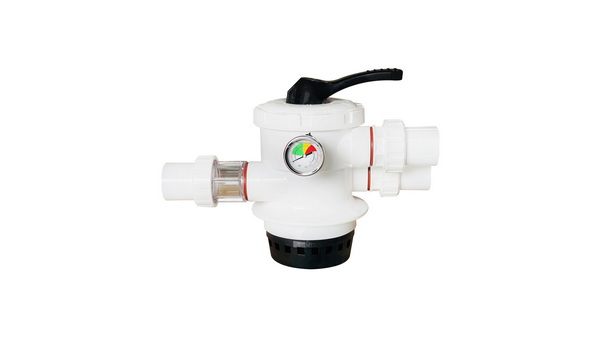
Pool filter valves in France include manual and automatic multiport valves, selector valves integrated with filters, and specialized valves for aquaculture and recirculating systems. Many Pool Filter Valve Manufacturers and Suppliers in France design valves that support multiple functions such as filtration, backwash, rinse, waste, recirculation, and closed positions to simplify maintenance.[4][5][6][7]
- Common valve sizes: 1½", 2", and 4" multiport valves designed for both top‑mount and side‑mount sand filters and other filter types.[8][4]
- Application sectors: private pools, hotel and campsite pools, public aquatic centers, spas, aquaculture facilities, and industrial water circuits.[5][7]
Several well‑known brands serve the French market either as domestic manufacturers or as European/global suppliers of filter valves and filtration equipment. These Pool Filter Valve Manufacturers and Suppliers offer valves as standalone products or integrated with sand, cartridge, and DE filters.[9][10][1][2]
- ACIS (France): Produces sand filters and filtration sets, pairing them with compatible valves designed for durability and easy installation.[11][10]
- Aqualux and Poolex: Focus on filtration groups for residential pools, with integrated valves and compact filter‑pump units optimized for energy saving.[12][1]
- AstralPool (Fluidra Group): Supplies a wide range of multiport selector valves used on filters throughout France and Europe, with 6‑way valves covering filtration, emptying, backwash, circulation, and rinsing.[13][4]
- Aquaculture France: Specializes in manual and automatic multiport valves for sand filters used in pools, aquariums, and recirculating aquaculture systems.[7][5]
- Syveco: A French master stockist of industrial valves and fittings for heating, sanitary, ventilation, and swimming pool circuits, providing a broad range of valve solutions to wholesalers.[14]
- Waterway Europe, Emaux, Pentair, and other European brands: Supply valves, filters, and fittings to French Pool Filter Valve Manufacturers and Suppliers and to OEM partners across Europe.[15][16][9]
Pool Filter Valve Manufacturers and Suppliers in France offer a mix of manual and motorized valves to match different system designs, budgets, and automation levels. The choice depends on flow rate, filter size, installation space, and whether the pool is residential or commercial.[8][4][5][7]
Common types include:
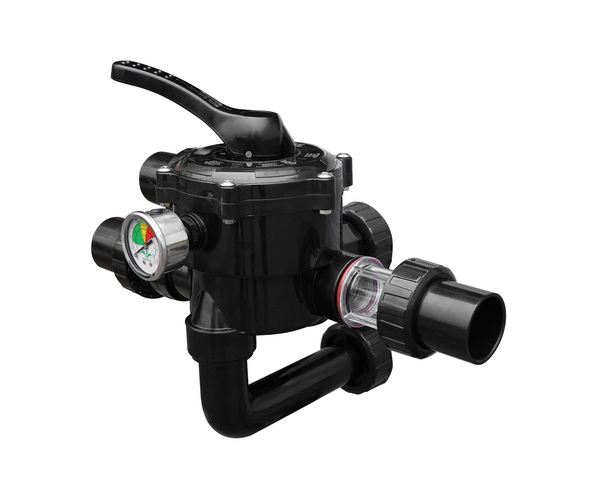
- Manual multiport valves: Traditional 6‑way valves with a handle on top or on the side, widely used on residential and small commercial sand filters.[6][5]
- Automatic multiport valves: Motorized valves that perform filtration, backwash, and rinse cycles automatically according to timers or sensor data, ideal for larger or heavily used pools.[7]
- Selector valves integrated with filters: New‑generation valves designed to couple directly to the filter body, minimizing leaks and simplifying installation.[4]
- High‑capacity commercial valves: Large 4" side‑mount valves for high‑flow commercial filtration systems in water parks, competition pools, and resorts.[8]
French and European Pool Filter Valve Manufacturers and Suppliers emphasize reliability, hydraulic performance, and user‑friendly operation. Their valves are engineered to maintain correct flow distribution across sand, cartridge, or DE filter media while minimizing pressure loss and water hammer.[1][9][4][8]
Key technical features often include:
- Robust materials: ABS or reinforced plastics with corrosion‑resistant internals for long service life in chlorinated or saltwater pools.[16][8]
- Clear labeling: High‑contrast, easy‑to‑read position labels and ergonomic handles designed for both homeowners and service technicians.[17][6]
- Multiple ports and unions: Standardized port sizes and union connections for quick installation and retrofits on different filter brands.[18][8]
- Tight sealing: High‑quality gaskets and diverter assemblies to prevent bypass and ensure proper backwashing.[4]
- Compatibility: Valves designed for both top‑mount and side‑mount configurations and for use with sand, glass media, and sometimes multi‑layer filtration beds.[10][8]
France has strong environmental and energy regulations that influence how Pool Filter Valve Manufacturers and Suppliers design filtration systems. Valves contribute to sustainability by optimizing backwash cycles and reducing water and energy waste.[3][1]
Important sustainability aspects include:
- Water‑saving backwash design: Valves and filters configured to require shorter backwash cycles, reducing total water usage per season.[3][1]
- Low‑resistance flow paths: Internal geometry designed to reduce pressure drop, allowing pumps to run at lower speeds while maintaining circulation.[19][12]
- Solar‑compatible systems: Filtration groups that can be integrated into solar‑powered or high‑efficiency pump systems for lower operating costs.[19][3]
Many Pool Filter Valve Manufacturers and Suppliers in France and Europe are open to OEM and private label cooperation with international partners. French brands often collaborate with high‑tech overseas factories for components such as filters, tanks, pumps, and accessories, while offering localized engineering, testing, and market support.[2][9][1]
For foreign brands, wholesalers, and manufacturers, working with French Pool Filter Valve Manufacturers and Suppliers can deliver:
- Co‑branding and private label options on valves, filtration sets, and complete equipment kits.[1][2]
- Compliance with EU standards such as CE and RoHS, helping products enter multiple European markets efficiently.[2][1]
- Access to R&D teams focused on automation, smart pool integration, and eco‑design.[19][2]
When selecting Pool Filter Valve Manufacturers and Suppliers in France, international buyers should consider technical, commercial, and service factors. This ensures long‑term reliability and competitiveness in their target markets.[9][15][1][2]
Key evaluation points:
- Certification and standards: Check for EU and French compliance, including CE marks and relevant quality certifications.[1][2]
- Product range: Prefer suppliers offering valves compatible with sand, cartridge, and DE filters, as well as manifolds, pumps, and related accessories.[10][2]
- OEM flexibility: Confirm customization options for branding, packaging, and technical specs such as port size, flow rate, and materials.[16][9]
- Logistics and after‑sales support: Ensure reliable lead times, spare‑parts availability, and technical assistance in English and other major languages.[15][2]
In many cases, French brands collaborate with specialized Chinese factories for components such as sand filters, tanks, and accessories, then integrate or pair them with French‑designed valves and control systems. This hybrid model allows Pool Filter Valve Manufacturers and Suppliers in France to balance cost efficiency, innovation, and branding.[9][2][1]
International buyers can benefit from:
- Combined strengths: French engineering and certification paired with competitive, high‑volume manufacturing from trusted Chinese OEM partners.[9][1]
- Broader product portfolios: Valves, filters, pumps, LED lights, and accessories supplied as complete packages ready for distributors and project contractors.[15][2]
- Scalable capacity: Ability to support large seasonal orders for global markets, including Europe, North America, and the Middle East.[2][9]
Correct installation and operation are crucial to maximizing the performance of pool filter valves from any manufacturer. Following best practices also minimizes leaks, downtime, and warranty issues.[17][10][8][4]
Recommended tips:
1) Match valve and filter size: Always verify valve port size, filter connections, and flow rating before ordering and installing.[18][8]
2) Use appropriate unions and seals: Install original or compatible unions and check gasket seating carefully to avoid bypass and drips.[8][4]
3) Shut pump off before switching: Never move the valve handle while the pump is running, to prevent internal damage and water hammer.[17][4]
4) Plan regular backwashing: Follow manufacturer guidelines for backwashing frequency based on pressure readings and water clarity.[10][3]
5) For automatic valves: Ensure correct wiring, programming of cycles, and periodic inspection of actuators.[7]
France has positioned itself as a premium yet flexible source of pool equipment, including valves, filters, pumps, and automation. For brands seeking to differentiate their Pool Filter Valve Manufacturers and Suppliers portfolio, working with French partners can add perceived value and compliance benefits.[1][2][9]
Advantages include:
- Reputation for quality and design, supported by modern production facilities and strict testing.[2][1]
- Strong export networks and multilingual support teams who understand distributor and OEM needs.[9][2]
- Integration with broader European supply chains, enabling access to complementary equipment from leading regional brands.[19][9]
Pool Filter Valve Manufacturers and Suppliers in France and Europe provide a comprehensive ecosystem of manual and automatic valves, paired with advanced filtration and automation technologies. Their focus on sustainability, certification, OEM cooperation, and user‑friendly engineering makes them attractive partners for international brands, wholesalers, and project contractors.[1][2][9]
By carefully evaluating certifications, product range, OEM flexibility, and after‑sales support, global buyers can build reliable supply chains for pool filter valves and filtration equipment. Combining French design with high‑quality manufacturing and smart marketing assets such as videos and technical imagery helps distributors stand out in a competitive pool equipment market.[15][2][9][1]

The most common types are 6‑way manual multiport valves used on sand filters, along with a growing share of automatic multiport valves for larger or more automated systems. In addition, selector valves that couple directly to filters are increasingly popular for compact filtration groups in residential installations.[12][5][4][7]
Yes, many French and European Pool Filter Valve Manufacturers and Suppliers offer OEM and private label services, including custom branding, packaging, and specification adjustments. These services are particularly targeted at foreign brand owners, wholesalers, and manufacturers who want to expand their product catalogs with reliable European equipment.[2][9][1]
Most multiport valves are primarily designed for sand filters, but many brands also engineer valves and manifolds that work with cartridge and DE filtration systems. Buyers should always check compatibility with the specific filter model and media type recommended by the manufacturer.[17][4][10][8]
French manufacturers integrate sustainability through energy‑efficient filtration groups, valves with low pressure loss, and designs that reduce water consumption during backwash cycles. Many systems are also compatible with variable‑speed pumps and solar‑assisted setups to further cut energy use.[12][3][19][1]
Buyers should focus on certifications, breadth of valve and filter product lines, OEM flexibility, logistics capabilities, and technical support. Evaluating these factors ensures a stable and scalable partnership that supports both retail and project‑based sales in different regions.[15][9][1][2]
Yes, European brands such as Pentair Pool Europe, Fluidra/AstralPool, and other regional manufacturers supply valves, filters, and accessories to the French market and beyond. These brands often operate integrated European logistics networks and collaborate with French distributors and pool specialists.[19][9][15]
[1](https://www.poolkingfilter.com/top-pool-filter-manufacturers-and-suppliers-in-france.html)
[2](https://www.poolkingfilter.com/top-swimming-pool-equipment-manufacturers-and-suppliers-in-france.html)
[3](https://www.filtration-ecologique-piscine.com/en)
[4](https://www.astralpool.com/en/en/filtration/multiport-valves/new-generation---selector-valve-with-coupling-to-filter.html)
[5](https://aquaculturefrance.com/en/189-vannes-multivoies)
[6](https://www.astralpool.com/en/en/filtration/multiport-valves/1-----multiport-side-outlet-with-filter-connections---flat/flat-1---lateral-multiport-valve-with-filter-connections.html)
[7](https://aquaculturefrance.com/en/198-vannes-automatiques)
[8](https://emauxgroup.com/products/selector-valve-and-accessories/4-0-inch-multiport-valve/)
[9](https://www.poolkingfilter.com/top-swimming-pool-equipment-manufacturers-and-suppliers-in-europe.html)
[10](https://acis-france.com/en/gamme/sand-filters/)
[11](https://acis-france.com/en/gamme/filtration-solutions/)
[12](https://www.poolex.fr/en/catalogue/swimming-pool-filtration)
[13](https://www.astralpool.com/en/en/filtration/multiport-valves/new-generation-2---multiport-valve/multiport-valve-2----configuration-2.html)
[14](https://www.syveco.com/en/our-company)
[15](https://www.waterwayeurope.com)
[16](https://emauxgroup.com)
[17](https://www.c-m-p.com/pool-products/valves/multiport-valves/)
[18](https://www.espinosa.fr/en/pool-filter/27021-11-2-classic-plus-multiport-valve-for-astral-side-strainers-73950.html)
[19](https://www.pentairpooleurope.com)
[20](https://fenixpool.fr/en/products/pool-filters/massif-series)


