
Views: 222 Author: Tina Publish Time: 2025-11-14 Origin: Site


Content Menu
● Why Your Pool Needs a Custom Ladder
● Planning Your Pool Ladder Project
>> Measuring and Designing Your Ladder
● Selecting Materials and Tools
>> Step 1: Planning and Layout
>> Step 2: Cutting and Preparing Materials
>> Step 3: Assembling Steps and Rails
>> Step 4: Ladder Stabilization and Safety Features
>> Step 5: Poolside Installation
>> Step 6: Final Quality Check
● Common Mistakes and How to Avoid Them
● Advanced DIY Options and Accessibility
● Safety Tips for Pool Ladder Installation
>> 1. How do I determine the right ladder size for my pool?
>> 2. Can I use the same ladder for inground and above-ground pools?
>> 3. How can I make my pool ladder safer for kids?
>> 4. What are the best materials for a DIY above ground pool ladder?
>> 5. How often should I inspect or maintain my pool ladder?
A reliable, safe, and easy-to-build pool ladder is essential for any above-ground pool setup, especially for families and pool owners who value comfort, accessibility, and safety. This comprehensive guide walks you through every step—from planning and material selection to construction and installation—while providing access to detailed images and demonstration videos. Whether you're upgrading an old ladder or building a custom entry system, this article ensures you have all the knowledge, visual aids, and professional tips needed to succeed.[1][2][3][4][5]
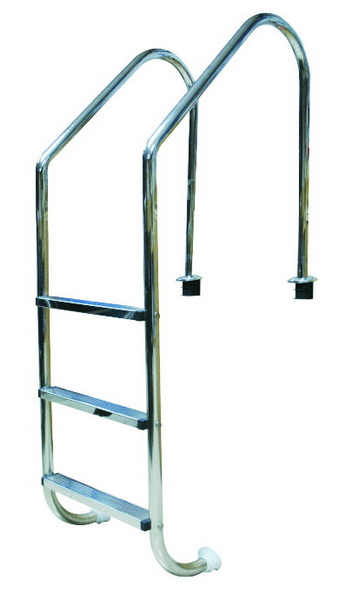
A sturdy above ground pool ladder provides secure entry and exit, helps prevent accidents, and adds convenience for swimmers of all ages. Custom ladders accommodate unique pool heights, deck designs, and individual user requirements, creating a tailored pool experience without sacrificing safety or aesthetics.[6][5][7]
- DIY ladders let owners select materials for durability and safety.
- A custom build means sizing for your pool, preferences, and local regulations.
- Many pool owners find that building their own ladder saves money and enables easy customization.[8][9]
Before buying parts or starting construction, accurate measurement ensures the ladder will be safe and fit well.[3]
- Measure pool wall height from ground level to the top rail and water depth where ladder will be installed.
- Decide if the ladder will connect to a deck, stand independently (A-frame), or be built as steps.
- Sketch your ladder to determine total height, width, number of steps, and handrail placement.
| Ladder Type | Features | Ideal For |
|---|---|---|
| Classic | Rests on pool edge | Standard entry |
| Deck Ladder | Anchors to a pool deck | Pools with deck |
| A-Frame | Freestanding outside pool | No deck pools |
| Wide Steps | Flat, stable step surfaces | Higher pools |
[9][3]
For a 3-5 step ladder or platform, consider these materials (customize based on your design):[2][8]
- 30 x 8"x8"x16" concrete blocks
- 5 x 4"x6"x8' treated lumber (Douglas fir recommended)
- Stainless steel fasteners and brackets (rust-resistant)
- Pool-grade PVC pipe (for lightweight options)
- Non-slip rubber pads for step covers
- Concrete adhesive (for permanent setups)
- Sandpaper or metal file for smooth edges
- Silicone sealant for waterproofing joints
Reference demonstration:
- Screwdrivers, drill, and level for assembly
- Pencil or marker for marking bracket positions
- Tape measure for accuracy
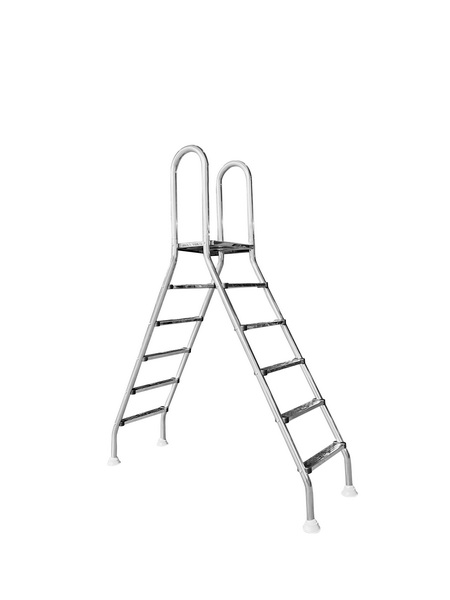
Begin by organizing all materials and laying out parts for assembly:[1]
- Place blocks and lumber in intended ladder orientation.
- Confirm step spacing and total length matches pool measurements.
- Check that all fasteners, brackets, and adhesives are ready.
- Saw lumber to match step size and secure with brackets on each end.
- Sand all rough edges and file any metal parts to prevent injury.[8]
- Apply silicone or rubber pads to each step for non-slip grip.
- Pair side rails with steps using labeled sides (“A” and “B” labels used in commercial kits).[1]
- Bolt or screw together rail and step junctions, checking alignment at each stage.
- Add handrails if desired—PVC pipe or wood can serve as safe, rounded handrails.
- Place ladder beside the pool and thoroughly test for stability.
- Add concrete glue for permanent installations; check side-to-side wobble.
- Confirm handrails are firmly attached and easy for all family members to grip.[6]
- Position ladder at the pool for optimal entry and exit.
- For deck-mounted ladders, secure anchors or brackets to the deck.
- For A-frame or freestanding ladders, ensure base sits level and ladder is at least three feet away from pool edge.[5]
- Have someone climb the ladder while another inspects for wobble.
- Tighten hardware, reapply adhesive if needed, and make sure ladder feet are in good contact with the ground.[13]
- For removable ladders, check locking or barrier mechanisms for child safety.[6]
- Using untreated wood or low-quality fasteners: Always select materials designed for outdoor and poolside use for longevity.[13]
- Insecure bracket installation: Tighten and check each bracket; reinforce with glue and additional hardware where needed.[14]
- Ignoring non-slip surfaces: Avoid bare wood or metal—always apply non-slip pads to prevent slips, especially for children.[6]
- Insufficient ladder stabilization: Test all ladder connections and ground contact before use to avoid dangerous accidents.[13]
- Building wider steps for easier access—especially for elderly or disabled users.[13]
- Adding solar-powered step lights or custom poolside illumination for nighttime safety and style.[15]
- Using removable or lockable ladder systems to prevent children from entering pool unsupervised.[6]
- Incorporating handrails and fencing for extra security.[13]
- Never allow more than one person on the ladder at a time.[5]
- Always supervise children and educate about ladder safety.[6]
- Inspect ladder and steps monthly for wear, loose bolts, or cracks.[13]
- Use anchors, bolts, or pads for extra ladder security.[14]
- For accessibility, explore wheeled pool lifts or adaptive entry systems for users with mobility challenges.[16][13]
Building a custom above ground pool ladder is a rewarding DIY project that enhances safety, convenience, and enjoyment for all pool users. With the right materials, accurate measurements, and diligent installation, even first-time builders can create a sturdy, attractive ladder tailored to their space. Always prioritize safety features—non-slip steps, handrails, secure base, and child-proof access—and maintain your ladder regularly. Leverage videos, images, and professional resources for every step, and enjoy a safer, more accessible pool season.[8][5][2][6][13][1]
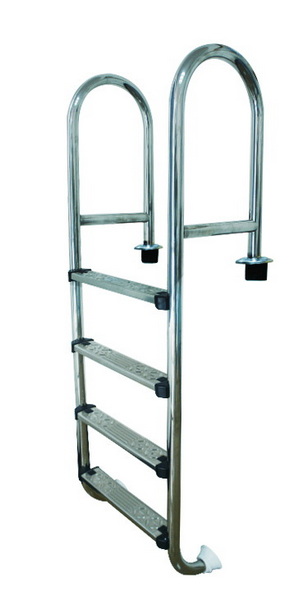
Measure the pool wall height and water depth, then select a ladder that is several inches taller than the wall and has steps deep enough for safe entry.[9][3]
No, ladders are engineered for specific pool types and heights. Always choose a ladder designed for your setup for proper fit and safety.[16]
Select ladders with removable or lockable features, wide non-slip steps, easy-to-grip handrails, and install barriers when the pool isn't in use.[6][13]
Use treated lumber, stainless steel or pool-grade PVC, concrete blocks, and always add non-slip surfaces to minimize the risk of slips, wear, or corrosion.[11][8][2]
Monthly checks for tight bolts, cracks, and alignment are recommended. Replace any worn components immediately and reapply sealant as needed.[14][13]
[1](https://www.youtube.com/watch?v=JJkG7vsan1E)
[2](https://www.youtube.com/watch?v=mvT1GMwOkK8)
[3](https://blog.watsons.com/blog/install-above-ground-pool-ladder)
[4](https://www.youtube.com/watch?v=h0d8-jKVffI)
[5](https://sternsbackyard.com.au/blogs/news/safety-tips-for-installing-and-using-above-ground-pool-ladders)
[6](https://www.poolfencediy.com/blogs/blog/pool-ladder-safety)
[7](https://www.reddit.com/r/AboveGroundPools/comments/1jaauys/pool_step_plans/)
[8](https://www.poolkingfilter.com/how-to-build-above-ground-pool-ladder.html)
[9](https://intheswim.com/blog/above-ground-pool-step-buyers-guide.html)
[10](https://www.tiktok.com/@krazygirl.80/video/7248810623243455790?lang=en)
[11](https://www.facebook.com/groups/637529959937311/posts/2618273518529602/)
[12](https://www.youtube.com/watch?v=AcVIHFSLCTY)
[13](https://blog.watsons.com/blog/make-above-ground-pool-ladder-stable)
[14](https://www.justpoolladders.com/faq/)
[15](https://www.instagram.com/reel/DM0AbFMx_13/?hl=en)
[16](https://www.mavaquadoc.com/blogs/pool-maintenance-blog/pool-ladders-steps-and-handrails-faqs)
[17](https://www.youtube.com/watch?v=x-xSSDDMSu4)
[18](https://www.facebook.com/groups/637529959937311/posts/2635564603467160/)
[19](https://www.facebook.com/emyludesigns/videos/above-ground-pool-glow-up-we-finally-ditched-our-ugly-above-ground-pool-ladder-f/1490575168965485/)
[20](https://www.facebook.com/Swimaboveground/videos/above-ground-pool-ladders-and-steps/1313026662122796/)


