
Views: 222 Author: Tina Publish Time: 2025-11-10 Origin: Site


Content Menu
● Why Choose a Heavy Duty Pool Ladder?
● Key Features of a Heavy Duty Pool Ladder
● Materials Selection: Professional-Grade Options
>> Wood and PVC
>> 2. Cutting and Preparing Parts
● Advanced Safety and Maintenance Tips
● Manufacturer's Perspective and International OEM Considerations
● Bonus: Popular Design Variations
>> Platform Ladder (with Deck Integration)
>> A-Frame and Double-Sided Styles
● Frequently Asked Questions (FAQ)
>> 1. What is the recommended material for a heavy duty pool ladder?
>> 2. How do I anchor my ladder securely?
>> 3. What should the weight capacity be for heavy duty pool ladders?
>> 4. How often should a pool ladder be inspected?
>> 5. Can I customize ladder height and step width?
A heavy duty pool ladder is an essential accessory for any pool—whether residential, commercial, above-ground, or built-in—ensuring safe, reliable access and durability under frequent use. With millions of pool owners seeking sturdy, long-lasting solutions, DIY heavy duty pool ladders have become popular for their cost-effectiveness and customizable features. This guide provides a comprehensive, step-by-step approach for both experienced builders and first-time hobbyists, with rich visual content, technical advice, and manufacturer insights.
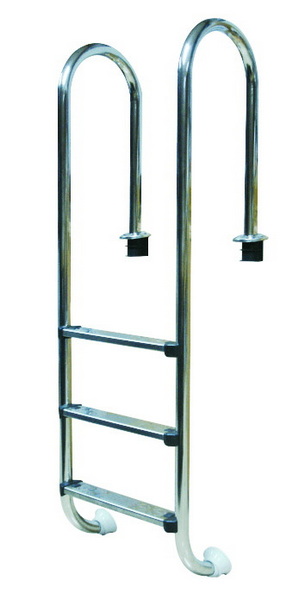
Heavy duty pool ladders differ significantly from standard versions by offering a higher weight capacity, robust construction, and enhanced safety features. These ladders are designed to withstand daily use, various climates, and users of all ages and body types. They're essential for commercial pools and crucial for families with small children or elderly members, providing peace of mind for everyone.[10][11]
- Supports up to 400 lbs or more
- Extra-wide, textured, non-slip steps
- Reinforced, corrosion-resistant materials
- Sturdy handrails and top platform
- Customizable step count and width for specific pool styles[11][12]
- Compatible with above-ground and in-ground pools
- Stability reinforcements (e.g., sand-filled legs, deck bolts)
Stainless Steel Tubing: Premier choice for resistance to rust, structural strength, and longevity, especially in saltwater and high-chlorine environments.[13]
Powder-Coated Steel: Offers extra rust resistance and aesthetics, available in multiple colors.[12]
High-Density Resin: Lightweight, cool to the touch, and corrosion-proof, ideal for step surfaces and handrails in hot climates.[12][13]
HDPE (High-Density Polyethylene): Used in some commercial grade ladders for its non-reactivity and resilience.
Pressure-Treated Timber/Composite Wood: Best for custom builds; strong, widely available, and affordable when properly finished.[14][15]
PVC Pipe: Suitable for DIY lightweight ladders; requires careful reinforcement.[15][16]
Stainless Steel Bolts/Deck Screws: Impervious to moisture and pool chemicals.
Non-Slip Tape/Grip Pads: Essential for every step surface, available in peel-and-stick or adhesive types.
Cinder Blocks/Concrete Pads: Often used as base support for added stability on soft ground.[17][15]
- Measure Your Pool Wall Height: Common wall heights are 48", 52", or 54". Sketched design should specify number of steps (3–6), width (18–24"), and handrail length.[6][14][15]
- Select Materials: Refer to your pool's climate, size, and whether you prefer metal, resin, or wood components.
- Gather Tools: Hacksaw, screwdriver, wrench, drill, measuring tape, sandpaper, sealant/paint, grip tape.
- Side Rails: Cut two rails to desired ladder length. For metal rails, use a hacksaw; for wood, apply smooth cuts and sand edges.[18]
- Steps/Treads: Cut non-slip step boards to length; resin steps may come pre-molded to size.[19][15]
- Handrails: Create handrails from bent stainless steel tubing or solid wood, ensuring ergonomic grip.[14][15]
- Attach Treads: Lay rails parallel, mark step spacing (10–12" apart), pre-drill holes, and attach steps securely with bolts/screws.[1][14]
- Install Handrails: Mount handrails at a 45° angle for safe support, securing with matching fasteners. Use washers to ensure tightness.[1][6]
- Create Top Platform: A flat platform at the pool's ledge offers improved user stability; bolt securely to rails.
- Sand Fill Legs: Pour dry sand into hollow ladder legs to add downward weight and prevent floating.[1]
- Deck Mounts and Base Pads: Install anchor brackets or use cinder/concrete pads to anchor ladder base.[15]
- Entrapment Barriers: Attach if included/to minimize swimmer risk under ladder area.[1]
- Non-Slip Steps: Adhesive grip pads, resin step covers, or texture paint for anti-slip surfaces.
- Edge Smoothing: Sand or file down all edges—particularly on wooden or resin ladders.
- Seal/Coat Surfaces: Use waterproof sealant or marine-grade paint for all exposed wood or non-stainless metal.
- Height Adjustment: Trim rails as needed to fit your exact pool wall.[6]
- Attach to Pool Wall: Bolt top platform to pool deck, drill pilot holes if necessary.[1]
- Final Check: Test all fasteners, apply downward pressure, and inspect each step for anchoring integrity.[3][8]
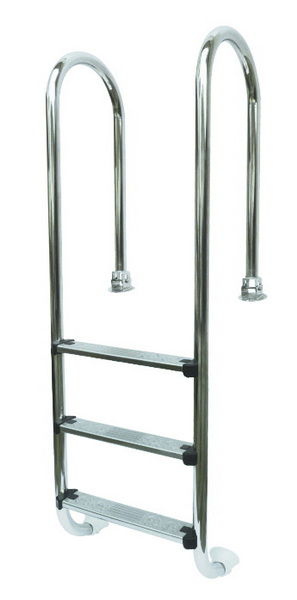
1. Regular Inspection: Check all bolts, steps, and handrails before each swim season and after heavy use. Tighten, replace, or repair immediately.[13][1]
2. Seasonal Removal: Protect materials from harsh winter conditions or storms by removing or covering ladder.[1]
3. Avoid Diving: Never dive or jump from a pool ladder; clearly label safety warnings.[4]
4. Weighted Legs: Always fill any hollow legs with sand, water, or mount weights; this keeps ladder base stable.[15][1]
5. Entrapment Prevention: Use barrier attachments to block off gaps beneath steps.[1]
6. Outdoor Longevity: Prefer stainless steel or resin for outdoor pools, as untreated metals and unsealed wood degrade rapidly.
For factories and professional OEM suppliers, producing heavy duty pool ladders requires strict adherence to international standards like ASTM F1346 and EN 16582. Automated cutting, welding, and molding machines ensure tight tolerances and repeatable quality. Surface finishing is vital—electropolished stainless steel, UV-resistant resin, and robotically applied anti-slip coatings guarantee durability and user safety.
Chinese manufacturers specializing in sand filter systems, pumps, LED pool lights, and accessories frequently offer custom ladder designs with client-branded features. OEM orders often require technical documentation, full CAD drawings, and sample reviews. Export standards require robust packaging, detailed assembly instructions, and support for variable pool heights and local code compliance.[1]
- Features a large top deck platform for easy access and poolside seating
- Requires deck anchors and extra-wide step pads
- Step section lifts when not in use, preventing unauthorized access and adding security[6]
- Out-of-the-way design for pool cleaning and safety
- Perfect for above-ground pools, these ladders have step access from both sides, allowing easy entry/exit
- For seaside or saltwater pools, always select 316-grade stainless steel for maximum corrosion resistance.[13]
- In cold climates, removable ladders are preferable to prevent freeze damage.
- For high-traffic commercial pools, industrial resin and anti-microbial coatings extend product life and hygiene.
- Rinse ladder after each swim session, particularly in saltwater.[13]
- Inspect for rust, corrosion, and hardware loosening monthly.
- Reapply sealant, paint, or non-slip covers yearly, or as needed per manufacturer guidelines.
- Store indoors or under a pool cover in the off-season for maximum lifespan.
Building a heavy duty pool ladder is both functional and rewarding. It increases pool safety and comfort, adds value, and can be tailored to suit any design vision or technical requirement. Whether you opt for stainless steel, resin, wood, or PVC, adherence to detailed construction methods, careful material selection, and regular maintenance ensure your ladder stands up to heavy use year after year. Following industry best practices and manufacturer tips will help create an access solution as durable as any commercially available option, tailored specifically for your pool.
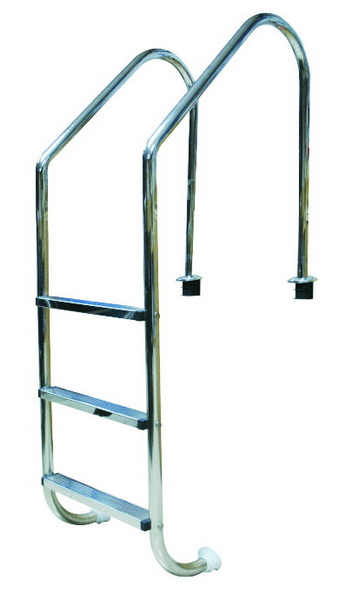
Stainless steel and high-grade resin are safest and most durable. Pressure-treated wood and reinforced PVC are viable for DIY builds when properly finished and sealed.[20][12][15][13]
Use sand-filled legs, concrete base pads, and bolt-on brackets to secure your ladder and prevent unwanted movement or floating.[17][15][1]
A minimum of 300 lbs, but commercial or high-traffic ladders are typically rated for 350–400 lbs.[21][10][11]
At the start of every swimming season and monthly during heavy use; tighten all fittings and check step surface for wear.[13][1]
Yes; measure your pool wall and desired step width, then trim rails and space steps to match your design.[6][15][1]
[1](https://www.poolkingfilter.com/how-to-assemble-above-ground-pool-ladder.html)
[2](https://www.youtube.com/watch?v=JJkG7vsan1E)
[3](https://www.intexsales.com/b2cmnl/B2CMNLServlet?instantiate=B2cMnldownloadApp&action=pub_mnl&filnam=330IO_A0_1805_EN.pdf)
[4](https://images.thdstatic.com/catalog/pdfImages/db/db34ae25-8daa-451a-8c9f-f25c27c97b44.pdf)
[5](https://manuals.plus/qa/5582064/How-do-I-assemble-the-EXIT-200x400x122cm-Pool-Ladder)
[6](https://www.familypoolfun.com/pdf/ne1222_manual.pdf)
[7](https://bestwayusa.com/bestway-above-ground-pool-ladder-48-58336e)
[8](https://images.inyopools.com/cloud/documents/103786-RG-CONFER-635-52X-PROOF1-1.pdf)
[9](https://www.vingli.com/products/vingli-swimming-pool-step-heavy-duty-pool-ladder-with-handrails-white)
[10](https://www.reddit.com/r/AboveGroundPools/comments/1dmbjtp/pool_ladder_for_fatties/)
[11](https://www.vevor.com/diy-ideas/heavy-duty-above-ground-pool-ladder/)
[12](https://blog.watsons.com/blog/best-ladder-for-above-ground-pool)
[13](https://medleypool.com/blog-details/best-materials-for-swimming-pool-ladders-pros-and-cons-of-stainless-steel-resin-and-plastic)
[14](https://www.youtube.com/watch?v=QP9lvq23BTg)
[15](https://www.poolkingfilter.com/how-to-make-a-pool-ladder.html)
[16](https://www.youtube.com/watch?v=BPzpxi47X58)
[17](https://www.facebook.com/groups/637529959937311/posts/2618273518529602/)
[18](https://100things2do.ca/diy-above-ground-pool-ladder-stairs/)
[19](https://www.youtube.com/watch?v=mvT1GMwOkK8)
[20](https://www.thebuildingcodeforum.com/forum/threads/which-materials-ladders-are-best-for-swimming-pool.22735/)
[21](https://www.facebook.com/groups/637529959937311/posts/2245819559108335/)


