
Views: 222 Author: Tina Publish Time: 2025-11-03 Origin: Site


Content Menu
● Section 1: Why Quality Installation Matters
● Section 2: Gathering Tools and Preparing Materials
● Section 3: Selecting the Ideal Ladder
● Section 4: Planning Your Installation and Measurements
● Section 5: Drilling Anchor Holes
● Section 6: Installing Anchors and Ensuring Stability
● Section 7: Mounting, Securing, and Testing the Ladder
● Section 8: Safety Finalization
● Section 9: Advanced Installation Tips
● Section 10: Special Cases—Deck-Mounted, Deep Pools, and Accessibility
● Section 11: Routine Maintenance and Seasonal Care
● Section 12: Trouble-Shooting and Manufacturer Advice
● Frequently Asked Questions (FAQ)
>> Q1: What kind of grout should be used for anchors?
>> Q2: What is the typical anchor spacing for a residential ladder?
>> Q3: How do I prevent ladder rails from rusting?
>> Q4: Can deck flanges replace in-concrete anchors?
>> Q5: What routine maintenance should be performed?
Concrete pool ladders are crucial for safe, convenient access to swimming pools. Whether managing a residential installation or supporting a large OEM project for international clients, accurate installation supports user safety, ladder durability, and compliance with global pool standards.
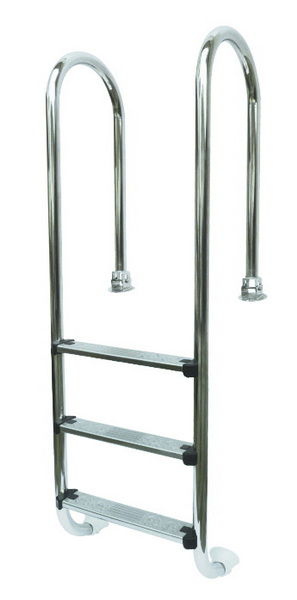
Proper ladder installation is essential for:
- Preventing slips, falls, and injuries around the pool.[11]
- Ensuring local building code compliance and avoiding fines.[4]
- Increasing equipment longevity and preventing corrosion or loosening.
- Supporting safe access for all guests—including children and seniors.
Before starting, assemble these materials:
- Hammer drill with masonry bits
- Stainless steel or resin pool ladder
- Ladder anchors/sockets
- Measuring tape, level, marker or chalk
- Socket wrench
- Safety gear (goggles, gloves)
- Concrete adhesive or non-shrink grout
- Cleaning brush or vacuum
- Ladder bumpers (for liner pools)
- Silicone sealant (optional)
- Non-slip surface mats (recommended)[6][11]
Select the best ladder for your application:
- Stainless steel: Excellent for salt, freshwater, and high-traffic pools.
- Resin: Lightweight and suitable for smaller or above-ground pools.[6]
- Wide step options: Provide improved access for seniors and children.
- Weight capacity: Ensure manufacturer ratings meet your intended use.
- Consult manufacturer instructions for specific step and rail spacing requirements.
- Standard spacing between ladder rails is typically 18–22 inches.
- Use a measuring tape and level to mark anchor points on the deck, ensuring both are equidistant from the pool wall.
- The anchor holes should be at least 12 inches from the edge for safety yet close enough to allow easy access.[11][6]
- Wear safety goggles and gloves.
- Drill perpendicular pilot holes using a 1/2-inch masonry bit, to a depth of 2–3 inches.
- Thoroughly vacuum or brush out debris for a clean anchor fit.
- Test anchor insertion before adhesive application.
- Insert ladder anchors/sockets into drilled holes and seal with strength-grade grout or adhesive.
- Orient anchor slots away from the pool for maximum grip.
- Ensure each anchor is flush with the deck surface.
- Allow adhesive to cure for up to 24 hours (manufacturer-dependent).
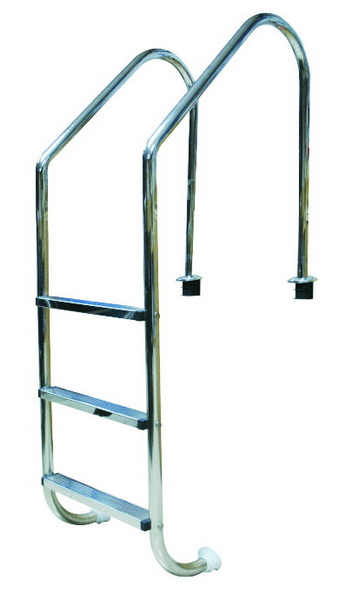
- Slide ladder rails into their respective anchors/sockets.
- Secure using bolts, wedges, or supplied hardware. Tighten evenly with socket wrench.
- Confirm vertical alignment using a level.
- For vinyl-lined pools, position bumpers to protect the liner from rail abrasion.
- Apply a bead of silicone sealant around anchor bases to prevent water infiltration.
- After adhesive cures, gently shake the ladder to confirm stability.
- Inspect all bolts, flanges, and anchors for tightness.
- Test for any movement and make adjustments if needed.
- For old, cracked, or uneven concrete, upgrade to marine-grade anchors and high-PSI grout.[11]
- Large OEM pools may require custom reinforcement, consult with an engineer for heavy-duty use.
- Use silicone sealant generously if your site is exposed to heavy rainfall or pool splash.
- Deck-mounted ladders: Use dedicated flange and brace kits—ensure all local construction code bonding requirements are met.[4]
- Deep pools: Mount ladder closer to water's edge if required.
- Accessible pools: Select ADA-compliant handrails and wide non-slip stair treads.
Maintain your ladder for user safety and extended lifespan by:
- Checking anchors, bolts, and railings monthly for corrosion or looseness.[6]
- Cleaning rails and steps with mild soap, avoiding harsh pool chemicals.
- Repairing any cracks in surrounding concrete promptly.
- Removing ladders during winter or extended closures to prevent freeze damage.
Common installation errors and remedies:
- Loose ladder: Check that bolts are tight and adhesive is fully cured. Add washers if anchors wobble.
- Rust/corrosion: Use only marine-grade steel in saltwater pools; remove rust deposits promptly.
- Misaligned rails: Re-measure and re-drill if anchor points are off. Use shims for minimal re-leveling.
- Persistent movement: Remove and reinstall anchor with fresh grout and adhesive.
Proper installation of a pool ladder in concrete is a vital engineering and safety task—especially for commercial installations and OEM brands targeting global markets. Following precise steps with quality visuals and educational video resources, you guarantee user security and maximize product lifespan. Routine checks, high-grade anchors, and comprehensive pre-planning underpin the most successful pool projects. Use the images, video demonstrations, troubleshooting tips, and maintenance advice found here and from trusted OEM suppliers to complete every installation to world-class standards.[12][4][6][11]
A: Non-shrink, high-PSI construction grout offers superior long-term stability versus standard concrete mix.[11]
A: Spacing is usually between 18-22 inches, as per most manufacturer guidelines. Always check your specific model.[11]
A: Use marine-grade stainless steel and rinse the rails regularly, especially in saltwater pools.[11]
A: Yes, for some deck-mounted ladders—but in-concrete anchors provide maximum stability for high-use pools.[4]
A: Inspect bolts, anchor stability, and steps monthly; clean with non-abrasive materials; store ladders inside during winter; and replace damaged components promptly.[6]
[1](https://blog.linerworld.com/2011/01/14/swimming-pool-ladder-installation/)
[2](https://www.intexsales.com/b2cmnl/B2CMNLServlet?instantiate=B2cMnldownloadApp&action=pub_mnl&filnam=330IO_A0_1805_EN.pdf)
[3](https://www.youtube.com/watch?v=JJkG7vsan1E)
[4](https://mrpoolman.com.au/blogs/news/easily-install-or-replace-your-pool-ladders-and-rails)
[5](https://alohapoolsusa.com/wp-content/uploads/main-access-easy-incline-deck-ladder-1.pdf)
[6](https://www.poolkingfilter.com/how-to-install-pool-ladder-above-ground.html)
[7](https://www.familypoolfun.com/pdf/ne1222_manual.pdf)
[8](http://www.vinylworkscanada.com/wp-content/uploads/2014/08/AF-Installation-Instructions.pdf)
[9](https://www.clubpiscine.ca/index.php?dispatch=attachments.getfile&attachment_id=5478)
[10](https://www.srsmith.com/media/126979/rail-installation-guide-10_2017-lr.pdf)
[11](https://ladderhitchrack.com/how-to-install-a-pool-ladder-in-concrete/)
[12](https://www.youtube.com/watch?v=T9S4w0_7CVM)
[13](https://www.youtube.com/watch?v=km3NlOGvjD0)


