
Views: 222 Author: Tina Publish Time: 2025-10-30 Origin: Site


Content Menu
● Why Fill a Pool Ladder With Water?
● Step-by-Step: How to Fill a Pool Ladder With Water
>> Gather Required Tools and Materials
>> Step 2: Remove Air From the Ladder
>> Step 4: Add Ballast (If Required by Design)
>> Step 5: Submerge and Secure
● Key Safety Considerations for Pool Ladders
● Common Mistakes and Troubleshooting
● FAQ
>> 1. How do I know if my pool ladder needs to be filled with water or sand?
>> 2. Can I use other materials besides sand or water as ballast?
>> 3. Why does my filled pool ladder still float?
>> 4. How often should I check my pool ladder for safety?
>> 5. Are there special considerations for winterizing my ladder?
Filling a pool ladder with water—or sometimes with ballast materials like sand—is a crucial step in ensuring stability and safety in your swimming pool. Whether you are installing a new above-ground or in-ground pool ladder, understanding the correct process is essential to prevent floating, wobbling, or damage to your pool liner. This guide draws from professional and user experiences and includes clear visual references to help you complete the process efficiently and safely.[1][2][3]
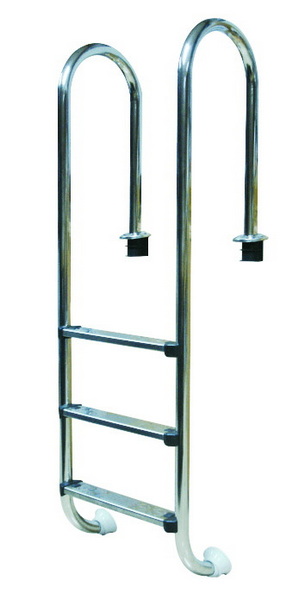
- Stability: A properly filled ladder won't float, tip, or drift, ensuring a secure way for swimmers to enter and exit the pool.[4][5]
- Safety: Reducing movement and eliminating trapped air lowers the risk of slips or accidents on the steps.[6]
- Longevity: Proper installation prevents stress and wear, extending the lifespan of both the ladder and pool liner.[7]
- Pool ladder (assembled, per manufacturer instructions)
- Garden hose (or hand pump)
- Funnel (for narrow openings)
- Pool-safe sand (for ladders requiring ballast)
- Ladder manual
- Teflon tape or silicone sealant (if specified)
- Review your ladder's assembly manual; most come with clearly marked fill holes on the legs or side panels.[1][2]
- Position the assembled ladder near the pool edge for easy access.
- Before filling, tip the ladder gently side to side and back and forth to allow trapped air to escape.[2]
- This step ensures the internal voids are accessible for water and no air pockets remain.
- Use a garden hose to fill each leg or ballast chamber through the appropriate openings at the top of the ladder.[3][2]
- If using a pump (for models where gravity can't do the job), insert the hose or pump nozzle deeply to drive out all remaining air.
- Continue filling until water starts to overflow, confirming the chamber is full.
- Some ladders, especially step models or thick-walled A-frames, require sand instead of (or in addition to) water to function as ballast.[7][1]
- Use a funnel for clean filling.
- Fill to the manufacturer-recommended weight—usually 20-30 lbs per leg or chamber.
- Cap or plug fill holes securely.
- Place the filled ladder into the pool.
- Hold the ladder under water at a slight angle to let out any remaining air bubbles; repeat on both sides until bubbling stops.[7][2]
- For deck-mounted ladders, attach hardware or anchor points as instructed.
- Test by climbing in and out to ensure the ladder is secure, doesn't shift, and does not float.
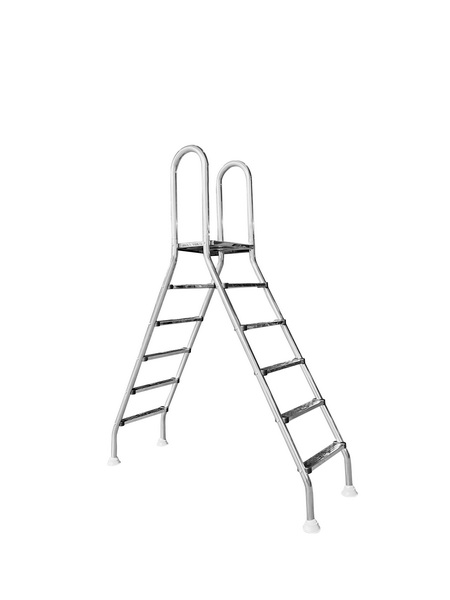
- Always supervise children near ladders or steps.[12][6]
- Ladders should have handrails and non-slip treads.[12][11]
- Never allow more than one person on the ladder at a time.[6]
- Ensure mounting hardware is tight and ladder is attached to pool or deck.
- Regularly inspect all fasteners and step surfaces for wear.[11]
- Remove, lock, or secure ladder when not in use.[12]
- Floatation Despite Filling: Sometimes, trapped air or insufficient ballast causes steps to float. Lean the ladder, agitate gently, and refill. Some models may require additional ballast like weighted bags or stone.[13][14]
- Water Leakage: Check plugs or caps for tightness and use Teflon tape if needed.
- Improper Positioning: Ensure the ladder sits fully on the pool floor, not on an angle or resting against the pool liner.
Filling a pool ladder with water—or the recommended ballast—ensures safe, secure, and durable access to your pool. By following the above steps, referencing your ladder's manual, and using the visuals and videos included, you'll achieve a professional-level installation that maximizes safety for all users. Regular inspection and proper use will extend the life of both the ladder and your pool for seasons of enjoyment.[6][11][7]
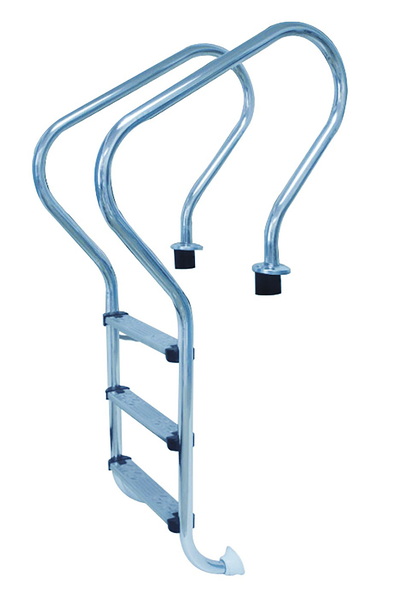
Most above-ground pool ladders are designed to accept water or sand as ballast—check your product manual for specific requirements and fill instructions.[7][1]
Yes, some users have used clean gravel, aquarium rocks, or weighted fitness bags, but always avoid materials that could puncture the ladder or pool liner.[14]
Trapped air is the most common cause. Try tilting the ladder to release air bubbles, and confirm the chamber is 100% full. Some heavier ladders may also require extra ballast.[13][7]
Check ladder stability, fasteners, and surfaces every week during swimming season, and always before children or elderly users enter the pool.[11][6][12]
Before winter, remove the ladder, drain water or sand if required by the manufacturer, and store in a dry place to prevent cracking or mold.[15]
[1](https://www.familypoolfun.com/pdf/ne1222_manual.pdf)
[2](https://www.youtube.com/watch?v=ioYl-25dDXY)
[3](https://www.youtube.com/watch?v=JJkG7vsan1E)
[4](https://blog.watsons.com/blog/install-above-ground-pool-ladder)
[5](https://www.facebook.com/marie.barbieri.9/photos/does-anyone-know-how-to-keep-this-pool-ladder-down-in-the-water/10056249504495368/)
[6](https://sternsbackyard.com.au/blogs/news/safety-tips-for-installing-and-using-above-ground-pool-ladders)
[7](https://www.thepoolfactory.com/blogs/equipment/how-prevent-pool-steps-from-floating)
[8](https://www.youtube.com/watch?v=kstTbJYtypE)
[9](https://www.youtube.com/watch?v=-qkS06U4SC0)
[10](https://www.youtube.com/watch?v=q7JE_8DIfsc)
[11](https://poolie.com/blog/general/enhance-pool-safety-with-handrail-and-ladder-installation/)
[12](https://www.poolfencediy.com/blogs/blog/pool-ladder-safety)
[13](https://www.reddit.com/r/pools/comments/1l6dbqo/pool_storeinternet_just_fill_your_stairs_with/)
[14](https://www.reddit.com/r/pools/comments/wubcro/how_to_keep_stairs_down_on_floor_instead_of/)
[15](https://www.youtube.com/watch?v=4Myn3ViypFU)
[16](https://www.facebook.com/groups/637529959937311/posts/2566425247047763/)
[17](https://www.tiktok.com/discover/how-to-fill-pool-stairs-with-water)
[18](https://www.reddit.com/r/pools/comments/vq07uu/i_just_installed_steps_but_they_tend_to_try_and/)
[19](https://www.youtube.com/watch?v=AcVIHFSLCTY)
[20](https://www.youtube.com/watch?v=kBZZrt8Gop4)


