
Views: 222 Author: Tina Publish Time: 2025-10-30 Origin: Site


Content Menu
● Why Fill Pool Ladder with Sand?
● Required Materials and Tools
● Technical Specifications: OEM Pool Ladders
● Step-by-Step Guide: Filling and Installing Pool Ladder with Sand
>> 1. Unpack and Inspect Components
>> 2. Assemble Ladder Panels and Supports
>> 3. Filling the Ballast Compartments
>> 4. Capping and Sealing Fill Holes
>> 5. Final Ladder Assembly and Hardware Installation
>> 6. Positioning and Submerging the Ladder
>> 7. Balancing, Stability, and Maintenance Checks
● Alternative Ballasting and Safety Precautions
● OEM Pool Ladder Features for Brands & Distributors
● Enhanced Pool Ladder Maintenance
>> 1. How much sand should I use for my pool ladder?
>> 2. Can I use alternatives to sand for ballasting?
>> 3. What if my ladder continues to float after adding sand?
>> 4. How do I install and secure my pool ladder for safety?
>> 5. What maintenance is needed for sand-filled ladders?
Pool ladders provide essential access and safety for swimmers, but floating or unstable steps can create hazards for users and maintenance teams. The best solution is to fill pool ladders with sand, providing the ballast needed to keep them securely anchored. This article offers a comprehensive, step-by-step guide for homeowners, installers, and international pool accessory distributors seeking OEM-quality solutions from leading Chinese factories.
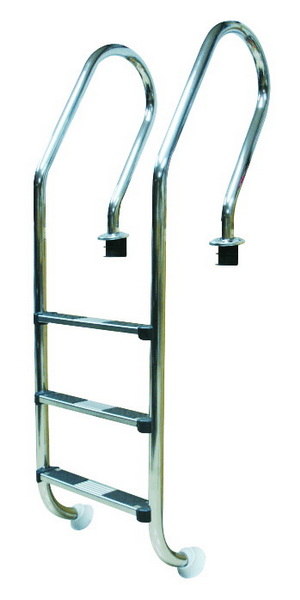
Most modern pool ladders, especially those constructed from polyethylene and resin, are hollow and will float without proper weighting. Sand is recommended because it is:
- Readily available, cost-effective, and easy to handle.[4]
- Capable of evenly distributing weight across ladder panels, improving stability.[1]
- Preferred by manufacturers for both above-ground and inground installations.[5][9]
- Non-corrosive and compatible with plastic ladder bodies.
OEM pool accessory manufacturers incorporate dedicated sand ballast compartments in their ladder designs to facilitate easy filling and optimal performance with international certification standards.
Before starting, prepare the following materials:
- Clean, dry play sand (pool-safe, 20–70 lbs depending on the ladder model).[7][1][4]
- A funnel or spout, for spill-free pouring into small fill holes.
- Screwdriver or drill for ladder assembly.
- Plugs or caps for fill holes (supplied with most OEM ladders).
- A rubber mallet for gentle panel tapping.
- Pool-grade mounting hardware (stainless steel recommended for outdoor pools).
When sourcing or installing an OEM pool ladder, key specifications to consider include:
- Material: High-density polyethylene or weather-resistant resin, with anti-slip treads for safety.[4][7]
- Max load: Typically supports up to 120–400 kg (264–880 lbs), depending on design and brand standards.[5][4]
- Ladder steps: Usually 3–4 non-slip steps, reinforced for user security.[4][5]
- Ballast compartment: Integrated, sized for easy sand filling and optimal placement.
- Installation: Snap-fit or bolted assembly, deck mounting brackets for stability.
- Dimensions: Confirm your pool depth and ladder fit (above-ground 48"–54"; inground ladders vary).[7][4]
Lay out all ladder panels, steps, handrails, and hardware. Check for dedicated sand fill holes, usually on side panels or at the base of steps. Inspect for any defects due to shipping or storage.
Connect ladder steps according to the instruction manual, securing each side panel. Most ladders use snap-together or screw-fastened joints. Firmly attach handrails for ergonomic grip and safety.
Locate each fill hole—typically:
- Two per side panel for above-ground ladders.
- One large compartment for top steps, as found in premium OEM ladders.[7]
Pour play sand slowly using the funnel. Shake or tap the panel to settle the sand and avoid air pockets. Most side panels require 20–25 lbs of sand per panel, and top step compartments may hold up to 50 lbs.[1][4][7]
Insert and tighten the fill hole plugs/caps. Use only OEM-supplied or pool-rated plugs to avoid premature degradation or sand leakage. Inspect all seals before proceeding.
Complete the ladder assembly:
- Attach handrails to the steps.
- Fit mounting flanges (included in premium OEM kits) for deck stability.
- Secure with stainless bolts and screws for corrosion protection.[7]
Check instructions for any model-specific adjustments needed for safety ratings in home or commercial settings.
With assistance, lower the fully assembled, sand-filled ladder into the pool. Hold at an angle underwater to release trapped air bubbles from the sand and hull. Gently tilt the ladder until bubbles stop, confirming stability.
Position the ladder 1 inch away from the pool wall to avoid liner abrasion. Use deck connectors or flanges and drill into mounting points for maximum security.[1][5][7]
Double-check the ladder's positioning for no floating, rocking, or shifting. If you notice movement:
- Revisit sand quantity recommendations for your model.
- Check for missed air bubbles and repeat tilting process.
- Inspect plug seals for leaks.
Maintain the ladder by regular safety inspections—check for cracks, loose bolts, or worn anti-slip treads.[7]
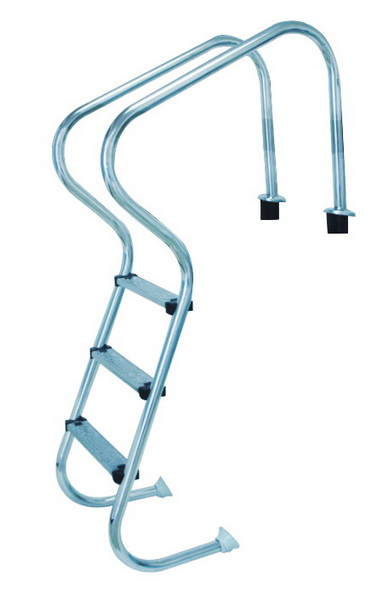
While sand is the standard for weighting ladders, some pool owners use capped PVC tubes filled with gravel or sand. OEM advice remains to always use sand for even dispersion, lower risk of ladder cracking, and compatibility with ladder compartment designs.[13]
For commercial pools, follow ANSI and local pool codes requiring corrosion-resistant ladders, slip-proof treads, and handrails positioned no farther than 6 inches from pool wall for safe grip. Always ensure hardware and ladder supports meet safety standards for public use.[8]
Leading Chinese factories provide these additional features for international partners:
- Customized ladder size, compartment shapes, and step design for branding.
- Rapid prototyping for new ladder variants.
- Integrated lighting strips for LED accent lighting.
- Compatibility with advanced sand filter and pump solutions for complete pool accessory sets.
- Independent lab testing and export compliance for global markets.[14]
To maximize the lifespan of your ladder:
- Rinse sand fill compartments after each season, refilling if necessary.
- Check plug integrity and replace worn or broken plugs with OEM parts.
- Store off-season ladders in dry locations to prevent mold growth.
- Clean non-slip treads with approved pool cleaner only—never abrasive materials.
- Lubricate moving hardware each quarter for smooth operation.
- Keep installation manuals and warranty documentation for future maintenance needs.[7]
Filling pool ladders with sand is the cornerstone of stability and safety for residential and commercial pools around the globe. With high-quality OEM solutions from leading Chinese factories, pool owners, installers, and brands benefit from precisely engineered ladder systems, dedicated ballast compartments, and stringent safety standards. Correct installation techniques—backed by thorough inspection and consistent maintenance routines—guarantee ladder security and user well-being throughout the lifespan of your pool accessory. By leveraging step-by-step visual guides and advanced OEM resources, even novice installers can achieve professional results for every pool environment.
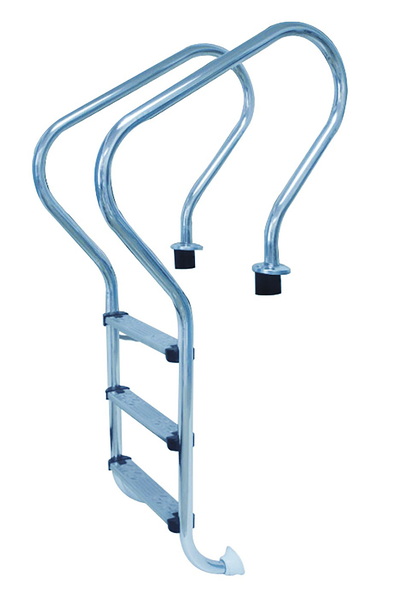
Most ladder models require 40–70 lbs, with up to 50 lbs for premium top steps and compartments. Always check your ladder's manual for exact weight recommendations.[4][1][7]
OEMs recommend play sand, but sealed sandbags or filled PVC tubes may work if designed to fit securely. Sand remains best for even distribution.[15][16][13]
Check for air pockets by tilting the ladder underwater, verify all fill holes are properly filled and sealed, and confirm that plugs are securely in place.[12][1]
Always use provided deck connectors/brackets and stainless hardware, and position the ladder following both manufacturer instructions and local safety codes.[8][5]
Inspect regularly for leaks, cracks, loose bolts, and worn treads. Rinse and refill sand annually, check plug seals, and store off-season ladders indoors.[7]
[1](https://www.thepoolfactory.com/blogs/equipment/how-prevent-pool-steps-from-floating)
[2](https://www.vingli.com/products/vingli-swimming-pool-step-heavy-duty-pool-ladder-with-handrails-white)
[3](https://www.facebook.com/groups/637529959937311/posts/1174173962939572/)
[4](https://www.grepool.com/en/ladders/inground-pool-ladders/ladder-4-steps-polyethylene)
[5](https://xtremepowerusa.com/products/above-ground-swimming-pool-ladder-heavy-duty-step-system-entry-non-slippery)
[6](https://blog.royalswimmingpools.com/how-to-fill-in-an-inground-pool)
[7](https://manuals.plus/asin/B0C5S6PHYZ)
[8](https://doh.sd.gov/media/q1cligob/standardsforswimmingpooldesign.pdf)
[9](https://www.youtube.com/watch?v=fMNH9Bui1-U)
[10](https://www.youtube.com/watch?v=kstTbJYtypE)
[11](https://www.youtube.com/watch?v=zBgR_gj8NGg)
[12](https://www.youtube.com/watch?v=-qkS06U4SC0)
[13](https://www.poolspaforum.com/forum/index.php?%2Ftopic%2F1059-weighing-pool-steps-downalternative-for-sand%2F)
[14](https://www.bonnywin.com/en/blog/oem-advantage-pool-accessories-manufacturer)
[15](https://www.facebook.com/groups/637529959937311/posts/2271632789860345/)
[16](https://www.facebook.com/chris.miller850/photos/does-anybody-have-a-ladder-like-this-and-if-so-how-are-you-keeping-it-weighed-do/122158916534439313/)


