
Views: 222 Author: Poolking Filter Equipment Publish Time: 2026-06-09 Origin: Site


Content Menu
● Quick Overview – Sand vs Cartridge vs D.E.
>> Core Comparison Table (2026 View)
● How Each Pool Filter Type Really Works
>> Sand Filters – The Workhorse of Commercial Pools
>> Cartridge Filters – High Clarity with Lower Water Use
>> D.E. Filters – Ultra‑Clear Water for Demanding Owners
● Real‑World Selection: Matching Filter Type to Pool Scenario
>> Residential Pools and Boutique Villas
>> Hotels, Resorts, and Water Parks
>> Municipal, Competition, and Therapy Pools
● Expert‑Level Factors Most Homeowners and Installers Overlook
>> 1. Lifetime Cost, Not Just Upfront Price
>> 2. Local Water Quality and Environment
>> 3. Operator Skill and Service Access
● Practical Step‑by‑Step Framework to Choose Your Filter in 2026
>> Step 1 – Define Your Priority
>> Step 2 – Match Filter to Pool Size and Use
>> Step 3 – Choose a Proven Manufacturer
● Why Work With a Specialist Manufacturer Like Poolking?
>> Engineering‑Driven Product Design
>> Support Across the Project Lifecycle
● Call to Action – Get a Custom Filtration Proposal
Choosing the best pool filter in 2026 is no longer just about sand vs cartridge vs D.E.—it is about matching real‑world usage, water quality goals, and long‑term ownership costs, backed by data and field experience from manufacturers like Guangdong Poolking. This guide combines hands‑on insights from a commercial pool filtration manufacturer with the latest industry knowledge, so you can confidently choose the right system for your residential or commercial pool. [poolking.en.made-in-china]
If you are building, upgrading, or troubleshooting a pool in 2026, your filter choice will determine day‑to‑day water clarity, chemical consumption, and lifetime maintenance costs. From large commercial facilities to boutique hotel pools and high‑end villas, the three dominant technologies—sand, cartridge, and D.E.—each shine in different niches. [intheswim]
As a manufacturer with over 20 years of experience in commercial pool sand filters, fiberglass and plastic sand filters, and cartridge filtration systems, Guangdong Poolking sees how these systems perform in the field long after installation. The industry data, combined with daily customer feedback, show that the "best" pool filter is the one whose performance profile matches the pool's size, usage pattern, and maintenance capability. [poolking]
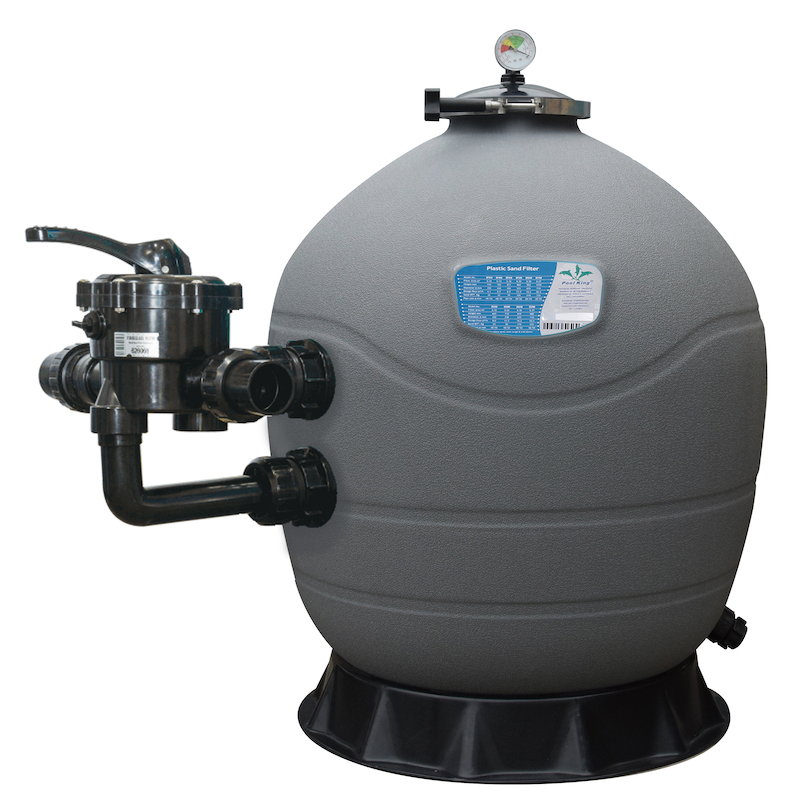
Before going deep, here is a high‑level snapshot of how each filter type behaves in real installations. [pinchapenny]
| Filter type | Typical particle size | Upfront cost | Maintenance effort | Water & energy use | Best for | Key drawback |
|---|---|---|---|---|---|---|
| Sand filter | About 20–30 microns (pinchapenny) | Low (intheswim) | Low, backwash occasionally (pinchapenny) | Higher water use due to backwashing (pinchapenny) | Large/commercial pools, busy operators (pinchapenny) | Finest clarity is weaker than cartridge/D.E. (intheswim) |
| Cartridge filter | About 10–20 microns (pinchapenny) | Medium (intheswim) | Medium, periodic cartridge cleaning/replacement (pinchapenny) | Very water‑efficient, no regular backwash (onesourcepoolsaz) | Residential, water‑conscious regions (onesourcepoolsaz) | Manual cleaning can be messy and time‑consuming (pinchapenny) |
| D.E. filter | About 3–5 microns (youtube) | Highest (intheswim) | Highest, D.E. handling & more complex operation (youtube) | Efficient but with frequent backwashing and media top‑ups (pinchapenny) | High‑end pools demanding ultra‑clear water (intheswim) | More complex, tougher learning curve, media disposal issues (youtube) |
In practice, sand filters dominate in commercial and high‑throughput pools because operators need robust, forgiving systems that can run for long cycles with simple backwashing. Cartridge filters are increasingly popular in residential and water‑restricted markets because they offer high clarity with minimal water waste, while D.E. filters serve the niche of owners willing to invest more effort for maximum clarity. [onesourcepoolsaz]
A sand filter is essentially a pressurized tank filled with specially graded silica sand or alternative media; pool water is pushed through the sand bed, where dirt and debris are trapped between grains. Standard pool filter sand captures particles down to roughly 20–30 microns, but upgraded media such as glass or zeolite can improve this, providing finer filtration and sometimes reducing chemical demand. [hyclor.com]
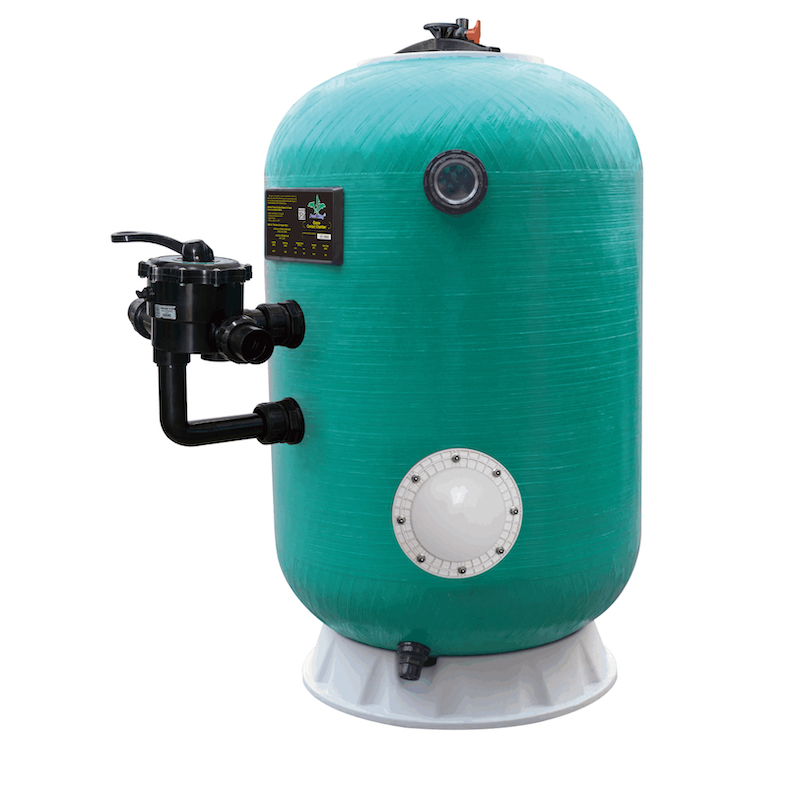
From Poolking's manufacturing perspective, fiberglass and plastic sand filter tanks with reinforced structures are widely chosen for hotels, water parks, and municipal pools because they are durable, corrosion‑resistant, and easy to integrate into centralized plant rooms. Field feedback shows that operators value simple backwashing—they monitor pressure, and once it rises about 10 psi above the normal operating level, they backwash to remove accumulated debris. [blog.chloramineconsulting]
Pros (real‑world):
- Low ownership cost over time, especially in large systems where cartridges or D.E. media would be expensive. [intheswim]
- Straightforward operation with rugged construction, particularly in fiberglass commercial tanks. [poolking.en.made-in-china]
- Compatible with different media options (silica, glass, zeolite) to tune performance. [hyclor.com]
Cons (real‑world):
- Uses more water due to routine backwashing cycles. [pinchapenny]
- Out‑of‑the‑box sand may not match the clarity of cartridge or D.E. for very demanding residential users. [blog.chloramineconsulting]
Cartridge filters use pleated polyester or fabric‑like elements housed in a plastic body, offering a large effective surface area for trapping fine debris. They typically filter down to about 10–20 microns, which translates into visibly clearer water compared with standard sand, especially when the pool is exposed to fine dust, pollen, or cosmetic products. [allfilters]
From the manufacturer's side, cartridge housings are often specified for residential and light commercial pools where water conservation and quiet, low‑pressure operation are priorities. Customers appreciate that these systems do not need regular backwashing, which reduces water and chemical loss—an important factor in regions with stricter water restrictions or higher sewer charges. [griffinpoolsandspas]
Pros (real‑world):
- Excellent clarity with smaller particle removal than standard sand. [pinchapenny]
- No routine backwashing, which saves water and retains more balanced chemistry. [onesourcepoolsaz]
- Relatively compact systems, suitable for villa pools, rooftop pools, and retrofits. [griffinpoolsandspas]
Cons (real‑world):
- Cartridges must be periodically removed and hosed down; this can be messy and time‑intensive for larger systems. [griffinpoolsandspas]
- Cartridges are consumables; over time, replacement costs add up, especially if low‑quality elements are used. [intheswim]
Diatomaceous earth (D.E.) filters coat internal grids or "fingers" with a fine powder made from fossilized diatoms, creating a highly porous yet extremely fine filtration layer. In practice, D.E. filters can remove particles down to around 3–5 microns, making them the top choice when water must look "HD clear" under strong lighting or for competition environments. [youtube]
User feedback and service reports consistently show that D.E. filters deliver outstanding clarity, but they also demand more operator skill: owners must learn how much D.E. to add, when to recharge the media after backwashing, and how to handle and dispose of the powder safely. For many commercial facilities, this added complexity is a barrier unless they have well‑trained maintenance staff. [youtube]
Pros (real‑world):
- Highest water clarity, capturing very fine particles better than sand or cartridge. [youtube]
- Strong performance in heavily used yet visually demanding pools (luxury resorts, show pools). [onesourcepoolsaz]
Cons (real‑world):
- Highest learning curve and maintenance complexity, including D.E. handling and disposal. [blog.chloramineconsulting]
- Higher upfront and ongoing costs, which may not be justified for typical residential or standard commercial pools. [intheswim]
For residential owners, clarity and convenience are usually more important than supporting very high bather loads. In 2026, cartridge filters are often the most balanced choice: they deliver clear water with moderate maintenance and minimal water loss, especially in regions with higher water costs or outdoor dust. [onesourcepoolsaz]
However, Poolking sees many villa projects and private pools opting for compact fiberglass or plastic sand filters when users prefer simple operation with minimal manual cleaning. In such cases, using premium filter media (e.g., glass or zeolite) can narrow the clarity gap with cartridge while keeping operation straightforward. [poolking]
In commercial hospitality environments, uptime and consistency are critical. Facility managers often select large horizontal or vertical commercial sand filters due to their robust structure, high flow capacity, and ease of operating with standard backwashing protocols. These systems are compatible with variable‑speed pumps, automated valve control, and central BMS monitoring, making them ideal for integration with modern plant‑room designs. [poolking.en.made-in-china]
For premium resorts that market "crystal‑clear, Instagram‑ready water," the strategy sometimes combines high‑capacity sand filters with downstream polishing methods (such as fine cartridge polishing or advanced oxidation systems) rather than relying solely on D.E. This hybrid approach balances operational reliability with top‑tier aesthetics. [allfilters]
Public and competition pools must protect large numbers of swimmers while keeping operating budgets under control. Here, robust commercial sand systems with carefully designed flow distribution and automatic backwashing remain the default, supported by precise chemical control and turnover rates that meet local codes. [pinchapenny]
Therapy pools and wellness facilities, where users are more sensitive to water quality, may pair sand filters with ultra‑fine secondary treatment or adopt D.E. in smaller therapy tanks where staff can manage the added complexity. The final choice often depends on the available technical team and regulatory requirements around D.E. discharge. [blog.chloramineconsulting]
Many buyers focus on the filter's sticker price, but manufacturers and long‑term users know that the true cost includes energy, water, consumables, and labor over 5–10 years. [allfilters]
Key lifetime cost drivers:
- Pump energy: Higher pressure drops and oversized pumps drive up energy use. [allfilters]
- Backwash water: Sand and D.E. systems periodically discharge water and chemicals. [pinchapenny]
- Replacement media: Cartridges and D.E. powder must be replaced regularly; sand and glass media last longer. [hyclor.com]
For large commercial pools, Poolking typically engineers systems with energy‑optimized pumps and large‑diameter sand filters to reduce operating pressure and extend backwash intervals, lowering both power and water consumption over time. [poolking]
Real‑world performance depends on what your filter is fighting against: dust storms, pollen, tree leaves, cosmetics, or high mineral content. In dry, dusty environments, fine airborne particles may favor cartridge or D.E. filtration, while leaf‑heavy, shaded pools must combine good skimming with robust filtration but may not require ultra‑fine capture. [griffinpoolsandspas]
Poolking's experience with export projects shows that media selection inside sand filters (pool‑grade silica versus glass or zeolite) can significantly influence performance in specific environments, helping systems handle finer particles or reduce chloramine formation when combined with proper sanitization. [poolking]
The best filter on paper is a liability if the operator cannot maintain it correctly. Sand filters offer the widest margin for error, while D.E. requires the most discipline in dosing and cleaning cycles; cartridge filters sit in between but demand manual disassembly for periodic cleaning. [youtube]
In markets where professional pool service companies are readily available, more complex systems like multi‑tank cartridge banks or D.E. filters are easier to support. In more remote areas, Poolking often recommends simplified sand systems, paired with robust pumps and clear operational manuals, to minimize downtime and errors. [poolking]
This simple framework reflects how Poolking's engineering and sales teams guide project owners every week. [poolking.en.made-in-china]
1. If your top priority is lowest cost and simple operation, start with sand. [intheswim]
2. If you care most about water saving and above‑average clarity, consider cartridge. [onesourcepoolsaz]
3. If you demand the clearest possible water and can manage more complex maintenance, evaluate D.E. or hybrid solutions. [youtube]
- Small–medium residential pools: Cartridge or compact sand systems, depending on water availability and owner preference. [griffinpoolsandspas]
- High‑use commercial pools: Large horizontal or vertical sand filters with automation. [poolking.en.made-in-china]
- Specialty pools (therapy, show pools): D.E. or sand plus polishing solutions, depending on staffing and regulations. [blog.chloramineconsulting]
Beyond filter type, manufacturing quality is crucial for long‑term reliability and safety. Look for: [blog.chloramineconsulting]
- At least 10–20 years of experience in pool equipment manufacturing. [poolking.en.made-in-china]
- Proven installations across commercial and residential projects. [poolking]
- Integrated product ranges (filters, pumps, LED lights, fittings) for system‑level compatibility and after‑sales support. [poolking.en.made-in-china]
Guangdong Poolking, for example, operates two advanced production bases in Guangzhou and Taishan City with a combined 60,000 sqm footprint, supplying sand filters, cartridge filters, pumps, LED underwater lights, and related fittings to domestic and international projects. This integrated approach simplifies design, procurement, and long‑term service for both commercial and private pool owners. [poolking]
Long‑term manufacturers continually incorporate user feedback and regulatory trends into new product iterations. Poolking's commercial sand filters and cartridge systems are designed to balance hydraulic efficiency, corrosion resistance, and ease of maintenance, with fiberglass and plastic tanks optimized for specific pressure ratings and installation environments. [poolking.en.made-in-china]
By offering a full ecosystem—filters, pumps, LED lights, fittings—the manufacturer can ensure that flow rates, head loss, and electrical loads are correctly matched from the design stage, reducing risk of cavitation, noisy operation, or premature wear. This system‑level thinking is especially important in large commercial or export projects, where coordination between multiple suppliers can introduce hidden compatibility problems. [blog.chloramineconsulting]
A specialist manufacturer can provide pre‑sales design consultation, technical drawings, and after‑sales support including recommended backwash cycles, media selection, and troubleshooting guidance. This is particularly valuable when local teams are new to commercial‑scale filtration or must comply with unfamiliar building codes and water regulations. [poolking]
For distributors and installers, working directly with a factory that has experience in multiple markets reduces the risk of undersized or oversized filter selection and simplifies logistics for projects that combine pool filters with pumps, lights, and fittings in a single shipment. [poolking.en.made-in-china]
If you are specifying a new pool or upgrading an existing system in 2026, a generic "sand vs cartridge vs D.E." answer is not enough; you need a system sized and tuned to your exact bather load, layout, and water conditions. [griffinpoolsandspas]
As a manufacturer with over 20 years of experience and two advanced production bases in Guangzhou and Taishan City, Guangdong Poolking can help you design a complete filtration solution—including sand or cartridge filters, pumps, LED lights, and fittings—optimized for your project's technical and budget requirements. To get started, contact the Poolking team with your pool dimensions, intended use, and local water quality, and request a tailored filtration proposal. [poolking]
Q1: Which pool filter type is best overall in 2026?
There is no single best type; sand, cartridge, and D.E. each excel in different scenarios, and the optimal choice depends on pool size, usage, water cost, and available maintenance expertise. [intheswim]
Q2: How often should a sand filter be backwashed?
Most operators backwash when filter pressure rises about 10 psi above the clean starting pressure, which can vary from weekly to monthly depending on bather load and debris. [pinchapenny]
Q3: Are cartridge filters really more water‑efficient?
Yes, because they do not require regular backwashing; you remove the cartridges and clean them manually, which significantly reduces water and chemical loss compared with traditional sand or D.E. systems. [onesourcepoolsaz]
Q4: Is a D.E. filter worth the extra work?
For pools that demand ultra‑clear water and have operators willing to learn proper D.E. dosing and cleaning, the clarity benefits can justify the added complexity and cost. [youtube]
Q5: How long does filter media last?
Pool‑grade silica sand or glass media in a well‑maintained sand filter can last several years, while cartridge elements and D.E. powder require more frequent replacement as part of routine maintenance. [hyclor.com]
1. AllFilters. "Pool Filter Types Compared: Sand vs DE vs Cartridge." [allfilters]
2. In The Swim. "Best Pool Filter Type: Sand, Cartridge, or D.E.?" [intheswim]
3. Pinch A Penny. "Sand, Cartridge or DE filters?" [pinchapenny]
4. One Source Pools AZ. "Cartridge vs. Sand vs. DE Filters – Which Is Best for Scottsdale Pools?" [onesourcepoolsaz]
5. Hyclor. "Best Sand for Pool Filter." [hyclor.com]
6. Chloramine Consulting. "Comparing Swimming Pool Filters." [blog.chloramineconsulting]
7. YouTube. "How to Choose a Pool Filter: Which Pool Filter is Right For You?" [youtube]
8. Griffin Pools & Spas. "Choose the Best Pool Filter for Your Needs." [griffinpoolsandspas]
9. Poolking. "Swimming Pool Sand Filters Suppliers & Manufacturers." [poolking]
10. Poolking / Made‑in‑China. "Commercial Sand Filters for Swimming Pools." [poolking.en.made-in-china]


