
Views: 222 Author: Tina Publish Time: 2025-09-14 Origin: Site


Content Menu
● Pool Pump Power Consumption: The Fundamentals
● Technical Deep Dive: Flow, Head, and Sizing
● Power Consumption Benchmarks
● Infographic: Pool Pump Energy Consumption
● Key Factors Affecting Power Use
>> Pool Features and Accessories
>> Environmental and Regional Influences
● Advanced Technologies in Pool Pumps
>> Inverter and Smart Controls
>> Solar and Hybrid Pump Systems
● OEM and Wholesale Pump Supply Advantages
● Optimizing Pool Pump Energy Use: Practical Tips
● Frequently Asked Questions (FAQ)
>> 1. How do I calculate my pool pump's power use?
>> 2. Will switching to a variable-speed pump really lower my costs?
>> 3. How many hours per day should my pool pump run?
>> 4. Do larger pumps always cost more to run?
>> 5. Are there ways to reduce pool pump power use without replacing it?
Swimming pools are a cherished feature in homes, resorts, and recreational facilities, offering relaxation, fitness, and entertainment. A pool's appeal, however, comes with ongoing commitments to maintenance and operation—among which the pool pump is the most constant and power-hungry device. In many households, the pool pump runs continuously through the peak season, critically impacting electricity bills and overall sustainability. This article explores in detail how much power a swimming pool pump uses, why it matters, and how both homeowners and B2B buyers can optimize performance, cost, and energy efficiency. Also included are technical charts, infographics, and helpful video references for comprehensive insight.[1][3][8]
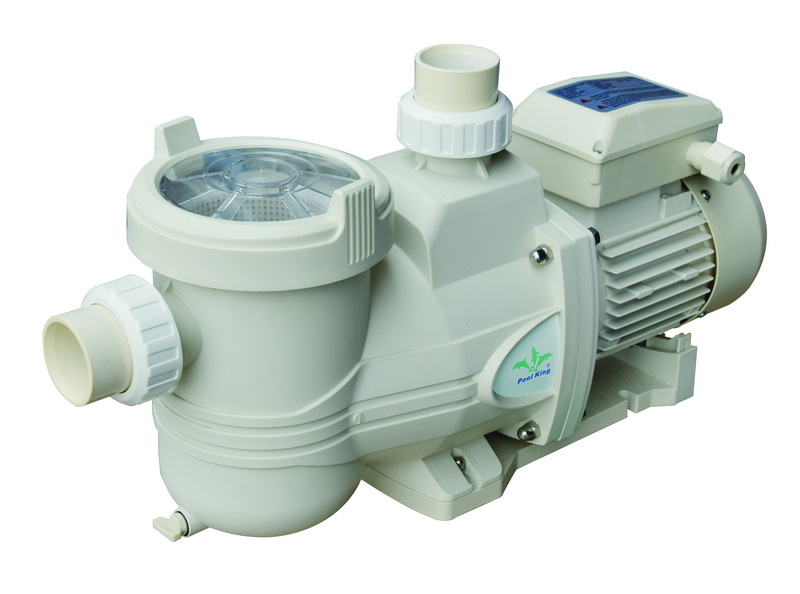
A swimming pool pump works by circulating water through filtration and purification systems, then back into the pool—removing debris and contaminants and maintaining water chemistry. The core metric for understanding a pump's electricity use is “wattage,” usually shown on the motor label. Most residential pool pumps use between 1,000 and 2,500 watts per hour, while larger or commercial units can draw even more power.[3][5][1]
- Kilowatt-hour (kWh) is the standard unit for measuring electricity usage over time.
- To calculate monthly power use:
Wattage×Run Time (hours per day)×30÷1,000=Monthly kWh
- Example: A 2,000-watt pump running 8 hours per day consumes:
2,000×8×30÷1,000=480kWh/month
To ensure optimal filtration and water quality, pump selection is based on several interrelated technical parameters:
- Standard Residential Pumps: 0.75–2.5 HP, 1,000–2,500 watts[8][1]
- Flow Rate: Measured in gallons or liters per minute, matching pool volume and turnover needs. For example, a 30,000-gallon pool requiring one turnover in 8 hours needs a pump delivering at least 60 gallons/minute.
- Refers to the resistance the pump must overcome, factoring in pipe length, diameter, bends, and height difference.
- Longer pipes and more fittings increase “feet of head,” requiring more powerful—and thus more energy-consuming—pumps.[1][8]
- Most pools require at least one full water turnover per day, typically needing 6–12 hours of pump operation, but advanced systems and well-calibrated run times can cut this closer to 6 hours during efficient usage.[5][1]
| Pump Type/Sizing | Power (Watts) | Daily Run (hr) | Monthly kWh | Typical Monthly Cost |
|---|---|---|---|---|
| Single-speed, 1 HP | 1,100 | 8 | ~264 | ~$34 (US avg.) |
| Single-speed, 2 HP | 1,500 | 8 | ~360 | ~$47 |
| Oversized, 3 HP | 2,200 | 8 | ~528 | ~$69 |
| Variable speed, eco mode | 300–800 | 8 | ~72–192 | ~$9–$25 |
- Small pools (1 HP): 1,100W/hr → 264 kWh/month
- Medium pools (1.5 HP): 1,500W/hr → 360 kWh/month
- Large/commercial (3 HP): 2,200W/hr → 528 kWh/month
- Variable speed on low: 300W/hr → 72 kWh/month
Older, single-speed pumps run at maximum output regardless of need, consuming much more energy than newer variable-speed motors. Variable-speed pumps can cut electricity usage by 60–85% by automatically adjusting flow to real-time filtration or cleaning demands.[10][5]
Water features, attached spas, in-floor cleaning systems, and long plumbing runs increase energy needs by requiring more forceful circulation.
Climate, debris load, pollen levels, and bather count determine filtration run times; hotter, debris-prone environments need longer or more intense pump operation.
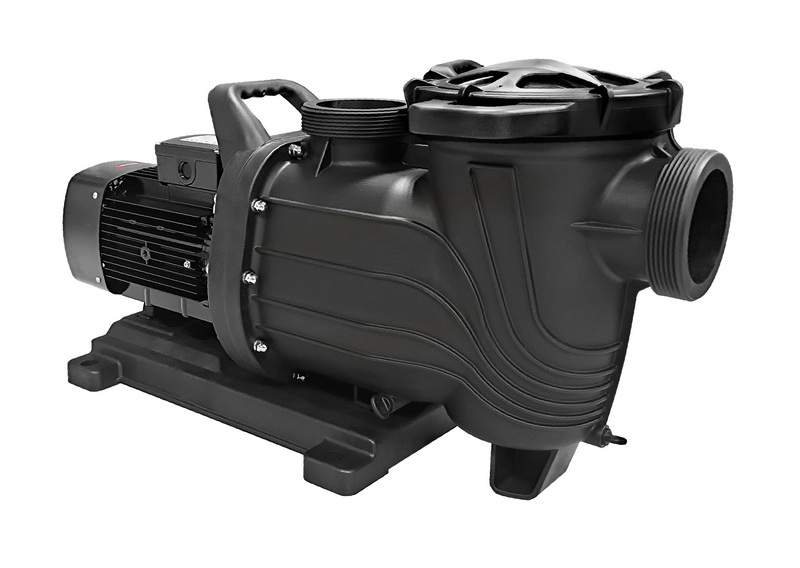
- Run at low speeds for filtration (~300 Watts), ramping up for cleaning or backwashing.
- Customizable settings, integrated timers, and Bluetooth/smart controls for optimization.
- Longer lifespan than traditional motors, often 12–15 years versus 8–10 for single speed.[10][5]
- Microcontroller-based inverters allow pumps to sense and adjust speed for best energy/performance balance, reducing operational costs significantly for OEM and commercial buyers.
- Smart pool controllers and programmable timers further optimize schedules and consumption.
- Solar-powered pumps provide low- or zero-cost daily operation where sunlight is abundant, especially for smaller or “satellite” pool systems.[9][11]
As a premier Chinese manufacturer specializing in OEM filtration solutions, we offer:
- Sand filters, DE filters, cartridge filters
- Variable-speed and smart inverter pool pumps
- LED lights and intelligent automation accessories
- Custom design for private label branding and specification sheets
Our energy-efficient pool pumps utilize advanced winding technology, precision electronic controls, and robust casing for long-life performance in all climates. Global partners benefit from tailored solutions, full CE/UL certification, and after-sales technical support.
1. Match Pump Size to Pool Needs: Avoid oversizing—a common mistake that leads to bigger bills.
2. Upgrade to Variable-Speed Tech: Significant savings over time offset the higher initial investment.[5]
3. Maintain Short, Straight Plumbing Runs: Less pipe means less hydraulic resistance, requiring less pump work.[8]
4. Regular Maintenance: Clean filters, check baskets, and keep water chemistry balanced to reduce unnecessary load.
5. Utilize Timers and Smart Controls: Schedule off-peak operation or synchronize with filtration/cleaning needs.
A homeowner with a single-speed, 2 HP (1,500 watts) pump running 8 hours daily (360 kWh/month, ~$47/month) switches to a variable-speed (300 watts) pump running the same schedule (72 kWh/month, ~$9/month), saving over $450 per year and extending pump lifespan by up to 50%.[8][10][5]
Swimming pool pumps are essential to water quality, yet represent a major share of pool operating costs. Fortunately, innovation in motor technology and control systems offers dramatic energy savings. By properly sizing pumps, choosing variable-speed or smart inverter models, modernizing system plumbing, and leveraging automation, both residential users and international buyers can realize superior performance, reduced bills, and stronger environmental stewardship. Reliable OEM partners in China are ready to supply globally with advanced, efficient, and customizable filtration equipment.
Multiply the pump's watt rating by daily operating hours, divide by 1,000 for daily kWh. Multiply by 30 for estimated monthly consumption.[2][1][5]
Yes—variable-speed pumps typically reduce energy use by up to 80%, saving hundreds of dollars annually over single-speed units.[10][5][8]
Most pools need one full turnover daily, often reachable with 6–10 hours run time if system efficiency is high.[1][5][8]
Not necessarily—proper sizing for pool volume, friction, and usage is critical. Overlarge pumps will cost more, but newer, right-sized variable models can run bigger pools efficiently.[1][8]
Yes: Use timers, lower run times in cooler seasons, maintain plumbing and filtration, and consult with experienced professionals to optimize setup.[7][5][1]
[1](https://www.agwayenergy.com/blog/how-much-electricity-does-a-pool-pump-use/)
[2](https://www.energybot.com/energy-usage/pool-pump.html)
[3](https://www.aquagem.com/news/how-much-energy-does-a-pool-pump-use)
[4](https://www.hayward-pool.co.uk/article/maintenance-of-my-pool/pool-annual-cost-electricity)
[5](https://electricityplans.com/variable-speed-pool-pump-vs-standard-pool-pump/)
[6](https://www.pool.shop/blog/calculating-the-consumption-of-a-swimming-pool-heat-pump/)
[7](https://www.canstarblue.com.au/home-garden/pool-pump-running-costs/)
[8](https://docs.nrel.gov/docs/fy12osti/54242.pdf)
[9](https://exploreindustries.com/pool-equipment/guide-to-pool-pumps/)
[10](https://www.astralpool.com.au/pool-and-spa-guides/how-much-can-you-actually-save-with-a-variable-speed-pump)
[11](https://www.hybsun.com/how-much-energy-does-a-swimming-pool-pump-use/)
[12](https://www.youtube.com/watch?v=HymAbKF8vgE)
[13](https://natural-resources.canada.ca/energy-efficiency/energy-star/pool-pumps-infographic)


