
Views: 222 Author: Tina Publish Time: 2025-12-27 Origin: Site


Content Menu
● Understanding pool ladder types
● Which side goes toward the pool?
● Orientation for above‑ground pool ladders
● Orientation for inground and deck ladders
● Step‑by‑step: checking ladder direction before use
● Common mistakes with ladder direction
● Safety, comfort, and OEM configuration
>> 1. Which way does an above‑ground A‑frame pool ladder go in?
>> 2. How do I know which side of the ladder is the pool side?
>> 3. Does ladder direction matter for inground pool ladders?
>> 4. Can incorrect ladder orientation damage my pool liner?
>> 5. How should OEM brands present ladder direction to end users?
>> 6. Where should a pool ladder be placed for maximum safety?
A pool ladder always goes in with the steps facing into the pool water and the support legs or platform facing the deck or outside of the pool wall. For A‑frame above‑ground models, one side faces inside the pool and the other side faces outside, while for in‑pool or deck ladders the curved handrails anchor on the deck and the treads drop into the water.[1][2]
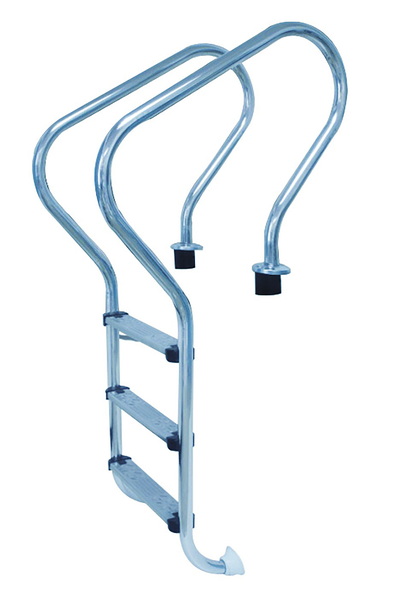
Different ladder types determine which way they go in and how they sit relative to the pool wall or deck.[2][1]
- A‑frame ladders: One ladder section sits inside the pool, the other outside, with a top platform resting on the pool wall.[2]
- Deck ladders: Curved handrails mount into anchor sockets on the deck; steps extend down into the water only.[3][4]
- In‑pool steps: Wide step units attach inside the pool wall or deck and face into the water, often with double handrails.[5][3]
- Combination step systems: Inside the pool you see broad steps; outside you see a smaller ladder for climbing up and over.[3][2]
Most modern ladders are clearly marked to show which side goes into the pool and which side points to the deck or ground.[6][7]
- Look for markings: Many above‑ground ladders have molded labels like “A” or “POOL SIDE” on the legs or feet that must face into the water.[7][6]
- Identify latch boxes and gates: On safety A‑frame ladders, the side with the safety gate or latch box is the outside; the open side without gate faces into the pool.[7]
- Check step surface and shape: Steps usually have textured, non‑slip treads on the top side and bracing ribs underneath; the tread surface must face up, into the swimming path.[5][1]
- Confirm with the manual: PDF manuals for A‑frame ladders instruct that raised areas or extension boots must face inward when assembled on the bottom step, ensuring correct orientation.[6]
Above‑ground pools use A‑frame or in‑pool style ladders, and their correct direction is essential for safety and liner protection.[1][5]
- A‑frame ladders
- Outside section: Sits on the ground; often includes a lockable or flip‑up section to block access when the pool is not in use.[5][2]
- Inside section: Faces into the pool and rests on a level pad or directly on the liner; steps must be fully submerged and parallel to the pool wall.[8][1]
- Top platform: Straddles the top rail; guard rails face along the pool wall so users step down into the water, not sideways.[9][10]
- Deck‑connected above‑ground ladders
- Handrails: Insert into deck anchors so they curve toward the pool; the vertical rails should lean slightly toward the water.[4][5]
- Lower legs: Follow the floor contour inside the pool, with rubber feet flat and fully supported.[1][5]
In inground pools and pools with built‑in decks, the ladder direction is controlled by deck anchors and the curve of the rails.[11][4]
- Handrail curve: The classic stainless‑steel ladder curves down toward the pool, not away from it; the upper ends drop into deck anchor sockets with wedges oriented away from the pool.[11][4]
- Steps and floor contact: Steps follow the slope of the pool floor and must sit flush; the lowest tread usually sits just above the deepest standing point in the entry area.[8][5]
- Anchor wedges: Many instructions specify that internal wedge mechanisms face away from the pool so tightening pulls the rail inward and keeps it stable.[4][11]
- Bonding and grounding: When the ladder is correctly oriented in bonded metal anchors, the bonding lugs remain accessible outside the socket to connect to the pool's bonding grid.[8][4]
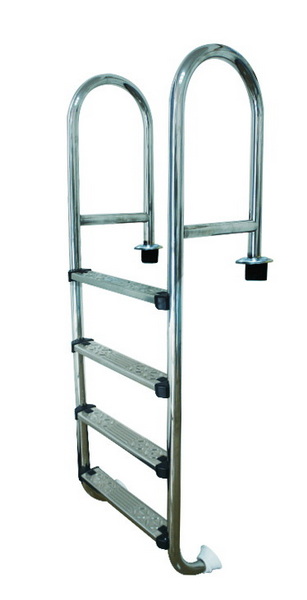
No matter the ladder type, a simple checklist helps confirm that it is facing the correct way before anyone uses it.[1][8]
1. Confirm labeling and markings
- Locate any molded letters, stickers, or embossed arrows on ladder legs, feet, and rails.[6][7]
- Verify that “pool side” labels and smooth protective panels face into the water, while latch boxes, gates, or rough back bracing face outward.[7][5]
2. Verify step alignment with pool wall
- Stand on the deck or ground behind the ladder; check that each step is parallel to the pool wall and square to the water surface.[8][1]
- Ensure the top tread or platform naturally guides the swimmer forward into the pool, not diagonally along the wall.[5][1]
3. Check feet and base pads
- Inside feet: Should rest flat on the pool floor or on a dedicated ladder pad; if a protective pad is used, it must sit under the pool‑side legs only.[5][1]
- Outside feet: Should be on level ground or deck; the ladder must not lean or torque the pool wall.[1][8]
4. Shake‑test from both sides
- Have an adult hold the handrails and gently rock the ladder; movement should feel symmetrical and directed straight into and out of the pool.[8][1]
- If the ladder twists or “walks” sideways, recheck the orientation and re‑seat the feet or anchors.[5][8]
Incorrect orientation can create serious safety hazards, especially for children and older swimmers.[1][8]
- Reversing the A‑frame
- Some users accidentally place the gate side inside the pool and the open side outside; this defeats the safety feature and makes entering awkward.[2][7]
- Always keep the gated or lockable side facing away from the pool so unauthorized users cannot climb in.[7][1]
- Misaligning steps with floor slope
- If the ladder is rotated or installed in a corner, steps may not sit flat on the floor and can create pinch points between tread and wall.[8][1]
- In sloped‑bottom pools, the ladder must be placed where step risers remain even and comfortable.[5][8]
- Ignoring manufacturer's template
- Manuals often show leg profiles with raised ribs that must face inward or outward; reversing them changes ladder geometry and stability.[12][6]
- Skipping these details leads to ladders that feel “twisted” even if they seem tight.
Correct ladder direction affects how users feel when entering and exiting the water, and it also influences how professional your installation looks to guests and commercial clients.[1][8]
- Safety and ergonomics
- Handrails must angle toward the swimmer, letting hands slide naturally from deck height down into the pool.[11][8]
- Steps must be fully visible from inside the home where possible, especially in above‑ground pools, to reduce unsupervised access risks.[1]
- Integration with filtration and lighting
- Ladder orientation should not obstruct return jets, skimmers, or main circulation zones so water moves freely around the steps.[5][1]
- Many OEM buyers combine correctly oriented ladders with sand filters, cartridge filters, energy‑efficient pumps, and LED lights for balanced, safe circulation and visibility around the entry point.
- OEM ladder packages for brands and wholesalers
- As a Chinese factory specializing in premium sand filters, complete pool filtration solutions, pumps, LED lights, and accessories, your team can supply customized ladder and step systems with clear directional markings and detailed installation guides for foreign brands and wholesalers.
- OEM sets can include deck anchors, anti‑slip steps, safety gates, and pre‑printed “pool side / outside” labels, simplifying correct orientation for end users and installers.
A pool ladder should always be installed so that steps or treads face into the water, handrails curve toward the pool, and all “pool side” markings, pads, and safety features are oriented correctly. This direction keeps swimmers safer, improves comfort, protects the pool wall and liner, and ensures that OEM ladder, filter, pump, and lighting packages look and perform like a professional system for brands, wholesalers, and installers worldwide.[2][5][1]
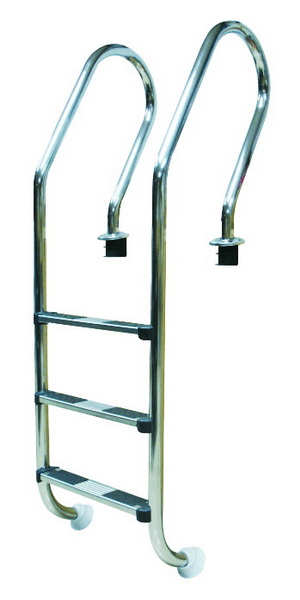
The A‑frame ladder goes with one side inside the pool and one side outside, with the top platform sitting over the pool wall; the safety gate or latch side must face outward, away from the water, and the open side must face into the pool.[7][2]
Most ladders have visible markings, labels, or letters like “A” or “POOL SIDE” on the legs or feet, and the smoother protective panels and open handrails are designed to face the water, while latch boxes, gates, and rough bracing typically face away.[6][7]
Yes, inground ladders must be inserted into deck anchors so the rails curve toward the pool and steps follow the pool‑floor slope, with anchor wedges oriented away from the water to pull the rails tight and keep the ladder stable under load.[4][11]
If the ladder is reversed or twisted, feet and bracing may dig into the wall or liner at sharp angles, causing wear spots; using a proper ladder pad under the pool‑side feet and aligning the steps squared to the wall helps protect the liner.[5][1]
OEM brands should include clear “pool side” labels on ladder parts, diagrams showing correct inside/outside orientation, and step‑by‑step manuals and videos so homeowners, installers, and service technicians can quickly verify direction during setup.[12][6]
The safest position is on a structurally strong section of wall or deck that is clearly visible from the house, away from skimmers, main drains, or sharp corners, and paired with fencing, covers, and alarms for above‑ground pools with children around.[8][1]
[1](https://blog.watsons.com/blog/install-above-ground-pool-ladder)
[2](https://diy.inyopools.com/article/choosing-a-ladder-or-steps-for-an-above-ground-pool/)
[3](https://www.thepoolfactory.com/blogs/new-pool-buyers/how-to-choose-the-correct-ladder-or-step-for-your-above-ground-swimming-pool)
[4](https://mrpoolman.com.au/blogs/news/easily-install-or-replace-your-pool-ladders-and-rails)
[5](https://poolpartstogo.com/blogs/pool-equipment/how-to-fit-a-ladder-to-your-above-ground-pool-the-right-way)
[6](https://www.familypoolfun.com/pdf/ne1222_manual.pdf)
[7](https://www.youtube.com/watch?v=UOszx5_q0s4)
[8](https://blog.linerworld.com/2011/01/14/swimming-pool-ladder-installation/)
[9](https://www.youtube.com/watch?v=AcVIHFSLCTY)
[10](https://www.youtube.com/watch?v=xdSVGLKnaJ8)
[11](https://www.youtube.com/watch?v=6lg8kCHO0m0)
[12](https://www.youtube.com/watch?v=JJkG7vsan1E)
[13](https://www.youtube.com/watch?v=ham2QiY9M7M)
[14](https://www.facebook.com/groups/637529959937311/posts/1429636454059987/)
[15](https://www.youtube.com/watch?v=c0NyjUtAEb8)
[16](https://www.youtube.com/watch?v=6D2VWj3Z_q8)
[17](https://www.youtube.com/watch?v=kBZZrt8Gop4)
[18](https://www.facebook.com/groups/637529959937311/posts/2602757936747827/)
[19](https://www.facebook.com/groups/637529959937311/posts/2295771177446506/)
[20](https://alohapoolsusa.com/wp-content/uploads/slide-adrenaline-installation-manual.pdf)


