
Views: 222 Author: Tina Publish Time: 2025-12-28 Origin: Site


Content Menu
● Why Daily Pump Runtime Matters
● General Daily Runtime Guidelines
● How to Calculate Exact Daily Runtime
>> Step 1: Determine Pool Volume
>> Step 2: Find Pump Flow Rate
>> Step 3: Use Turnover Formula
>> Step 4: Adjust for Conditions
● Single-Speed vs Variable Speed Pumps
>> Variable Speed Pump Runtime
● Factors That Change Daily Runtime
>> Bather Load and Contaminants
● Signs You Need to Run the Pump More
● Daily Runtime and Filter Type (Sand, DE, Cartridge)
● Energy Efficiency and Cost Considerations
● Practical Daily Runtime Examples
>> Example 1: Medium Residential Pool, Single-Speed Pump
>> Example 2: Large Pool with Variable Speed Pump
● FAQs About Daily Pool Pump Runtime
>> 1. Is it OK to run my pool pump 24 hours a day?
>> 2. Can I split my daily pump runtime into several shorter periods?
>> 3. How do I know if I am not running my pump long enough?
>> 4. Do saltwater pools need longer daily pump runtime?
>> 5. How does my filter type affect daily pump runtime?
>> 6. Should I change pump runtime between summer and winter?
Most pools need the pump long enough to turn all the water over at least once per day, which usually means about 8 hours for a correctly sized single-speed pump and often 10–12 hours for variable speed models running on lower speeds. The exact daily runtime depends on pool volume, pump flow rate, climate, bather load, and the efficiency of your filtration system (sand, DE, or cartridge filter).[1][2][3][4][5]
Running the pool pump daily keeps water circulating through the filter, removing debris and suspended particles that cause cloudy water. Proper circulation also distributes chlorine and other chemicals evenly, improving disinfection and reducing algae growth and unpleasant odors.[2][3][6]
For OEM and professional operators, correct daily runtime protects equipment. Adequate flow reduces strain on seals, impellers, sand or media beds, and cartridges, extending the life of pumps and filters in both residential and commercial installations.[4][1]
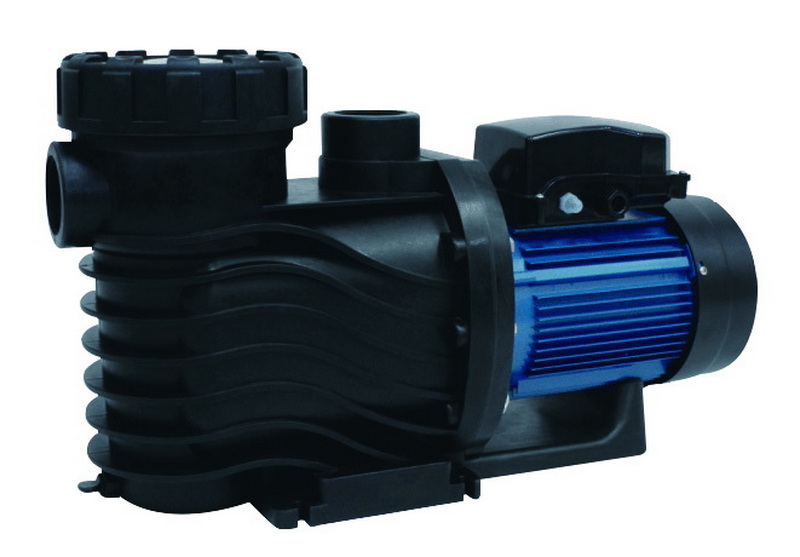
Most authoritative pool maintenance sources recommend at least one full turnover of the pool volume per day. In practice, this translates into typical ranges:[3][1][2]
- Single-speed pumps: About 8 hours per day for correctly sized systems.[7][8][3]
- Variable speed pumps: Often 12–18 hours per day at low/medium speeds to maintain flow while saving energy.[9][5][1]
- High-demand conditions (hot summer, heavy use, trees nearby): Up to 10–12 hours or more, sometimes approaching 24 hours at low speed for large or problem pools.[10][11][9]
Many manufacturers and service guides note that you do not need to run the pump in one continuous block; you can split runtime into multiple sessions (for example, 3 hours in the morning and 5 hours in the evening) as long as you achieve your daily turnover target.[12][2]
The most accurate way to decide how long to run your pump daily is to calculate the turnover time using pool volume and pump flow rate.[13][1][4]
- Rectangular pools: Length × width × average depth × 7.5 (for gallons).[4]
- Round or irregular pools: Use manufacturer charts or online calculators for more precise volume data.[4]
Pump labels, manuals, or performance curves indicate gallons per minute (GPM); if you have GPM, you can convert to gallons per hour (GPH) by multiplying by 60.[1][4]
- Example: 40 GPM × 60 = 2,400 GPH.[1][4]
Turnover time (hours) is:
- Total pool volume (gallons) ÷ Pump GPH (gallons per hour).[13][1][4]
Example from a 20,000-gallon pool with a 40 GPM (2,400 GPH) pump:
- 20,000 ÷ 2,400 ≈ 8.3 hours for one full turnover.[1][4]
After you know the base turnover, fine-tune:
- Increase runtime in hot weather, high bather load, or when dealing with algae or cloudy water.[6][10][12]
- Reduce runtime in cooler seasons when the pool is covered and used less, keeping at least partial circulation.[15][10]
The daily runtime strategy differs depending on pump type.[5][9][1]
Single-speed pumps run at one fixed RPM and draw relatively high wattage, so the goal is to run them just long enough for at least one turnover.[8][7]
- Typical guidance: ~8 hours per day if correctly sized.[7][3][8]
- Oversized pumps may need fewer hours; undersized pumps may need more to achieve full turnover.[7][4]
Variable speed (VS) pumps can be programmed for multiple speeds (RPMs) through the day, improving efficiency and allowing longer runtimes at lower speeds.[9][5][1]
- Many pool owners run VS pumps 12–18 hours per day, using 3–4 hours on higher speed for skimming, heating, or cleaners and the rest at lower speed for filtration.[16][9][1]
- Some expert schedules aim for nearly 24 hours of low-speed operation, particularly on large pools, to keep water moving continuously while using much less power per hour.[11][16][9]
Several variables influence how long to run a pool pump each day.[2][3][12]
- Larger volume requires more runtime or higher flow rate to achieve at least one daily turnover.[7][4][1]
- Complex shapes or dead zones may need more runtime or better return jet positioning to avoid stagnant pockets.[12][2]
- Hot summer conditions and high UV exposure accelerate chlorine loss and promote algae, so more circulation is needed—often 10–12 hours or more.[10][6][8]
- In cooler months or when winterizing (but not fully shutting down), pumps may run only 4–6 hours daily or use freeze-protection cycles.[15][10]
- Heavy use, parties, and nearby trees or dusty environments demand longer runtime for effective debris and contaminant removal.[17][2]
- Saltwater pools need sufficient runtime to keep the salt chlorine generator operating at its required flow for adequate chlorine production.[18][19][11]
Monitoring water quality helps confirm whether your daily runtime is adequate.[14][6][12]
Key indicators that you need more hours or better flow:
- Slight cloudiness that does not clear within 24 hours after chemical balancing.[14][12]
- Early algae growth on walls, steps, or behind ladders despite proper sanitizer levels.[10][15]
- Floating debris remaining on the surface or in corners after the pump cycle.[2][9]
You do not have to run the pump in one continuous block to meet your daily hours.[3][2]
Common scheduling options:
- Two blocks (for example, 3–4 hours early morning, 4–5 hours late afternoon) to take advantage of off-peak power rates or better skimming times.[12][2]
- For VS pumps, long low-speed blocks (10–16 hours) plus a shorter high-speed block for cleaning and chlorination.[5][11][9]
The pump and filter work together, so filter type also affects perceived performance at a given runtime.[5][1][7]
- Sand filters: Robust and forgiving, ideal for many residential pools; they handle heavy debris but may need slightly longer runtime or periodic backwashing to maintain good flow.[1][7]
- DE filters: Very fine filtration; if pressure rises too quickly, a partially clogged DE grid can extend turnover time, so keeping them clean is crucial for efficient operation.[7][1]
- Cartridge filters: Offer excellent clarity with relatively low resistance; sizing cartridges generously can keep flow high and daily runtime efficient.[3][7]
As a professional OEM manufacturer of sand, DE, and cartridge filters, a factory can design matched pump–filter systems that achieve full turnover with optimized runtime and lower energy consumption for foreign brands and wholesalers.[10][5]
Running a pool pump longer than necessary wastes electricity, but running it too little leads to water problems that require extra chemicals and cleaning.[15][3][7]
- Correct sizing and runtime can significantly reduce overall energy bills, especially when replacing an older single-speed pump with a modern variable speed model.[9][16][7]
- VS pumps can often run 12–24 hours daily at low speeds with a fraction of the energy use of a single-speed pump operating only 8 hours per day.[16][9][5]
- Pool: 20,000 gallons, single-speed pump at 40 GPM (2,400 GPH).[1][7]
- One turnover ≈ 8.3 hours; many owners schedule 8–9 hours per day, increasing to 10–12 hours in very hot weather.[8][10][1]
- Pool: 30,000 gallons with VS pump.[11]
- Minimal-cost option is to choose an RPM that delivers about 21 GPM for 24 hours, achieving two turnovers per day with continuous low-speed circulation.[11][5]
For most pools, running the pump long enough to achieve at least one full turnover per day—typically around 8 hours for a properly sized single-speed pump and often 10–12 or more hours at lower speeds for variable speed models—is the starting point. Fine-tuning based on pool size, climate, bather load, and equipment type, combined with well-matched sand, DE, or cartridge filters from a specialist OEM factory, ensures clear, safe water with optimal energy efficiency and long equipment life.[2][3][5][7][1]
Yes, a pool pump can run 24 hours a day if necessary, especially variable speed models, but it is usually not required for most residential pools if the system can achieve at least one full turnover in fewer hours. Continuous low-speed operation is sometimes used on large pools or when correcting severe algae or clarity problems, but energy-efficient scheduling and proper filtration can often reduce the need for 24/7 operation.[16][5][11][15][9]
You can split daily runtime into multiple sessions as long as total daily hours still meet your turnover goal. Many pool owners run a few hours in the morning and several hours in the evening to improve skimming when debris is most active and to take advantage of off-peak electricity pricing.[12][2]
Common signs include persistent cloudiness, recurring algae even with correct chemical levels, and poor skimming or debris accumulation after normal cycles. If these issues appear, increase runtime in 1–2 hour increments and check that your sand, DE, or cartridge filter is clean and operating within the recommended pressure range.[6][14][10][12][7][1]
Saltwater pools often need enough runtime to keep the salt chlorine generator (SWG) operating at its required flow rate for several hours per day, sometimes resulting in longer total pump runtime than comparable manually chlorinated pools. Owners commonly use a mix of moderate and low speeds on a variable speed pump to maintain chlorination while still controlling energy costs.[19][18][5][11][9]
Filter type affects how efficiently debris is removed at a given flow rate: sand filters are rugged but may require slightly longer runtime, DE filters offer very fine filtration but must be kept clean to avoid high resistance, and cartridge filters perform well at modest pressures with generous surface area. When a pump is paired with a correctly sized OEM sand, DE, or cartridge filter, you can usually achieve the desired turnover with fewer issues and more predictable daily runtimes.[3][5][7][1]
Yes, most pools require longer runtimes in summer because higher temperatures, UV intensity, and bather load all increase chlorine demand and algae risk, so 10–12+ hours per day is common in hot climates. In winter or during low-use periods, owners often reduce runtime to 4–6 hours or rely on freeze-protection programs that cycle the pump mainly to prevent ice formation while preserving acceptable circulation.[6][15][8][10]
[1](https://lesliespool.com/blog/how-to-calculate-pool-pump-run-time.html)
[2](https://www.swimmingpool.com/maintenance/pump&filter/how-long-to-run-pool-pump/)
[3](https://global-poolproducts.com/how-long-should-a-pool-pump-run/)
[4](https://www.poolsuppliessuperstore.com/help/calculate-pool-pump-run-time)
[5](https://poolpartstogo.com/blogs/articles/ideal-schedule-for-your-variable-speed-pool-pump)
[6](https://www.youtube.com/watch?v=Oppm1lT94ps)
[7](https://mrpoolman.com.au/blogs/news/how-long-should-i-run-my-pool-pump-every-day)
[8](https://www.youtube.com/watch?v=edm862QQ9mY)
[9](https://www.youtube.com/watch?v=5SbEB44THW4)
[10](https://www.1stopfilter.com/blogs/academy/are-pool-filter-pump-supposed-to-run-all-the-time)
[11](https://www.reddit.com/r/pools/comments/14p2e0j/variable_speed_pump_run_times/)
[12](https://www.youtube.com/watch?v=LvN8m1AsrHI)
[13](https://www.doheny.com/help/calculate-pool-pump-run-time)
[14](https://www.youtube.com/watch?v=u4ExnupI26o)
[15](https://home.howstuffworks.com/swimming-pool-pumps-run-all-the-time.htm)
[16](https://www.youtube.com/watch?v=NdFMge84h8k)
[17](https://www.reddit.com/r/pools/comments/pbcz27/how_long_should_i_run_my_pool_pump_each_day_i/)
[18](https://www.reddit.com/r/pools/comments/dhrbrx/misleading_guidance_on_vs_pump_speed_and_turnover/)
[19](https://www.reddit.com/r/swimmingpools/comments/uxq093/best_schedule_for_variable_speed_pump_with/)
[20](https://www.perplexity.ai/search/44b43ac0-41b7-4ae0-95c5-043abbae4a7d)
[21](https://www.reddit.com/r/pools/comments/csj0s1/rule_of_thumb_for_pool_turnover_8hrs_10hrs_1_day/)


