
Views: 222 Author: Tina Publish Time: 2025-12-30 Origin: Site


Content Menu
● Understanding Why Ladders Float
● Safety Risks of an Unstable Pool Ladder
● Step‑by‑Step: How to Get Your Pool Ladder to Stay Down
>> 1. Check the Ladder Type and Manufacturer Instructions
>> 2. Eliminate Trapped Air in the Ladder
>> 3. Add Proper Weight: Sand, Water, or Dedicated Ladder Weights
>> 4. Use DIY Weight Solutions (If Allowed by the Manufacturer)
>> 5. Secure Inground Ladders with Proper Anchors
>> 6. Stabilize Above‑Ground Ladders and Steps
>> 7. Regular Inspection and Maintenance
● When to Replace Your Pool Ladder
>> 1. Why does my above‑ground pool ladder keep floating?
>> 2. Is it safe to drill holes in my pool ladder or steps?
>> 3. Can I use regular sandbags or bricks to weigh down my ladder?
>> 4. Why does my inground ladder feel loose even though it does not float?
>> 5. How often should I check my pool ladder for safety?
>> 6. Will extra weight damage my pool floor or vinyl liner?
A floating or unstable pool ladder is usually caused by trapped air, lack of weight, loose anchors, or an uneven pool floor. Fixing these issues quickly is essential for swimmer safety and to protect your pool structure.[1][2][3]
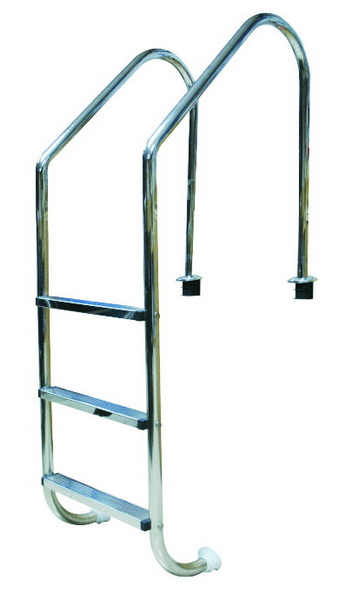
Most modern pool ladders and steps are made from hollow plastic or resin that naturally traps air and becomes buoyant in water. When there is not enough internal weight or ballast, the ladder tries to rise toward the water surface instead of sitting firmly on the pool floor.[4][2][1]
Common reasons your ladder will not stay down include:
- Air pockets trapped in hollow steps or tubes.[2][1]
- No sand or water added to the built‑in weight chambers.[5][1]
- Lightweight resin construction without additional ballast.[1][2]
- Loose or missing deck anchors on inground ladders.[2][1]
- Worn rubber bumpers or uneven ground under the legs.[1][2]
A ladder that floats, shifts, or tilts is more than just annoying; it creates real safety hazards for anyone entering or exiting the pool.[3][1]
Key risks include:
- Slips and falls: A sudden ladder shift can cause a swimmer to lose balance and fall back into the water or against the pool wall or deck.[6][3]
- Sprains, fractures, bruises, or cuts from hitting hard edges, rails, or concrete.[3]
- Increased drowning risk if swimmers, especially children or elderly users, cannot exit the pool quickly and safely.[4][3]
- Damage to vinyl liners when an unstable ladder scrapes or digs into the surface.[7][2]
This section walks through practical steps you can take to keep both above‑ground and inground pool ladders firmly in place.[4][1]
Different ladder designs require different stabilizing methods, so always review the original installation guide.[5][2]
- Above‑ground A‑frame ladders often have hollow steps or dedicated fill ports for sand or water.[5]
- Inground stainless‑steel ladders are meant to be anchored to deck sockets or brackets with wedge bolts.[2][1]
- Some step systems specify exactly how many pounds of sand (for example, about 70 lb) are needed to prevent floating.[5][4]
Air inside the ladder increases buoyancy, making it want to float up.[8][2]
Basic methods to remove air:
- Slowly submerge the ladder at an angle, letting bubbles escape from each step before fully lowering it.[9][8]
- If the model allows, open small plugs or caps while it is underwater to help water rush in and replace trapped air.[9][5]
- For hollow tube ladders, carefully drill small drainage holes (often 3–5 mm) near the base so water can flow in and air can escape.[10][2]
Safety tips when drilling:
- Use a bit designed for plastic and smooth any sharp edges so they do not damage a vinyl liner.[10][2]
- Drill on the sides or underside of tubes, not in critical structural areas.[2]
Insufficient ballast is one of the most common reasons a pool ladder will not stay down.[4][2]
Standard weighting options:
- Water‑filled chambers: Many ladders include internal cavities that can be filled with pool water through hidden plugs.[9][5]
- Sand‑fill chambers: Using play sand in built‑in step cavities or tubes provides long‑lasting, dense weight.[4][5]
- External sandbags or gravel bags: Heavy bags placed or strapped at the base of the ladder help hold it in place.[11][4]
- Commercial ladder weights and anchor bags: Purpose‑made vinyl weights designed to sit under or within the step system.[12][4]
Typical guidance is to use around 70 lb of ballast for larger step‑style systems, though the exact amount depends on design and manufacturer recommendations.[2][5]
Many pool owners successfully use DIY methods to weigh down their steps, but these must be used carefully to avoid liner damage.[13][4]
Common DIY solutions:
- PVC pipe weights: Fill sections of PVC pipe with sand or gravel, cap them, and zip‑tie them to the ladder base.[14][13]
- Weighted jugs: Fill sturdy plastic jugs with sand or small stones and attach them to the inner side of the steps as temporary ballast.[15][14]
- Salt or gravel bags: Use vinyl‑coated bags to avoid sharp edges and protect the liner.[13][2]
Important safety notes:
- Never use metal objects that can rust, have sharp edges, or puncture a vinyl liner.[7][2]
- Ensure all DIY weights are smooth, securely tied, and positioned where swimmers will not trip on them.[11][4]
If an inground ladder feels loose or lifts when you climb it, the deck anchors or wedge bolts may be the problem.[1][2]
Checklist for inground ladder stability:
- Inspect anchor sockets in the deck for looseness, cracks, or missing wedge parts.[3][1]
- Tighten all wedge bolts with a suitable wrench until the rails are rigid and do not shift.[6][1]
- Replace worn rubber bumpers at the ladder feet to improve grip against the pool wall and protect the surface.[1][2]
- Ensure the ladder sits about 1 inch away from the pool wall instead of pressing directly on a vinyl liner.[7][2]
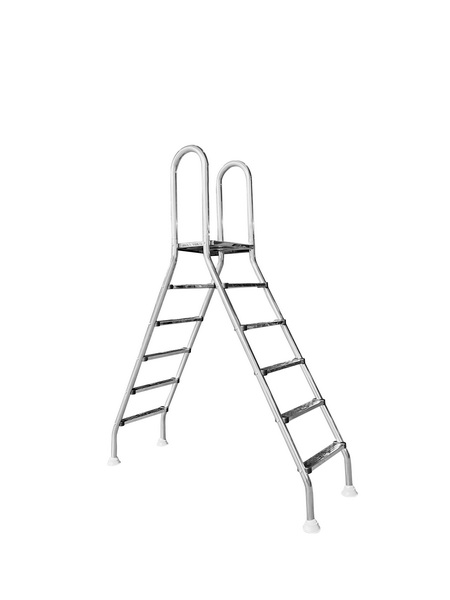
Above‑ground ladders that simply rest on the pool floor or ground often shift or float if not properly stabilized.[6][2]
Best practices:
- Assemble the ladder on a level surface and use a level tool to ensure even contact across all feet.[6]
- If your pool has a surrounding deck, bolt the ladder to the deck using the provided brackets or aftermarket stabilizer kits.[16][2]
- Add non‑slip mats or step pads under the feet to increase friction and protect vinyl liners.[17][1]
- For A‑frame styles, verify that the outside legs are properly supported on firm, stable ground, not soft soil.[16][1]
Even a well‑installed ladder can start floating or wobbling over time as parts wear or water conditions change.[1][4]
Create a simple maintenance routine:
- Check bolts, nuts, and brackets every week in busy season.[3][1]
- Inspect bumpers, step treads, and non‑slip surfaces for cracks or excessive wear.[2][1]
- Confirm that weight chambers or bags are still intact and not leaking sand or water.[12][4]
- Before every swim session with children, test the ladder by stepping on it firmly to verify that it stays down and does not shift.[11][4]
Sometimes, constant floating or wobbling is a sign that the ladder itself should be upgraded.[1][2]
Consider replacing the ladder if:
- The frame is cracked, warped, or UV‑damaged and no longer holds weight correctly.[3][2]
- Anchor sockets are severely corroded or broken and cannot hold wedge bolts firmly.[2][1]
- Built‑in weight chambers are damaged or leaking, making it impossible to maintain ballast.[12][4]
- You need a heavier‑duty model with wider steps, integrated weight systems, or stainless‑steel construction for commercial or high‑use pools.[5][2]
A pool ladder that will not stay down is usually caused by trapped air, lack of ballast, loose anchoring, or worn support components. By eliminating air pockets, properly filling weight chambers with sand or water, securing anchors, and adding stable footing, you can keep your ladder firmly in place and dramatically improve pool safety for every swimmer. Regular inspections and timely upgrades to higher‑quality, well‑weighted ladder systems help protect both swimmers and your pool investment season after season.[3][4][1][2][5]
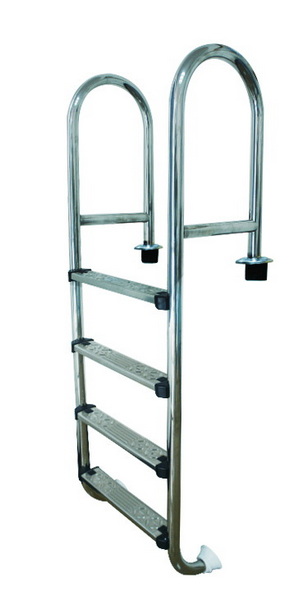
Most above‑ground ladders are made from lightweight hollow plastic that traps air and lacks sufficient ballast, so they naturally want to float. Filling internal chambers with sand or water and adding stabilizing weights at the base usually solves the problem.[4][1][2][5]
Drilling small holes near the bottom of hollow tubes or steps can safely allow water in and air out, greatly reducing buoyancy. Use a suitable bit for plastic, smooth the edges, and avoid drilling load‑bearing structural areas; always confirm the manufacturer's recommendations first.[10][7][2]
Regular sandbags can work if the bags are durable, smooth, and designed for underwater use, but bricks and rough objects may damage a vinyl liner. A better solution is sealed PVC pipe weights, vinyl‑coated bags, or purpose‑made ladder weights that distribute weight safely.[13][11][4]
Inground ladders depend on deck anchor sockets and wedge bolts; if these are loose, corroded, or installed in cracked concrete, the ladder will wobble. Tightening or replacing wedges, repairing the deck area, and renewing rubber bumpers usually restores firm, safe support.[3][1][2]
During the main swimming season, visually inspect your ladder at least once a week and perform a quick stability test before heavy use or parties. Check weights, bolts, bumpers, and step surfaces more thoroughly at the start and end of each season, especially in commercial or high‑traffic pools.[3][1][4]
Extra weight can damage a liner only if it is concentrated on small, sharp, or unprotected contact points. Use wide, smooth bases, soft pads, or step mats under weighted ladders to spread the load and protect the surface.[17][7][1][2]
[1](https://www.poolkingfilter.com/how-to-get-pool-ladder-to-stay-down.html)
[2](https://www.poolkingfilter.com/how-to-keep-a-pool-ladder-from-floating.html)
[3](https://blog.watsons.com/blog/make-above-ground-pool-ladder-stable)
[4](https://www.poolkingfilter.com/how-to-weigh-down-a-pool-ladder.html)
[5](https://www.thepoolfactory.com/blogs/equipment/how-prevent-pool-steps-from-floating)
[6](https://blog.watsons.com/blog/stabilize-above-ground-pool-ladder)
[7](https://www.poolkingfilter.com/how-to-keep-a-pool-ladder-from-floating-up.html)
[8](https://www.facebook.com/groups/637529959937311/posts/2594449264245361/)
[9](http://www.poolforum.com/pf2/showthread.php/194-Pool-ladder-won-t-stay-down-in-pool)
[10](https://www.youtube.com/watch?v=-qkS06U4SC0)
[11](https://www.homesandgardens.com/gardens/how-to-weigh-down-pool-steps)
[12](https://www.facebook.com/groups/637529959937311/posts/2578471772509777/)
[13](https://www.reddit.com/r/pools/comments/v0lhxh/what_sand_weights_do_you_use_to_hold_down_your/)
[14](https://www.facebook.com/groups/637529959937311/posts/2581283702228584/)
[15](https://www.reddit.com/r/pools/comments/wubcro/how_to_keep_stairs_down_on_floor_instead_of/)
[16](https://www.facebook.com/groups/637529959937311/posts/2626171321073155/)
[17](https://www.reddit.com/r/AboveGroundPools/comments/1ll74eg/do_you_put_something_under_the_stairladder_legs/)
[18](https://www.thepoolfactory.com/a/answers/6442767/Why-won-t-my-pool-ladder-stay-down)
[19](https://www.facebook.com/groups/637529959937311/posts/2601329323557355/)
[20](https://www.reddit.com/r/pools/comments/1ceiey7/best_way_to_weigh_down_these_stairs/)


