
Views: 222 Author: Tina Publish Time: 2025-12-30 Origin: Site


Content Menu
● Understanding Pool Ladder Heights
● When a 42 Inch Ladder Works on a 36 Inch Pool
● When You Should NOT Reuse the 42 Inch Ladder
● Step-by-Step: How to Check Compatibility
● Safety Risks of Using the Wrong Height Ladder
● OEM Angle: Matching Ladders, Filters, and Accessories
● FAQs About Reusing a 42 Inch Ladder on a 36 Inch Pool
>> 1. Can I safely use a 42 inch ladder on a 36 inch above ground pool?
>> 2. How do I know if my ladder is adjustable for 36–42 inch pools?
>> 3. What happens if the ladder is too tall for the pool?
>> 4. Are there ladders designed for both 36 and 42 inch pools?
>> 5. Why is matching ladder height to pool wall height so important?
>> 6. What other safety features should I look for in a replacement ladder?
A 42 inch pool ladder can sometimes be reused on a 36 inch pool, but only if the ladder is specifically designed for 36–42 inch wall heights and can be safely adjusted to the lower pool wall. If the ladder cannot be adjusted or ends up excessively tall or unstable, it should not be used on the shorter pool for safety reasons.[1][2][3]
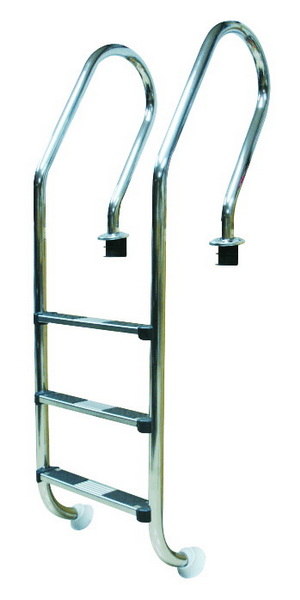
Above ground pool ladders are designed around the pool wall height, not water depth or overall frame height. Most above ground pools are built with wall heights in the 36–54 inch range, and manufacturers match ladders to those sizes.[2][4][5]
- Many above ground pools use standard wall heights like 36, 42, 48, and 54 inches.[5][2]
- A proper ladder should reach from the ground (or deck) to the top of the pool wall with the in-pool section sitting firmly on the floor.[2][5]
Some ladders are adjustable and explicitly rated for a range of wall heights, such as 36–42 inches. These models are generally more suitable for reuse when you change pool size within that range.[1][2]
Many homeowners change from a 42 inch wall height pool to a 36 inch pool and want to reuse the same ladder. A 42 inch ladder can work on a 36 inch pool if all of the following are true.[1][2]
- The ladder is rated for “36–42 inch wall height” or similar wording on its label or manual.[4][1]
- The design allows height adjustment, usually through telescoping legs or adjustable rails.[4][2]
- When adjusted, the ladder sits firmly on the pool floor and ground/deck with no tilting or wobble.[2]
For example, some Intex-style ladders are advertised for 36–42 inch depth pools and can be adjusted to match those walls safely. If your 42 inch ladder is one of these adjustable models, you can usually set it to the 36 inch position and use it on a shorter pool.[6][1]
A ladder that is too tall for the pool wall height can be dangerous because it may wobble, lean, or create an awkward step down into the water. In these cases, reusing a 42 inch ladder on a 36 inch pool is not recommended.[3][2]
Avoid reusing the ladder if:
- The ladder is fixed-height only for 42 inch or taller walls, with no adjustment for 36 inches.[3][2]
- The top platform sits well above the pool top rail, forcing users to step down too far onto the top rail or first tread.[2]
- The in-pool legs cannot sit flat on the pool floor once the top is hooked over the wall.[2]
Social feedback from pool owner communities consistently warns that using an over-tall ladder (like 48–54 inches) on a significantly shorter pool (like 42 inches or less) can feel unstable and unsafe. A similar logic applies when trying to use a 42 inch ladder on a 36 inch pool without proper adjustability.[3][2]
Before reusing your ladder, go through a simple checklist to decide if your 42 inch ladder truly fits a 36 inch pool.[4][2]
1. Confirm your pool wall height
- Measure from the pool floor to the top of the pool wall, not the waterline.[4][2]
- Typical compact pools use 36 inch walls; larger models may be 42–54 inches.[2]
2. Read the ladder's specifications
- Look at the label, user manual, or online listing for the ladder model.[1][4]
- If it explicitly states “for 36–42 inch pool wall height” (or similar), it is designed for that range.[1]
3. Adjust the ladder height (if possible)
- Follow the manufacturer's instructions for adjusting the legs or rails to match the lower wall height.[4]
- Ensure every locking pin, bolt, or snap-lock is fully engaged.[4]
4. Test stability on the 36 inch pool
- Place the ladder on level ground or deck and hook it over the pool wall, making sure both in-pool feet rest evenly on the pool floor.[5][2]
- Check for rocking, twisting, or gaps between the steps and water surface that could cause awkward stepping.[2]
5. Confirm safety features still work
- Verify that any flip-up or removable steps, safety gates, or anti-accident features still operate correctly at the lower height.[5][1]
- If the ladder was designed to create a “no-swim zone” or anti-entrapment area, make sure that geometry is not changed in a risky way.[5]
If the ladder passes all of these checks, you can generally reuse it with confidence. If it fails any test, it is safer to purchase a model specifically matched to 36 inch walls.[5][4][2]
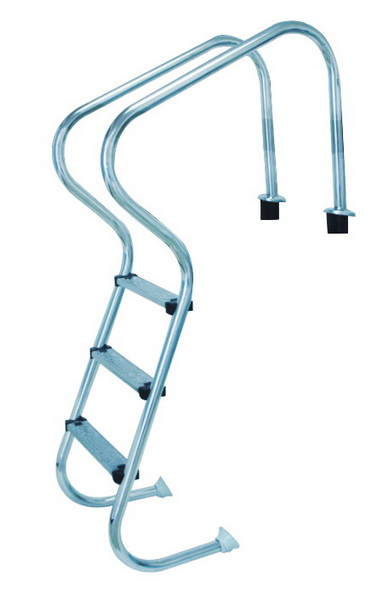
Using the wrong-height ladder is not just inconvenient; it can create real safety hazards around the pool. Above ground pool safety guidelines highlight proper access control and robust ladders as key parts of preventing falls and drowning.[7][2]
Common risks include:
- Wobbling and tipping if the ladder is too tall and fails to sit flat on the pool floor or ground.[2]
- Overstepping or sudden drop from a high platform down to a low top rail or first step, which increases the chance of slips.[8][2]
- Barrier failure if the ladder creates an easier climb for small children or bypasses the intended safety barrier height.[7]
Regulatory guidance for residential pools stresses that ladders and access systems must be part of the overall safety barrier, not a weakness in it. Matching ladder height to pool wall height directly supports that objective.[7][2]
For brands, wholesalers, and pool kit manufacturers, consistent sizing across ladders, pool walls, and circulation equipment is essential for a high-quality pool package.[9][2]
- Complete kits often bundle a properly sized ladder (e.g., 36–42 inch adjustable), a matched filtration system (sand, DE, or cartridge filter), and a pump sized to the pool volume.[5]
- Offering customizable ladder and accessory options for 36, 42, 48, and 54 inch wall heights helps distributors serve different markets while maintaining safety and comfort.[9][2]
If your factory produces pool accessories alongside filters and pumps, highlighting your ability to source or integrate properly rated ladders and LED lighting into OEM packages can increase appeal for overseas brands and wholesalers.
A 42 inch pool ladder can be reused on a 36 inch pool only when it is designed and rated for a 36–42 inch wall height range and can be adjusted to sit safely on the shorter pool. If the ladder is fixed-height at 42 inches or cannot be adjusted without creating wobble, misaligned steps, or an awkward drop, it should not be used and a 36 inch-compatible ladder is the safer choice. Matching ladder height to pool wall height reduces accident risk, preserves the integrity of your safety barrier, and ensures a comfortable, confident entry and exit experience for swimmers of all ages.[3][7][1][2]
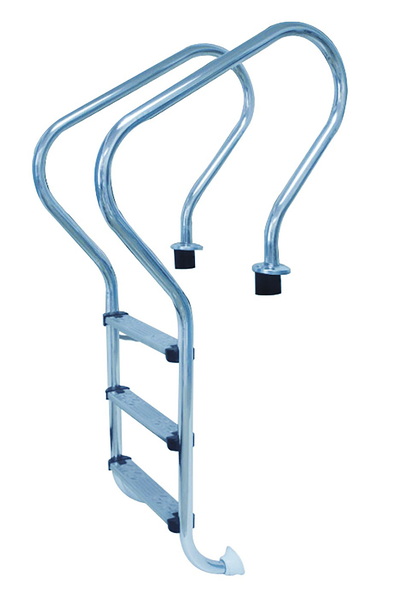
You can use a 42 inch ladder on a 36 inch pool if the ladder is specifically rated for 36–42 inch wall heights and can be adjusted to the correct height. If it is fixed for 42 inches and cannot be shortened, it may be unstable and unsafe on the smaller pool.[3][1][2]
Check the product label, manual, or online listing for your ladder's model number and look for wording such as “for 36–42 inch pool wall height” or “height adjustable.” Adjustable ladders usually have telescoping legs, multiple pin holes, or sliding rails to adapt to different pool wall heights.[1][4][2]
If the ladder is too tall, the in-pool legs may not sit flat on the pool floor, causing wobbling, tilting, or twisting when someone climbs. There may also be an uncomfortable or unsafe step down from the ladder platform to the pool's top rail or water surface.[8][2]
Yes, some above ground pool ladders are specifically designed for pools with wall heights from 36 to 42 inches and can be adjusted within that range. These models are a good choice if you expect to change pool sizes or want maximum flexibility for different installations.[6][1][2]
Matching ladder height to the pool wall height ensures that all feet of the ladder rest flat, step spacing feels natural, and the top platform aligns safely with the pool's top rail. This alignment improves stability, reduces slip and fall risks, and helps maintain a secure safety barrier around the pool.[7][5][2]
Look for non-slip treads, sturdy handrails, a 300 lb (or higher) weight capacity, and safety features like removable steps or flip-up outside ladders to restrict unsupervised access. These features work together with correct height matching to offer safer everyday pool use.[5][7][1][2]
[1](https://www.walmart.com/ip/Intex-Deluxe-Pool-Ladder-with-Removable-Steps-for-42in-36in-Depth-Pools/564088011)
[2](https://www.vevor.com/diy-ideas/heavy-duty-above-ground-pool-ladder/)
[3](https://www.facebook.com/groups/637529959937311/posts/2630582777298676/)
[4](https://www.poolkingfilter.com/how-to-adjust-above-ground-pool-ladder.html)
[5](https://intheswim.com/blog/above-ground-pool-step-buyers-guide.html)
[6](https://intexcorp.com/products/above-ground-pools/pool-accessories/ladders/pool-ladder-for-42in-depth-pools-1/)
[7](https://www.floridahealth.gov/environmental-health/swimming-pools/_documents/cpsc-safety-barriers.pdf)
[8](https://www.houzz.com/discussions/2531116/height-of-steps-in-pool-and-spa)
[9](https://www.thepoolfactory.com/blogs/new-pool-buyers/how-to-choose-the-correct-ladder-or-step-for-your-above-ground-swimming-pool)
[10](https://www.lowes.com/pl/pools/pool-ladders-lifts/above-ground-pool-ladders-steps/36-inch-wide/4294610238-4294799010)
[11](https://waterlinetechnologies.com/spectrum-5-step-36-stainless-steel-standard-pool-and-spa-ladder/)
[12](https://intexcorp.com/products/above-ground-pools/pool-accessories/ladders/deluxe-pool-ladder-with-removable-steps-for-42in-36in-depth-pools/)
[13](https://www.homedepot.com/b/Outdoors-Pool-Supplies-Pool-Accessories-Pool-Ladders/36-in/N-5yc1vZcfz3Z1z1vg4g)
[14](https://www.sunnyspoolsandmore.com/pools/ladders/)
[15](https://www.target.com/p/intex-steel-frame-pool-ladder-for-42-wall-height-pools-15-round-pool-cover/-/A-82041273)
[16](https://www.target.com/p/funsicle-surestep-3-step-lightweight-steel-ladder-with-heavy-duty-material-for-outdoor-above-ground-swimming-pool-blue-and-white/-/A-88661104)
[17](https://www.lowes.com/pl/pools/pool-ladders-lifts/above-ground-pool-ladders-steps/42-inch-tall/4294610238-4294799011)
[18](https://www.facebook.com/groups/637529959937311/posts/2551874295169525/)
[19](https://www.lowes.com/pl/pools/pool-ladders-lifts/above-ground-pool-ladders-steps/36-inch-tall/36-inch-wide/4294610238-4294728343-4294799010)
[20](https://www.homedepot.com/p/Intex-Steel-Frame-Pool-Ladder-for-42-in-Wall-Height-Pools-and-10-ft-Round-Pool-Cover-28065E-28030E/315399879)


