
Views: 222 Author: Tina Publish Time: 2025-12-31 Origin: Site


Content Menu
● Sand To Filter Ball Conversion Basics
● Quick Rule Of Thumb: From Sand Weight To Balls
>> Example with 1.5 lb = 50 lb sand
>> Example with 1 lb = 100 lb sand
● How Many Balls For Common Filter Sizes?
● Volume‑Based Formula (When Specs Are Missing)
● Why Correct Quantity Matters
● Step‑By‑Step: Filling A Sand Filter With Balls
● Benefits Of Pool Filter Balls vs Sand
● Best Practices For Choosing And Using Filter Balls
● FAQs About How Many Pool Filter Balls You Need
>> 1. How do I know how many pool filter balls I need?
>> 2. Can I just fill the tank until it looks full?
>> 3. Do different brands of filter balls use the same conversion?
>> 4. How many filter balls do I need for a 200 lb sand filter?
>> 5. Can I mix sand and filter balls in the same filter?
>> 6. How often do I need to replace pool filter balls?
>> 7. Are filter balls suitable for all pool sizes?
Choosing the right number of pool filter balls is essential for clear water, safe circulation, and efficient operation of your pool filtration system. This guide explains how to calculate what you need, how filter balls compare to sand, and how to size them for different pool and filter types.[1][2]
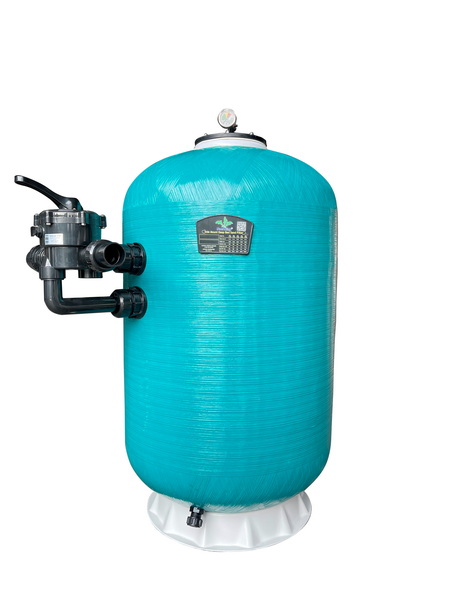
Pool filter balls are synthetic fiber spheres used as a replacement for traditional silica sand inside a sand filter housing. They are usually made from polyethylene or similar materials with a pitted or honeycomb surface that increases filtration area.[3][1]
- They are significantly lighter than sand and easier to handle and dispose of.[4][1]
- Many brands claim finer filtration down to a few microns, with lower pressure and higher flow compared with standard silica sand.[5][1][4]
The fastest way to answer “how many pool filter balls do I need?” is to convert from the sand weight your filter normally uses.[6]
Typical manufacturer equivalences:
- Some products specify that 1.5 lb of pool filter balls equals 50 lb of sand.[7][8]
- Other fiber-ball brands claim 1 lb of balls can replace up to 100 lb of sand in certain systems.[9][4]
Because these ratios vary, pool owners should:
- Check the nameplate on the filter tank for “sand required” (for example, 100 lb, 150 lb, 200 lb).
- Read the specific conversion printed on the filter ball packaging or in the product manual.[8][10]
Use the sand capacity of your existing filter as the starting point. Then apply the conversion ratio on the filter ball package.[6]
This equivalence is commonly printed on consumer filter ball packaging.[7][8]
- 50 lb sand ≈ 1.5 lb filter balls
- 100 lb sand ≈ 3.0 lb filter balls
- 150 lb sand ≈ 4.5 lb filter balls
- 200 lb sand ≈ 6.0 lb filter balls
- 250 lb sand ≈ 7.5 lb filter balls
If your balls are sold in 1.5 lb bags, you can use this simple formula:

So a 200 lb sand filter would need about 4 bags of 1.5 lb balls (because \(200 ÷ 50 = 4\)).[8][7]
Some high‑performance products claim 1 lb of media replaces 100 lb of sand.[4]
- 100 lb sand ≈ 1.0 lb balls
- 200 lb sand ≈ 2.0 lb balls
- 300 lb sand ≈ 3.0 lb balls
In this case, the formula is:

Always follow the conversion guidance provided by your chosen brand to avoid under‑filling or over‑packing the tank.[9][4]
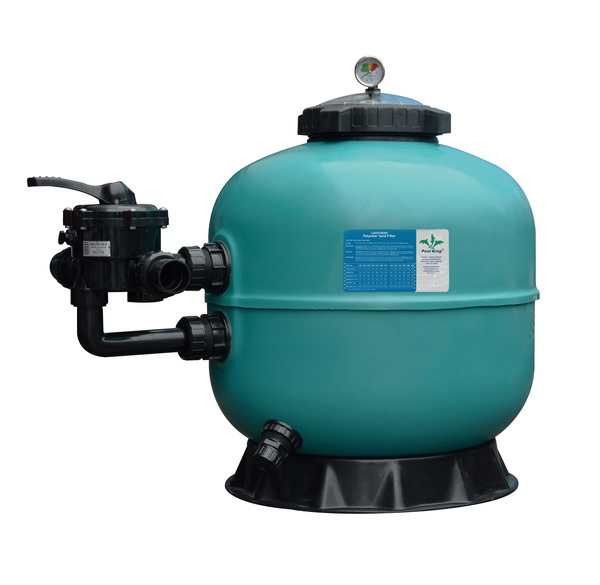
Many retail charts match filter diameter and sand weight to the number of boxes/bags of filter balls. Assuming a product where 1 box is equivalent to 50 lb of sand, a typical guide looks like this:[1][6]
| Filter size / model (example) | Typical sand required | Approx. filter balls needed |
|---|---|---|
| 16" sand filter | 100 lb | 2 boxes (≈3 lb balls) thepoolfactory+1 |
| 18" sand filter | 125–150 lb | 2.5–3 boxes thepoolfactory+1 |
| 20" sand filter | 200 lb | 4 boxes thepoolfactory+1 |
| 23"–24" sand filter | 250–300 lb | 5–6 boxes thepoolfactory+1 |
| 30" large sand filter | 500 lb | 10 boxes poolsuppliescanada |
If you do not know your filter's sand weight, some guides estimate ball quantity using a formula that relates pool volume to flow rate and media volume percentage.[2][11]
One example approach:
1. Estimate pool volume in gallons.
2. Know your filter system's flow rate in gallons per minute (GPM).
3. Apply a formula for how much media to add based on a recommended fill percentage.
A published guide gives:

In the example, a 30,000 gallon pool with 60 GPM circulation yields about 100 balls. This method is more approximate than using the manufacturer's sand weight, but it can be useful when labels are unreadable.[2]
Using the right number of filter balls is important for safety, water clarity, and equipment life.[5][2]
If you use too few balls:
- Water can bypass the media, causing cloudy water and poor filtration.
- Flow may become too strong through limited media areas, which can damage internal laterals or create channeling.[12][9]
If you use too many balls:
- The tank may be over‑packed, increasing system pressure and reducing flow.[9]
- The pump may work harder, potentially shortening motor life and risking leaks around seals.[5][9]
Correctly filling to the recommended percentage keeps pressure in the safe range and maintains good turnover times.[11][9]
Below is a general procedure pool owners can use, in addition to the product‑specific instructions.[13][5]
1. Check sand capacity and conversion
- Locate the sand weight rating on the filter tank label or in the manual.
- Confirm the equivalence on the filter ball packaging (for example, 1.5 lb balls = 50 lb sand).[8]
2. Prepare the filter tank
- Turn off the pump and close valves.
- Open the filter, remove old sand (if present), and rinse the tank and laterals.
3. Protect the standpipe
- Cover the center standpipe opening to prevent balls from entering, just as you would when filling sand.[13]
4. Add the correct number of balls
- Pour balls slowly into the tank until reaching the recommended level or media height above the laterals.[14]
- Use a ruler or internal mark (often about two‑thirds of the tank height) as a guide.
5. Reassemble and start up
- Reinstall the valve, set to backwash briefly, then rinse, then switch to filter mode.[13]
- Check initial pressure and record it as your clean‑filter baseline.[5]
Many pool owners switch to filter balls for convenience and performance.[1][4][9]
Key advantages:
- Much lighter weight — a single box under 2 lb can replace 50 lb of sand or more, making handling and shipping easier.[4][1][8]
- Lower system pressure with higher flow, which can reduce energy consumption when used with a properly sized pump.[4][9][5]
- Finer filtration (down to around 3–10 microns for some brands), potentially yielding clearer water.[12][1][4]
- Reusable and machine‑washable, often lasting multiple seasons and reducing waste.[3][1][8]
Considerations:
- Some filters and local codes still recommend or require traditional sand; always check manufacturer instructions.
- Different brands have different densities and conversion ratios—mixing brands inside one filter is not recommended.[2][3]
To get the most from your filter media:
- Select a reputable brand that clearly states sand equivalence and maximum flow rate.[3][2]
- Match the media to your filter type and pump size to stay within the manufacturer's pressure and flow specifications.[11][9]
- Avoid over‑backwashing; short, regular backwashes are usually enough because the balls trap and release dirt efficiently.[9][5]
- Wash and reuse according to the product label, typically every 2–4 years or when they appear heavily stained or compacted.[3][5]
Professional OEM‑level suppliers can also help match media choice to your filter design and bather load requirements for residential and commercial pools.[2]
Choosing the right number of pool filter balls starts with one key piece of information: how much sand your filter is designed to hold. Once you know that, you can apply the conversion printed on your chosen brand of filter balls—whether 1.5 lb equals 50 lb of sand or 1 lb replaces 100 lb—to calculate an accurate media load that keeps your system in its ideal pressure and flow range.[7][6][8][4]
Beyond the quantity question, filter balls offer several performance and handling advantages: they are dramatically lighter than silica sand, easier to install and replace, and often provide finer filtration with lower operating pressure. When properly sized and maintained, they can help pool owners achieve clearer water, longer filter cycles, and more efficient circulation, especially when paired with a well‑matched pump and a correctly sized sand filter housing.[12][1][4][9][5]
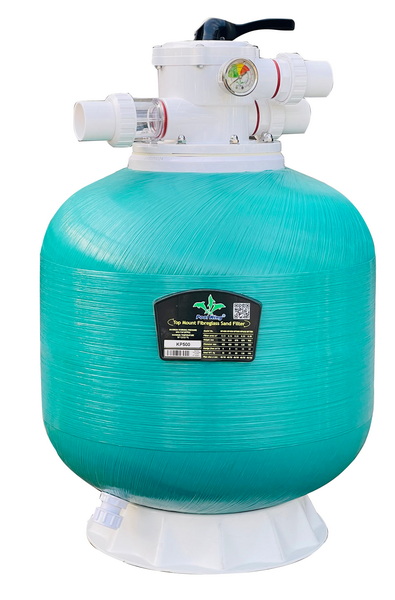
Check the sand capacity rating on your filter (for example, 100 lb or 200 lb), then apply the conversion ratio printed on the filter ball packaging (such as 1.5 lb balls = 50 lb sand). Divide the filter's sand capacity by the sand equivalence listed on your product to determine the correct number of bags or pounds.[6][1][8][4]
No. Over‑filling or under‑filling can both cause problems with pressure, flow, and filtration quality. Always follow the recommended media percentage or fill height given by your filter and filter ball manufacturers, usually around two‑thirds of the tank volume.[2][5][9]
No. Some brands say 1.5 lb equals 50 lb of sand, while others claim 1 lb replaces 100 lb of sand or use different density assumptions. For accurate dosing, rely on the specific conversion chart or instructions provided by the brand you purchase, not a generic rule.[7][8][4][3][2]
With a product that states 1.5 lb balls equal 50 lb sand, a 200 lb filter would need roughly 6 lb of balls, or about 4 bags of 1.5 lb each. If you are using another conversion (such as 1 lb = 100 lb sand), the same filter might only require 2 lb of media, so always check the label.[1][6][8][4]
Manufacturers generally recommend using one media type at a time in a sand filter housing. Mixing sand and filter balls can create uneven flow paths, unpredictable pressure, and inconsistent filtration, so most experts advise against it unless the product explicitly allows blending.[3][5][9][2]
Many filter ball products are designed to last 2–4 years, depending on pool usage, water chemistry, and maintenance practices. Replace or deep‑clean the balls whenever they appear compressed, discolored, or when normal backwashing no longer restores expected flow and pressure.[5][3]
Filter balls are particularly popular for small to medium‑sized above‑ground pools, but they can also be used in properly sized in‑ground systems that use sand filters. Ensure your pump and filter remain within the manufacturer's flow and pressure specifications when using any alternative media.[11][1][9][3]
[1](https://www.thepoolfactory.com/blogs/pool-care/how-many-boxes-of-filtra-balls-to-use-with-your-sand-filter-system)
[2](https://www.poolking.co/a-news-how-many-pool-filter-balls-do-i-need.html)
[3](https://www.pool.shop/blog/the-different-filter-media-options-and-their-pros-and-cons/)
[4](https://intheswim.com/blog/filterballs-a-breakthrough-in-pool-filtration-media.html)
[5](https://www.doheny.com/media/Pdfs/285001-benefits.pdf)
[6](https://www.poolsuppliescanada.ca/how-much-sand-does-my-pool-filter-need.html)
[7](https://www.facebook.com/groups/637529959937311/posts/2575679526122335/)
[8](https://www.walmart.com/ip/1-5Lb-Pool-Filter-Balls-Pool-Filter-Media-for-Swimming-Pool-Sand-Filters-Equals-50-lbs-Pool-Filter-Sand/9412666869)
[9](https://filterballs.com/pages/save-energy-money)
[10](https://fmsi.com/For-Sand-1-54-Lbs-Eco-Friendly-Fiber-Balls-Equals-50-Lbs-Sand-c-434631)
[11](https://www.youtube.com/watch?v=B8_c7M_iTwc)
[12](https://lesliespool.com/blog/pool-filter-media-types-a-comparison-guide.html)
[13](https://www.youtube.com/watch?v=zHqaDOEhWU0)
[14](https://www.facebook.com/groups/637529959937311/posts/2163128787377413/)
[15](https://automaticindustries.com/Balls-For-Sand-Filter-Pool-Filter-Media-Balls-For/1000088)
[16](https://usartsupply.com/products/usp-fb-415)
[17](https://www.youtube.com/watch?v=usl5JVWWTrM)
[18](https://www.facebook.com/groups/637529959937311/posts/2537722893251332/)
[19](https://www.reddit.com/r/pools/comments/1drh8nf/has_anyone_used_filter_balls/)
[20](https://www.facebook.com/groups/637529959937311/posts/2634650556891898/)


