
Views: 222 Author: Tina Publish Time: 2025-12-30 Origin: Site


Content Menu
● How Pool Ladders Are Designed
● Ways a Pool Ladder Can Be Lowered
● When You Should Not Lower a Ladder
● Step‑by‑Step: Lowering an Adjustable Pool Ladder
● Safety Tips When Lowering a Pool Ladder
● Choosing the Right Ladder for Your Pool
● How Filtration and Circulation Support Ladder Safety
● FAQs About Lowering Pool Ladders
>> 1. Can I lower any pool ladder to fit a shorter pool?
>> 2. How do I know if my ladder is adjustable?
>> 3. Is it safe to cut my ladder legs to lower them?
>> 4. What if my ladder is still wobbly after lowering?
>> 5. Should I add weights to keep a lowered ladder down?
Yes, many modern pool ladders can be lowered or adjusted, but only within the height range they are designed for and according to the manufacturer's instructions. Lowering a ladder too far beyond its rated range or by cutting/altering structural parts can make it unsafe and may void warranties.[1][2][3]
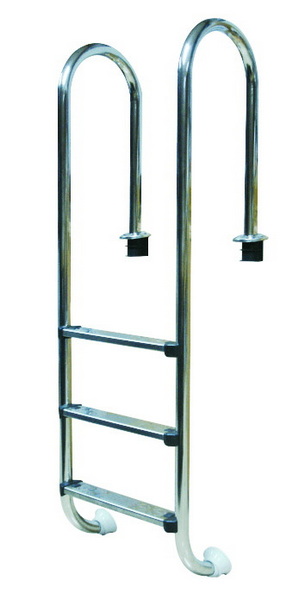
Most pool ladders are engineered for a specific pool type and wall height range, and that decides how far they can be lowered.[2][1]
- Above‑ground ladders are usually rated for wall heights like 36–42 inches, 48–54 inches, or 48–56 inches.[4][1]
- Many A‑frame and in‑pool ladders are adjustable by sliding legs, moving step sections, or trimming marked cut‑lines on rails and legs.[3][1]
Key point: The ladder feet should rest flat on the pool bottom and the top platform or handrails must sit level on the pool wall or deck for safe use.[2][3]
Lowering usually means shortening the effective height so the steps sit correctly on the pool floor while the top remains secure.[3][2]
- Built‑in height adjustment: Some ladders let you move step sections up or down along the side rails or adjust telescoping legs with bolts and nuts.[1][2]
- Cut‑to‑fit designs: Certain resin A‑frame ladders have molded lines where you can cut the handrails and legs for 48 or 52 inch pools.[3]
- Leg extensions or foot blocks: Some manuals advise adding or removing extension pieces or placing a patio block under the ladder foot to fine‑tune height.[5][2]
Never cut areas that are not specifically marked for trimming, and always follow the exact height instructions for your ladder model.[2][3]
There are clear situations where lowering a ladder is unsafe or not recommended.[6][7]
- The ladder is a fixed, non‑adjustable model rated only for one height.[7]
- Lowering would prevent the feet from sitting flat or would twist the rails so they no longer sit square on the wall or deck.[5][2]
- You would need to drill new structural holes or cut beyond the manufacturer's guide lines.[2][3]
In these cases, choosing a new ladder that matches your pool wall height is the safest option.[4][1]
Below is a generic process; always cross‑check with the specific instruction manual for your model.[8][2]
1. Confirm ladder and pool height
- Measure your pool wall height from the ground or deck surface to the top rail.
- Check your ladder label or manual for its supported height range, such as 48–54 inches.[3][2]
2. Review the manufacturer's instructions
- Download the manual if needed and identify any height‑adjustment sections (cut lines, telescoping legs, or bolt positions).[8][2]
- Check if separate instructions apply for 48, 52, or 54 inch walls on cut‑to‑fit ladders.[3]
3. Remove the ladder and disassemble as required
- Take the ladder out of the pool or away from the wall and place it on a flat surface.
- Loosen bolts or fasteners that secure the legs or inner ladder sections so they can slide.[5][2]
4. Adjust or trim carefully
- For telescoping or bolt‑position systems, slide the legs or inner section down to shorten the height, then re‑secure with bolts, washers, and nuts.[5][2]
- For cut‑line systems, use a hacksaw to cut at the marked lines on the handrails and/or legs that correspond to your pool height.[3]
5. Re‑assemble and test fit in the pool
- Place the ladder so the platform rests on the top rail or deck and the feet sit flat on the pool floor.
- Ensure no rocking or twisting when weight is applied and check that handrails are firm.[6][2]
6. Secure and stabilize
- Anchor deck‑mount flanges or braces with the recommended screws or bolts.
- For above‑ground models, a patio block or pad under the feet can improve stability; some guides also suggest foam or weight solutions if movement persists.[6][2]
This process helps ensure the ladder is safely lowered without compromising structural integrity.[2][3]
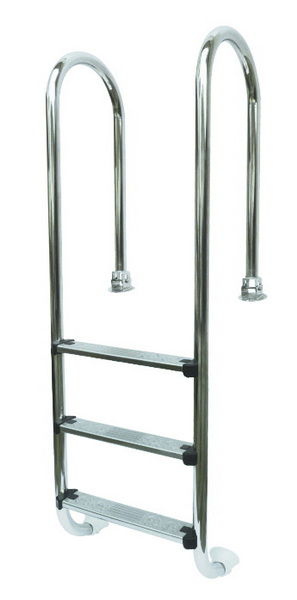
Focusing on a few essential safety practices reduces the risk of accidents after changing ladder height.[8][6]
- Always keep at least three points of contact (two feet and one hand) when first testing a newly adjusted ladder.
- Verify all bolts, nuts, and flanges are tight and re‑check them periodically during the season.[7][6]
- Make sure steps are fully submerged but not resting on uneven surfaces that can make the ladder wobble.[6][2]
If you notice persistent flexing, wobbling, or cracks, replace the ladder or consult a professional rather than lowering it further.[9][6]
When lowering is not enough or not allowed, matching the ladder model to the pool is critical.[1][4]
- Look for a ladder that specifies your exact wall height or a range that includes it, such as 36–42 inches or 48–54 inches.[1][2]
- Consider weight capacity, tread width, and whether you need inside‑only steps, A‑frame designs, or deck‑mounted systems.[13][4]
For above‑ground pools over about 52 inches, step systems that mount to the wall often provide safer, more stable entry than narrow ladders.[6]
Your ladder and circulation system work together to create a safe, comfortable swimming environment.
- Properly sized sand, DE, or cartridge filters keep water clear, making the ladder, treads, and bottom clearly visible for safe entry and exit.[14][15]
- Reliable pumps and well‑placed returns maintain circulation around the ladder area, reducing algae and slippery film on the steps.[16][14]
High‑quality OEM filtration systems, pumps, and LED lighting enhance both safety and aesthetics, especially when integrated with durable ladders and accessories from a specialized manufacturing factory.
A pool ladder can be lowered down only if it is an adjustable or cut‑to‑fit model designed to cover your pool's wall height range and installed according to the manufacturer's instructions. When in doubt, measuring your pool, checking the ladder's rated height, and choosing a properly matched ladder is far safer than forcing modifications that weaken the structure.[7][1][2][3]
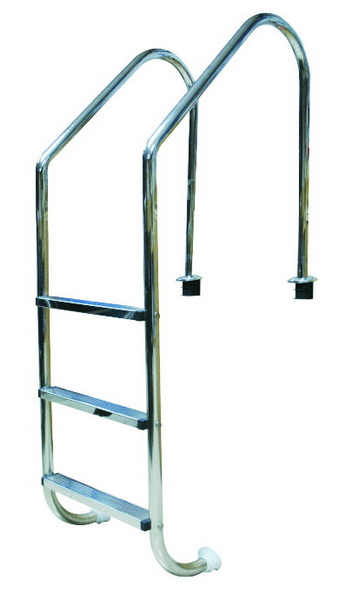
Not every ladder can be safely lowered; only models specifically designed for multiple wall heights with adjustment mechanisms or marked cut lines should be shortened. Fixed‑height ladders usually must be replaced, not modified.[7][2][3]
Check the manual and look for sliding legs, multiple bolt positions, telescoping sections, or molded cut lines on the rails and legs. Product listings often state a height range such as “for 48–54 inch above‑ground pools”.[4][1][2][3]
It is only safe to cut legs or rails at manufacturer‑marked cut lines and when the manual explicitly instructs you to do so for a certain pool height. Cutting elsewhere can weaken the ladder and void any warranty.[7][2][3]
First confirm the feet sit level and all hardware is tight, then consider stabilizing with a patio block under the feet or supports recommended in the manual. Persistent wobble can signal that the ladder is the wrong size or damaged and may need replacement.[6][2]
Some owners use weights or sand‑filled devices to keep steps from floating, but excess or poorly placed weight can stress the ladder and pool liner. It is better to use the manufacturer's recommended anchoring and weighting methods, and ensure the ladder rails are water‑filled when required.[17][9][5][2]
[1](https://www.lowes.com/pl/Above-ground-pool-ladders-steps-Pool-ladders-lifts-Pools-Outdoors/4294610238)
[2](https://www.poolkingfilter.com/how-to-adjust-a-frame-pool-ladder.html)
[3](https://www.familypoolfun.com/pdf/ne1222_manual.pdf)
[4](https://www.thepoolfactory.com/collections/above-ground-pool-ladders)
[5](https://images.inyopools.com/cloud/documents/200700t-assembly-instructions-for-use-with-200600t-200400t.pdf)
[6](https://blog.watsons.com/blog/stabilize-above-ground-pool-ladder)
[7](https://www.doheny.com/media/Pdfs/6581-instructions.pdf)
[8](https://www.intexsales.com/b2cmnl/B2CMNLServlet?instantiate=B2cMnldownloadApp&action=pub_mnl&filnam=330IO_A0_1805_EN.pdf)
[9](https://www.reddit.com/r/pools/comments/wubcro/how_to_keep_stairs_down_on_floor_instead_of/)
[10](https://www.youtube.com/watch?v=JJkG7vsan1E)
[11](https://www.youtube.com/watch?v=UOszx5_q0s4)
[12](https://www.youtube.com/watch?v=hROweruJPdc)
[13](https://poolandspasupplystore.com/pools-and-equipment/above-ground-pool/ladders-and-steps)
[14](https://www.perplexity.ai/search/e0177386-b996-4ff9-be24-a043fa1fdcce)
[15](https://www.perplexity.ai/search/d64d04b0-9937-4ba5-9850-2b6738db13a7)
[16](https://www.perplexity.ai/search/5d1fe216-f906-4e4a-9eaa-5fcbf558dcfb)
[17](https://www.facebook.com/groups/637529959937311/posts/2594449264245361/)
[18](https://www.facebook.com/groups/637529959937311/posts/2551874295169525/)
[19](https://www.doheny.com/confer-deluxe-straight-up-down-in-pool-ladder)
[20](https://aquapoolsupply.com/products/vinylworksdeluxeadjustable24agpoolstepladderentrysystemwnonslipstepstaupein24tvwcin24t)
[21](https://www.reddit.com/r/swimmingpools/comments/14dkmoh/above_ground_ladder_too_shorthow_to_fix/)
[22](https://www.facebook.com/groups/637529959937311/posts/2558390304517924/)
[23](https://www.homedepot.com/p/Blue-Wave-A-Frame-Flip-Up-Pool-Ladder-for-Above-Ground-Pools-NE1222/203414404)


