


Content Menu
● Main Reasons Your Pool Ladder Is Wobbly
>> 1. Loose bolts and hardware
>> 2. Rust, corrosion, and material fatigue
>> 3. Improper installation or anchoring
>> 4. Uneven deck, soft ground, or shifting base
>> 5. Insufficient weight or flotation issues (above‑ground)
● Why a Wobbly Ladder Is Dangerous
● Step‑by‑Step: How to Fix a Wobbly Pool Ladder
>> 1. Inspect and tighten all hardware
>> 2. Examine anchors, cups, and surrounding deck
>> 3. Level and stabilize the base
>> 4. Add weight or stabilizers if needed
>> 5. Replace damaged or worn parts
● Preventing Future Wobble: Maintenance and Safety Tips
>> Regular inspection and maintenance
>> Choose the right ladder and accessories
● Related Questions and Answers
>> 1. Why does my pool ladder keep moving away from the wall?
>> 2. Can I use sandbags or bricks to stabilize my pool ladder?
>> 3. When should I replace instead of repair a wobbly ladder?
>> 4. Are there specific safety standards for pool ladders?
>> 5. How often should I check the tightness of my pool ladder bolts?
>> 6. Will ladder feet damage my pool liner?
A wobbly pool ladder usually comes down to loose bolts, worn or corroded hardware, improper anchoring, or an uneven surface under the ladder legs. Ignoring the wobble is risky because an unstable ladder can easily lead to slips, falls, and even drowning incidents, especially for children and older swimmers.[1][2][3]
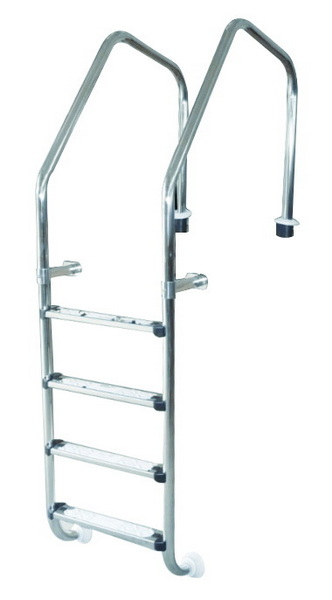
Over time, the nuts, bolts, and screws that hold the ladder together and secure it to the deck or pool wall can gradually loosen under constant use, water movement, and vibration. Even a small amount of play in these connection points can translate into a noticeable side‑to‑side or front‑to‑back wobble when someone climbs.[4][5][1]
- Loose mounting bolts at the deck anchors or rail sockets are one of the most common causes of wobble for in‑ground ladders.[6][1]
- Above‑ground ladders often loosen at step-to-rail joints or where the legs meet the top platform.[7][1]
Stainless steel and coated steel ladders constantly exposed to chlorinated or saltwater eventually develop rust at welds, fasteners, and inside anchor cups. Corrosion thins the metal, weakens joints, and lets connections flex more than designed, which shows up as wobble under load.[2][5]
- Corroded anchor wedges or cups may no longer grip the ladder tube firmly, allowing the rails to rock in their sockets.[1][6]
- On some above‑ground models, internal rust in hollow legs or steps can cause hidden weakness and instability.[5][7]
If an in‑ground ladder is not seated fully in its anchors, or the anchors themselves were not installed correctly, wobble is almost guaranteed. For above‑ground ladders, poor assembly or missing hardware is a frequent reason the ladder never feels fully stable.[7][6][1]
- Deck anchors set too shallow, not bonded properly, or not packed with the right cement/epoxy may shift or crack around the ladder tubes.[6]
- Skipped washers, under‑tightened lock nuts, or mixing non‑original hardware can leave excess play in the frame.[7][1]
For above‑ground pools, a ladder sitting on a soft, sloped, or uneven base will rock as weight shifts from one side to the other. Even on concrete decks, small irregularities or a missing ladder mat under the legs can create micro‑movement that becomes noticeable wobble.[8][1][7]
- Bare metal feet pressing into soft soil or sand slowly sink and tilt under repeated use.[9][7]
- Pavers or blocks that were added under the legs as a quick fix can shift over time if they are not leveled and locked in place.[10][1]
Many above‑ground pool ladders rely on either built‑in ballast, sand‑filled legs, or added weights to stay planted in the water. If these cavities are empty, not fully filled, or have leaked, the ladder can float, drift, or move slightly with waves, creating a wobbly, unstable feel.[9][1][7]
- Some models are designed to be filled with water or sand, but owners sometimes skip this step or do it only partially.[8][9]
- Lightweight ladders without added weight can ride up in the water when swimmers push off the steps, loosening their contact points and making them feel unstable.[1][7]
A wobbly ladder is more than an annoyance; it is a clear safety hazard for anyone entering or exiting the pool. Sudden shifts can cause a loss of balance, slips, or falls onto the deck, pool wall, or into the water.[3][1]
- Common injuries include sprains, fractures, bruises, and cuts from hitting the ladder, coping, or deck edge as the ladder moves unexpectedly.[3]
- Major instability or broken steps can make it hard for a tired swimmer or child to climb out, increasing the risk of panic and potential drowning in extreme cases.[11][3]
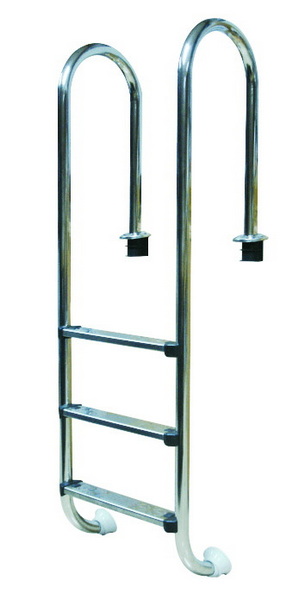
Start with a thorough visual and manual inspection of every connection point, from the top rails down to the feet. Use a suitable wrench or socket set to snug all bolts, nuts, and screws according to the ladder manufacturer's instructions.[5][7]
- Check deck anchor bolts, step fasteners, handrail joints, and any brackets connecting the ladder to the pool wall.[7][1]
- Replace missing or badly stripped hardware with stainless steel or manufacturer‑approved parts, and avoid mixing metals that may accelerate corrosion.[5][1]
For in‑ground pools, remove the ladder rails (if possible) and inspect inside the anchor cups as well as the concrete around them.[6][1]
- Look for cracks, spalling concrete, loose anchor cups, or blocked drain holes that trap moisture and promote corrosion.[6][5]
- If an anchor is loose or failing, it may need to be reset with new high‑strength cement/epoxy or replaced entirely, following local building codes and manufacturer guidance.[1][6]
Ensure the surfaces under all ladder feet are flat, firm, and level.[7][1]
- For above‑ground pools, place the outer legs on compacted, level ground, pavers, or a pre‑cast pad, and the inner legs on the pool floor using a ladder mat to distribute load and protect liners.[1][7]
- Adjust or shim uneven spots so all legs share the load evenly and do not rock when weight is applied.[7][1]
If the ladder still moves in the water after tightening and leveling, add ballast or stabilizing accessories.[1][7]
- Fill any built‑in weight chambers with the recommended material (water or sand) per the manual.[9][8]
- Use commercial ladder weights, sandbags, or water‑filled bags designed for pool use to hold the base down, ensuring they are smooth, waterproof, and not tripping hazards.[7][1]
Some wobble cannot be fixed by tightening or weighting because the structure itself is compromised.[2][5]
- Replace cracked steps, bent rails, worn rubber feet, or severely rusted sections using genuine parts whenever possible.[5][1]
- If the ladder is old, badly corroded, or repeatedly problematic, replacing the entire unit with a modern, code‑compliant ladder is often the safest long‑term option.[11][1]
Consistent inspection drastically reduces the chance that wobble will return.[5][7]
- At least monthly in the swimming season, check all hardware, anchors, and feet; re‑tighten as needed and look for rust or cracks.[5][7]
- Before each swim session, give the ladder a quick shake test from the deck to confirm it feels solid and stable.[1][7]
Selecting a ladder that matches your pool type, depth, and user profile improves inherent stability and safety.[12][11]
- Look for features such as non‑slip steps, handrails on both sides, adequate step width, and strong anchoring systems aligned with safety guidelines.[13][12]
- Add accessories like ladder mats, handrails, or stabilizer kits to further reduce movement and improve grip, especially for children and elderly swimmers.[14][1]
A wobbly pool ladder almost always signals a fixable issue such as loose hardware, corrosion, poor anchoring, uneven footing, or inadequate weight—each of which can be identified with a careful inspection. Correcting the wobble and maintaining your ladder with regular checks, proper anchoring, and timely part replacement will greatly improve pool safety and give swimmers a secure, confident way to enter and exit the water.[5][7][1]
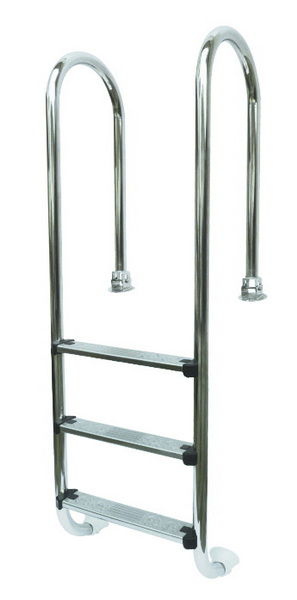
This usually happens when the ladder is under‑weighted or not correctly anchored, allowing buoyancy and water movement to push it away from the pool wall. Filling ballast chambers, adding approved weights, and confirming rail or bracket connections to the wall typically solves this problem.[7][1]
Yes, you can use sandbags or specially designed water weights as long as they are waterproof, smooth, and placed so they do not create tripping hazards or damage the liner. Commercial pool‑specific weights are usually safer and more durable than improvised bricks or rough materials.[1][7]
If the ladder has severe rust, cracks in rails or steps, loose anchors that cannot be restored, or repeated failures after multiple repairs, replacement is recommended. A new, code‑compliant ladder with modern safety features is often the most reliable solution in these cases.[14][2][11][1]
Safety recommendations from organizations such as the CPSC emphasize adequate step width, dual handrails, non‑slip treads, covered sharp edges, and restricting ladder access when not in use for above‑ground pools. Many pool codes also require proper barriers and fencing to prevent unsupervised access near ladders.[12][13][11]
During the swimming season, a monthly hardware inspection is a good minimum, with additional checks after storms, heavy use, or if anyone reports the ladder feels loose. A quick shake test before use helps catch problems early and maintain a consistently safe entry and exit point.[5][7][1]
Properly assembled ladders with intact end caps or rubber feet should not damage liners when used correctly. Using a ladder mat under the feet adds extra protection and can also improve stability.[8][1]
[1](https://www.poolkingfilter.com/how-to-staBilize-pool-ladder.html)
[2](https://www.poolking.co/a-news-why-is-my-pool-ladder-wobbly.html)
[3](https://blog.watsons.com/blog/make-above-ground-pool-ladder-stable)
[4](https://www.thisoldhouse.com/tools/fast-fix-for-loose-ladders)
[5](https://www.mavaquadoc.com/blogs/pool-maintenance-blog/how-to-maintain-your-pool-ladders-and-handrails-for-longevity)
[6](https://mrpoolman.com.au/blogs/news/easily-install-or-replace-your-pool-ladders-and-rails)
[7](https://blog.watsons.com/blog/stabilize-above-ground-pool-ladder)
[8](https://support.funsicle.com/docs/funsicle-ladders)
[9](https://www.reddit.com/r/AboveGroundPools/comments/vcjn3w/ladder_is_very_wobbly_advice_on_how_to_stabilize/)
[10](https://www.facebook.com/groups/637529959937311/posts/2564006880622933/)
[11](https://poolfence.com/pool-ladders-a-step-toward-safety/)
[12](https://www.poolfencediy.com/blogs/blog/pool-ladder-safety)
[13](https://www.swimmingpool.com/resources/safety-guides/safety-guidelines/)
[14](https://poolie.com/blog/general/enhance-pool-safety-with-handrail-and-ladder-installation/)
[15](https://www.youtube.com/watch?v=Jlj82ZOTU2I)
[16](https://www.youtube.com/watch?v=Nb82H39bU0g)
[17](https://sternsbackyard.com.au/blogs/news/safety-tips-for-installing-and-using-above-ground-pool-ladders)
[18](https://www.reddit.com/r/pools/comments/1bkj319/pool_ladder_railing_is_loose_can_i_just_pour/)
[19](https://www.facebook.com/groups/637529959937311/posts/2268091670214457/)
[20](https://www.youtube.com/watch?v=yFMxysbwa6s)


