


Content Menu
>> Impact on Filtration Efficiency and Water Clarity
>> Energy Consumption and Operating Cost
>> System Longevity and Warranty Considerations
● Key Concepts in Pool Pump Sizing
>> Pool Volume and Turnover Rate
>> Pump Flow Rate vs. Filter Capacity
>> Plumbing Resistance and Total Dynamic Head (TDH)
>> Step 1 — Measure Pool Volume
>> Step 2 — Determine Desired Turnover
>> Step 3 — Check Existing Pump Flow Rate and Efficiency
>> Step 4 — Match to Filter Type and Size
>> Step 5 — Account for Head Loss and Piping Layout
>> Step 6 — Consult the Pump Performance Chart
>> Step 7 — Consider Voltage, Horsepower, and Variable-Speed Options
● Choosing Against Over- or Under-Sizing
>> When to Choose a Larger Pump
>> When a Smaller Pump Is Acceptable
>> The Role of Variable-Speed Pumps
● OEM and Engineering Considerations
>> Custom Pump Assemblies by Pool Type
>> Integration with All Filter Types
>> Quality Control, Certifications, and Assurance
>> Example 1: Small Residential Pool
>> Example 2: Large Commercial Pool
>> Example 3: High-Feature Private Pool
● Maintenance and Best Practices
>> Regular Testing and Cleaning
>> Signs of Mismatch and Troubleshooting
● Frequently Asked Questions (FAQ)
>> Q1: How do I determine my pool's turnover rate and required flow?
>> Q2: How do Total Dynamic Head (TDH) and plumbing affect pump selection?
>> Q3: Should I choose a variable-speed (VS) pump?
>> Q4: What's the risk of oversizing a pump?
>> Q5: Can your company provide custom OEM/ODM solutions for my pool?
Sizing a pool pump correctly is one of the most important decisions for any pool owner, builder, or industry professional. The right pool pump guarantees excellent water clarity, reduced energy bills, and extended equipment life, all while ensuring the optimal experience for swimmers. As a leading Chinese manufacturer specializing in high-end sand filter assemblies and advanced filtration solutions, we understand not just the science and engineering behind pool pump sizing, but also the practical requirements of our international OEM/ODM clients.
In this guide, you'll learn everything about sizing a pool pump for residential, commercial, or bespoke pools, including technical foundations, step-by-step calculations, advanced configuration tips, and professional OEM considerations.[1][2][5][6]
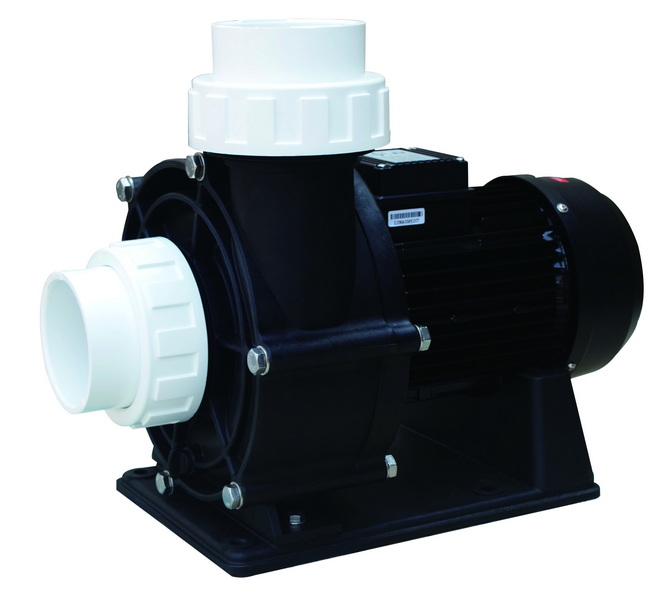
Ensuring the correct pool pump size is critical for several reasons beyond simple water movement:
A correctly sized pump enables the filter—whether sand, DE, or cartridge—to work at its design capacity, maximizing particle removal and ensuring brilliant water clarity. An undersized pump may fail to turn over the water adequately, leading to cloudy water and ineffective sanitation. Conversely, an oversized pump can push too much water too quickly, reducing filter effectiveness and sometimes forcing debris through the media rather than trapping it.[2][1]
Pumps account for a significant portion of a pool facility's electricity usage. Oversized pumps waste energy, while right-sized or variable-speed pumps conserve power and operate quietly. By matching the pump to the true hydraulic requirements, you efficiently combine cleanliness and cost savings.[6]
Proper pump selection ensures that all components—filters, pipes, heaters, and chlorinators—operate within their design specifications. It safeguards against over-pressure damage, premature seal wear, and leaks, upholding warranty compliance and extending the entire system's useful lifespan.[1]
Let's break down the main concepts you'll use in your sizing calculation:
Start by accurately calculating pool volume:
- Rectangular: Length × Width × Average Depth × 7.5 = Volume (US Gallons)
- Circular: Diameter × Diameter × Average Depth × 5.9 = Volume (US Gallons)
- Oval: Length × Width × Average Depth × 6.7 = Volume (US Gallons)
For irregular pools, sketch and divide into simple shapes, estimate each, and combine totals.
Target turnover rate: Most residential pools aim for a complete water turnover in 8 hours. Higher turnover rates may be required for public, heavily used, or commercial pools (often 6 hours or even less by regulation).[5][2][6]
Flow rate (in gallons per minute, GPM) is calculated as:

Match flow rate to both the selected filter's minimum and maximum specifications; never exceed the filter's rated flow for safety and effectiveness.[5][1]
Pipes, elbows, fittings, filter media, heaters, and other equipment create resistance. Total Dynamic Head (TDH) is measured in feet and represents all these losses combined.
Assessing TDH:
- Add up resistance from all straight pipe runs, fittings, valves, filter backpressure, and any elevation differences.
- A typical residential pool system falls in the 40–70 feet TDH range.
- Consult pump performance curves to select a model that delivers your required GPM at the calculated TDH.[9][1][5]
Now, let's walk through each stage required for precise pump selection:
Use formulae above to calculate total water in gallons or cubic meters. For example, a pool 30ft × 15ft × 6ft deep on average:
30×15×6×7.5=20,250gallons
For most pools, one full turnover in 8 hours:

Compare your calculated flow requirement with existing pump data, and inspect the system for high-resistance points (long pipe runs, sharp elbows, elevation).
Verify that the pump's flow is within your filter's accepted range. For example, a filter rated for 40–60 GPM should not operate with a 70 GPM pump to prevent channeling and inefficient filtration.
Sum the friction losses from pipes, elbows, tees, valves, and elevation differences:
- Each 90-degree elbow increases resistance (typically 1–4 feet of head).
- Larger pipes mean less friction; 2” pipes are preferred over 1.5” for most systems.
- Accurate TDH calculation ensures you select a pump that meets requirements with a comfort margin.
Select a pump whose performance curve intersects your required GPM at your calculated TDH. Choose a model where your operating point sits in the efficient middle of the curve—for flexibility and stability.
- Ensure compatibility with available power supply (115V or 230V).
- For most residential pools, 1.0–1.5 HP is sufficient; larger or multi-featured pools may need up to 2.5 HP.
- Variable-speed pumps enable precise adjustment and major energy savings—preferred in all new installations.[1][5]
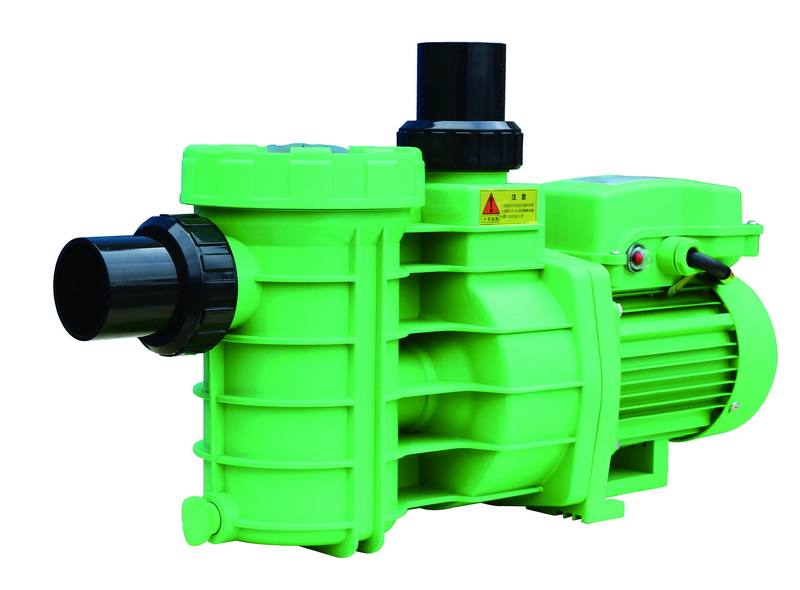
Consider a larger pump if you have extensive pipe runs (far from pool to pad), multiple water features, waterfalls, or in-floor cleaning with high flow demands.
If your pool is compact, plumbing is short and direct, and the filter system is efficient, a smaller, energy-saving pump can deliver reliable performance and longevity.
Variable-speed (VS) pumps let you tune performance exactly to your needs, minimizing energy waste and optimizing filtration throughout the day and night.
We specialize in OEM production for overseas brands and project owners. Our intelligent lines build pump-filter systems tailored for:
- Residential pools (compact, silent, reliable)
- Commercial or public pools (robust, large volume, high turnover)
- Luxury pools with advanced water features and LED integration
Our engineering teams custom-design seamless connections for sand filters, DE filters, and cartridge/tube filters, ensuring smooth hydraulic performance and easy field installation.
Every product meets strict international standards (CE, Reach, UL, NSF/ANSI 50). Our automated QC labs inspect for flow rate, pressure stability, and component durability. OEM packages include batch tracking, private label options, and logistics support to global partners.
Suppose your pool is 20ft × 10ft × 5ft average depth. Volume is:
20×10×5×7.5=7,500gallons
With an 8-hour turnover, target GPM:
7,500÷(8×60)≈16GPM
For low-resistance plumbing (30–40 TDH), a 0.75–1.0 HP variable-speed pump suffices.
A complex resort pool measures 50ft × 25ft × 6ft average:
50×25×6×7.5=56,250gallons
If local code mandates a 6-hour turnover, GPM is:
56,250÷(6×60)≈156GPM
With long plumbing, multiple features, and a commercial sand filter, you'll need a 2.0–2.5 HP high-head VS pump.
A luxury pool with water jets, spa returns, and LED waterfalls may require segmented hydraulic circuits. OEM engineering can provide split-flow pump/filter systems, each sized for a specific purpose—ensuring no single pump is overloaded and each pool zone receives correct turnover.
- Clean strainer baskets weekly
- Backwash sand/DE filters once pressure increases 8–10 psi above clean baseline
- Inspect pump impellers for debris every quarter
- Poor circulation or low pressure may signal undersized/overworked pump
- Frequent filter pressure spikes suggest an oversized pump or clogged media
- Excessive noise/vibration point to mounting or priming issues; review installation and TDH calculations
Choosing the right pool pump size is essential for superior water quality, energy-efficiency, and equipment durability. By starting with an accurate pool volume, targeting the correct turnover rate, calculating system resistance, and matching pump performance to filter capacity, you ensure an integrated solution that protects your investment and provides healthy swimming for years. Our factory brings together advanced engineering and manufacturing expertise to offer global OEM/ODM partners complete filtration solutions—from smart pumps and sand filters to LED lighting and full accessory integration, all backed by authoritative certifications and robust quality controls. Whether you require tailored systems for residential, commercial, or specialty projects, we stand ready to deliver advanced, sustainable filtration you can depend on.[2][6][5][1]
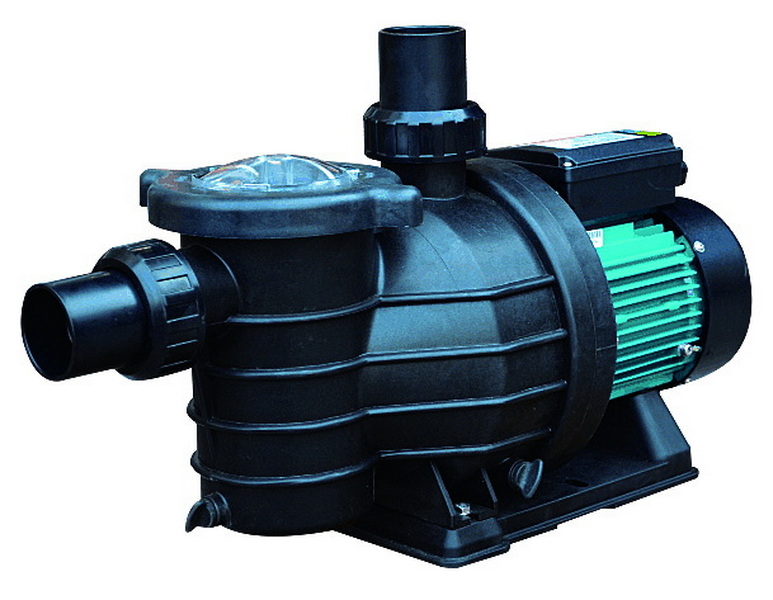
A: Calculate your pool volume with the relevant formula, then divide by your target turnover time (usually 8 hours for residential, 6 for commercial). Flow rate (GPM) = Pool Volume ÷ (Hours × 60).[5][1]
A: TDH sums friction, elevation, and filter resistance. Estimate TDH using pipe lengths, bends, and fittings. Choose a pump that reaches the required GPM at that TDH from its curve.[9][1]
A: Yes—VS pumps adjust performance for different needs, often reducing energy use by 40–70% compared with single-speed types, offering both efficiency and longevity.[6]
A: Oversized pumps increase costs, raise filter pressure, shorten lifespan, and decrease filtration efficiency. Always match pump specs closely to calculated system needs.[1][5]
A: Absolutely—our team designs and produces tailored pump/filter systems, matching all international standards and client requirements for bulk and project orders.
[1](https://blog.royalswimmingpools.com/blog/what-horse-power-pump-should-i-get-for-my-pool)
[2](https://www.aquagem.com/news/pool-pump-sizing-guide-for-your-swimming-pool)
[3](https://www.swimmingpoolsteve.com/pages/pump-sizing.html)
[4](https://www.inyopools.com/HowToPage/how_to_size_a_pool_pump_for_your_in_ground_pool_.aspx?CommentPage=15)
[5](https://www.vitafilters.com/blogs/news/what-size-pool-pump-do-i-need-for-my-pool)
[6](https://www.aquamagazine.com/builder/article/15710659/five-steps-to-proper-pool-pump-selection)
[7](https://www.hayward-pool.co.uk/article/configurators/pump-configurator)
[8](https://poolpartstogo.com/blogs/articles/choosing-the-right-pool-pump-for-above-ground-pools)
[9](https://intheswim.com/blog/swimming-pool-feet-of-head-calculations.html)


