
Views: 222 Author: Tina Publish Time: 2026-02-01 Origin: Site


Content Menu
● What Your Pool Filter Hose Setup Does
● Tools and Parts You Need Before Hook‑Up
● Step‑by‑Step: How to Hook Up Pool Filter Hoses
>> Positioning the Pump and Pool Filter
>> Preparing Fittings and Ports on the Pump and Pool Filter
>> Connecting Hose 1 – Skimmer to Pump
>> Connecting Hose 2 – Pump Outlet to Pool Filter “PUMP” Port
>> Connecting Hose 3 – Pool Filter “RETURN” to Pool Return Jet
>> Adding the Backwash/Waste Hose on a Sand Pool Filter
>> Priming the System and Checking for Leaks
● Special Notes for Different Pool Filter Types
>> Cartridge Pool Filter Hoses
>> DE (Diatomaceous Earth) Pool Filter Hoses
● Troubleshooting Common Hose and Pool Filter Problems
>> Pump Losing Prime or Running Dry
>> Persistent Leaks at Hose Joints
>> Weak Return Flow, Dirty Water
>> Hose Collapsing Under Suction
● Tips for OEM Manufacturers and Brand Partners
● FAQ About Hooking Up Pool Filter Hoses
>> 1. How many hoses does a typical sand pool filter need?
>> 2. Which hose goes where on my pool pump and pool filter?
>> 3. Can I use regular garden hose instead of pool filter hoses?
>> 4. Why is my pool filter hose leaking even after I tightened the clamp?
>> 5. How do I know the pool filter is hooked up in the right direction?
Learn how to hook up pool filter hoses step by step for sand, cartridge, and DE systems. This detailed guide covers skimmer, pump, and pool filter connections, diagrams, leak‑prevention tips, and FAQs so your pool filter runs smoothly all season.
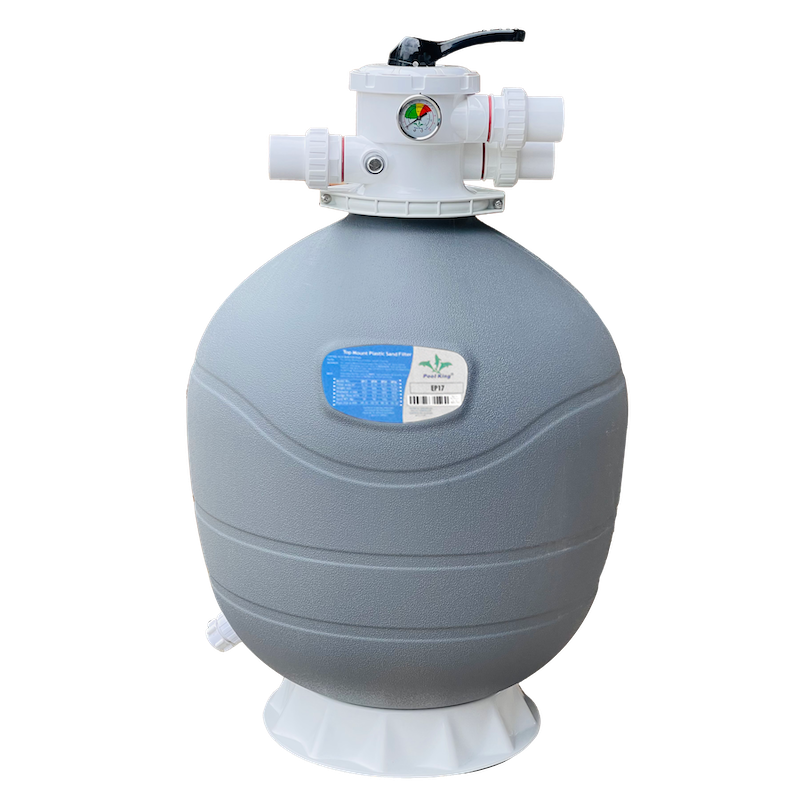
A typical pool filter system creates a continuous loop of water flow: from skimmer to pump, from pump to pool filter, and from pool filter back to the pool return jet. Understanding this basic path is the first step in hooking up pool filter hoses correctly.
Most above‑ground and small in‑ground setups use three main hoses:
- From the skimmer on the pool wall to the pump strainer housing (pump inlet).
- From the pump outlet to the pool filter “PUMP” port.
- From the pool filter “RETURN” port back to the return jet in the pool.
Some sand pool filter systems also include a fourth hose, usually a flat backwash/waste hose that routes water away when you clean or drain the pool filter. Knowing this layout helps you plan hose routing and avoid crossed or reversed connections.
Before you start connecting any pool filter hose, gather everything you will need on one work surface.
- Pool pump and pool filter (sand filter, DE pool filter, or cartridge filter tank) with multiport valve or built‑in inlet/outlet fittings.
- Installed skimmer and return fittings on the pool wall for your above‑ground or in‑ground design.
- Flexible hoses suitable for pool filter use (typically 1¼ or 1½ inch diameter and reinforced for suction and pressure).
- Stainless‑steel hose clamps (bar‑clamp or screw‑type) to avoid rust and ensure a tight grip.
- Hose adapters, union fittings, or threaded nipples that came with the pump or pool filter kit.
- Teflon tape (PTFE tape) for sealing threaded connections that lead into/from the pump and the pool filter.
- Basic hand tools: screwdriver or nut driver, maybe a wrench or pliers for stubborn fittings.
If you are an OEM manufacturer providing these systems to brands, ensure each kit includes clear hose‑length labels (Hose 1, Hose 2, Hose 3) and simple printed diagrams that mirror the flow path.
Begin with correct layout and placement of the pump and pool filter near the pool.
- Install the pump and pool filter on a firm, level surface away from standing water but close enough to keep hose runs reasonably short.
- Make sure the pump is oriented so the strainer housing faces the skimmer and the “RETURN” side of the pool filter faces the return jet for straight, low‑bend routing.
- Leave enough clearance around both units to access hoses, clamps, and the multiport valve when you need to maintain or clean the pool filter.
Good positioning reduces stress on the hoses and makes future repairs or seasonal shutdowns much easier.
Clean, well‑prepared fittings are critical to leak‑free connections.
- Identify and label the main points of contact on the pump:
- Strainer housing (front of pump) = Sahara / suction port.
- Pump outlet (top or side) = Discharge / high‑pressure output.
- Identify the relevant ports on the pool filter (sand, cartridge, or DE type):
- “PUMP” port = Inlet from the discharge side of the pump.
- “RETURN” port = Outlet back to the return jet.
- “WASTE/BACKWASH” port = Optional backwash hose connection on sand pool filters.
- Wrap Teflon tape clockwise on all male threaded ports or adapters that will receive hose fittings (usually 2–3 wraps).
- Screw hose adapters or union fittings into these ports by hand first, then snug them with a wrench—you should not distort the plastic or crush the threads.
- Inspect all O‑rings and gaskets on multiport valves and unions to make sure they sit flat and are not twisted or cracked.
Done correctly, this preparation ensures a clean, airtight seal before you ever slide the first hose in place.
Hose 1 is the suction hose that draws water from the pool into the pump, and then toward the pool filter.
- Slide a stainless‑steel hose clamp onto each end of the first pool filter hose before you install it.
- Push one end of the hose firmly onto the skimmer thru‑wall adapter on the outside of the pool. Rotate the hose slightly as you push to evenly seat it over the fitting barb.
- Secure that end with a clamp and tighten it just enough so the hose cannot twist or slide.
- Attach the other end of Hose 1 to the strainer housing / pump inlet on the front of the pump and clamp it in the same way.
If the hose feels stiff, briefly dip the end in warm water (not hot) for 30–45 seconds; this slightly softens the rubber and makes it slide onto fittings more easily without forcing or cutting.
This completed Hose 1 connection forms the beginning of the circulation loop, where dirty water leaves the pool and enters the pump before going to the pool filter.
Hose 2 is usually a high‑pressure hose that carries water from the pump discharge into the pool filter.
- Slide clamps onto both ends of the second hose before finishing the install.
- Attach one end to the pump discharge outlet, using a stainless‑steel clamp or by threading into a union, depending on your design.
- Find the pool filter port labeled “PUMP” on the multiport valve or inlet manifold and screw in a matching adapter if your kit includes one.
- Push the other end of the hose fully onto that adapter and tighten the clamp so the hose will not pull loose under pressure.
On many sand pool filter setups, this is a shorter, thicker hose specifically designed for high‑pressure service. Check your OEM manual to confirm whether a special reinforced “pump‑to‑filter” hose is required for your model.
This completes the pathway from pump to pool filter, ensuring that pressurized water enters the sand, cartridge, or DE media and is cleaned before being sent back to the pool.
Hose 3 returns freshly filtered water to the pool and closes the loop.
- Locate the outlet on your pool filter labeled “RETURN” (this may be on the multiport valve of a sand pool filter or on the outlet manifold of a cartridge or DE pool filter).
- Install a hose adapter as needed, using Teflon tape on threaded ports, and tighten it firmly.
- Push one end of the third hose onto that adapter and clamp it.
- Attach the other end of the hose to the return jet fitting on the outside of the pool wall and secure it with a clamp as well.
When the system runs, you should see a strong, steady jet of water in the pool, confirming that the pool filter is circulating and sending clean water back.
If your system uses a sand pool filter, you often need a fourth hose for backwashing and draining.
- Find the port on the multiport valve labeled “WASTE” or “BACKWASH.”
- Attach a flat or flexible backwash hose using a clamp or adapter supplied with the valve.
- Run this hose out to a safe drainage area away from the pool deck, other equipment, and building foundations.
- Remember: this backwash hose is only used when the multiport valve is set to Backwash or Waste, not during normal cleaning (“FILTER”) operation.
During backwash, much of the unfiltered water and loosened debris escapes through this hose, which is why placement and length matter for convenience and cleanliness.
Once all pool filter hoses are connected, it is time to start the system and inspect for problems.
- Confirm the multiport valve is set to “FILTER” so water circulates through the sand, cartridge, or DE media.
- Remove the lid from the pump strainer basket and pour water into the housing until it overflows; this helps the pump prime and reduces air pockets.
- Replace the lid and secure it according to the manufacturer's instructions.
- Turn on the pump and let it run for several minutes. Watch all hose joints, threaded ports, and unions for drips, spray, or bubbles.
- If you see a leak, shut off the pump, release pressure, and gently tighten that hose clamp or reseat the fitting. Sometimes a small re‑wrapping of Teflon tape on a threaded port will fully eliminate a drip.
Taking a few minutes to inspect the entire hose layout—skimmer to pump, pump to pool filter, and pool filter to return—will pay off in fewer leaks, lower maintenance, and better circulation.
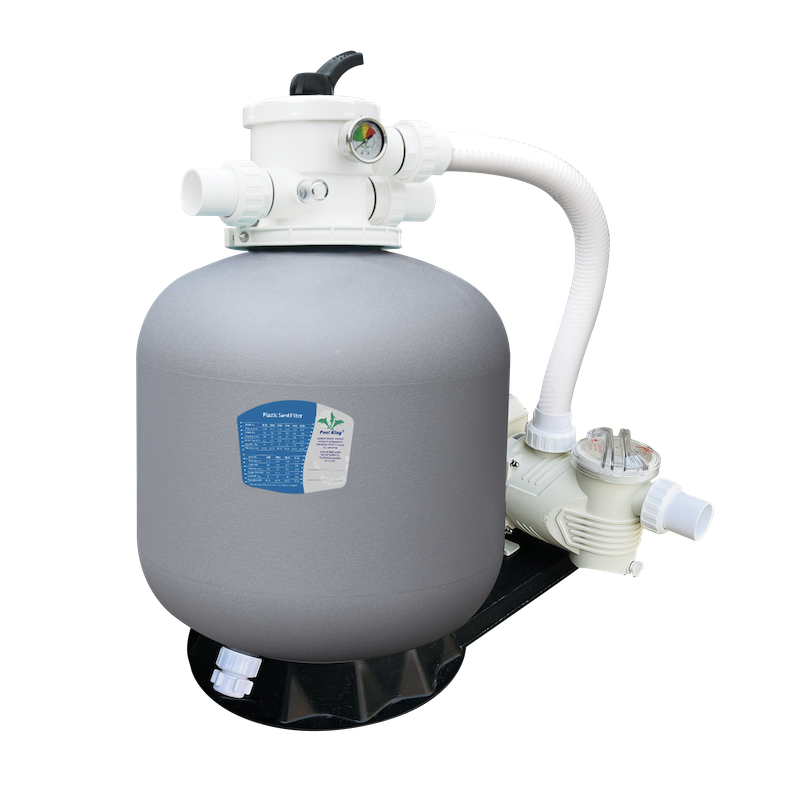
Although the hose logic is similar, pool filter designs differ in the details.
A sand pool filter typically uses:
- Hose from skimmer → pump.
- Hose from pump → “PUMP” port on the multiport valve.
- Hose from “RETURN” port → return jet.
- Optional backwash/waste hose from the “WASTE” port to a drain.
Because sand pool filters require periodic backwashing, factory‑integrated hose‑routing graphics and color‑coded ports (“FILTER,” “BACKWASH,” “WASTE”) help both end users and pool installers avoid mistakes.
Cartridge pool filters often connect directly to the pump and may use:
- Same skimmer → pump → cartridge tank inlet → tank outlet → return jet sequence.
- Sometimes union connections instead of flexible hoses near the cartridge housing, especially on wall‑mounted or permanently plumbed systems.
For hose‑based systems, OEM clones of cartridge pool filter sets usually follow the same 1–2–3‑hose pattern for shipment to wholesalers and retailers.
DE pool filters function like heavy‑duty cartridge units but rely on DE media.
- They still follow skimmer → pump → DE filter inlet → outlet → return flow.
- The hoses look and hook‑up similarly to cartridge or sand setups, so cross‑compatibility for hose kits is common.
- The main difference is inside the tank rather than in the hose routing: users add DE powder to the pool filter to coat grids and capture fine particles.
In manufacturer product descriptions and installation guides, clearly distinguishing between sand, cartridge, and DE pool filter series while highlighting their shared hose layout makes it easier for dealers to stock and customers to understand.
Even with a correct hook‑up, issues can appear. Here are frequent problems and simple checks.
If your pool filter pump cannot maintain suction or keeps losing prime, inspect:
- The pump‑lid O‑ring and strainer housing for cracks, distortions, or missing sealant.
- Hose 1 (suction hose) for cracks, soft spots, or loose clamps that let in air.
- Pool water level at the skimmer; it should be at least halfway up the skimmer opening during normal operation.
Often, tightening clamps, replacing an old suction hose, or repositioning the system to shorten the hose run solves the problem.
Ongoing leaks at pool filter hose joints usually have common causes:
- Rough or corroded fittings that cut into the hose.
- Old or deformed O‑rings on valve unions.
- Poorly seated hoses that were pushed only partway onto the barb.
Remove the hose, inspect and clean the fitting, re‑wrap Teflon tape if threaded, replace any damaged part, slide the hose fully over the fitting again, and tighten the clamp only until the hose stops rotating.
If the return jet is weak and the water stays cloudy:
- Check the pool filter pressure gauge (if installed). A high reading often indicates a clogged pool filter; backwash a sand pool filter or clean the cartridge/DE grid.
- Inspect for kinked or crushed hoses, especially the longer flexible sections that may sag or twist.
- Confirm that the multiport valve is in the “FILTER” position, not “Winterize,” “Recirculate,” or “Backwash.”
Regular cleaning and simple hose checks maintain good turnover and clear water.
A flexible hose that visibly collapses near the pump inlet usually cannot handle the suction demand.
- Replace it with a reinforced pool filter hose designed for pump suction.
- Avoid ordinary garden hose or thin‑wall tubing for this line.
- For OEM units, specify minimum hose diameter and wall thickness in technical drawings and on packaging labels so wholesalers and installers are less likely to substitute low‑quality hose.
If you are an OEM sand pool filter and filtration‑solutions factory, several practical details can improve user experience:
- Use clear color‑coding or labels (Hose 1, Hose 2, Hose 3) on each hose in your kit.
- Print or emboss “TO PUMP,” “FROM PUMP,” “TO/filter,” “RETURN” arrows directly onto adapters and hose ends.
- Supply stainless‑steel clamps only, with enough torque to seal reliably without rupturing plastic ports.
- Include a simple hose‑routing diagram in multiple languages so brand partners can bundle it in local‑language instruction packs.
By refining the hose kit itself—fitting quality, length, and clarity—you directly reduce mis‑hook‑ups, leaks, and service calls for each brand or dealer using your pool filter systems.
How to hook up pool filter hoses is a straightforward but crucial part of pool installation. When you route water from the skimmer to the pump, the pump to the pool filter, and the pool filter to the return jet with tight, leak‑free connections, you create a reliable circulation loop that keeps the water clear and balanced. Whether your system uses a sand pool filter, a cartridge pool filter, or a DE pool filter, the core hose layout remains similar: one suction hose, one high‑pressure hose to the pool filter, and one return hose closing the loop. Direct manufacturers and dealers to use reinforced hoses, stainless‑steel clamps, and Teflon‑tape‑sealed threads so every installation minimizes leaks and maximizes performance. Understanding the full circuit—from dirty water entering the pump to clean, filtered water returning to the pool—gives installers, retailers, and end users the confidence to maintain their pool filter systems easily and effectively.
Contact us to get more information!
Most above‑ground sand pool filter systems use three main hoses: one from the skimmer to the pump, one from the pump to the pool filter “PUMP” port, and one from the pool filter “RETURN” port back to the pool return jet. Many setups also include a fourth backwash/waste hose on the “WASTE” port for cleaning and water disposal, giving users more control over sand pool filter maintenance.
In a standard layout, the suction hose from the skimmer connects to the front of the pump (strainer housing). The discharge hose from the pump outlet goes to the pool filter port labeled “PUMP.” The return hose from the “RETURN” port connects to the pool return jet fitting on the wall. Always follow labeled arrows on your pump and pool filter housing and match each hose to its designated connection point.
It is not recommended. Regular garden hose is not rated for the sustained suction and pressure of a pool pump system, so it can collapse, split, or leak prematurely. Use reinforced pool filter hoses that are specifically designed for pool equipment. These hoses handle pump suction, high pressure at the discharge side, and exposure to UV and pool chemicals far better than standard garden‑hose products.
Leaking at pool filter hose joints is often due to a combination of factors. These include dirty or rough fittings, misaligned hoses that only partially cover the barb, or missing or inadequate Teflon tape on threaded adapters. Remove the hose, clean the fitting, replace any damaged O‑rings, re‑wrap the threads with fresh tape, reseat the hose fully, and then tighten the stainless‑steel clamp just enough to stop rotation without crushing the plastic port.
Look for arrows and labels printed on the pump and pool filter housing: the pump arrow should point from the skimmer toward the pool filter, and the pool filter outlet or “RETURN” port should point toward the return jet. When the system runs, you should see strong, steady flow from the return jet and no visible air bubbles at hose joints. If the pump churns or the return jet remains weak, check that all hoses are securely connected, that the multiport valve is in the “FILTER” position, and that the suction hose route is unclogged.
1. The Pool Factory – How to Connect Hoses to Your Sand Filter (https://www.thepoolfactory.com/blogs/installation-tips/how-to-connect-hoses-to-your-sand-filter)
2. YouTube – Connect Your Pool Filtration System: A Step-by-Step Process (https://www.youtube.com/watch?v=dcaoMSCFt5k)
3. YouTube – How to Set Up a Swimming Pool & Filter Pump (https://www.youtube.com/watch?v=19UbsZCDrGSO8)
4. YouTube – How To Connect or Hook Up an Above Ground Swimming Pool Filter (https://www.youtube.com/watch?v=W5hYuiAkbMw)


