
Views: 222 Author: Tina Publish Time: 2026-01-31 Origin: Site


Content Menu
● Can You Convert a Frame Pool Ladder to a Deck Ladder?
● Tools and Materials You Will Need
>> Basic tools
>> Typical hardware and accessories
● Planning the Conversion: Safety First
● Step‑by‑Step: How to Convert a Frame Pool Ladder to Deck Ladder
>> Step 1: Disassemble the Outside Section
>> Step 2: Dry‑Fit the Ladder at the New Location
>> Step 3: Mark Deck Mounting Points
>> Step 4: Install Flanges or Brackets on a Wood or Composite Deck
>> Step 5: Install Flanges on a Concrete Deck
● Step 6: Adjust and Attach the Ladder Rails
● Step 7: Add Stabilizers, Bumpers, and Anti‑Slip Features
● Step 8: Perform Thorough Safety Checks
● When You Should Not Convert a Frame Pool Ladder
● Maintenance Tips for a Converted Deck Pool Ladder
● OEM and Professional Opportunities Around Convertible Pool Ladders
● FAQ About Converting a Frame Pool Ladder to Deck Ladder
>> (1) Can every frame pool ladder be converted to a deck ladder?
>> (2) Do I need a specific conversion kit for my pool ladder?
>> (3) How can I make my converted deck pool ladder more stable?
>> (4) Is converting a pool ladder safe for children and older swimmers?
>> (5) When should I replace my pool ladder instead of converting it?
Converting a frame pool ladder to a deck ladder is a smart way to upgrade pool access when you add a deck, without throwing away a perfectly good ladder. A properly converted pool ladder can feel just as solid and safe as a factory deck‑mounted model, as long as you plan the project carefully, use the correct hardware, and follow basic safety rules.

In many situations, you can convert a frame pool ladder to a deck ladder, but not every ladder is designed for this kind of modification. Some very light, low‑cost plastic models are only meant to stand independently and may become unsafe if you rigidly bolt them to a deck.
Before you decide to convert your pool ladder, evaluate:
- Construction and material
Check whether the pool ladder uses thick resin, stainless steel, or thin hollow plastic. Heavier, reinforced designs are better candidates for deck mounting.
- Weight rating and stability
Look for labels that state the maximum user weight. If the pool ladder flexes or wobbles with normal use, converting it to a deck ladder will not fix the underlying weakness.
- Platform and rail design
Deck pool ladders usually have a top platform and handrails that are easy to attach to flanges or brackets. If the top of your pool ladder is small or oddly shaped, you may need a dedicated conversion kit.
- Availability of conversion kits
Many brands sell “A‑frame to deck” conversion kits that include matching hardware, brackets, or platform components designed for their specific model.
If your frame pool ladder is significantly damaged, badly rusted, or feels weak, replacing it with a dedicated deck pool ladder is often the safer and more economical long‑term option.
Most DIY‑friendly conversions from frame pool ladder to deck ladder require only common tools:
- Measuring tape and permanent marker or pencil.
- Spirit level to keep the pool ladder plumb.
- Cordless drill with wood, metal, or masonry bits (depending on deck type).
- Hole saw (often around 38–40 mm / 1.5 inch) if the rails must pass through the deck surface.
- Socket set, open‑end wrenches, and screwdrivers.
- Hacksaw or metal‑cutting saw for trimming pool ladder rails if they are too tall.
- Rubber mallet and pliers for fine adjustments.
- Safety glasses, gloves, and hearing protection.
The exact hardware depends on whether you mount the pool ladder on wood, composite, or concrete, but you will usually need:
- Stainless steel or hot‑dip galvanized bolts, nuts, and washers.
- Deck mounting flanges or surface‑mount bases designed for 1.9 inch (48 mm) ladder rails.
- Lag screws for wood framing or sleeve / expansion anchors for concrete.
- Plastic or rubber shims to fine‑tune the height and angle of the pool ladder.
- Anti‑slip tape or step pads to improve traction on treads and deck areas.
- Optional: decorative escutcheon plates to cover holes around rails in the deck.
Whenever possible, start with a manufacturer‑approved A‑frame‑to‑deck conversion kit for your exact ladder model. These kits typically include resin side pieces, brackets, and hardware already matched to the pool ladder's design.
A successful conversion starts with a clear plan. Rushing or “eyeballing” the installation increases the risk of a crooked, unstable deck pool ladder that feels unsafe and may damage the pool or deck.
Key planning steps:
- Review manuals and labels
Read any documentation that came with the pool ladder and search the model number online for instructions or conversion kits.
- Inspect the existing ladder
Check for cracks, UV‑brittle plastic, loose steps, or rusted metal. Any structural damage is a reason to replace the pool ladder instead of converting it.
- Measure your deck height
Measure from the deck surface to the pool floor and compare it with the total length of the pool ladder and step spacing. The goal is a comfortable first step and consistent rise between steps.
- Choose the safest location
Place the deck pool ladder where swimmers can easily enter and exit without crossing skimmers, returns, or tight corners. Avoid locations near sharp deck edges.
- Check local codes and insurance rules
Some regions require specific ladder types, self‑closing gates, or anti‑entrapment features, especially for rentals or commercial pools.
If you are unsure about regulations, consult a local pool professional or building inspector before modifying any pool ladder.
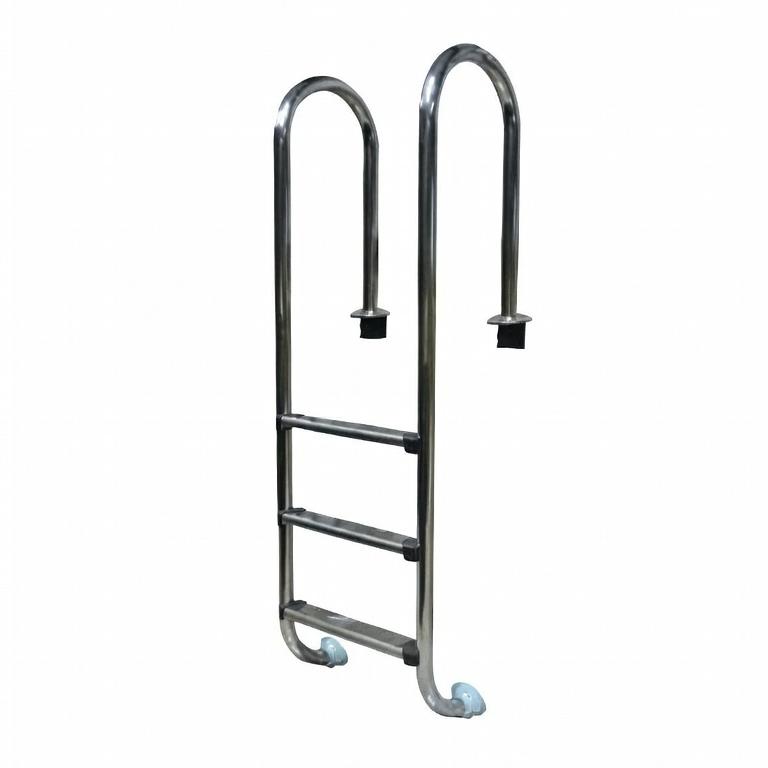
A typical frame or A‑frame pool ladder has two sides: one inside the pool and one outside on the ground. To convert it to a deck pool ladder, you usually remove the outside side.
- Remove bolts or clips connecting the two sides and the top platform.
- Keep all usable hardware and caps for later, but set the outside side aside or discard it if your kit replaces these parts.
- If your pool ladder includes a roll‑guard or flip‑up outside section for child safety, you will not need that piece once the ladder attaches to the deck.
By the end of this step, you should have a clean “in‑pool” ladder section and top assembly that can serve as the basis for your deck pool ladder.
Before drilling any holes, test the position of the pool ladder against the deck.
- Place the ladder inside the pool where you want the final deck access.
- Rest the top platform or rails on the deck surface.
- Use a spirit level to make sure the pool ladder is plumb front‑to‑back and side‑to‑side.
- Confirm that the bottom step sits flat on the pool floor and is not too close to the floor, which could cause wear.
If the pool ladder is too tall, you may need to trim the rails. If it is too short, consider a different location, shims, or a different ladder model.
Once you like the position and height of the pool ladder, mark where the deck fasteners or flanges will go.
- Mark through existing holes in the platform or mounting brackets if your ladder already has them.
- If you use deck flanges that accept 1.9 inch rails, place them where the rails should penetrate or meet the deck and mark the screw holes.
- Double‑check that the two rails are parallel and equally spaced from the pool wall.
Accurate marking prevents twisted rails, uneven flanges, and extra holes in your deck.
For a wood or composite deck, the pool ladder must be anchored to solid framing—not just thin decking boards.
- Locate joists or install blocking under the area where the ladder will mount.
- Pre‑drill pilot holes at the marks for lag screws using the appropriate drill bit size.
- Position the flanges or mounting brackets and fasten them with stainless or galvanized lag screws into the framing.
- For composite boards, avoid over‑tightening to prevent cracking; use washers if needed to distribute load.
If your design calls for the pool ladder rails to pass through the deck surface, drill holes with a hole saw centered on your marks, then mount flanges underneath or on top of the deck to capture the rails.
On concrete decks, you typically use expansion or wedge anchors to secure the deck flanges for the pool ladder.
- Drill at the marked positions with a hammer drill and masonry bit matched to your anchors.
- Clean dust from each hole and insert the anchors according to manufacturer instructions.
- Position the flanges and tighten the anchor bolts until snug, then check that each flange is level and aligned with its partner.
Some surface‑mount bases are specifically designed for ladder rails on concrete and include integrated anchor points and decorative covers.
With flanges or brackets installed, it is time to adapt your frame pool ladder rails to their new deck role.
- Test‑fit the rails in the flanges or brackets to see how deep they sit and how high the top step is relative to the deck.
- If the rails are too long, mark equal cut lines on both sides, remove the ladder, and cut carefully with a hacksaw or metal saw.
- Deburr the cut ends so they slide smoothly into the flanges and do not damage any seals or gaskets.
- Reinsert the ladder rails, adjust for plumb and equal spacing, and tighten flange set screws or through‑bolts until the pool ladder feels solid.
Aim for a comfortable step between the deck and the first pool ladder tread so swimmers do not have to stretch or stoop awkwardly when entering the water.
To make your converted deck pool ladder as safe and comfortable as a purpose‑built system, add stabilizing and anti‑slip details:
- Bottom bumpers or feet
Install rubber or soft plastic bumpers where the pool ladder contacts the pool floor or wall to prevent wear on liners and surfaces.
- Anti‑slip treads
Apply self‑adhesive anti‑slip tape or bolt‑on treads to each step, especially if the pool ladder material becomes slippery when wet.
- Deck grip improvements
Add textured tape or mats around the deck area where swimmers will step off the pool ladder to reduce slip risks.
- Handrail covers
Use padded or textured handrail covers to improve grip for children and older swimmers.
These small upgrades significantly improve the “feel” of the converted deck pool ladder without major additional cost.
Before you declare the pool ladder conversion finished, run a full safety inspection.
Check for:
- Wobble or flex
Grab both handrails and rock the pool ladder firmly in all directions. Any movement at the deck or flanges is a sign that bolts need tightening or that the structure isn't solid enough.
- Sharp edges
Smooth any cut rail ends and exposed bolt threads. Use caps or escutcheons to cover metal corners or holes around the rails.
- Comfortable step spacing
Climb the pool ladder slowly and check that each step feels even and natural. If one step is much higher or lower, adjust the ladder height in the flanges if possible.
- Wall and liner clearance
Make sure the pool ladder does not push hard against the pool wall or liner. A small gap with bumpers usually works best.
- Load test
Have an adult climb the pool ladder while another person watches for movement or flex in the deck, flanges, and rails.
If your converted deck pool ladder passes these checks, it is ready for regular use.
Sometimes, converting a frame pool ladder is not the best solution. In these situations, a brand‑new deck pool ladder or full step system is safer and more reliable.
You should avoid conversion when:
- The existing pool ladder is structurally compromised with cracks, heavy rust, or bent rails.
- The ladder's weight rating is too low for typical users or heavy traffic.
- Your deck height falls far outside the ladder's intended adjustment range.
- Local code or insurance requires specific certified deck entry systems, especially for commercial pools or rentals.
- You plan intensive use by children, elderly swimmers, or guests with mobility issues.
In these cases, a purpose‑built deck pool ladder or step system designed to integrate with your filtration, circulation, and lighting package will be the better long‑term investment.
A converted frame‑to‑deck pool ladder can last many seasons with basic care.
Recommended maintenance schedule:
- Weekly or bi‑weekly
Rinse the pool ladder and rails with fresh water to remove chemical residue and prevent staining.
- Monthly
Inspect bolts, flanges, and brackets for corrosion or loosening; retighten as needed.
- Seasonally
Examine step treads, anti‑slip pads, and bumpers. Replace worn or loose components.
- Before and after winter
In cold climates, consider removing the pool ladder from the flanges and storing it indoors to reduce freeze‑thaw stress and UV exposure.
Good maintenance not only keeps the deck pool ladder safe but also helps it match the clean appearance of your pool, deck, filters, and lighting.
For OEM factories, brands, and professional pool installers, frame‑to‑deck conversion is not just a DIY topic—it is a product and marketing opportunity.
Ways to leverage convertible pool ladder designs:
- Offer ladders that can operate as A‑frame units first and convert to deck pool ladders later using simple, branded kits.
- Include clear printed manuals and QR codes linking to video guides that show how to convert the pool ladder step by step.
- Bundle pool ladders with sand filters, cartridge filters, pumps, and LED lights to create complete above‑ground pool packages.
- Promote safety features—non‑slip steps, sturdy handrails, and child‑resistant designs—as selling points for international buyers.
By designing pool ladder systems with conversion in mind, manufacturers and distributors can support homeowners from the first season with a simple frame ladder through to a finished deck environment, using the same core products.
Converting a frame pool ladder to a deck ladder is a practical way to reuse existing equipment, upgrade pool access, and create a cleaner, more permanent entry when you build a deck. With the right planning, tools, and hardware—especially proper flanges, brackets, and anchors—you can transform a basic frame pool ladder into a solid, deck‑mounted pool ladder that feels safe and professional.
The most important points are to verify that your current pool ladder is strong enough for conversion, follow clear step‑by‑step procedures, and complete thorough safety checks before anyone uses the ladder. When in doubt, or when dealing with strict codes or heavy use, investing in a dedicated deck pool ladder or full entry system from a reliable OEM supplier is often the best long‑term solution.
Contact us to get more information!
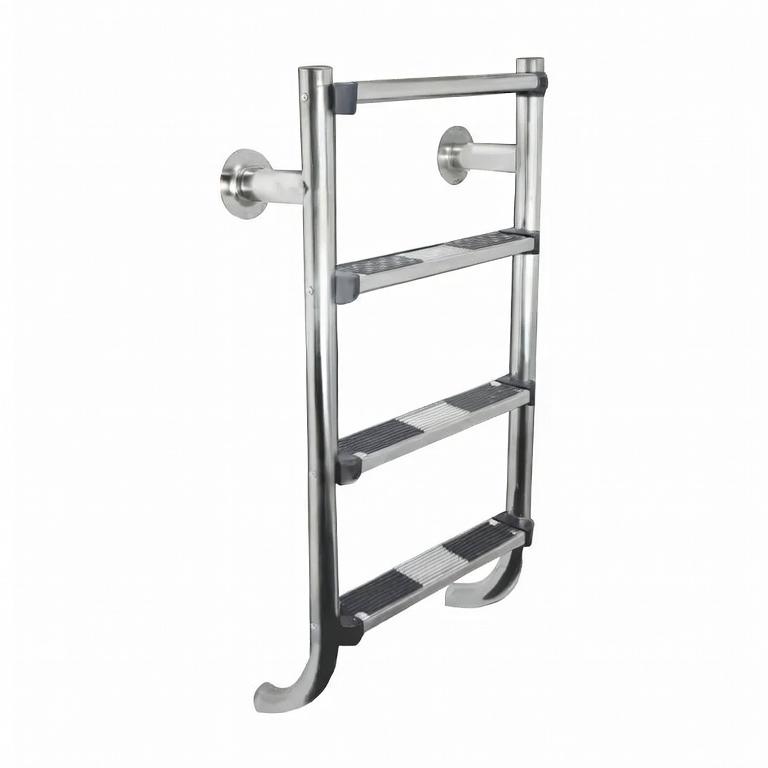
No, not every frame pool ladder can be safely converted to a deck ladder. Light‑duty plastic models, heavily rusted metal ladders, or designs with weak handrails may fail if fixed rigidly to a deck. Always review the manufacturer's instructions and inspect the pool ladder before deciding whether conversion is appropriate or whether a new deck pool ladder is a better choice.
If your pool ladder's manufacturer sells a dedicated A‑frame‑to‑deck conversion kit, using it is usually the easiest and safest option. These kits include matching resin or metal parts, flanges, and hardware designed for your ladder's dimensions. If no kit exists, you can often use generic flanges and brackets for 1.9 inch rails, but you must design the mounting points carefully and follow general ladder and deck safety practices.
Stability comes from solid anchoring and good contact between the pool ladder and the pool structure. To improve stability, mount flanges into structural deck framing or concrete with the correct anchors, tighten all set screws and bolts, use bumpers or feet at the bottom of the ladder, and make sure the rails are fully seated in the flanges. Adding anti‑slip treads and handrail grips also makes the pool ladder feel safer to users.
A well‑installed, properly maintained deck pool ladder can be safe for children and older swimmers, but it requires extra attention to details. Ensure step spacing is comfortable, handrails are easy to reach, and all treads and deck areas around the pool ladder are non‑slip. In homes with young children, you may also need removable or lockable ladder designs and self‑closing gates, depending on local law and insurance requirements.
You should replace your pool ladder instead of converting it when the structure shows significant cracks, corrosion, or flex, when the weight rating is too low for your users, or when your deck height is far outside the ladder's intended range. You should also choose a new certified deck pool ladder or entry system when local codes or commercial standards specify particular models or configurations that a converted frame pool ladder cannot meet.


