
Views: 222 Author: Tina Publish Time: 2026-01-05 Origin: Site


Content Menu
● What “Marine Grade” Really Means
● The Main Stainless Grades for Pool Ladders
● Material Options: Stainless, Resin, and Aluminum
● How to Choose the Right Grade for Your Pool
>> 1. Environment and water type
>> 2. Pool type and usage pattern
>> 3. Budget and total cost of ownership
● Example: Different Grades in Real Pool Ladders
● Stainless vs Resin vs Aluminum Ladder Options
>> Pool ladder materials and grades
● OEM Considerations for Marine Grade Pool Ladders
● Maintenance and Lifespan of Different Grades
● FAQs About Marine Grade Pool Ladders
>> 1. What is the difference between 304 and 316 marine grade pool ladders?
>> 2. Do I really need 316 marine grade stainless for a saltwater pool?
>> 3. Are resin pool ladders better than stainless in terms of corrosion?
>> 4. How can I tell if a ladder is truly marine grade?
>> 5. What maintenance does a marine grade ladder need?
>> 6. Can aluminum ladder be considered marine grade for pools?
Marine grade pool ladders do come in different “grades”, mainly referring to the grade of stainless steel (such as 304 and 316/316L), as well as different material and design options that affect corrosion resistance, durability, and performance in harsh pool and coastal environments. Choosing the right grade is essential for saltwater pools, heavily chlorinated systems, or coastal installations, where 316 marine grade stainless steel, or even non‑metallic options like resin, often provide the longest service life.[1][2][3][4][5]
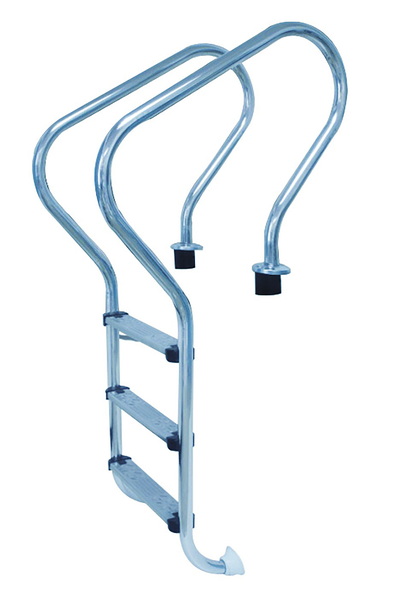
In the pool industry, “marine grade” usually refers to 316 or 316L stainless steel, an alloy with added molybdenum and higher nickel content that dramatically improves resistance to salt, chlorides, and harsh chemicals. This is why 316 is widely recommended for coastal properties, saltwater pools, and high‑end commercial installations where standard stainless can rust or “tea stain” quickly.[2][4][5][1]
By contrast, 304 stainless steel is still a high‑quality stainless grade, but it is more suited to indoor or mild outdoor environments and can develop pitting or discoloration much faster when exposed to salt or aggressive pool chemistry. Many manufacturers still sell 304 ladders for standard chlorine pools, while offering 316 marine grade versions as a premium, corrosion‑resistant upgrade.[4][6][7][5][1]
From a buyer's perspective, the “grades” of marine grade pool ladders revolve around the stainless steel type, wall thickness, and overall construction quality.[3][6][8]
- 304 stainless steel
- Good general corrosion resistance for many residential pools.
- More affordable than 316 and widely available.[9][2][1]
- Can show rust spots, tea staining, or pitting in coastal or saltwater environments.[4][5]
- 316 / 316L marine grade stainless steel
- Enhanced resistance to chlorides and salt due to molybdenum additions.[2][5][1]
- Standard recommendation near the sea, on saltwater systems, and around heavily chlorinated commercial pools.[10][3][4]
- Higher material cost but significantly longer service life in aggressive environments.[3][1]
- Other factors within the same grade
- Tube wall thickness (for example, around 0.049–0.065 inch) affects strength and resistance to denting.[6][8]
- Step (tread) design, weld quality, and protective caps or bumpers also define “grade” in terms of real‑world performance.[6][3]
Even when people say “marine grade ladder,” the market offers several material categories, each with different pros and cons for harsh pool environments.[11][12][3]
Stainless steel ladders (304 and 316)
- Pros:
- Strong, rigid, and long‑lasting in properly matched environments.[11][3]
- Premium appearance that suits upscale residential and commercial pools.[3]
- Cons:
- Cost is higher, especially for 316 marine grade.
- Poor grade choice or improper maintenance can still lead to rust or staining.[5]
Resin or plastic ladders
- Pros:
- Highly resistant to corrosion and rust because they are non‑metallic.[13][3]
- Lightweight, easy to move, and often preferred for above‑ground pools.[14][11]
- Cons:
- Lower structural stiffness compared with heavy‑wall stainless.
- UV exposure and heavy use can gradually degrade low‑quality resin.[13][3]
Aluminum ladders
- Pros:
- Lightweight and relatively corrosion‑resistant, especially when powder‑coated.[12][15][14]
- Lower cost and easier handling compared to stainless steel.
- Cons:
- Generally not as durable or strong as stainless in the long run.[15][12]
- Surface can still oxidize or discolor over time, especially in aggressive chemistry.
Many “hybrid” ladders combine stainless steel rails with resin anti‑slip treads, giving both strength and corrosion‑resistant steps. This mix‑material design is popular for both in‑ground and above‑ground pools where comfort and durability must be balanced.[11][3]
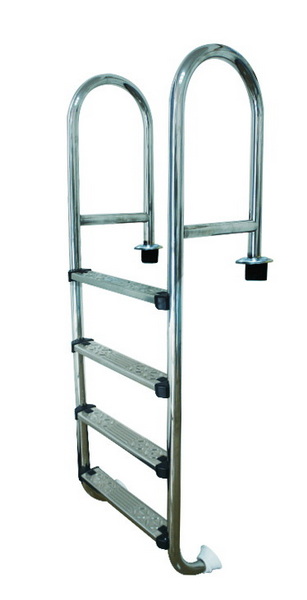
From an end user's perspective, the “right grade” of a marine ladder depends on environment, pool type, and budget.[10][1][3]
- Coastal or seaside locations
- Constant salty air and fine salt spray demand 316 marine grade stainless as a minimum for metal ladders.[2][4][10]
- This reduces the risk of rapid pitting and ugly rust lines at welds and joints.[1][5]
- Saltwater pools and aggressive chemistry
- High salt and chlorine concentrations benefit from marine grade 316/316L, or corrosion‑proof resin designs.[5][13][3]
- Non‑metallic ladders may be preferred where maintenance is minimal or water chemistry is inconsistent.[13][3]
- Standard backyard chlorine pools away from the coast
- Quality 304 stainless steel can perform well when water chemistry is maintained.[9][1][5]
- Resin ladders offer a lower‑cost, low‑maintenance alternative, especially for above‑ground pools.[14][11]
- In‑ground residential pools
- Classic 2–4 step stainless ladders (304 or 316) are common, sometimes with resin treads.[7][3][11]
- Marine grade makes sense if the owner prioritizes long‑term aesthetics and low staining.[4][3]
- Commercial or high‑traffic pools
- Often specify 316 marine grade stainless rails and treads for maximum durability.[8][3]
- Heavy use and strict health code inspections demand ladders that stay safe and visually clean for many seasons.[3][5]
- Above‑ground and freestanding pools
- Resin or hybrid ladders are popular due to lighter weight and ease of removal.[12][11][14]
- Aluminum can be used but must be carefully finished and maintained.
Although 316 marine grade stainless ladders cost more initially, they often prove cheaper over the life of a saltwater or coastal pool because they resist premature replacement and cosmetic damage. Lower‑grade metal ladders may require more frequent refinishing or replacement once corrosion sets in, especially at welds and anchor points.[1][2][5][13][3]
Many well‑known pool hardware brands already list multiple “grades” for a single ladder model, giving a clear example of how marine grade options fit into the product line.[7][6][8]
- Standard residential ladder
- Available in 304 stainless or upgraded 316L marine grade.[6][7]
- Tube OD around 1.90 inches with wall thickness about 0.049–0.065 inch, and 2–5 step configurations.[8][6]
- Vinyl‑liner compatible ladder
- Stainless frame with rubber bumpers at the bottom to protect the liner, available in marine grade for saltwater liner pools.[7][6][5]
- Steps can be stainless or heavy‑duty plastic treads depending on budget.[11][6]
These examples show that “grade” is not only about the steel type but also about details such as tubing size, bumper design, and tread material, all of which affect safety and longevity.[6][3][11]
For buyers, it helps to see the main ladder material choices, including marine grade stainless options, in a simple table.[12][14][3][11]
| Ladder type | Typical grades / materials | Best environments | Key pros | Key cons |
|---|---|---|---|---|
| Stainless steel – 304 | 304 stainless steel rails and treadssailrite+1 | Standard chlorine pools away from coastsailrite+1 | Strong, attractive, widely availablemedleypool | Can rust/tea‑stain in salt or coastal airhandrailsaustralia+1 |
| Stainless steel – 316/316L | 316/316L marine grade stainless rails/treadsarccaptain+1 | Saltwater systems, coastal, heavy commercial usemedleypool+1 | Excellent chloride corrosion resistancesailrite+1 | Higher upfront cost than 304sailrite+1 |
| Hybrid SS + resin | Stainless rails + resin treadsmedleypool+1 | In‑ground and above‑ground family poolsmedleypool+1 | Strong rails, non‑slip, corrosion‑proof stepsmedleypool | More complex design, mixed replacement parts |
| Full resin / plastic | Molded resin frame and stepsmedleypool+1 | Above‑ground or budget‑focused poolspoolsupplies+1 | No rust, lightweight, low maintenancemedleypool+1 | Less rigid; UV and heavy load can age resinmedleypool+1 |
| Aluminum | Powder‑coated aluminum rails/stepswatsons+1 | Lightweight, movable above‑ground laddersmavaquadoc | Light, affordable, corrosion‑resistantmavaquadoc+1 | Not as durable as stainless long‑termmavaquadoc |
For overseas brands, wholesalers, and pool equipment manufacturers, marine grade ladder projects often require customized specifications and tight quality control.[8][3][6]
- Custom grades and material mix
- Offering both 304 and 316/316L variants allows brands to target different price levels and climates.[9][6][7]
- Combining marine grade rails with UV‑stable resin treads creates family‑friendly ladders that resist both corrosion and slipperiness.[3][11]
- Tube thickness, weld quality, and surface finishing
- Thicker‑wall tubing improves load capacity and dent resistance, especially for public pools.[6][8]
- Proper polishing and passivation of stainless surfaces further enhance corrosion performance in chlorinated water.[5][13]
- Compatibility with other pool hardware
- Ladders must integrate with standard deck anchors, escutcheons, and handrails, allowing uniform marine grade upgrades around the pool perimeter.[8][7]
- OEM factories with laser cutting, automated welding, and robotic polishing can standardize these interfaces across different ladder models.
Even the best marine grade ladder needs basic care to deliver its full design life.[13][5][3]
- Routine cleaning
- Rinsing stainless steel with fresh water and wiping down surfaces helps prevent salt crystals and chemical residues from starting corrosion spots.[5][13]
- Non‑abrasive cleaners protect the polished finish and reduce staining at welds and joints.[5]
- Water chemistry management
- Keeping salt, chlorine, pH, and stabilizer within recommended ranges reduces corrosion stress on all metals.[13][5]
- Poorly balanced water can attack even 316 stainless, and can also degrade resin and aluminum coatings faster.[3][5]
- Inspection and replacement
- Regularly check step treads, fasteners, and anchor areas for cracks, looseness, or discoloration.[11][3]
- Replace damaged bumpers or corroded parts promptly to avoid liner damage or safety hazards.[5]
Marine grade pool ladders absolutely come in different grades and configurations, covering 304 stainless, upgraded 316/316L marine grade stainless, hybrid stainless‑plus‑resin designs, full resin constructions, and even aluminum options. The optimal choice depends on pool environment, water chemistry, usage level, and budget: coastal and saltwater pools nearly always justify true 316 marine grade stainless or fully non‑metallic ladders, while standard backyard chlorine pools may perform well with 304 or resin‑based ladders if maintained correctly. For OEM customers and professional buyers, offering multiple grades within the same ladder family—supported by precise tube thickness, high‑quality welds, and smart mixed‑material designs—creates a flexible product range that can serve both entry‑level and high‑end international markets.[2][4][12][1][6][8][3][5]
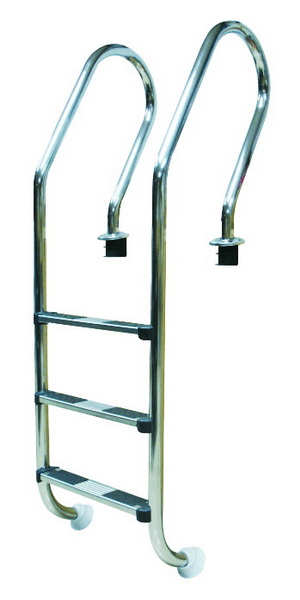
304 stainless ladders provide good general corrosion resistance at a lower cost but can rust or tea‑stain more quickly in salty or highly chlorinated environments. 316 marine grade ladders contain molybdenum for superior chloride resistance, making them the preferred choice for coastal, saltwater, and heavy commercial pools where long‑term appearance and durability matter most.[4][1][2][3][5]
For most saltwater pools, 316 or 316L marine grade stainless is strongly recommended, because salt and chlorides accelerate pitting and staining on 304 ladders, especially at welds and in splash zones. While resin ladders are another corrosion‑proof option, a properly designed 316 ladder offers a premium feel, high strength, and a much longer service life in salty conditions.[1][2][11][13][3][5]
Resin ladders are completely non‑metallic, so they will not rust, which makes them very attractive for above‑ground and budget‑focused pools where owners want low maintenance. However, they are usually less rigid than stainless steel, and lower‑quality resin can degrade under strong UV, heavy loads, or rough handling over many seasons.[11][13][3]
Product labels and technical specifications should clearly state “316” or “316L marine grade stainless” for rails and treads, and may also specify wall thickness and polishing details. If a ladder only lists “stainless steel” without the grade, or if the price seems unusually low for a marine environment, it may be 304 or a lower grade that is less suitable for saltwater applications.[2][4][7][6][3][5]
Even 316 marine grade ladders benefit from regular rinsing with fresh water, gentle cleaning, and periodic inspection of welds, treads, and bumpers to prevent localized corrosion and wear. Maintaining balanced pool chemistry is equally important, because extreme salt, chlorine, or low pH can damage metals faster and shorten the ladder's service life.[13][3][5]
Aluminum ladders are lightweight, relatively corrosion‑resistant, and popular for above‑ground pools, especially when powder‑coated. However, they generally do not match the long‑term strength and chloride resistance of 316 stainless in aggressive saltwater or coastal environments, so they are not typically described as “marine grade” in the strict sense.[15][14][12]
[1](https://www.sailrite.com/304-vs-316-stainless-steel)
[2](https://www.arccaptain.com/blogs/article/304-vs-316-stainless-steel)
[3](https://medleypool.com/blog-details/best-materials-for-swimming-pool-ladders-pros-and-cons-of-stainless-steel-resin-and-plastic)
[4](https://handrailsaustralia.com/blogs/helpful-resources/304-vs-316-stainless-steel-why-marine-grade-matters-for-pool-handrails)
[5](https://www.plasticapools.net/knowledge-base/what-can-cause-a-stainless-steel-ladder-to-rust/)
[6](https://www.poolwarehouse.com/shop/s-r-smith-residential-pool-ladder/)
[7](https://www.srsmith.com/en-us/products/ladders-and-rails/residential-ladder/)
[8](https://www.srsmith.com/media/mmhfiswj/98859_sl_srs_railsladders_8-5x11_brochure_nocrops.pdf)
[9](https://www.aussiestairs.com.au/blog-posts/316-marine-grade-and-304-grade-stainless-steel-is-one-better-than-the-other)
[10](https://senmit.com/blogs/news/304-vs-316-stainless-steel-railing)
[11](https://www.poolsupplies.com/page/ladders-buyers-guide--faq)
[12](https://www.mavaquadoc.com/blogs/pool-maintenance-blog/step-up-your-pool-game-finding-the-perfect-ladder-or-steps)
[13](https://www.pooltime.co.uk/blogs/news/which-material-for-pool-ladder-is-best)
[14](https://blog.watsons.com/blog/best-ladder-for-above-ground-pool)
[15](https://krossberpools.com/pool-learning-center/steel-vs-resin-vs-aluminum/)
[16](https://allfold.com/best-stainless-steel-swimming-pool-ladder-guide/)
[17](https://www.facebook.com/groups/1478549242559366/posts/2339617463119202/)
[18](https://lesliespool.com/s.r.-smith-rlf-24-24in.-basic-residential-pool-ladder-marine-grade/764dd0f4-d56c-4e5d-b384-013c5069a816.html)
[19](https://www.poolzoom.com/sr-smith-vlls-103s-mg-24-marine-grade-stainless-steel-3-step-economy-ladder.html)
[20](https://www.facebook.com/groups/637529959937311/posts/1966695080354119/)


