
Views: 222 Author: Tina Publish Time: 2026-01-05 Origin: Site


Content Menu
● What Is a Pool Ladder Cover?
● Main Types of Pool Ladder Covers
>> 1. Safety Ladder Covers and Guards
>> 2. Comfort and Grip Covers for Ladder Rails
>> 3. Winter Covers for Ladders and Steps
>> 4. Protective Guards for Pool Safety Covers
>> 5. Integrated Ladder and Cover Systems
● How Ladder Covers Improve Pool Safety
● Comfort, Aesthetics, and User Experience
● How Ladder Covers Work with Pool Covers
● Choosing the Right Pool Ladder Cover
>> 1. Pool Type and Ladder Style
>> 2. Main Objective: Safety, Comfort, or Protection
>> 4. Integration with Filtration, Pumps, and Lighting
● Installation Tips and Best Practices
● OEM Opportunities for Ladder Covers and Accessories
● FAQs About Pool Ladder Covers
>> 1. Do they really make dedicated covers just for pool ladders?
>> 2. Are ladder covers necessary if I already have a pool safety cover?
>> 3. What materials are best for ladder rail covers?
>> 4. Can a ladder cover help protect my pool liner?
>> 5. How do I choose between mesh, solid, and winter covers around my ladder?
>> 6. Are ladder covers compatible with all ladder designs?
Owning a pool ladder is only the first step; protecting it and making it safer often requires additional accessories such as covers, guards, and barriers. Many homeowners are surprised to learn how many different “ladder covers” exist, from soft wraps that improve grip to rigid guards that block access.[3][4][1]
In this guide, you will learn what a pool ladder cover is, the main types on the market, how to choose the right option, and how OEM buyers can integrate these solutions into a complete pool system including filters, pumps, and LED lighting.
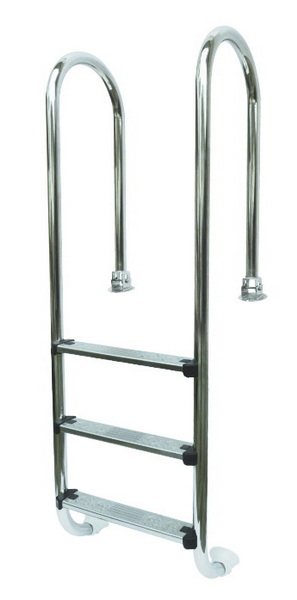
A pool ladder cover is any accessory that partially or fully covers ladder rails, steps, or the space around the ladder to improve safety, comfort, durability, or appearance.[3][1]
Common examples include:
- Soft sleeves or wraps that go over metal rails to improve grip and reduce heat or cold transfer.[3]
- Barriers and guards that prevent children from using or climbing the ladder when the pool is closed.[1]
- Winter covers and step lids that shield the ladder or steps from snow, ice, and debris in the off‑season.[5][6]
For above‑ground pools, ladder covers also work together with pool covers and step lids to prevent children from gaining easy access to the water when the pool is not supervised.[7][1]
Different ladder covers solve different problems. Below are the most common categories you can use in product planning or purchasing.
Some manufacturers offer dedicated “safety covers” designed specifically to prevent children from climbing pool ladders.[1]
Typical characteristics:
- Rigid or semi‑rigid panels that fit around or in front of the ladder.[1]
- Lockable or removable designs to block access when the pool is unattended.[1]
- Often used together with a pool fence and a safety cover for multi‑layer protection.[8][7]
These covers are especially popular for above‑ground pools, where the ladder is often the only access point to the pool.[1]
Comfort‑oriented ladder rail covers focus on improving the user experience rather than restricting access.[3]
Key features typically include:
- Soft, non‑slip materials that wrap around metal rails to enhance grip.[3]
- UV‑resistant and pool‑chemical‑resistant construction to resist fading, cracking, and deterioration.[3]
- Aesthetic design options that can match pool décor or brand color schemes.[3]
These products help prevent hot‑surface burns in sunny climates and cold‑metal discomfort in cooler weather, while also giving the ladder a more premium feel.[3]
During the off‑season, many pool owners use additional covers to protect ladders and plastic steps from ice and heavy snow loads.[9][5]
Typical solutions:
- DIY or commercial winter step covers built with a light frame and tarp to span over the steps or ladder area.[6][5]
- Hard plastic lids or step covers designed to sit over molded steps and then integrate with a larger pool tarp or safety cover.[6][9]
- Combinations of stair lids plus mesh or solid safety covers that protect the entire pool surface.[7][8]
These covers help reduce staining, UV degradation, and mechanical stress on plastic or resin components over the winter.[10][7]
In some cases, protection is not for the ladder itself but for the pool safety cover where it passes near rough coping, steps, or hard edges.[11]
- “Cover guard” products protect the safety cover fabric where it rubs against coping or edges.[11]
- By preventing abrasion, they extend the life of the safety cover and maintain its structural integrity.[11]
While these are not ladder covers in the narrow sense, they are often installed in the same zone and are important when designing a complete protection system.
Certain modern pool designs combine steps, ladders, and covers into integrated systems.[8][6]
For example:
- Pools with double tracks that allow both a step lid and a full safety cover to be installed seamlessly.[6]
- Automatic pool covers that slide over ladders and steps, supported by special hardware and coping designs.[12]
For OEM buyers, these integrated systems create an opportunity to offer matched ladders, covers, and filtration equipment as a single solution.
While most safety discussions focus on main drains and suction outlets, ladder areas also play a role in overall pool safety and entrapment prevention.[13]
Ladder covers and related accessories contribute to safety in several ways:
- Access control: Safety ladder covers can prevent unsupervised children from climbing into an above‑ground pool.[1]
- Trip and slip reduction: Non‑slip ladder rail wraps and step surfaces reduce the risk of slips when entering and exiting.[14][3]
- Better integration with safety covers: Proper step lids or custom covers help ensure that mesh or solid safety covers form a continuous, walkable barrier over the entire pool.[7][8]
Combined with compliant anti‑entrapment drain covers, safety vacuum release systems, and proper maintenance, these accessories support a safer pool environment.[13][7]
Many pool owners buy ladder covers not just for safety, but also for comfort and appearance.[3]
Benefits include:
- Thermal comfort: Soft sleeves over metal rails reduce the shock of touching extremely hot or cold stainless steel.[3]
- Chemical and UV resistance: High‑quality ladder wraps are designed to withstand pool chemicals and sunlight without quick fading or cracking.[3]
- Visual upgrade: Available in different colors and textures, ladder covers can match the pool coping, deck, or LED lighting theme.[15][3]
For brands selling premium pool packages, pairing elegant ladder covers with LED underwater lighting, stylish rail shapes, and high‑end filtration systems can significantly elevate perceived value.[15]
Ladder protection does not exist in isolation; it must coordinate with the overall pool cover strategy.[8][7]
There are three main pool cover families to consider:
- Winter covers: Basic tarp‑style covers that keep debris out during the off‑season; they may require special solutions to span over ladders and steps.[16][6]
- Mesh and solid safety covers: Strong, tensioned covers designed to support weight and prevent accidental falls into the water.[10][7][8]
- Automatic covers: Motor‑driven systems that open and close at the push of a button, often integrating with rails and steps.[17][12]
Step lids and custom ladder covers help close small gaps where a standard cover does not reach the stairs, ensuring that the cover system is continuous, clean‑looking, and safe.[9][6]
When selecting a ladder cover for a residential or commercial pool, several criteria should guide the decision.
Different pool and ladder types require different cover solutions.[4][14]
- Above‑ground pools with A‑frame ladders often use safety guards to block external climbs.[1]
- In‑ground pools with built‑in step sections may use step lids or integrated cover tracks.[6]
- Resin or plastic in‑pool ladders may need winter step covers to protect from UV and snow.[9]
Always confirm compatibility with the ladder's width, height, and mounting method.[4]
Clarify your primary goal:
- If safety and child access control are the priority, choose lockable or rigid safety covers and combine them with a safety pool cover.[7][1]
- If comfort and ergonomics are the focus, prioritize soft, UV‑stable rail covers.[3]
- For winter protection, select sturdy step lids or winter covers designed for snow load and wind.[5][9]
In many programs, one pool may use different covers season by season or in combination.
A ladder cover constantly faces UV, chemicals, and mechanical wear.[7][3]
- Look for UV‑resistant, chemical‑resistant polymers or fabrics tested for pool environments.[7][3]
- For safety covers and lids, verify the strength ratings and recommended weight limits.[8][7]
- Inspect hardware (clips, buckles, fasteners) for corrosion‑resistant metals or reinforced plastics.[11]
For OEM buyers, consistent material specifications and quality control are critical to protect brand reputation.
A good ladder and cover design must work smoothly with the rest of the pool system.
- Safety covers reduce debris load, lowering the strain on filters and pumps and saving up to 70% on energy when used as full pool covers.[17]
- Ladders and covers should not obstruct skimmers, return inlets, or vacuum points.[7]
- LED lights around ladder zones can highlight steps and rails at night, improving visibility and perceived luxury.[15]
For a factory supplying sand filters, cartridge filters, pumps, LED lights, and accessories, bundling matching ladders and covers creates a complete “pool kit” for international buyers.
Correct installation is essential for safety and durability.
- Follow each manufacturer's instructions for positioning, tensioning, and fastening the ladder cover.[8][7]
- For safety ladder covers, ensure there are no large gaps that children could slip through or use as footholds.[1]
- For winter and step covers, confirm that wind cannot easily lift the cover and that snow load is adequately supported.[5][10]
- Regularly inspect the cover, fasteners, and surrounding deck or coping for wear or sharp edges that might damage fabric or plastics.[11][7]
Where electrical equipment is nearby, all metal parts of ladders and rails should also be correctly bonded and grounded according to local codes, even though this is a separate safety topic.[13]
For overseas brands, wholesalers, and pool equipment producers, ladder covers create additional SKUs and margin possibilities.
Potential OEM strategies:
- Bundle ladders, filters, pumps, LED lights, and ladder covers into standardized “pool equipment packages” for retailers or installers.[17][15]
- Offer customized colors, logos, or packaging for ladder rail wraps and safety covers to strengthen brand identity.[3]
- Develop region‑specific models: heavy‑duty winter step lids for cold regions, minimalist safety guards for warm climates with strict safety rules, etc.[10][8]
Since pool covers reduce energy use and maintenance, they align well with high‑efficiency sand filters, variable‑speed pumps, and LED lighting when selling a complete, energy‑saving system.[17][7]
Yes, manufacturers do make covers for pool ladders, and these products range from soft comfort wraps to rigid safety guards and winter step lids. Choosing the right ladder cover depends on pool type, safety requirements, climate, and whether your priority is access control, comfort, or protection of the ladder and steps. For brands and OEM buyers, combining well‑designed ladder covers with high‑quality filters, pumps, and LED lights creates a more complete, safer, and more attractive pool solution for end users.[10][15][17][5][7][1][3]
Yes. There are dedicated safety covers designed specifically to prevent children from climbing pool ladders, especially on above‑ground pools. In addition, there are comfort‑oriented rail wraps and winter step covers that focus on grip and protection rather than access control.[5][1][3]
A full safety cover greatly reduces risk, but you may still need step lids or custom covers if the main cover does not fully span the stair or ladder area. For above‑ground pools, safety ladder guards add an extra layer of protection by blocking the ladder itself when the pool is not in use.[6][8][7][1]
High‑quality ladder rail covers typically use UV‑resistant, chemical‑resistant synthetic materials that can withstand constant exposure to sunlight and pool water. These materials resist fading, cracking, and surface degradation, ensuring reliable grip over several seasons.[3]
While ladder covers mainly protect users and the ladder, related accessories like ladder mats and step covers help prevent wear on vinyl liners and plastic steps. By stabilizing the ladder and reducing abrasion or rubbing, they can extend liner life and maintain a neat appearance.[18][4][9][6]
If your primary goal is off‑season protection and debris control, a solid or mesh safety cover combined with a compatible step lid is often best. If you need a simple seasonal solution, a dedicated winter step cover or DIY stair cover combined with a standard tarp may be sufficient in fenced, low‑risk environments.[10][6][5][7]
Not all covers fit every ladder, so it is important to check ladder width, height, step style, and mounting configuration. Many suppliers categorize accessories by pool type (in‑ground vs above‑ground) and ladder model, making selection easier for both homeowners and professional buyers.[14][4]
[1](https://www.ravecommercial.com/Inch-Safety-Cover-To-Prevent-Children-From-Climbing-Pool/399449)
[2](https://automaticindustries.com/Pool-Ladder-Cover-Designed-For-Convenience/282443)
[3](https://safetygrip.net/safe-and-stylish-pool-ladder-covers-for-neighborhood-pools/)
[4](https://www.poolsupplies.com/shop/ladders-accessories)
[5](https://www.youtube.com/watch?v=idA82PJMCtE)
[6](https://www.reddit.com/r/pools/comments/17blvis/suggestions_on_how_to_cover_stairs_and_connect_to/)
[7](https://lesliespool.com/blog/safety-covers.html)
[8](https://www.swimuniversity.com/pool-safety-covers/)
[9](https://www.facebook.com/groups/637529959937311/posts/2441212152902407/)
[10](https://www.doheny.com/help/pool-cover-types)
[11](https://www.doheny.com/doheny-s-cover-guard)
[12](https://www.riverpoolsandspas.com/the-complete-guide-to-automatic-pool-covers-benefits-options-costs-and-everything-in-between)
[13](https://redwoodsgroup.com/resources/aquatic-entrapment-guidelines-pools-and-spas/)
[14](https://www.poolsupplies.com/product/aqua-select-heavy-duty-resin-in-pool-ladder-w-entrapment-barrier)
[15](https://www.americansale.com/collections/pool-accessories)
[16](https://intheswim.com/eguides/safety-covers-benefits-types-and-measuring-advice.html)
[17](https://www.lathampool.com/blog/plan/which-safety-cover-is-right-for-your-pool/)
[18](https://www.facebook.com/groups/637529959937311/posts/2296236560733301/)
[19](https://global-poolproducts.com/pool-safety-cover-selection-guide/)
[20](https://cincinnatipoolandpatio.com/types-of-pool-covers-and-how-they-help/)


