


Content Menu
● What Does a Pool Ladder Actually Do?
● When Is a Pool Ladder Essential?
● Safety Benefits You Should Not Ignore
● What Do Codes and Guidelines Say?
● Ladder vs Built‑In Steps or Other Options
● How to Choose the Right Pool Ladder
● Installation and Maintenance Best Practices
● Integrating Ladders Into an Overall Safe Pool System
● FAQ
>> 1. Do I legally need a pool ladder for my residential pool?
>> 2. Is a ladder enough to make my above‑ground pool safe?
>> 3. Are built‑in steps safer than a ladder?
>> 4. How do I know if my pool ladder is safe?
>> 5. What type of ladder is best for an above‑ground pool?
>> 6. Do public pools still use ladders if they have ADA lifts or ramps?
>> 7. How often should I replace my pool ladder?
A pool ladder is not just a nice accessory; for most pools it is a key safety and accessibility feature that makes getting in and out of the water safer, easier, and more comfortable for everyone. Whether a ladder is strictly “required” depends on your pool type, local regulations, and who uses the pool, but in practice almost every residential pool benefits from a properly designed ladder or entry system.[1][2][3]
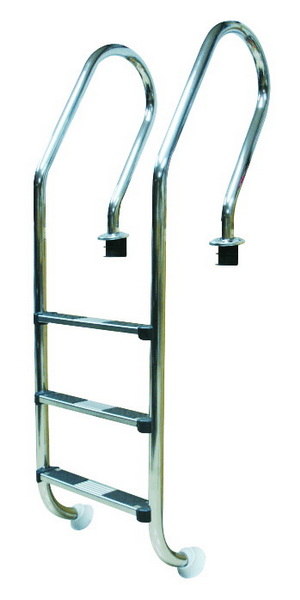
A ladder is the primary access point for many above‑ground and even some in‑ground pools, and it plays a bigger role than most owners realize.[2][1]
- It provides secure handholds and slip‑resistant steps so swimmers can enter and exit without climbing over walls or using unstable furniture.[4][1]
- It reduces the risk of slips, falls, and panic moments at the pool edge, especially for children, older adults, and people with limited mobility.[3][1]
- It helps organize traffic flow in busy family or party settings, preventing people from crowding dangerous areas of the coping or deck.[5][1]
Whether you “must” have a ladder depends on the pool design and who is using it, but certain scenarios make it almost non‑negotiable.[1][2]
- Above‑ground pools: These typically rely on a ladder or steps as the only safe way to get in and out; climbing the wall is unsafe and not recommended.[6][4][2]
- Pools used by kids, seniors, or guests with limited mobility: A secure ladder or wide steps greatly improves safety and confidence, reducing accident risk.[3][1]
- Public and commercial pools: Accessibility rules often require at least one accessible means of entry (such as lifts, sloped entries, or pool stairs), and ladders may complement these for other users.[7][8][9]
From a safety perspective, a well‑designed ladder is much more than a simple set of steps.[4][1][3]
- Non‑slip treads and proper step width reduce the risk of slipping, even when feet are wet or covered with sunscreen.[10][11][4]
- Ergonomic handrails on both sides give users a stable grip, helping them maintain balance while entering or exiting the pool.[10][5][3]
- Correct installation (including weighing down or anchoring above‑ground pool ladders) prevents wobbling, floating, or tipping, which are common causes of falls.[2][4]
In addition, a ladder can be integrated into your overall barrier strategy to keep unsupervised children and pets from accessing the water.[12][13][10]
- Many above‑ground ladders have removable or lockable outer steps so you can block access when the pool is not in use.[13][10][4]
- Some codes and safety guidelines recommend or require that ladders be lockable or removable, or fully enclosed by a barrier, to prevent unattended entry.[14][12][13]
For private residential pools, explicit ladder requirements vary, but several standards and guidelines show how important safe access systems are.[11][12][13]
- Many safety booklets for residential pools emphasize that ladders or steps for above‑ground pools should be capable of being secured, locked, or removed, or surrounded by a barrier to prevent unsupervised access.[12][13]
- Technical standards often specify that ladder treads must be slip‑resistant and that the top tread should be within a certain distance below the deck or coping to allow safe entry and exit.[15][11]
Public and commercial pools are under stricter accessibility rules.[16][9][7]
- ADA standards require accessible means of entry (like lifts or sloped entries) for many public and hotel pools, with the number of required access points depending on pool size.[8][9][7]
- While ladders alone usually do not satisfy ADA accessibility requirements, they remain essential for many users and work together with accessible entries to serve all swimmers.[9][16][8]
Not every pool relies on a ladder; some designs use built‑in steps, beach entries, or ramps.[17][8]
- Built‑in steps and sloped entries are often easier for young children, elderly swimmers, and people with mobility issues than a vertical or steep ladder.[17][3]
- Ladders, however, are more compact and cost‑effective, and they are especially common and practical for above‑ground pools or smaller in‑ground pools.[1][17][2]
For many pools, a combination approach works best.
- A main access point might be a set of wide entry steps, while a secondary ladder near the deep end provides a quick exit for tired swimmers.[8][3]
- Seasonal or temporary pools often use removable ladders that can be stored away in winter or when the pool is covered.[6][4][2]
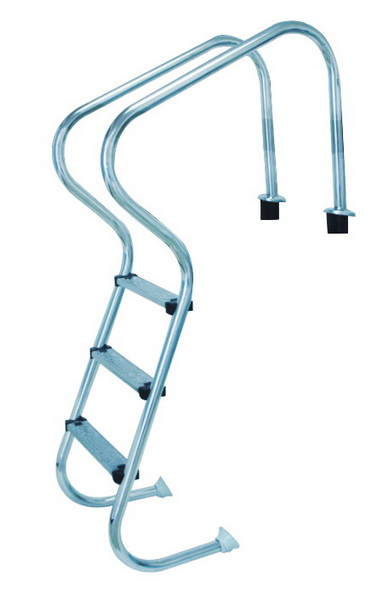
If you decide that you need a ladder, choosing the right model is crucial for safety, comfort, and long‑term durability.[4][2][1]
Key factors to consider include:
- Pool type and wall height: Above‑ground pools typically require A‑frame or deck‑mounted ladders sized to the wall height, while in‑ground pools use deck‑anchored stainless or resin ladders.[2][6][4]
- Material and corrosion resistance: Stainless steel, resin, and coated metals are common; they must withstand chlorinated or saltwater environments without weakening.[5][3][4]
- Step design: Wide, non‑slip treads and enough step depth to fit the whole foot provide more stability than narrow rungs.[10][5][4]
- Handrails: Dual, easy‑to‑grip handrails help children and older adults maintain balance during entry and exit.[5][3][10]
- Safety features: Look for lockable or removable outer steps on above‑ground ladders, enclosed risers to prevent entrapment, and sturdy weight‑bearing ratings.[13][10][4]
If your factory or brand offers pool accessories along with filters, pumps, and LED lights, positioning a ladder as part of a complete safe‑pool package (filtration system, circulation pump, lighting, access equipment) can help overseas buyers simplify sourcing and ensure consistency in quality.
Even a high‑quality ladder can become a hazard if installed or maintained poorly.[10][4][2]
Installation basics:
- Follow manufacturer instructions carefully, ensuring the ladder is level, properly anchored, and tightened so it does not rock or twist under load.[4][2]
- For above‑ground ladders, use the recommended ballast (often sand or water inside the ladder body) so the steps stay submerged and do not float or drift.[2][4]
Ongoing maintenance:
- Inspect the ladder regularly for loose bolts, cracked steps, sharp edges, or corrosion, and repair or replace components as needed.[10][4]
- Clean treads to remove algae or scale that can make surfaces slippery, especially in shaded or low‑circulation areas.[18][10]
If your pool uses strong sand or DE filtration driven by a high‑performance pump, water clarity will usually be excellent, but ladder surfaces still require physical cleaning because biofilm and small deposits can build up on plastic or metal regardless of filtration quality.
A safe, enjoyable pool is the result of the right combination of equipment and design choices, not a single accessory.[18][1][5]
- Filtration and circulation: High‑quality sand, DE, or cartridge filters paired with reliable pumps keep water clear, reducing slip risks and allowing swimmers to see steps and treads clearly.[1][4]
- Lighting: LED pool lights around ladders and steps greatly improve nighttime visibility and reduce missteps or accidental falls.[18][3]
- Barriers and covers: Fences, gates, removable ladders, and safety covers work together to prevent unsupervised access by children and pets.[14][12][13]
For OEM buyers, combining filters, pumps, LED lights, and ladders into a coherent product line lets them offer bundled “safe pool” kits to end users, reinforcing brand value and simplifying installation for contractors.
For most pool owners, the answer to “do I need a pool ladder?” is yes, even if local codes do not explicitly demand one. A well‑chosen, properly installed ladder provides safer entry and exit, supports vulnerable users like children and seniors, and integrates with wider safety measures such as barriers, lighting, and high‑quality filtration to create a comfortable, low‑risk swimming environment. Whether you operate an above‑ground family pool or a professionally managed facility, treating the ladder as essential equipment rather than an afterthought will pay off in fewer accidents, happier swimmers, and higher perceived value for your pool.[3][6][4][1][2][10]
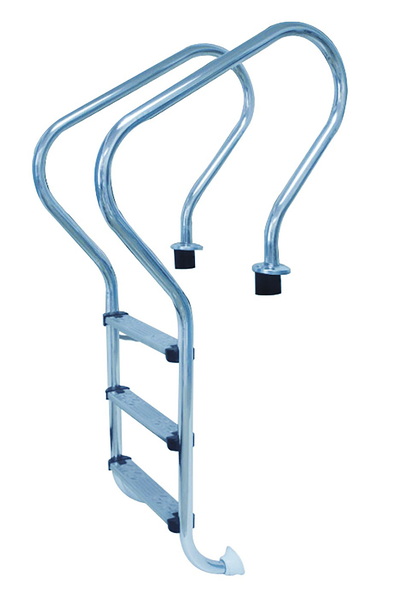
Legal requirements vary by region, but many safety guidelines for residential pools recommend secure, lockable or removable ladders or steps for above‑ground pools to prevent unsupervised access. Even when not strictly required by law, a ladder is strongly advised for safe entry and exit for most homeowners.[12][13][14][1][2]
A ladder alone does not fully secure a pool; it must work together with barriers, covers, alarms, and active supervision. However, a properly designed ladder with lockable or removable outside steps is a key element in controlling access to an above‑ground pool and reducing fall risks.[13][12][18][4][2][10]
Built‑in steps or sloped “beach entries” are generally easier for young children, seniors, and people with limited mobility to use than a vertical ladder. Ladders are still widely used because they are compact and cost‑effective, especially for above‑ground pools, but many owners choose a combination of steps and ladders for optimum safety and convenience.[17][8][3][1]
A safe ladder has non‑slip treads, secure dual handrails, no sharp edges, and is firmly anchored or weighed down so it does not wobble or float. Regular inspections for loose bolts, cracked steps, or corrosion and routine cleaning of the treads are essential to maintain its safety over time.[11][18][4][10]
Most above‑ground pools use A‑frame or deck‑mounted ladders that match the wall height and offer stable, anti‑slip steps on both sides. For families, models with lockable outside steps or integrated gates provide added protection against unsupervised entry when the pool is not in use.[6][13][4][2][10]
Yes, public and commercial pools often use ladders alongside ADA‑compliant lifts or sloped entries, because different users prefer different ways to enter and exit. Ladders remain important for many swimmers, while accessible devices ensure people with disabilities can enjoy the pool independently.[7][16][9][8]
There is no fixed replacement schedule, but ladders should be replaced when they show structural damage such as cracked treads, severe corrosion, or loose rails that cannot be repaired. In harsh environments or high‑traffic commercial pools, more frequent replacement may be necessary to maintain safety and comfort for users.[5][4][1][10]
[1](https://cincinnatipoolandpatio.com/choosing-pool-ladders/)
[2](https://www.thepoolfactory.com/blogs/equipment/scaling-new-heights-above-ground-pool-ladders)
[3](https://sodramar.com.br/en/blog/construcao-de-piscina/como-garantir-uma-piscina-segura-com-escada-para-piscina/)
[4](https://poolfence.com/pool-ladders-a-step-toward-safety/)
[5](https://insights.made-in-china.com/Why-Do-Swimming-Pool-Ladders-Matter-More-Than-You-Think-The-Surprising-Truth-Behind-Pool-Safety-and-Comfort_QAlTOwqFnJHX.html)
[6](https://www.pooltime.co.uk/blogs/news/do-you-need-a-pool-ladder-for-an-above-ground-pool)
[7](https://www.ada.gov/resources/q&a-accessibility-requirements-pools-public/)
[8](https://www.access-board.gov/ada/guides/chapter-10-swimming-pools-wading-pools-and-spas/)
[9](https://www.ada.gov/resources/accessible-pools-requirements/)
[10](https://www.poolfencediy.com/blogs/blog/pool-ladder-safety)
[11](https://codes.iccsafe.org/s/ISPSC2021P1/chapter-3-general-compliance/ISPSC2021P1-Ch03-Sec322.3)
[12](https://www.poolsafely.gov/wp-content/uploads/2016/04/Safety-Barrier-Guidelines-for-Residential-Pools.pdf)
[13](https://www.cpsc.gov/s3fs-public/362%20Safety%20Barrier%20Guidelines%20for%20Pools.pdf)
[14](https://www.seattle.gov/documents/Departments/SDCI/Codes/SeattleResidentialCode/2012SRCAppendixG.pdf)
[15](https://www.law.cornell.edu/cfr/text/16/1207.5)
[16](https://www.swimmingpool.com/resources/safety-guides/ada-standards-for-swimming-pools/)
[17](https://tiptonpools.com/should-you-get-pool-steps-or-use-a-pool-ladder/)
[18](https://www.thepoolfactory.com/blogs/equipment/make-your-pool-safer-simple-steps)
[19](https://app.leg.wa.gov/wac/default.aspx?cite=246-260-041)
[20](https://www.facebook.com/groups/637529959937311/posts/2221368338220124/)


