
Views: 222 Author: Tina Publish Time: 2026-01-05 Origin: Site


Content Menu
● Can You Use a Pool Ladder for a Freestanding Pool?
● Types of Ladders for Freestanding Pools
>> Deck ladders and in‑pool ladders
● Safety Rules When Using a Ladder on a Freestanding Pool
>> Weight rating and stability
>> Child safety and access control
>> Preventing liner and wall damage
● How to Choose the Right Ladder for Your Freestanding Pool
>> Match ladder height to pool wall
>> Consider users: children, seniors, and heavy swimmers
>> Material and corrosion resistance
● Installation Tips for a Ladder on a Freestanding Pool
>> Anchoring and periodic checks
>> Winter and off‑season handling
● FAQ About Using a Pool Ladder for a Freestanding Pool
>> Q1: Can I use any pool ladder on my freestanding above‑ground pool?
>> Q2: What is the safest ladder type for a freestanding pool without a deck?
>> Q3: How do I stop my freestanding pool ladder from wobbling or floating?
>> Q4: Do I need to remove the ladder from my freestanding pool in winter?
>> Q5: What safety features should I look for if children use the pool?
>> Q6: Can I place a pressure‑treated wooden ladder inside my vinyl‑lined freestanding pool?
Yes, you can use a pool ladder for a freestanding (above‑ground) pool, but you must choose a ladder specifically designed for above‑ground use, match it to your pool wall height, and install it correctly to ensure safety and stability. The best options are A‑frame ladders or freestanding step systems that support both the outside and inside of the pool without needing a deck.[1][2][3]
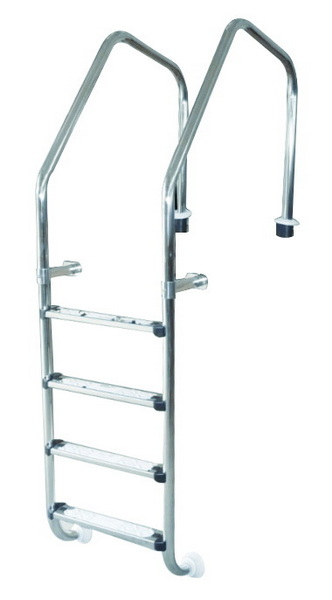
A freestanding or soft‑sided above‑ground pool needs a ladder that is self‑supporting and compatible with its wall height and structure. In most cases, a standard in‑ground deck ladder is not safe because it requires rigid walls and deck anchors, while freestanding pools often have flexible frames and vinyl liners.[2][4][5][1]
For a typical above‑ground pool (48–54 inches wall height), manufacturers recommend:
- A‑frame safety ladders that stand independently on both sides of the wall.[5][1][2]
- Freestanding step systems that sit on the pool floor inside and provide a stable entry from the ground outside.[6][2]
- Deck‑mount ladders only when there is a rigid, properly built deck to anchor into.[4][1][2]
Using the correct style protects the pool wall and liner, prevents wobbling, and reduces the risk of falls and entrapment.[7][8]
Choosing the right ladder starts with understanding the main ladder categories and how they interact with freestanding pools.[1][5][6]
A‑frame ladders are designed specifically for freestanding above‑ground pools without a deck.[2][5][1]
- Two-sided design with steps inside and outside the pool, supporting themselves over the wall.[5][1][2]
- Many models include removable or locking outside steps to prevent unsupervised access by children.[8][9][2]
- Weighted bases (sand, pebbles, or integrated ballast) keep the ladder from floating or shifting.[9][2]
Freestanding “walk‑in” steps give an in‑ground feel inside a freestanding pool.[6][2]
- Wide treads and handrails make entry easier for kids, seniors, and heavier swimmers.[3][10][2]
- Perforated steps allow water circulation to reduce algae and debris buildup around the steps.[6]
- Often combined with an outer ladder or platform to create a full entry system for pools without decks.[1][2]
These are not suitable for a truly freestanding pool unless a solid deck is present.[2][5][1]
- Deck ladders bolt into the deck and drop into the pool water, using the deck for structural support.[4][1][2]
- In‑pool ladders for in‑ground pools are usually anchored to concrete or built‑in fittings and should not be “rested” against a soft‑sided pool wall.[11][10][5]
Safety is the core concern when adding any ladder to a freestanding pool.[12][7][8]
A freestanding pool ladder must handle the body weight of your heaviest user plus a safety margin.[10][3]
- Many heavy‑duty above‑ground ladders are rated 300–400 lbs or more.[13][3][2]
- The ladder should sit flat on the pool floor and ground, with no rocking or twisting when tested side‑to‑side.[7][9]
- For free‑standing step systems, sandbags or integrated weights help prevent “floating” when someone climbs.[9][2]
Ladders are one of the biggest risk points for unauthorized entry.[8][12]
- Use locking ladders, removable outside steps, or gate‑style entry systems for above‑ground pools with children nearby.[8][9][2]
- Many safety guidelines recommend a fence and self‑latching gate around any above‑ground pool, plus a secure ladder.[12][8]
A freestanding pool often has a vinyl liner over a steel, resin, or soft frame.[1][2]
- Use a ladder pad or step pad under the ladder feet to prevent punctures and abrasion.[4][2]
- Avoid sharp metal edges, pressure‑treated wood, or DIY ladders that can leach chemicals or tear the liner.[14][4]
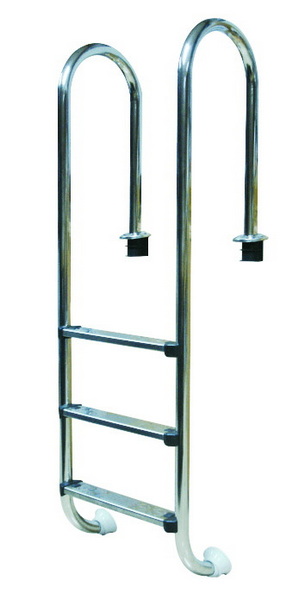
Selecting the correct ladder is both a safety decision and a comfort decision.[5][6][1]
Most above‑ground pools have walls between 48 and 54 inches high, and the ladder should match that range precisely.[3][6]
- If the ladder is too short, swimmers must “climb” the top rail, increasing fall risk.[10][3]
- If the ladder is too tall, it can wobble or push awkwardly against the wall, stressing the frame.[3][4]
Your user group influences tread design and handrail style.[10][3]
- Wide, deep, non‑slip steps and dual handrails are strongly recommended for elderly users and young children.[2][3][10]
- Higher weight‑capacity models and rigid handrails improve confidence and reduce accidents for heavier swimmers.[13][3]
Pools using chlorine or salt systems demand corrosion‑resistant materials.[13][2]
- Common options include resin, coated steel, and 304/316 stainless steel for long‑term durability.[11][13][2]
- Always confirm whether the ladder is rated for saltwater if your pool uses a salt chlorinator.[13][10]
Correct installation is essential for safety and to protect your pool structure.[4][1][2]
While details depend on the specific model, most above‑ground and freestanding ladders follow similar principles.[6][2][4]
- Assemble the ladder or steps strictly following the manufacturer's instructions, tightening all bolts to spec.[7][1][2]
- Position the ladder so that the inside feet sit flat on the pool floor and the top rests on the top rail without sharp edges.[2][4]
- Add weight (sand, pebbles, or built‑in ballast) where recommended to prevent the ladder from floating.[9][2]
Ongoing inspection keeps the ladder safe throughout the season.[12][7][8]
- Before each swim day, test for wobble and ensure all steps and handrails feel solid.[7][10]
- Monthly, check and retighten hardware, inspect rubber feet and pads, and replace worn pieces immediately.[7][4]
Cold weather can damage both the ladder and the pool if you leave the ladder in place.[15][7]
- Many suppliers advise removing the ladder from above‑ground pools during winter to prevent freeze damage and debris buildup.[15][7]
- Store it dry and clean, away from direct sunlight, to maximize lifespan and keep plastics from becoming brittle.[10][7]
You can safely use a pool ladder with a freestanding above‑ground pool as long as the ladder is designed for above‑ground use, matched to the pool wall height, and installed according to the manufacturer's specifications. A‑frame safety ladders and freestanding step systems are the most appropriate choices, providing stability, weight capacity, and child‑safety features that standard in‑ground deck ladders cannot offer. By combining the right ladder with proper pads, ballast, fencing, and regular inspection, owners can dramatically reduce accidents and enjoy comfortable, secure access to their freestanding pools.[8][3][12][1][2][7][5]
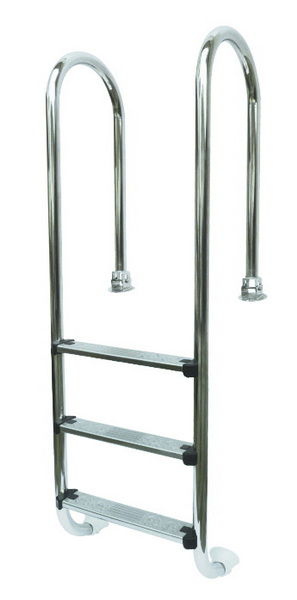
A: No. You should only use ladders specifically designed for above‑ground pools, such as A‑frame ladders or freestanding step systems that match your pool wall height and liner type.[1][2][5]
A: The safest choice is usually an A‑frame safety ladder or a combined step‑and‑ladder entry system, because these ladders are self‑supporting and include non‑slip treads and handrails.[2][6][1]
A: Make sure the feet sit flat on the pool floor, add sand or built‑in weights where recommended, and use a ladder pad or step pad to improve grip and protect the liner.[9][4][2]
A: Many experts recommend removing ladders from above‑ground pools before winter to avoid freeze damage, staining, and unnecessary stress on the pool wall and liner.[15][7]
A: Look for lockable or removable outside steps, high‑visibility handrails, non‑slip treads, and combine the ladder with a compliant fence and self‑latching gate around the pool.[12][8][2]
A: This is not recommended because pressure‑treated wood can leach chemicals and has rough surfaces that may damage the liner; use a purpose‑built resin or coated metal ladder instead.[14][4][2]
[1](https://www.thepoolfactory.com/blogs/new-pool-buyers/how-to-choose-the-correct-ladder-or-step-for-your-above-ground-swimming-pool)
[2](https://intheswim.com/above-ground-pool-ladders-steps/)
[3](https://www.vevor.com/diy-ideas/heavy-duty-above-ground-pool-ladder/)
[4](https://www.poolsupplies.com/shop/accessories-ladders)
[5](https://cincinnatipoolandpatio.com/choosing-pool-ladders/)
[6](https://poolzilla.com/blogs/blog/the-simple-guide-selecting-the-right-pool-steps-and-ladders-for-your-swimming-pool)
[7](https://blog.watsons.com/blog/make-above-ground-pool-ladder-stable)
[8](https://www.swimmingpool.com/resources/safety-guides/above-ground-safety/)
[9](https://sternspools.com.au/blogs/help-advice/easy-access-a-guide-to-above-ground-pool-ladders)
[10](https://www.rehabmart.com/post/how-to-choose-pool-steps-and-ladders)
[11](https://www.royalswimmingpools.com/Inground-Pool-Ladders.html)
[12](https://brightwaterpools.com/your-easy-8-step-guide-to-above-ground-pool-safety/)
[13](https://www.doheny.com/pool-supplies/accessories/pool-steps)
[14](https://www.reddit.com/r/swimmingpools/comments/csmq3a/pressure_treated_pool_ladder_inside_of_pool/)
[15](https://www.royalswimmingpools.com/above-ground-pool-ladders-steps.html)
[16](https://www.facebook.com/groups/637529959937311/posts/2565129437177344/)
[17](https://www.lowes.com/pl/Above-ground-pool-ladders-steps-Pool-ladders-lifts-Pools-Outdoors/4294610238)
[18](https://www.facebook.com/groups/637529959937311/posts/2595540947469526/)
[19](https://www.facebook.com/groups/637529959937311/posts/2203700393320252/)
[20](https://www.homedepot.com/b/Outdoors-Pool-Supplies-Pool-Accessories-Pool-Ladders/Highly-Rated/Above-Ground/N-5yc1vZcfz3Zbwo5oZ1z1a66e)


