
Views: 222 Author: Tina Publish Time: 2026-01-02 Origin: Site


Content Menu
● What an A Frame vs Deck Ladder Really Is
● When Conversion Is Possible (and When It Is Not)
● Safety and Code Issues You Must Consider
● Two Main Ways to Convert an A Frame Ladder
>> 1. Manufacturer Conversion Kit
>> 2. Deck Flanges and Anchors for Compatible Rails
● Step by Step: How to Convert an A Frame Pool Ladder to Deck
>> Step 1 – Confirm Model and Compatibility
>> Step 2 – Purchase the Correct Conversion Kit or Flanges
>> Step 3 – Disassemble and Remove the Outside Legs
>> Step 4 – Assemble the Deck-Mount Top Section
>> Step 5 – Mark and Drill Deck Mounting Points
>> Step 6 – Bolt the Ladder Securely to the Deck
>> Step 7 – Adjust Height and Check Clearances
● When You Should Replace Instead of Convert
● OEM Pool Entry, Filtration, and Lighting Solutions
● FAQs About Converting an A Frame Pool Ladder to Deck
>> 1. Do all A frame pool ladders convert to deck ladders?
>> 2. Is it safe to bolt an A frame ladder directly to my wood deck?
>> 3. What deck height can a converted ladder fit?
>> 4. Can I convert the ladder myself, or do I need a professional?
>> 5. Should I upgrade my filtration or lighting when I add a deck ladder?
Owning an above-ground pool with a new deck often creates a common upgrade question: can an existing A-frame ladder be safely converted into a deck ladder instead of buying a brand-new entry system? In many cases the answer is yes, provided you use the correct conversion hardware, respect pool safety codes, and verify that your specific ladder model is approved for deck mounting.[3][1]
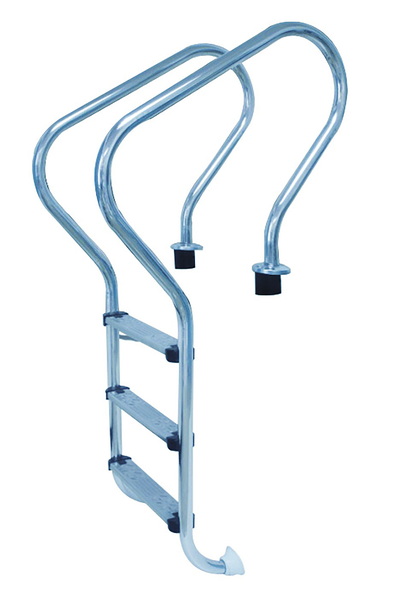
An A-frame ladder is designed to sit on the ground outside the pool and rest on the liner or floor inside, with two sides forming a freestanding “A” shape. A deck-mounted ladder, by contrast, bolts rigidly to the deck so that only the in-pool portion drops into the water while the outside legs are removed.[4][1]
For many popular resin models (such as Confer 7100x and similar “Evolution” A‑frame ladders), manufacturers sell dedicated conversion kits that replace the outer legs with deck-mount rails and flanges.[5][1]
Not every A-frame ladder is designed to be converted, so the first step is to confirm compatibility. Some models have specific bolt patterns and molded rails that accept a conversion kit; others are strictly freestanding and must not be rigidly attached to a deck.[6][1]
Situations where conversion is usually feasible:[5][1]
- The ladder manufacturer sells an “A-frame to deck ladder conversion kit” for your exact model.
- The kit clearly states the supported deck height range (for example 42–56 inches).
Situations where conversion is usually not recommended:[1][3]
- No kit or hardware is offered and the manual doesn't mention deck mounting.
- The ladder is very old, cracked, sun‑faded, or has weakened resin or rusted steel.
Even when a conversion is physically possible, the ladder must still comply with safety guidelines and local building or pool codes. Proper clearances, non‑slip treads, and stable handholds are essential to reduce accidents on wet surfaces.[7][3]
Typical requirements from codes and guidelines include:[7][3]
- Ladders must be corrosion‑resistant and have non‑slip treads or steps.
- Ladders must be rigidly installed with adequate handholds extending above the deck or platform.
Because local codes differ, pool owners should always check municipal or state requirements for residential pools, especially where decks, barriers, and access gates are concerned.[8][9]
There are two primary approaches to conversion: using a purpose‑made manufacturer kit, or using universal deck flanges and hardware with a compatible ladder design.[2][1]
Some brands provide a dedicated kit that turns a specific A‑frame model into a deck ladder. The kit typically includes new top rails, mounting hardware, and flanges that bolt to the deck.[5][1]
Advantages:[1][5]
- Designed for exact fit and correct deck height range.
- Hardware and instructions are tested to match the ladder's load rating.
In some setups, the existing top rails of the ladder can slide into standard deck flanges if they are the correct diameter (often around 1.5 inches). These flanges bolt directly into the deck, anchoring the ladder rails securely.[4][2]
However, this approach should only be used where the ladder manufacturer allows deck anchoring with generic flanges; otherwise, structural and warranty issues can arise.[10][6]
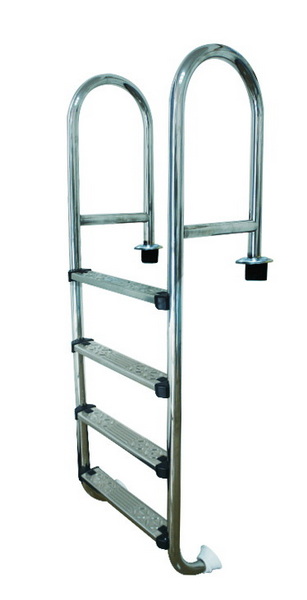
The exact process depends on your ladder model and hardware, but the overall workflow is similar for most modern resin A‑frame ladders with conversion kits.[6][1]
1. Locate the ladder's brand and model number on a sticker or molded mark.[1]
2. Download the user manual and look for “deck mount” or “conversion kit” information.[6][1]
If a brand‑specific kit exists, purchase that exact model to ensure proper fit. If the manual allows deck‑flange mounting, buy flanges sized for your rail diameter from a reputable pool parts supplier.[2][4][5][1]
Most conversion kits require removing the “outside” legs and platform of the A‑frame so only the pool‑side portion remains. Carefully lay the ladder down, undo bolts or snap‑locks, and set aside any parts not reused.[1]
Install the new deck‑mount top rails or brackets provided in the kit, following the sequence in the manual. Ensure all fasteners are tight and that the rails or handholds are aligned and square, ready to attach to the deck.[6][1]
Position the ladder at the correct spot on the deck so that the lower treads sit comfortably on the pool wall or floor. With help holding it level, mark the flange or bracket screw holes and drill pilot holes as recommended for your deck material.[8][10][4][2]
Fasten the flanges or brackets to the deck using corrosion‑resistant hardware, and then secure the ladder rails inside the flanges with set bolts. Check that the ladder is rigid, with no wobble or flex when weight is applied.[10][4]
Many conversion kits allow small height adjustments for deck heights like 42–56 inches. Adjust so that:[1]
- Steps are level and not too steep.
- Handrails extend adequately above the deck for a secure grip.[3]
Improper conversions can create serious hazards, from instability to entrapment risks, particularly for children. Avoid the following errors when turning an A‑frame ladder into a deck ladder.[7][3]
- Using DIY wood blocks or random brackets instead of tested flanges or conversion hardware.[4][2]
- Failing to secure the ladder to solid framing beneath the deck boards, which can lead to fasteners pulling out under load.[8]
Additionally, any ladder should be periodically inspected for corrosion, cracks, or loose bolts, especially near the waterline and deck connection points.[11][7]
Sometimes replacing the A‑frame ladder with a purpose‑built deck entry system is the safer long‑term solution. This is especially true where the existing ladder is old, undersized, or incompatible with modern decks and codes.[12][3][7]
You may prefer a new deck ladder or step system if:[12][3]
- You want integrated safety features like anti‑entrapment design and lockable gates.
- You are upgrading the pool with premium filtration, lighting, and pumps and want the access equipment to match.
For professional buyers, brands, and contractors, integrating certified ladders with matched filtration and circulation equipment creates a unified, reliable system. Many above‑ground pool packages now combine sand or cartridge filters, high‑efficiency pumps, LED lighting, and deck entry to simplify installation for end users.[13][12][1]
A modern OEM package for above‑ground pools can include:
- Sand, DE, or cartridge filters sized to the pool volume and pump flow.
- High‑efficiency circulation pumps and quiet plumbing layouts.
- LED underwater and perimeter lights synchronized with the deck and landscape.
For overseas wholesalers, brands, and pool installers, working with a specialized factory allows customization of ladder styles, filtration capacities, and accessories under a private label to match regional preferences and standards.[13][11]
Converting an A-frame pool ladder to a deck ladder is often possible and can be a smart way to reuse existing equipment, but it must be done with correct hardware and attention to safety codes. When you use the proper manufacturer conversion kit or deck flanges, mount into solid deck framing, and verify that handrails, treads, and clearances meet local requirements, the converted ladder can provide years of safe, comfortable access to your above-ground pool.[3][7][1]
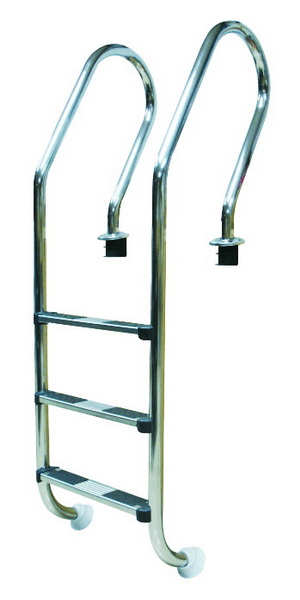
No, only certain A-frame models are designed to be converted, usually when the manufacturer offers a specific conversion kit or approves deck-mount flanges for that ladder. If the manual does not mention deck mounting or a kit, it is safer to treat the ladder as A-frame only and consider a new deck ladder instead.[12][7][6][1]
It can be safe if the ladder model is approved for deck mounting and you use suitable deck flanges or the official conversion kit, fastening into structural framing, not just thin deck boards. Avoid improvised brackets or undersized screws, which may not meet load expectations or code guidance for rigid ladder installations.[7][4][8][3]
Most conversion kits specify a deck height range, such as 42–56 inches, and the ladder must be adjusted within that range to maintain safe step spacing and rail height. If your deck is outside the specified range, you should choose a different ladder system designed specifically for that height.[3][1]
Many pool owners can complete the conversion themselves using basic tools, as long as they closely follow the manufacturer's instructions and use the supplied hardware. For complex decks, strict local codes, or heavy use environments, hiring a professional installer or carpenter can help ensure that the deck structure and fasteners are adequate.[9][5][8][1]
A new deck and entry system is an excellent time to upgrade to a properly sized sand or cartridge filter, a more efficient pool pump, and modern LED lights for better safety and nighttime visibility. Bundling these components as an integrated OEM package can simplify installation and deliver a more consistent, high-quality experience for end users.[13][10][12]
[1](https://www.thepoolfactory.com/products/ck7100x)
[2](https://www.poolsupplies.com/product/deck-flange-to-mount-pool-ladder)
[3](https://codes.iccsafe.org/content/ISPSC2018/chapter-7-onground-storable-residential-swimming-pools)
[4](https://nationaldiscountpoolsupplies.com/above-ground-pool-deck-ladder-mounting-flange-1-5/)
[5](https://www.poolwarehouse.com/shop/confer-ck7100x-a-frame-to-deck-ladder-conversion-kit/)
[6](https://fmsi.com/Conversion-Kit-Secure-Your-Pool-Ladder-To-Decks-42-56-Inches-c-524637)
[7](https://codelibrary.amlegal.com/codes/sunsetcityut/latest/sunsetcity_ut/0-0-0-4206)
[8](https://www.decksgo.com/deck-building-code.html)
[9](https://www.thebuildingcodeforum.com/forum/threads/pool-deck-barrier-railing-heights.28835/)
[10](https://www.poolweb.com/collections/deck-anchors)
[11](https://www.getpoolparts.com/section/18/ladder-parts)
[12](https://www.thepoolfactory.com/products/vinyl-works-sld-resin-deck-ladder)
[13](https://www.perplexity.ai/search/00f6090e-bebe-4c9b-baf7-57ecf370516b)
[14](https://www.thepoolfactory.com/products/conversion-kit-for-confer-roll-guard-to-deck-ladder)
[15](https://www.poolsupplies.com/product/a-frame-to-deck-ladder-conversion-kit-for-832097)
[16](https://www.facebook.com/groups/637529959937311/posts/2507783596245262/)
[17](https://www.law.cornell.edu/cfr/text/16/1207.5)
[18](https://www.ravecommercial.com/Confer-7200-Pool-Ladder-Conversion-Kit-Deck-Mount-For-Above/1052377)
[19](https://www.facebook.com/groups/637529959937311/posts/2461281357562153/)
[20](https://codes.iccsafe.org/content/ISPSC2012/chapter-7-onground-storable-residential-swimming-pools)


