
Views: 222 Author: Tina Publish Time: 2026-01-04 Origin: Site


Content Menu
● Why correct pump start matters
● Basic safety checks before turning on
● Prepare the pool system (water level and valves)
● How to prime a pool pump before turning it on
>> Step 1: Turn off power and relieve pressure
>> Step 2: Inspect and clean the pump basket
>> Step 3: Fill the pump housing with water
>> Step 4: Close the system and start the pump
● Step‑by‑step: Turning on a swimming pool pump
● Starting above‑ground vs in‑ground pool pumps
● What to check if the pump will not turn on
>> What to check if the pump runs but has no flow
● OEM pumps, filters, and integrated solutions (for B2B buyers)
● FAQs about turning on a swimming pool pump
>> 1. Do I need to fill the pump with water before turning it on?
>> 2. How long should I let the pump run after turning it on?
>> 3. Is it normal to see bubbles or hear gurgling when I start the pump?
>> 4. What should I do if the pump trips the breaker when I turn it on?
>> 5. Can I turn the pump on with the filter valve in “Backwash” or “Waste” mode?
>> 6. What is the difference between turning on a single‑speed and variable‑speed pump?
>> 7. How often should I check the pump and filter after start‑up?
Turning on a swimming pool pump safely is about three key steps: preparing the equipment and electrical supply, setting valves and water level correctly, and priming the pump so it never runs dry. When each step is done in order, the pump starts smoothly, protects the motor and seal, and keeps water circulating efficiently for clean, healthy swimming.[1][2]
You can also insert a short OEM brand introduction block in the middle of the article (for example, between “Basic Safety Checks” and “Prepare the Pool System”) to introduce your factory as a professional manufacturer of sand filters, DE filters, cartridge filters, pool pumps, LED pool lights, and accessories, providing OEM services to international brands and wholesalers.
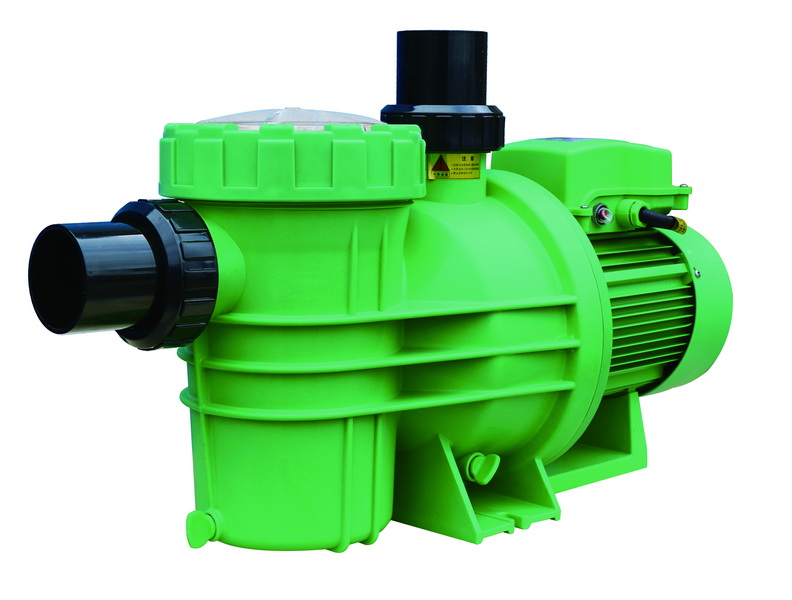
Turning a pool pump on is not just flipping a switch; it is part of the entire circulation and filtration system that keeps water sanitary and equipment protected.[2][6]
If the pump starts with closed valves, trapped air, or low water level, it can overheat, lose prime, cavitate, or damage the shaft seal and motor bearings.[1][2]
- Proper start‑up ensures strong circulation through the filter, heater, and chlorinator so chemicals distribute evenly and algae is less likely to grow.[7][5]
- Priming the pump before running prevents dry running, which can cause expensive damage to the pump wet end and shorten the life of the motor.[2][1]
Before touching any controls, always focus on electrical and physical safety around the pool equipment area.[8][3]
This is especially important at the beginning of the season or after any repair, when wiring, plumbing, and seals may have shifted or degraded.[6][7]
- Make sure the area around the pump and filter is dry, clear of puddles, and free of extension cords or loose tools that could cause electrical hazards.[8]
- Inspect the pump, filter, heater, and chlorinator for visible cracks, leaks, corrosion, or loose fittings before you “flip the switch.”[7][6]
Simple electrical checks dramatically reduce the risk of shocks and nuisance trips when the pump starts.[3][8]
Many residential pool pumps are fed through a dedicated GFCI‑protected circuit, which should be tested regularly.[8][3]
- Verify the pump is plugged in (for cord‑and‑plug models) or that its disconnect switch is in good condition with no melted or burnt marks.[3]
- Check that the circuit breaker is not tripped; reset it if necessary, and test any GFCI outlets or breakers by pressing “Test” and then “Reset.”[8][3]
The pump can only run correctly if it has a stable source of water and clear suction paths.[9][2]
Above‑ground and in‑ground pools share the same basic idea: the skimmer and main drain need enough water and open valves to feed the pump.[9][1]
- Confirm the pool water level is at least halfway up the skimmer opening so the skimmer does not suck air, which would break prime.[9]
- Check that the skimmer weir door is moving freely and not stuck closed, as a stuck weir can starve the pump of water.[9]
Incorrect valve settings are a common reason a pump “runs” but does not move water.[1][2]
Most pools have a combination of skimmer, main drain, vacuum, and return valves, plus a multiport valve on the filter.[4][2]
- Set suction valves so at least one source (usually the skimmer, sometimes the main drain) is open enough to supply water to the pump.[2]
- If your filter uses a multiport valve, make sure it is in the correct position (usually “Filter” for normal operation, or “Recirculate” when priming according to some guides).[10][4]
Priming removes air from the plumbing and fills the pump housing with water so the impeller can generate full suction.[4][1]
Many self‑priming in‑ground pumps still benefit from manual priming, especially after winterization, repairs, or when the water level has been low.[1][2]
Never open a pump or filter while the system is running or under pressure, because pressurized water or air can cause injury.[1][2]
A safe priming process always starts with the pump off and pressure relieved at the filter.[10][2]
- Turn off the pump at the timer or control panel, and then switch off the circuit breaker for an extra layer of safety.[2][1]
- Open the air‑relief valve on the top of the filter, or slowly remove the filter or pump lid to release trapped air and pressure.[10][1]
A clogged strainer basket can restrict flow so much that the pump fails to prime properly.[6][2]
While the lid is off, take the chance to inspect seals and o‑rings that keep air from leaking into the system.[6][2]
- Remove the pump lid and lift out the strainer basket; clean out leaves, hair, and debris that could block water flow.[2]
- Check the pump lid and o‑ring for cracks, deformation, or dryness, and lubricate or replace them if needed to maintain an airtight seal.[6][2]
Filling the pump housing gives the impeller enough water to start drawing from the pool and clear remaining air out of the lines.[4][1]
This step is especially important after winterization, when all lines may have been blown out and are full of air.[1][2]
- Use a garden hose or bucket to fill the pump housing until the basket chamber is completely full of water.[4][2]
- Allow the water to run for at least one to two minutes so some water seeps into the suction pipes from the skimmer and main drain.[4][1]
Once the pump body is full, the system can be sealed and powered up so the pump can pull water continuously from the pool.[1][4]
The first seconds often include some gurgling and air bubbles, which should quickly stabilize.[4][1]
- Reinstall the strainer basket (if removed), fit the lid properly, and tighten it by hand to avoid air leaks.[2]
- Close the filter's air‑relief valve once water begins to flow steadily and the pump basket is visibly full of water under the clear lid.[1][4]
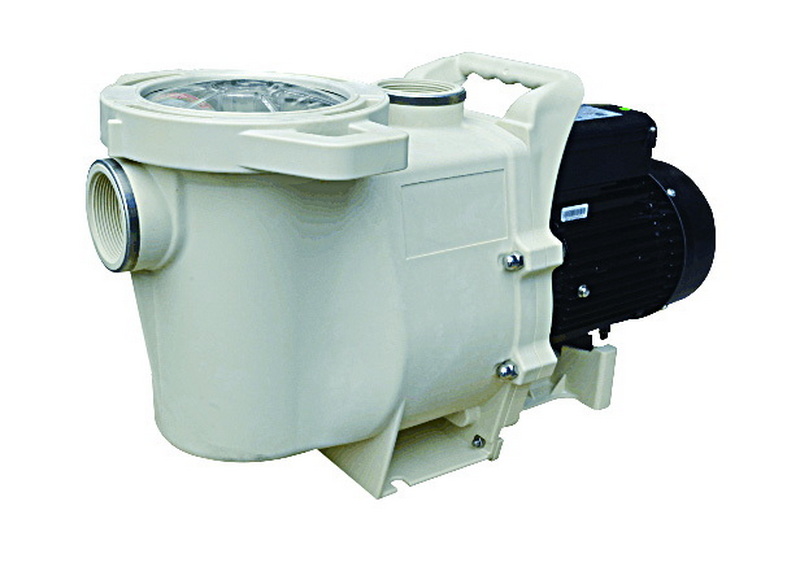
After preparation and priming, you are ready to perform the actual start‑up sequence for the pump.[1][2]
These steps are similar for many brands and models, but owners should always check the specific manual for model‑specific instructions.[2][1]
1. Verify water level and valve positions
Ensure the pool water is halfway up the skimmer, suction valves are open, and the filter multiport is in “Filter” (normal) or “Recirculate” (for priming, if recommended).[10][4]
2. Confirm the pump is primed
Look through the clear pump lid; it should be mostly full of water, with no large pockets of air.[4][1]
If the housing is mostly air, repeat the filling step before proceeding.[4]
3. Turn on electrical supply
Switch the breaker back on and set the pump control, switch, or timer to “On” or “Auto” depending on your system design.[7][5]
For variable‑speed pumps, you may choose a low or medium speed for initial filtration.[6]
4. Observe pump priming and filter pressure
Watch the pump basket fill completely and look at the filter pressure gauge; it should rise into the normal operating range for your system.[2][4]
You may see air bubbles at the returns for a short time, which should fade as air is purged.[1][4]
5. Walk around and check for leaks or noises
Inspect unions, valves, and the pump lid for drips, and listen for abnormal grinding or rattling noises.[7][6]
If the pump never fully primes or you see a persistent leak, shut it down and investigate before continuing.[3][2]
Above‑ground and in‑ground systems share many steps but behave slightly differently because of pump position relative to the water level.[9][1]
Understanding these differences helps avoid frustration when priming and starting the pump.[9][2]
| System type | Key characteristics | Priming/starting tips |
|---|---|---|
| Above‑ground pool pump | Usually sits below water level; often non self‑priming; shorter hoses. thepoolfactory | Ensure the pump is not higher than the skimmer, keep hoses tight, open all valves, and use water from the pool to flood the pump housing before switching on. thepoolfactory+1 |
| In‑ground pool pump | Typically self‑priming; sits above water level; connected to buried plumbing. swimmingpool+1 | Carefully fill the housing with water, set valves to draw from one suction line at first, and allow extra time for the pump to clear long underground pipes. swimmingpool+1 |
Sometimes the pump will not start at all when you press the switch, which usually points to electrical or control issues.[3]
Other times it runs but does not move water, which usually indicates priming or valve problems.[4][2]
- Confirm power supply: check the outlet, breaker, and GFCI, and make sure any external timer or automation is not set to “Off.”[5][3]
- If electricity is present but the motor only hums or trips the breaker, there may be a failed capacitor or motor issue that requires service.[3]
When the pump runs but there is little or no water movement, the issue is usually air leaks, blocked flow, or incorrect valve positions.[2][4]
This situation should be resolved quickly so the pump does not overheat or damage the seal.[1][2]
- Re‑check water level, open suction valves, and ensure the skimmer basket and pump basket are not clogged.[9][2]
- Inspect the pump lid and union o‑rings for cracks or misalignment that allow air in, and re‑prime the pump if large air pockets are visible.[6][2]
For pool professionals, brands, and distributors, choosing high‑quality pumps and filtration systems reduces start‑up problems and long‑term maintenance costs.
Factory‑level OEM support also allows customization for different regions, voltages, and market requirements.
- A specialized Chinese manufacturer can supply sand filters, DE filters, cartridge filters, high‑efficiency pool pumps, LED pool lights, and accessories designed to start reliably and maintain strong flow under varied conditions.
- OEM services typically include customized logos, packaging, performance curves, and voltage options (such as 110–120 V and 220–240 V) to match local codes and end‑user expectations.
Turning on a swimming pool pump correctly is a systematic process: verify safety and electrical conditions, set water level and valves, prime the pump housing completely, and then monitor start‑up until pressure and flow stabilize.[1][4]
When pool owners or service professionals follow this routine—and pair it with quality OEM pumps and filters—the system runs quieter, lasts longer, and keeps pool water clearer with fewer problems throughout the season.[7][6]
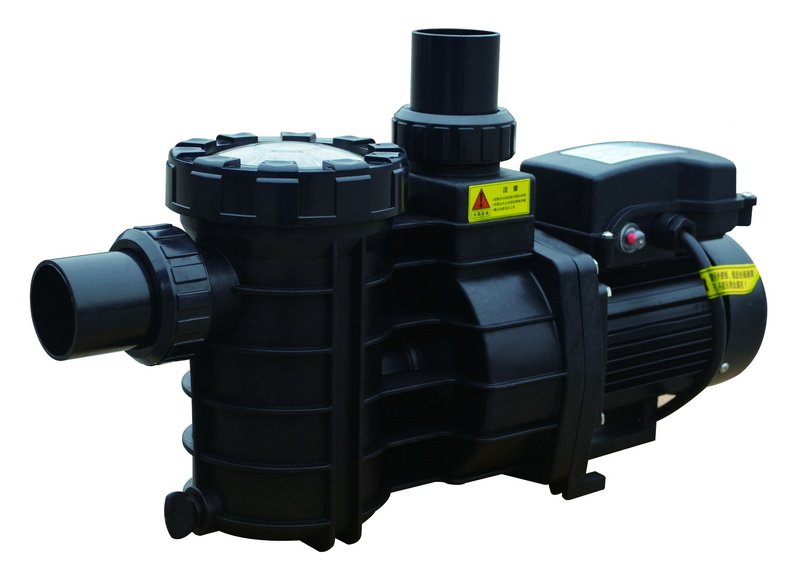
Yes, if the pump housing is mostly full of air, you should fill it with water using a hose or bucket before starting, especially after winterization or repairs.[4][1]
This helps the pump prime quickly and prevents damage from running dry.[2][1]
Most residential pools need enough daily run time to turn the entire pool volume over at least once, which often means 8–12 hours per day depending on pump size and pool volume.[5][6]
Right after start‑up or spring opening, some professionals recommend running the pump continuously for 24 hours to stabilize water chemistry and filtration.[5]
Some bubbles and gurgling are normal for the first few minutes as air is purged from the lines and filter.[1][4]
If bubbles and noise continue for a long time, this may indicate an air leak at the pump lid, unions, or suction fittings that needs attention.[11][2]
First, check for obvious issues like water around electrical components and test or reset the GFCI and breaker.[8][3]
If the breaker keeps tripping, the pump motor or capacitor could be faulty, and a qualified electrician or pool technician should inspect the system.[3]
You should not run the pump in “Backwash” or “Waste” for normal filtration because water will bypass the standard return path and may discharge to waste.[10][4]
Only use these positions briefly for cleaning or draining tasks according to the filter manual, then return the valve to “Filter” for regular operation.[10][4]
Single‑speed pumps simply turn on at full power when the switch or timer activates, while variable‑speed pumps allow you to choose a specific RPM or preset program.[6]
Many owners start variable‑speed pumps at a low‑to‑medium speed for filtration and schedule higher speeds for vacuuming or backwashing.[6]
During the first few days after opening the pool or installing new equipment, it is wise to check the pump basket, filter pressure, and equipment pad daily.[5][6]
Once everything is stable, weekly inspections for leaks, unusual noises, and pressure changes are usually enough for most residential pools.[6]
[1](https://www.swimmingpool.com/maintenance/pump&filter/when&how-to-prime-pool-pump/)
[2](https://teampoolworks.com/blog/prime-pool-pump-step-step/)
[3](https://aquaticpros.org/common-pool-pump-electrical-issues/)
[4](https://www.swimuniversity.com/prime-pool-pump/)
[5](https://www.nationalpoolsandspas.com/complete-pool-opening-checklist/)
[6](https://lesliespool.com/blog/pre-season-checklist-pool-pump-maintenance.html)
[7](https://jcpools.net/pool-prep-checklist-for-the-season-ahead/)
[8](https://corraoelectric.com/get-ready-for-pool-season-a-simple-electrical-safety-checklist/)
[9](https://www.thepoolfactory.com/blogs/equipment/how-to-prime-an-above-ground-pool-pump)
[10](https://www.wikihow.com/Prime-a-Pool-Pump)
[11](https://www.youtube.com/watch?v=cLwpXo9kNTA)
[12](https://www.youtube.com/shorts/Gp6AioHHmM4)
[13](https://www.facebook.com/groups/637529959937311/posts/2223961787960779/)
[14](https://www.youtube.com/watch?v=Ayk3co2KetE)
[15](https://www.youtube.com/watch?v=SPOzgmXgTlk)
[16](https://www.youtube.com/watch?v=20RLr0afvSc)
[17](https://www.reddit.com/r/pools/comments/1d1exe0/help_request_how_to_turn_on_this_pool_pump/)
[18](https://www.tiktok.com/@swimuniversity/video/7506203521168051486)
[19](https://www.reddit.com/r/swimmingpools/comments/vpwj5b/should_i_fill_the_pump_with_water_before_priming/)
[20](https://pleasantpools.com/pool-opening-checklist-10-steps-for-spring-success/)


