
Views: 222 Author: Tina Publish Time: 2026-01-07 Origin: Site


Content Menu
● What “Run Time” Really Means
● Typical Daily Run Time Recommendations
● How to Calculate Your Exact Pump Run Time
● Key Factors That Change Pump Run Time
>> Climate, season, and sun exposure
>> Pool usage & sanitation type
● Can You Split Pump Run Time During the Day?
● Signs You Should Run the Pump Longer
● Energy‑Saving Tips While Maintaining Water Quality
● Why Professional‑Grade Filters and Pumps Matter
● FAQs About Pool Pump Run Time
>> 1. Is it OK to run a pool pump 24 hours a day?
>> 2. Is it better to run a pool pump at night or during the day?
>> 3. How long should I run my pump after adding chemicals or shocking the pool?
>> 4. Do variable‑speed pumps need to run longer than single‑speed pumps?
>> 5. How do I know if my pool pump is too small or too large for my pool?
>> 6. Should I change my pump runtime between winter and summer?
Most residential pool pumps need to run about 8–12 hours per day to circulate all the water at least once and keep the pool clean and safe. The exact run time depends on pool size, pump flow rate, filter type, climate, and how heavily the pool is used.[1][2][3][4][5][6][7]
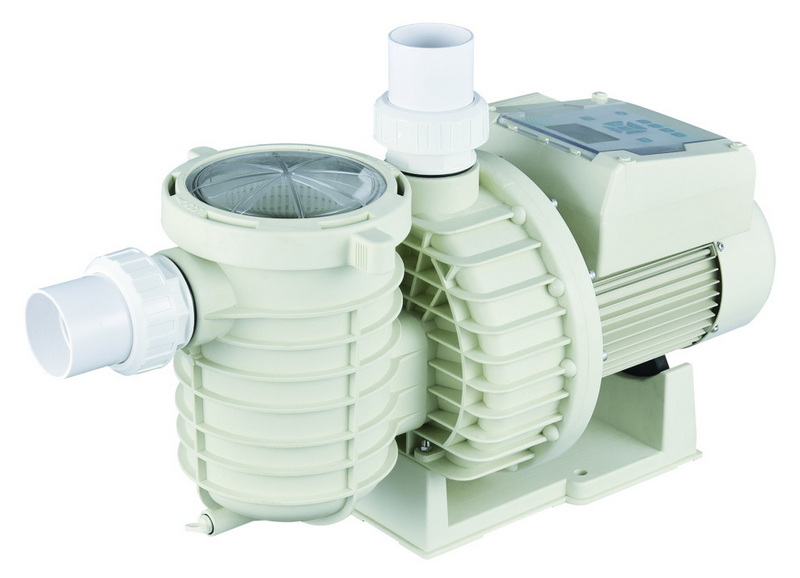
Pool pump “run time” is the number of hours per day your pump operates to push all the water through the filter at least once. This complete circulation is called a turnover and is the baseline for proper filtration and sanitation.[2][3][5][7][1]
- Most residential pools are sized so that one full turnover takes around 8 hours of pumping.[7][1][2]
- Some experts and health codes recommend 6–8 hours or more, and in hot weather or high use you may need up to 12–16 hours.[3][8][5][9]
Most guidance converges on a daily run time of about 8 hours under normal conditions, with adjustments for season, usage, and equipment.[10][11][8][5][9][1][2][3][7]
- Standard recommendation:
- Run the pump about 8 hours per day to achieve at least one full turnover.[11][1][2][3][7]
- Cool / off-season:
- When water is below roughly 60 °F, many pools can run less than 6 hours per day.[8][5]
- Hot summer season:
- In warm weather, some pools need 12–16 hours or even up to 18 hours of run time to stay clear, especially if water reaches the 80s °F and the pool sees heavy use.[5][8]
- Saltwater (salt chlorinator) pools:
- Often require longer run times so the salt system can generate enough chlorine, commonly 10–12 hours or more per day.[12][13]
Instead of relying only on rules of thumb, you can calculate an approximate run time using pool volume and pump flow rate.[4][9][1][10][5]
1. Find your pool volume (gallons or liters).
2. Check your pump's flow rate (gallons per minute – GPM or liters per minute – LPM).
3. Use the formula:

where pump flow per hour = flow rate × 60.[1][10][5]
Sample calculation (US pool):
- Pool volume: 20,000 gallons.[5][1]
- Pump flow rate: 40 GPM.[1]
- Gallons per hour = 40 × 60 = 2,400 gallons/hour.[1]
- Run time for one turnover = 20,000 ÷ 2,400 ≈ 8.3 hours.[1]
Sample calculation (metric):
- Pool volume: 70,000 liters.[10]
- Pump flow: 210 L/min = 12,600 L/hour.[10]
- Run time = 70,000 ÷ 12,600 ≈ 5.5 hours (often rounded up to 6 hours).[10]
Several conditions can require longer or shorter daily operation.[6][9][14][4][8][5]
Larger pools contain more water and need more time to complete a full turnover.[4][5]
- A compact 10,000‑gallon pool with a strong pump may only need 5–6 hours.[4][10]
- A 30,000‑gallon pool with the same pump might need 10+ hours per day.[5][4]
The type of pool pump directly affects how long it should run.[15][9][13][11][4][5]
- Single‑speed pumps:
- Run at one fixed high speed; typically 8 hours or more to complete filtration.[13][2][5]
- Dual‑speed pumps:
- Can run longer on low speed (e.g., around 12 hours) more efficiently.[15][4]
- Variable‑speed (VS) pumps:
- Often programmed for 12–24 hours at lower speeds, improving filtration and saving energy despite longer run time.[9][11][13][4][1]
Filter technology and cleanliness also influence necessary run time.[6][5]
- Sand filters:
- Capture larger particles; often need longer run times and more operation after storms or heavy use.[6][5]
- Cartridge filters:
- Finer filtration; can achieve clarity with shorter run times if cartridges are kept clean.[5][6]
- DE (diatomaceous earth) filters:
- Provide the finest filtration, allowing shorter run times, but require regular backwashing and recharging.[6][5]
Dirty or aging filter media slow the flow, so the pump may need to run longer to achieve the same turnover.[5][6]
Heat and sunlight accelerate algae growth and chlorine loss, which often requires longer pump run time.[8][9][5]
- Cool, shaded pools: Can often run closer to 6–8 hours.[8][5]
- Hot, sunny climates in summer: May need 12–16 hours or more, sometimes up to 18 hours with very warm water.[8][5]
Heavy rain or storms add dirt, pollen, and organics, so running the pump longer after bad weather helps prevent cloudiness.[14][6]
How often and how intensely the pool is used affects circulation needs.[9][14][4][8][5]
- More swimmers, pool parties, and frequent use require longer daily run times.[8][5]
- Saltwater pools rely on the pump to power the salt chlorinator, so low pump hours can lead to low chlorine.[12][13]
Yes, daily run time does not have to be continuous; you can split it into multiple blocks.[2][11][3][7][9]
- For an 8‑hour target, many owners run 3–4 hours in the morning and 4–5 hours in the evening.[11][7][2]
- Splitting hours allows you to:
- Run more during non‑peak electricity times to save on energy costs.[3][2][11]
- Coordinate with automatic chlorinators, heaters, and cleaners for better performance.[14][9][4]
The key is achieving the total number of hours in each 24‑hour period, not running them all at once.[7][2][11][3]
If you see any of the following, your pool pump may not be running long enough or your system is undersized.[9][14][4][10][6][8][5]
- Cloudy water even after adding chemicals.[10][8][5]
- Algae growth on walls, steps, or in corners.[8][5]
- Struggling to keep chlorine and pH balanced despite correct dosing.[10][5]
- Debris still floating after many hours of operation.[4][9]
In some cases, the pump or filter may be undersized, forcing longer daily operation (e.g., more than 10–12 hours) to achieve proper turnover.[16][9][4][5][10]
Running your pump efficiently helps control electricity costs while protecting water quality.[13][2][11][3][14][9][4][1][10]
- Use a variable‑speed pump:
- Run it longer at low speed for better filtration and lower energy per hour.[13][9][4][1]
- Target off‑peak hours:
- Shift most runtime to cheaper electricity periods if your utility offers time‑of‑use rates.[2][11][3]
- Keep baskets, skimmers, and filters clean:
- Good flow allows you to achieve turnover in fewer hours.[14][6][5][10]
- Size equipment correctly:
- Pumps should match pool size and filter capacity; an oversized or badly matched pump wastes energy and may still underperform.[16][9][14][4][5]
For brand owners, wholesalers, and OEM pool equipment buyers, reliable circulation and filtration depend heavily on pump and filter quality.[16][9][14][4][6][5]
- Combining a properly sized pump with a high‑performance sand, cartridge, or DE filter ensures effective turnover within your target daily run time.[16][9][6][5]
- Precision‑engineered sand filters, DE filters, cartridge filters, and circulation pumps, supported by OEM manufacturing, help reduce noise, energy use, and maintenance for end users.[9][4][6][16][5]
A complete system that includes LED lighting, accessories, and automation can further optimize daily pump schedules and enhance the overall pool experience.[14][4][9]
In most residential applications, a pool pump should run around 8 hours per day to achieve at least one full turnover and maintain clear, healthy water. However, factors such as pool size, pump flow rate, filter type, climate, and usage can extend this to 10–16 hours or more, especially in hot weather, saltwater systems, or heavily used pools.[12][11][3][7][2][13][4][6][9][1][5][8]
By calculating your turnover time, watching water clarity and chemical stability, and optimizing equipment selection, you can fine‑tune daily run time to balance water quality, energy efficiency, and long‑term system reliability.[4][6][16][9][14][1][5][10]
Yes, it is technically safe to run a pool pump 24/7, and some variable‑speed systems are designed for near‑continuous operation, but it is usually unnecessary and increases energy costs. Most residential pools achieve good results with 8–12 hours of targeted runtime.[11][3][7][2][13][9][1][4][5][8]
From an energy perspective, running the pump during off‑peak electricity hours (often at night) can lower costs. However, running part of the time during the day helps circulate chemicals and combat UV‑driven chlorine loss, so many owners split hours between day and night.[3][7][2][11][9][14]
After shocking or adding large amounts of chemicals, it is common to run the pump continuously for 24 hours or at least extend daily runtime significantly to distribute chemicals and clear debris. Check product labels and local guidelines for specific instructions.[9][14][5][8]
Variable‑speed pumps often run more hours per day, but at much lower speeds, which reduces energy consumption while improving filtration quality. Even with longer daily runtime, total energy cost is usually lower than a single‑speed pump running 8 hours on high.[11][13][1][4][9]
If your pump cannot turn over the pool water within a reasonable window (e.g., 8–10 hours) and you still struggle with clarity and chemistry, it may be undersized or restricted. If the pump's flow rate exceeds the filter's maximum capacity, it may be oversized, causing pressure issues and inefficiency; ideally, the filter should be slightly “oversized” relative to pump flow and pool volume.[6][16][4][5][9][10]
Yes, many pool owners reduce runtime to 4–6 hours in cooler months and increase to 10–16 hours during hot summer conditions to combat algae and higher bather loads. Adjustments should be based on water temperature, sunlight exposure, and how the pool looks and tests.[5][9][8]
[1](https://lesliespool.com/blog/how-to-calculate-pool-pump-run-time.html)
[2](https://florida.codypools.com/how-long-should-i-run-my-pool-pump-every-day/)
[3](https://www.californiapools.com/blog/california-pools-blog/pool-maintenance-care/how-long-should-you-run-your-pool-pump-/)
[4](https://liquiduspools.com/blog/run-your-pool-pump/)
[5](https://intheswim.com/blog/how-long-to-run-pool-pump.html)
[6](https://www.fjvconstruction.com/how-often-should-you-run-your-pool-pump)
[7](https://www.swimmingpool.com/maintenance/pump&filter/how-long-to-run-pool-pump/)
[8](https://www.riverbendsandler.com/help-advice/pool-school-how-often-should-a-pool-pump-run-in-the-summer/)
[9](https://www.riverpoolsandspas.com/blog/how-long-to-run-pool-pump)
[10](https://mrpoolman.com.au/blogs/news/how-long-should-i-run-my-pool-pump-every-day)
[11](https://www.swimuniversity.com/run-pool-pump/)
[12](https://www.facebook.com/groups/273395260599363/posts/1421226082482936/)
[13](https://www.facebook.com/lesliespoolcare/posts/when-it-comes-to-pool-pumps-most-single-speed-pumps-need-at-least-8-hours-to-do-/777218277829723/)
[14](https://www.aaronpoolsandspas.com/pool-pumps-the-best-time-to-run-your-pump/)
[15](https://www.inyopools.com/HowToPage/how-to-size-a-pool-filter.aspx?CommentPage=1)
[16](https://lesliespool.com/blog/pool-pump-sizing-101.html)
[17](https://www.reddit.com/r/pools/comments/pbcz27/how_long_should_i_run_my_pool_pump_each_day_i/)
[18](https://www.youtube.com/watch?v=u4ExnupI26o)
[19](https://www.reddit.com/r/pools/comments/csj0s1/rule_of_thumb_for_pool_turnover_8hrs_10hrs_1_day/)
[20](https://www.youtube.com/watch?v=9ToRTbckeOw)


