
Views: 222 Author: Tina Publish Time: 2025-12-14 Origin: Site


Content Menu
● Safety Risks of a Floating Ladder
● Main Methods to Keep a Ladder Down
● Step 2: Drill Drainage and Vent Holes (If Allowed)
● Step 3: Add Internal Ballast (Sand or Gravel)
● Step 4: External Weights and Universal Anchors
● Step 5: Anchor the Ladder to the Deck
● Step 6: Protect the Liner and Maintain Circulation
● Step 7: Regular Inspection and Seasonal Adjustments
● OEM and Upgrade Opportunities for Pool Ladders
● FAQ – How to Stop Pool Ladder from Floating
>> 1. Why does my pool ladder keep floating up?
>> 2. Is it safe to fill my pool ladder with sand?
>> 3. What kind of weights can I use if I don't want sand everywhere?
>> 4. Will drilling holes in the ladder damage it?
>> 5. How do I keep steps down without blocking water circulation?
>> 6. Do I still need to anchor the ladder if it is heavy?
Keeping a pool ladder from floating mainly requires removing trapped air and adding safe, evenly distributed weight using sand, gravel, or dedicated ladder weights, combined with secure anchoring to the deck or pool wall. When done correctly, the ladder sits firmly on the floor, feels solid underfoot, and does not shift or lift when swimmers climb it.[1][2][3]
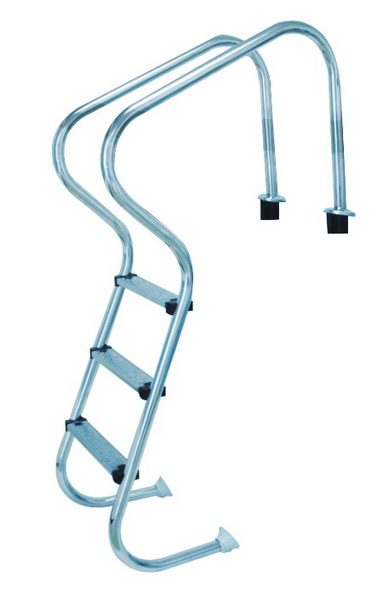
Many above ground and in‑pool ladders are made from hollow plastic or resin, which traps air inside and creates buoyancy so the structure naturally tries to rise. Lightweight designs also reduce friction with the pool floor, so any trapped air or water movement can cause the ladder to wobble or float.[4][2][5]
Water chemistry and temperature can change how much air is trapped inside the steps or tubes, especially when the ladder is removed and reinstalled during the season. If the ladder is not properly filled with water or ballast, it will become unstable and may lift away from the floor when someone steps on it.[2][1][4]
A floating or unstable ladder can cause swimmers to lose balance, slip, or fall back into the pool, increasing the risk of injury for children, seniors, and anyone with limited mobility. Movement at the base of the ladder can also scrape or pinch the liner, creating small tears that eventually turn into expensive leaks.[6][3][5][2]
If the ladder shifts away from the wall, swimmers may get feet, hands, or hair caught behind or under the steps, which is why safety standards emphasize secure mounting and physical barriers behind ladders and steps. A ladder that floats up during circulation can also disrupt water flow and create dead spots where algae is more likely to grow.[7][8][9][6]
Stopping a ladder from floating usually involves a combination of three strategies: letting air escape, adding weight, and anchoring the structure. In practical terms, that means drilling small drain holes where allowed, filling hollow sections with sand or gravel, and using deck connectors or anchor sockets to lock the ladder in place.[1][2]
Some manufacturers offer universal sand weights or ballast kits that strap to the bottom of most step systems, providing a simple way to keep ladders firmly on the pool floor without homemade solutions. When used correctly, these methods create a solid, non‑wobbly access point that feels similar to a built‑in stair system.[10][3][11][5]
For many plastic step systems and in‑pool ladders, trapped air is the primary reason they keep floating even when you try to weigh them down. Removing that air allows the hollow cavities to fill with water so the ladder naturally sinks and stays in place.[4][2][1]
Manufacturers and pool technicians often recommend slowly submerging the ladder at an angle and “working” it underwater until bubbles stop escaping from the cavities. This may need to be repeated on both sides so water completely replaces the air inside the steps or rails.[1][4]
If the ladder's design permits modifications, small drainage holes near the bottom of hollow tubes help water flow in and air escape, reducing buoyancy. Holes of roughly 3–5 mm, aimed downward or sideways, are usually enough to allow efficient drainage without weakening the structure.[12][2]
Edges around new holes should be carefully smoothed to prevent sharp areas that might cut the liner or catch skin. Always check the manufacturer's instructions before drilling; altering a ladder may void warranties or conflict with safety standards in some public pools.[5][7][2]
Filling hollow steps or side panels with sand is one of the most widely recommended methods to keep pool steps from floating. Some popular step systems call for around 70 lb of sand distributed among several internal compartments to ensure the steps stay firmly on the floor.[1][2]
Vinyl‑coated gravel bags, resin blocks, or custom ladder weights can replace loose sand where easier handling or improved durability is required. These inserts create dense ballast inside the ladder while minimizing contact between hard surfaces and the liner.[13][5][2]
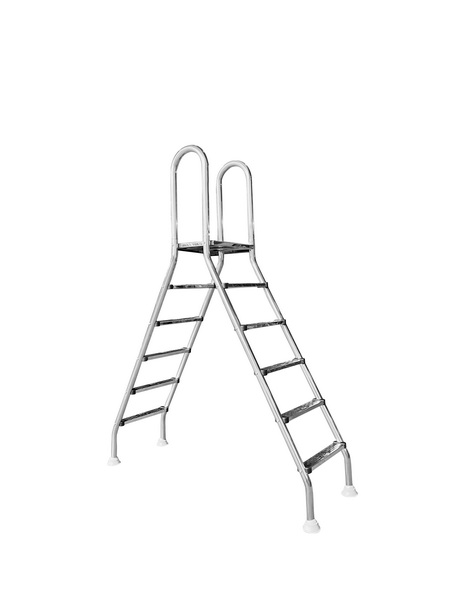
Universal sand anchors and ladder weight kits are designed to sit under or behind pool steps and can be filled with sand or similar ballast material. These anchors usually strap or clip to the step frame so they stay in place but still allow water circulation underneath.[11][10][5]
DIY solutions include using plastic containers, jugs, or dumbbell‑style weights filled with sand or small gravel and tied to the ladder's back supports with non‑corrosive rope. Any improvised weight must be secured so it cannot shift onto the liner, and should be positioned where it will not obstruct swimmers or block circulation under the steps.[14][15][13][5]
Deck connectors and stainless‑steel brackets provide the most secure long‑term way to hold a pool ladder or in‑pool step system in place. When properly installed, anchor sockets or surface‑mounted brackets lock the ladder rails to the deck while still allowing removal for winter storage.[3][2][1]
Guidelines usually recommend keeping the back of the ladder a small distance away from the pool wall or liner, often around 1 inch, to prevent rubbing and allow water movement. All bolts and mounting hardware should be stainless‑steel or another corrosion‑resistant material, tightened and inspected periodically.[6][2][1]
Any weight or ladder foot in contact with the liner should have a soft pad underneath—foam mats, rubber step pads, or manufacturer‑supplied bases—to spread the load and prevent punctures. Foam noodles or cylindrical backer rods under the feet are often used to increase friction and reduce lateral movement without creating hard pressure points.[16][17][2]
At the same time, most safety guidance warns against completely blocking water circulation beneath or behind the steps, which can create “dead zones” where algae grows. The goal is to balance stability with enough flow so the filtration system and chemicals can still reach all areas around the ladder.[8][9][3]
Over time, sandbags, anchors, and fasteners can degrade, loosen, or shift, especially in chlorinated or saltwater pools. Inspect weights, straps, and brackets at least several times each season and replace damaged or corroded items before they fail.[6][5][2]
Public and commercial pools must also consider local health codes for ladders, steps, and access, which often address entrapment, safe clearances, and secure barriers to prevent unsupervised use. Even in residential pools, keeping the ladder inaccessible when the pool is not in use, such as by removing outer rungs or locking gates, is a recommended safety practice.[9][6][3]
For brands, wholesalers, and manufacturers, integrating anti‑floating features—such as built‑in ballast chambers, factory‑drilled drain holes, and matching universal weight kits—can turn a standard ladder into a premium safety product. Pairing these ladders with high‑quality sand filters, circulation pumps, and LED lights allows customers to purchase a complete access and filtration package from one supplier.[12][2]
OEM partners can customize color, rail geometry, tread texture, and anchoring hardware to match different above‑ground and inground pool systems in various markets. Offering pre‑configured kits that include ladder, anchors, pads, and ballast reduces installation time for installers and DIY users.[11][10][2]
Stopping a pool ladder from floating requires understanding why it lifts—trapped air, insufficient weight, and weak anchoring—and then solving each of these issues with the right combination of drainage, ballast, and deck connections. When air is released, internal or external weights are properly installed, and the ladder is securely anchored while protecting the liner and circulation, the result is a stable, safe entry system that feels solid for every swimmer.[3][1][2]
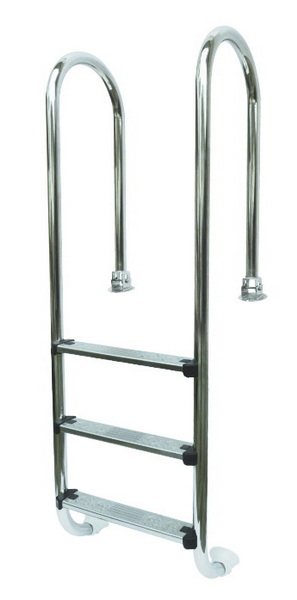
Most pool ladders float because hollow plastic or resin sections trap air, and the overall structure is too light to overcome that buoyancy. Without proper drainage holes or ballast, the ladder will naturally rise when water moves or when someone steps on it.[4][1][2]
Filling ladder steps or side panels with sand is a common and effective way to add ballast, and many step manufacturers specify approximate sand weights in their manuals. Use clean, dry sand, follow the product's fill instructions, and make sure caps or plugs are secure so sand does not leak into the pool.[5][1][2]
You can use universal ladder sand anchors, vinyl‑coated gravel bags, or sealed plastic containers filled with sand or small stones, strapped securely to the ladder frame. Avoid bare metal or sharp materials, and always position weights where they will not shift onto the liner or obstruct swimmers.[13][10][5][2]
Small, well‑placed drain holes near the base of hollow tubes are often enough to let air out and water in, without significantly weakening the structure. However, drilling may void warranties and is not permitted for some models, so always consult the documentation and use smooth, deburred holes to protect bathers and liners.[7][12][2]
Position weights and pads so they support the ladder but leave open channels underneath and behind the steps for water flow. Commercial ballast kits and foam pads are typically shaped to maintain circulation while stabilizing the ladder, helping to prevent algae growth in dead spots.[8][5][2]
Yes, even a weighted ladder should be anchored or braced so it cannot shift horizontally or tip when people climb it. Deck connectors, anchor sockets, or rigid handrail mounts provide this stability and are part of many safety recommendations for residential and public pools.[9][6][2][3]
[1](https://www.thepoolfactory.com/blogs/equipment/how-prevent-pool-steps-from-floating)
[2](https://www.poolkingfilter.com/how-to-keep-a-pool-ladder-from-floating.html)
[3](https://poolfence.com/pool-ladders-a-step-toward-safety/)
[4](https://www.youtube.com/watch?v=pacoHDlvEAE)
[5](https://www.yahoo.com/lifestyle/weigh-down-pool-steps-simple-180052070.html)
[6](https://www.poolfencediy.com/blogs/blog/pool-ladder-safety)
[7](https://www.govinfo.gov/content/pkg/CFR-2012-title16-vol2/pdf/CFR-2012-title16-vol2-part1207.pdf)
[8](https://www.facebook.com/groups/637529959937311/posts/2594449264245361/)
[9](https://www.floridahealth.gov/environmental-health/swimming-pools/_documents/64e-9_fac_draft_rev7_no_strike.pdf)
[10](https://www.homedepot.com/p/Main-Access-Universal-Anchors-Swimming-Pool-Ladder-Step-Sand-Weights-2-x-200888/310623853)
[11](https://www.target.com/p/main-access-universal-anchor-swimming-pool-ladder-and-step-sand-weight-8-pack/-/A-91834866)
[12](https://www.poolkingfilter.com/how-to-weigh-down-a-pool-ladder.html)
[13](https://www.poolspaforum.com/forum/index.php?%2Ftopic%2F1059-weighing-pool-steps-downalternative-for-sand%2F)
[14](https://www.facebook.com/groups/637529959937311/posts/2202923233397968/)
[15](https://www.homedepot.com/p/Main-Access-Universal-Anchors-Swimming-Pool-Ladder-Step-Sand-Weights-3-x-200888/310623840)
[16](https://www.facebook.com/groups/637529959937311/posts/2509115239445431/)
[17](https://www.facebook.com/groups/637529959937311/posts/1667822236908073/)
[18](https://www.youtube.com/watch?v=-qkS06U4SC0)
[19](https://www.reddit.com/r/pools/comments/wubcro/how_to_keep_stairs_down_on_floor_instead_of/)
[20](https://whiplashwhiskeyco.com/Sand-Anchors-For-Above-Ground-Inflatable-Pool-Steps-k-519211)


