
Views: 222 Author: Tina Publish Time: 2025-11-14 Origin: Site


Content Menu
● Why Consider a DIY Pool Ladder?
>> Assessing Pool Type and Ladder Design
● Step-by-Step Construction Guide
>> Step 1: Cutting and Preparing Ladder Rails
>>> For PVC Ladders:
>> Step 2: Preparing and Attaching Ladder Steps
>> Step 3: Assembling the Ladder
>> Step 4: Mounting and Anchoring
>> Step 5: Final Safety Checks
● Safety Standards and Best Practices
● Customization Tips and Advanced Upgrades
● Maintenance and Seasonal Storage
● Troubleshooting Common Issues
>> 1. What are the most important safety features for pool ladders?
>> 2. What is better: PVC or wood for a DIY pool ladder?
>> 3. How do I make sure the steps are truly non-slip?
>> 4. Can I add extra handrails for kids or seniors?
>> 5. How much weight should a DIY pool ladder support?
Building your own pool ladder is not just a practical project—it offers significant customization, durability, and cost savings over mass-produced options. Whether for an above-ground or inground pool, a DIY ladder can be tailored perfectly to your pool's height, material preferences, and safety needs. This guide details the planning, design, assembly, maintenance, and advanced tips for constructing a reliable ladder, including visual instructions, safety insights, and direct links to instructional videos.[10][11]
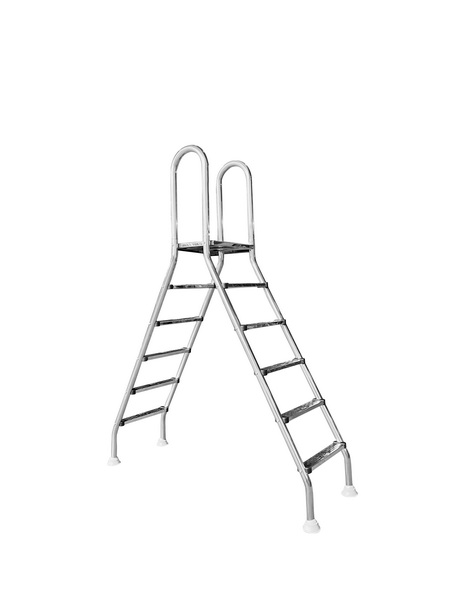
- Customization: Match ladder size, width, and look precisely to your pool and deck.
- Durability: Select high-quality, corrosion-resistant materials for long-lasting performance.
- Affordability: Achieve similar or superior quality to retail ladders at a much lower price.[11][10]
- Enhanced Safety: Incorporate advanced safety features, non-slip treads, and better stability based on your needs.
Start by measuring the vertical height from the pool floor to the top edge. Decide whether you need a simple vertical ladder, angled stairs, or a platform-top entry for deck integration.
- Above-Ground Pools: Ladders need tall, sturdy rails, often removable or lockable for child safety.
- Inground Pools: May use shorter, permanent or semi-permanent ladder designs.
- Platform Deck Integration: Ladders can connect with custom-built or prefab pool decks for seamless access.
- Height: Confirm pool wall height (typically 48-52 inches for above-ground styles).
- Tread Spacing: Steps should be spaced 10–12 inches apart for safe climbing.[3][4][9]
- Rail Angle: For stair-step ladders, use 15° or greater from vertical for safety.[2][4]
- Width: Steps should be at least 12 inches wide (preferably 16–18 inches for adult comfort).[5][9]
- Handrails: Extended handrails on both sides for secure grip.[1][2]
- PVC Pipe: Lightweight and rustproof, ideal for easy assembly and removal.
- Treated Wood: Durable, sturdy, and customizable; suitable for permanent installations.
- Composite Boards: Offer high resistance to water and UV degradation.
- Stainless Steel Hardware: Bolts, screws, and brackets for all-weather reliability.
- Miscellaneous: Non-slip tread strips, pool-safe adhesive, measuring tape, saw, drill, level, wrench, sandbags or cinder blocks for anchoring.[6][12][13][11]
- Cut two upright rails from PVC pipe, each extending from pool floor to 8 inches above the deck/pool edge.
- Use elbows, tee joints, and end caps for structural integrity and watertight seals.[11]
- Rip two 2x6 or 4x4 boards to length.
- Sand all edges, predrill holes for steps and hardware, and weatherproof the wood.[12][14]
- Material: Use 18–20 inch PVC pipe, treated wood, or composite treads.
- Spacing: Place steps at consistent 10–12 inch intervals.[4][3]
- Attachment: PVC steps use solvent-welded tees; wood/composite steps are bolted to rails.
- Surface: Each tread should have anti-slip tape, rubber pads, or rough surface for secure footing.[14][1][11]
- PVC: Assemble steps and side rails together, glue all connections, and pressure-test for sturdiness.[11]
- Wood: Bolt steps firmly, using carriage bolts and washers.
- Alignment: Regularly check squareness with a level during assembly.[14]
- End Caps: Seal open tube ends to prevent water and debris ingress.
- Base Anchoring: Secure base with sandbags, cinder blocks, or screw mounts for wood ladders.
- Deck Integration: Fasten ladder top to deck using stainless steel brackets or removable hooks for above-ground pools.
- Removability: For families with children, use locks on above-ground ladders or design them to be removable.[8][1]
- Handrails: Install on both sides, extending above pool edge for secure entry and exit.[1][2]
- Edge Protection: Cover or round all sharp corners and exposed bolts.
- Load Test: Ensure each step supports at least 300 lbs (1334 N), standard for residential ladders.[2][5]
- Slip Resistance: Confirm all steps and handholds are securely non-slip.[4][1][2]
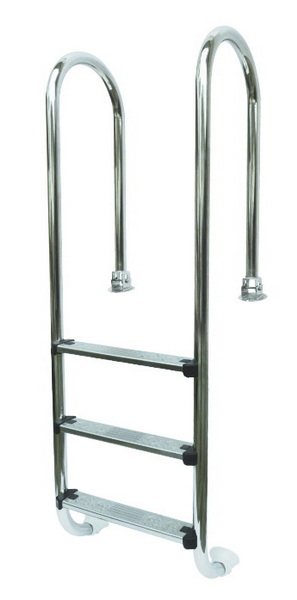
- CPSC Recommendations: Steps must be at least three inches wide; ladders must have handrails on both sides, non-slip surfaces, and covered bolts or sharp edges.[1]
- OSHA Spacing: Steps between 10–14 inches apart for ladder safety.[9][3]
- Slip-Resistance: Surfaces must resist slippage at a 33° angle for a barefooted adult.[2]
- Handrails: Required, must extend above platform, with safe clearances to avoid entrapment.[1][2]
- Access Security: Lockable or removable ladders help prevent child access when not in use.[8][1]
- Structural Requirements: Ladders must withstand 300 pounds without permanent deformation.[5][2]
- Removable Ladders: Use quick-detach brackets or rope/chain anchor points.
- Integrated Pool Deck: Build steps directly into a wood or composite decking for seamless access.
- Incorporate LED Lights: Attach waterproof LED strips under treads for night visibility.
- Add Handrails: Additional inner handrails made from smaller PVC or stainless tubing for children or seniors.
- Color Coding: Use colored step covers or paint for improved visibility.
- Annual Checkups: Inspect for cracks, corrosion, or loose bolts at least once per season.
- Winterization: Remove ladder and store in a dry shed in freezing areas, or cover with a tarp and elevate off the ground.
- Replacement: Swap out non-slip tape or tread grips as needed, and apply fresh sealant/paint to exposed wood.
- Wobbling: Add additional weights, secure base, or inspect deck mounts.
- Slippery Steps: Reapply non-slip coatings or replace grips.
- Rust or Corrosion: Only use stainless or coated hardware, paint wood or metal regularly.
- Family Pools: Wide, slip-proof steps for child and senior safety.
- DIY Pool Spas: Compact removable ladders for temporary set-ups.
- Commercial/Rental Pools: Install tamperproof locking mechanisms for compliance.
Creating your own pool ladder delivers maximum customization, strength, and safety on a budget. With quality modern materials like PVC, treated timber, and stainless hardware, coupled with careful assembly and regular maintenance, a homemade ladder can last for years and meet or exceed all relevant safety standards. You also gain the flexibility to adapt the design for changing needs, advanced features, or unique pool settings. When properly constructed and maintained, a DIY pool ladder becomes a reliable, integral part of your pool's enjoyment and safety.[10][4][12][2][11][1]
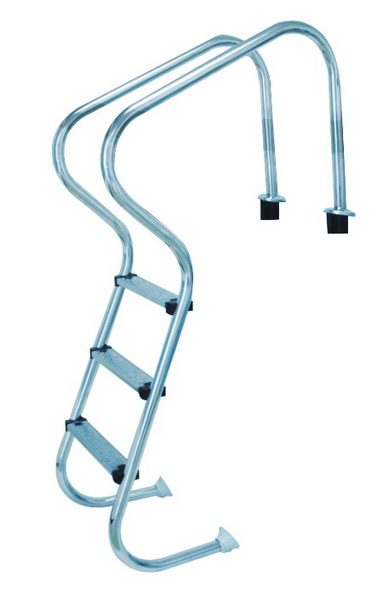
The essentials include sturdy handrails on both sides, non-slip treads, step width of at least 12 inches, uniform spacing of 10–12 inches, and a stable base with secure anchoring. Ladders should use corrosion-resistant materials and lockable/removable options to prevent unintended access.[6][8][2][1]
PVC offers light weight, corrosion resistance, and easy removability—great for above-ground pools. Treated wood provides a more natural look and robust feel, but needs weatherproofing. Both can deliver long service when constructed properly.[13][12][11]
Apply pool-grade non-slip tape, install rubber tread covers, or use textured anti-slip paint on each step. Replace these materials at the first sign of wear.[14][11][1]
Absolutely—customize with a second set of smaller-diameter rails, or opt for a full stairwell with deck-style handles for maximum support.
Guidelines specify at least 300 pounds (about 1334 N) for each step without permanent deformation or failure.[5][2]
[1](https://www.poolfencediy.com/blogs/blog/pool-ladder-safety)
[2](https://www.law.cornell.edu/cfr/text/16/1207.5)
[3](http://www.osha.gov/laws-regs/regulations/standardnumber/1910/1910.23)
[4](https://www.ecfr.gov/current/title-16/chapter-II/subchapter-B/part-1207)
[5](https://www.govinfo.gov/content/pkg/CFR-2012-title16-vol2/pdf/CFR-2012-title16-vol2-part1207.pdf)
[6](https://codelibrary.amlegal.com/codes/sunsetcityut/latest/sunsetcity_ut/0-0-0-4206)
[7](https://www.astm.org/news/standards-and-pool-safety-mj15)
[8](https://www.poolsafely.gov/wp-content/uploads/2016/04/Safety-Barrier-Guidelines-for-Residential-Pools.pdf)
[9](https://codes.iccsafe.org/s/ISPSC2021P1/chapter-3-general-compliance/ISPSC2021P1-Ch03-Sec322.3)
[10](https://www.poolkingfilter.com/how-to-build-your-own-pool-ladder.html)
[11](https://www.budget101.com/do-it-yourself/6038-diy-pvc-pool-ladder-plans/)
[12](https://www.youtube.com/watch?v=QP9lvq23BTg)
[13](https://www.youtube.com/watch?v=mvT1GMwOkK8)
[14](https://www.southshoredeckbuilders.com/how-to-build-above-ground-swimming-pool-steps/)
[15](https://www.youtube.com/watch?v=JJkG7vsan1E)
[16](https://www.youtube.com/watch?v=x-xSSDDMSu4)
[17](https://www.youtube.com/watch?v=AcVIHFSLCTY)


