
Views: 222 Author: Tina Publish Time: 2026-01-15 Origin: Site


Content Menu
● How to Attach Pool Ladder to Composite Deck
● Understand Your Deck and Ladder
● Choose the Right Mounting Hardware
● Plan Ladder Position on Composite Deck
● Step‑by‑Step Installation Process
>> Step 1 – Dry‑fit and Mark the Ladder
>> Step 2 – Locate Framing and Pre‑Drill
>> Step 3 – Fasten the Deck Flanges
>> Step 4 – Insert and Secure the Ladder
>> Step 5 – Level, Bond, and Safety‑Check
● Maintenance Tips for Ladder and Composite Deck
● FAQs About Attaching a Pool Ladder to Composite Deck
>> Q1: Can I screw a pool ladder directly into composite boards without hitting framing?
>> Q2: What kind of hardware should I use for composite decking?
>> Q3: Do I need to bond a metal pool ladder attached to a composite deck?
>> Q4: How do I stop the ladder from wobbling on my composite deck?
>> Q5: Can I reuse existing concrete ladder anchors when I build a composite deck over the old patio?
>> Q6: How often should I inspect the ladder connection on a composite deck?
>> Q7: What is the ideal height difference between the deck and the top ladder step?
How to attach a pool ladder to a composite deck comes down to choosing the right surface‑mount hardware, finding solid framing under the decking, and fastening and sealing everything for long‑term safety. Proper planning also helps protect your composite boards from cracking or water damage while giving swimmers a stable, wobble‑free way in and out of the pool.[1][2][3]
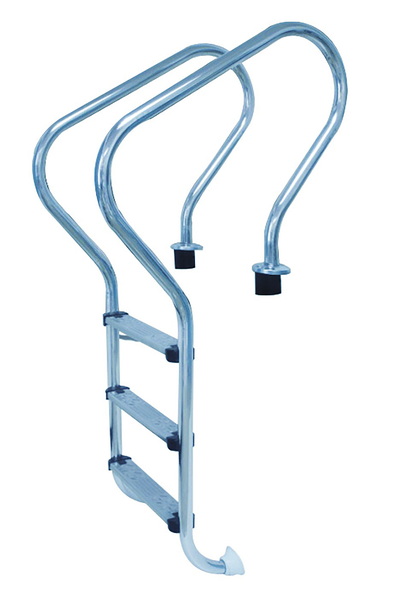
Attaching a pool ladder to a composite deck is different from mounting it on concrete or bare wood, because composite boards need careful drilling and solid support underneath. The process below walks through planning, hardware selection, installation, and safety checks that work for most above‑ground and inground pools next to composite decking.[4][3][1]
Before drilling into any composite deck, it is essential to understand what is below the surface and how your ladder is designed to mount.[4][1]
- Most composite decks use wood or steel joists under hollow or capped composite boards, so fasteners must grab into the framing instead of just the surface boards.[4]
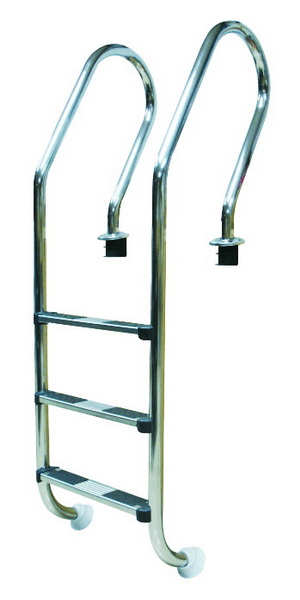
- Many pool ladders are made for deck mounting with surface‑mount bases or flanges that slip over the rails and bolt to the deck, while others use anchor sockets cast into concrete or built into aluminum decking.[5][3]
- A loose or rocking ladder is a major cause of poolside accidents, so stability and load capacity are more important than cosmetics when planning your installation.[6][1]
Using hardware designed for deck surfaces and compatible with composite material is critical for a safe, durable installation.[1][2]
- Surface‑mount ladder bases or deck flanges are made to sit on top of the deck and clamp around the ladder rails, allowing you to bolt the ladder down without embedding anchor cups into concrete.[9][5][2]
- For composite or wood decks, corrosion‑resistant lag screws or structural screws should fasten through the flange and composite board into the sub‑structure, not just the board, to resist pull‑out.[1][4]
- When choosing a ladder for a composite deck, look for stainless steel or coated aluminum with non‑slip treads, UV resistance, and a weight rating of at least 250–300 pounds for residential use.[3][1]
Where you place the ladder on the deck affects safety, comfort, circulation, and maintenance access.[6][1]
- Position the ladder in a clear entry/exit zone away from skimmers, return jets, main drains, and automatic cleaner paths so it does not interfere with circulation or cleaning.[6][1]
- Ensure enough space on both sides of the ladder so users can grip the rails easily, and align the ladder so the feet rest firmly on the pool floor or steps without stressing the liner or pool wall.[3][1]
- For above‑ground pool decks, center the ladder on a straight portion of the pool wall where the deck framing is strong, rather than near corners, cantilevered sections, or narrow platforms.[3][1]
Having the correct tools and materials ready makes the attachment process smoother and prevents mistakes on composite boards.[1][4]
- Typical items include a drill/driver, drill bits sized for pilot holes and your fasteners, a socket set or wrench, measuring tape, pencil, spirit level, and safety glasses.[1][4]
- Materials normally include: the ladder itself, surface‑mount bases or deck flanges, stainless or coated lag screws, washers, composite‑compatible sealant, and optional shims for leveling on slightly uneven decks.[2][9][5]
- If the ladder or bases are metal, bonding lugs and a section of bonding wire may be needed to connect into the pool's equipotential bonding system where required by code.[1]
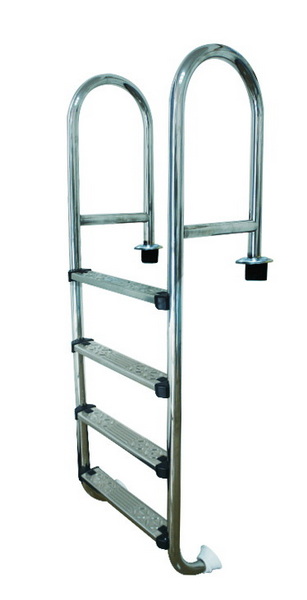
This sequence describes a common method for attaching a pool ladder to a composite deck using surface‑mount flanges.[2][1]
Dry‑fitting ensures the ladder feels comfortable and lines up correctly with the pool edge before drilling into composite boards.[1]
- Place the ladder so the feet rest on the pool floor or step platform and the rails lean over the deck edge; check that the top tread sits just below deck height for easy stepping.[3][1]
- Slide the surface‑mount bases onto the rails, rest them flat on the deck surface, and use a pencil to mark the screw hole locations through the base openings.[2][1]
Finding the framing under composite boards prevents stripping and cracking while providing much stronger connections.[4][1]
- Use construction drawings, a stud finder, or under‑deck access to identify joists or blocking beneath the marked positions, adjusting the marks slightly if necessary to land over solid structure.[4]
- Drill pilot holes through the composite boards at each mark with a bit slightly smaller than the lag screws, and, if possible, continue into the framing to guide the fasteners.[4][1]
Properly mounting the flanges provides the primary structural connection between the ladder and the composite deck.[2][1]
- Align each flange over the pilot holes, apply a bead of composite‑safe sealant under the base if desired, and drive corrosion‑resistant lag screws or structural screws through the flange into the framing until the base sits flat without rocking.[1][4]
- Double‑check that the flange orientation matches the ladder rail spacing and that the two flanges are parallel and centered so the ladder slides in without binding.[5][2]
With the flanges fixed, the ladder rails can be installed and locked in place.[2][1]
- Slide the ladder rails into the mounted flanges until the rails bottom out or reach the designed stop point, then align any pre‑drilled rail holes with flange clamping screws.[5][2]
- Tighten the clamping or set screws evenly on each side so the ladder cannot twist, pull up, or wobble under normal use.[5][1]
Final adjustments and safety checks help protect users and keep the deck‑ladder connection in good condition over time.[6][1]
- Use a spirit level on the top tread and side rails, adding shims under the flanges if needed so the ladder stands straight and feels balanced when someone steps on it.[1]
- If required by local code, connect bonding lugs on metal rails or anchor hardware to the pool's equipotential bonding grid to reduce the risk of electrical shock around the water.[1]
- Walk up and down the ladder, pull side‑to‑side on the rails, and periodically re‑check fasteners during the season, tightening or reinforcing any connection that starts to move.[6][1]
A few simple maintenance habits keep both the ladder and the composite deck connection safe and attractive season after season.[4][1]
- Rinse metal rails and hardware regularly to reduce corrosion from pool chemicals, especially in saltwater systems, and replace any rusted fasteners with stainless or coated parts.[5][1]
- Inspect composite boards around the flanges for cracks, swelling, or discoloration, and reseal screw heads and flange bases if you see signs of moisture intrusion.[4][1]
- At opening and closing each season, verify that the ladder still feels solid, re‑check bonding connections if present, and confirm that the ladder position does not interfere with new equipment, cleaners, or covers.[6][1]
Attaching a pool ladder to a composite deck safely depends on matching the ladder and hardware to the deck structure, then fastening the bases securely into joists rather than just the surface boards. By planning the location, using surface‑mount flanges and corrosion‑resistant fasteners, bonding metal parts where required, and checking the connection regularly, pool owners can enjoy a stable, professional‑grade access point that protects both swimmers and the composite deck.[2][1][4]
A1: No, fasteners driven only into composite boards are more likely to loosen or pull out, so ladder bases should always be anchored into joists or blocking underneath the decking.[1][4]
A2: Use deck‑rated surface‑mount bases or flanges with stainless or coated lag screws or structural screws sized to penetrate both the composite board and the underlying framing.[2][5][1]
A3: In many regions, metal ladders and anchor hardware must be connected to the pool's equipotential bonding system, so an electrician should confirm local code requirements.[1]
A4: Confirm that flanges sit over solid framing, tighten all mounting and clamping screws, add blocking if needed, and level the ladder so the feet and rails share the load evenly.[4][1]
A5: It is possible to integrate existing concrete anchor cups by leaving access holes or transition plates, but many homeowners switch to surface‑mount bases bolted through the new composite decking into framing.[3][5]
A6: A quick check every few weeks during the swimming season plus a detailed inspection at pool opening and closing is usually enough for residential pools.[6][1]
A7: Many installers aim for the top tread to sit just below deck level so swimmers can step naturally between the deck surface and the first step without stretching or tripping.[3][1]
[1](https://www.poolkingfilter.com/how-to-secure-pool-ladder-to-deck.html)
[2](https://www.innovativepoolproducts.com/pool-ladder-surface-mount-base.html)
[3](https://www.fairfieldcountydeckbuilders.com/how-to-install-above-ground-pool-ladder-for-a-deck/)
[4](https://www.lowes.com/n/how-to/build-a-deck-composite-stairs-and-stair-railings)
[5](https://intheswim.com/c/ladder-and-handrail-parts/)
[6](https://littledipperpools.com/need-a-pool-ladder-installation-heres-what-to-know-before-you-buy/)
[7](https://www.youtube.com/watch?v=7Qwq9eTpcH8)
[8](https://www.tiktok.com/discover/how-to-attach-pool-ladder-to-composite-deck)
[9](https://www.poolsupplies.com/product/deck-flange-to-mount-pool-ladder)
[10](https://www.youtube.com/watch?v=6-6_yBMSlmk)
[11](https://www.facebook.com/groups/637529959937311/posts/1992670827756544/)
[12](https://www.reddit.com/r/HomeMaintenance/comments/1lwc253/best_way_to_attach_pool_ladder_to_concrete_deck/)
[13](https://www.reddit.com/r/AboveGroundPools/comments/13q494j/securing_pool_steps_no_drilling/)
[14](https://www.facebook.com/groups/637529959937311/posts/1973036743053286/)
[15](https://www.getpoolparts.com/section/18/ladder-parts)


