
Views: 222 Author: Tina Publish Time: 2026-01-15 Origin: Site


Content Menu
● Before You Start: Safety & Planning
>> Choose the Right Ladder Type
>> Safety Rules You Must Follow
● Tools, Materials, and Visual Aids
>> Tools and Materials Checklist
● Step‑by‑Step: How to Attach a Pool Ladder to Above Ground Pool
>> Step 1: Measure and Select the Location
>> Step 2: Assemble the Ladder on a Flat Surface
>> Step 3: Add Ballast or Weight (If Required)
>> Step 4: Attach an A‑Frame Ladder
>> Step 5: Attach a Deck‑Mounted Ladder
>> Step 6: Attaching Wall‑Mounted Brackets (Classic Over‑Wall Ladders)
>> Step 7: Final Stability and Safety Checks
● Ongoing Maintenance and Upgrades
>> Improving Safety with Filtration and Lighting
● FAQs About Attaching a Pool Ladder to an Above Ground Pool
>> 1. Do I really need to bolt the ladder to a deck or wall?
>> 2. How far from the pool wall should the ladder base be?
>> 3. Why does my ladder float or feel “light” in the water?
>> 4. Can I install the ladder on top of a pool support or buttress?
>> 5. How often should I check my ladder hardware?
>> 6. Is it necessary to remove the ladder when the pool is closed?
Attaching a pool ladder correctly to an above ground pool is essential for safe entry and exit, especially for families with kids and older swimmers. A well-installed ladder also protects the pool wall from damage and reduces the risk of slips, falls, and structural problems over time.
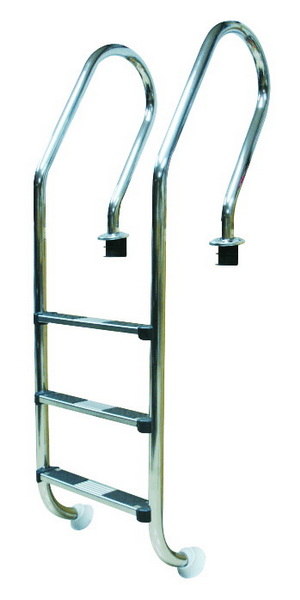
Proper planning makes installation faster and reduces safety risks around your above ground pool. Take time to check local regulations, pool manufacturer requirements, and basic ladder safety standards before drilling, cutting, or filling any component.[2][3][1]
Different above ground pool setups require different ladder structures. Pick the model that matches your pool height, wall shape, and whether you have a deck.[1]
- Classic over‑wall ladder: Rests on the top ledge; suitable for pools without decks where one side goes inside the pool and the other outside.[1]
- A‑frame ladder: Self‑supporting ladder with two sides, ideal for standalone pools without a surrounding deck; both sides have steps.[4][1]
- Deck ladder: Bolts directly to a wood or concrete deck; inside legs rest on the pool floor while the top bracket anchors to the deck.[5][1]
- Step system: Wide step “stair” units that attach to the wall or sit on the floor, recommended for taller pools (over about 52 inches) and for users needing easier access.[5][1]
Many accidents happen around ladders, not in the water itself, so basic rules are critical. Safety agencies recommend the following when installing and using above ground pool ladders.[3][2]
- Ensure steps are at least about 3 inches wide and have a non‑slip surface.[3]
- Make sure handrails are on both sides and easy to grab, even for children.[3]
- Place the ladder in a visible area from the house so adults can supervise.[1]
- Keep the ladder inaccessible when the pool is not in use (lockable or removable ladder, or barrier around the ladder).[3]
- Never allow multiple people to climb at the same time and always supervise children.[2][3]
Preparing all tools and media assets in advance will streamline installation and improve your blog reader's experience.
Most above ground pool ladders come with their own hardware kits, but you will usually also need basic tools.[6][4][1]
- Ladder kit with handrails, treads/steps, mounting brackets, and bolts
- Measuring tape (to measure wall height and ladder height)[1]
- Screwdrivers (Phillips and flathead)
- Adjustable wrench or socket set
- Drill with metal/wood bits; for deck ladders, often a 1.5 inch hole saw for handrail posts through deck boards[5]
- Pencil or marker to mark bracket locations on the wall or deck[1]
- Silicone sealant for wall mounting brackets to prevent leaks and corrosion[1]
- Sand or pea gravel to fill ladder sides or step cavities for ballast (commonly around 40 lb total for step systems)[5]
This section explains the actual installation process for three common configurations: A‑frame ladders, deck‑mounted ladders, and internal step systems.
Correct positioning protects the pool wall and makes the ladder more comfortable to use.[2][1]
- Measure the total height of your above ground pool wall at the deepest part where people will enter.[1]
- Compare that measurement to your ladder's rated height; choose a ladder tall enough to extend safely over the wall but not so tall that it wobbles.[1]
- Avoid placing the ladder over vertical support posts, braces, or skimmers; choose a flat section of wall that distributes the load.[1]
- For safety, place the ladder where it is clearly visible from the house's main living area.[1]
Assembly is usually easier on the ground before the ladder ever touches the pool.[4][6][1]
- Lay all parts out on a smooth, clean surface and verify that nothing is missing according to the manufacturer's parts list.[6]
- Slide or bolt each tread into the side rails in the order shown in the manual; many models use identical treads, but some have left/right connectors that are not interchangeable.[4][6]
- Tighten hardware enough to hold everything firmly, but avoid over‑tightening plastic components that could crack.
- Attach the top platform or top tread section last to keep assembly manageable.
Many modern above ground pool ladders and step systems need internal weight to prevent floating.[5]
- For step systems, place the assembled step in the water briefly and move it side‑to‑side to allow air to escape and water to enter cavities.[5]
- Use a funnel to pour sand directly into the designated side panels or openings, often around 20 lb per side for a total of about 40 lb.[5]
- For some A‑frame ladders, attach weight bags or fill dedicated ballast reservoirs as specified.
- Never use loose bricks or sharp stones inside the ladder body, as they may crack the plastic or puncture the liner.
A‑frame ladders are common with above ground pools that have no surrounding deck.
- Position the ladder so one side rests against the inside wall and the outer side stands firmly on level ground.[1]
- Adjust the leg extensions (if adjustable) so that both feet rest flat on the ground and on the pool floor, with no rocking.
- Some A‑frame models provide straps or mounting brackets that clamp to the top rail; install these to keep the ladder from sliding along the wall.[1]
- For safety models with a roll‑guard or flip‑up outer steps, verify the locking mechanism functions smoothly after attachment.[8][6]
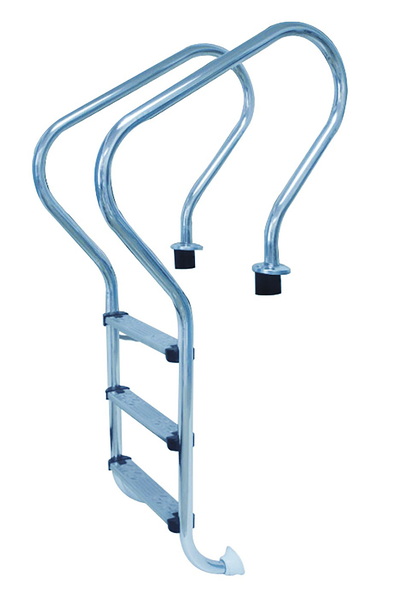
Deck‑mounted ladders provide the cleanest look and most stable access when you have a fixed deck.
- Place the fully assembled ladder in the pool and rest the inside feet on the floor where you want swimmers to step.[5]
- Let the top rails or posts rest on the deck surface and make sure the steps sit flat without twisting.
- Mark the positions of the handrail posts on the deck with a pencil.[5]
- Using a suitable hole saw (often around 1.5 inch), drill holes through the deck surface for the posts so they slide through and anchor firmly below deck level.[5]
- Install deck flanges or mounting brackets under or on top of the deck and secure using galvanized or stainless hardware, tightening firmly.[5][1]
- Double‑check that there is no side‑to‑side or front‑to‑back movement when you shake the rails.
Some classic ladders use small brackets that bolt directly to the pool wall.
- Hold the ladder in position and lightly mark bracket locations on the exterior wall using a pencil or marker.[1]
- Remove the ladder and pre‑drill holes through the steel or resin wall according to the bracket template.
- Apply a thin bead of silicone sealant between the wall and each bracket to maintain a watertight seal and reduce corrosion.[1]
- Secure the brackets with the supplied bolts and nuts; tighten evenly but avoid deforming the wall.
- Re‑hang the ladder so its hooks or rails rest on the brackets, then lock with the included fasteners.
Once the ladder is physically attached, perform a thorough check before allowing swimmers to use it.[2][1]
- Shake the handrails firmly from side to side and front to back; there should be no looseness or shifting.[1]
- Inspect for sharp edges, exposed bolts, or plastic burrs and smooth them with sandpaper if necessary.[3][1]
- Verify that the ladder feet or base do not rock on the liner; if they do, add a foam backer rod or pad underneath for stability.[1]
- Confirm the ladder's weight limit and never exceed it; post a small sign if the pool is used by guests.[3][1]
- If the ladder is lockable or removable, test that you can easily secure it when the pool is unsupervised.[3]
A well‑installed ladder will last longer when paired with periodic maintenance and compatible filtration and circulation equipment.
Basic upkeep prevents corrosion and plastic degradation over time.
- Rinse the ladder regularly to remove chemical buildup, especially if chlorine levels fluctuate.
- Inspect bolts, nuts, and brackets at least once a month during pool season and tighten any that feel loose.[1]
- Check the non‑slip surfaces; if they become smooth or slick, add adhesive anti‑slip strips designed for pools.[3]
- Remove and store the ladder indoors in freezing climates to avoid cracking from ice and UV damage.
Good water circulation, filtration, and lighting make every ladder safer to use at any time of day.
- Use a properly sized sand filter, cartridge filter, or DE filter to maintain clear water so swimmers can clearly see steps and the pool floor.[11]
- Pair your above ground pool with a reliable pump matched to filter capacity to keep debris away from the entry area.[11]
- Install underwater LED lights or wall lights near the ladder so users can see the steps at night.
- Consider adding a handrail‑adjacent return jet that gently circulates water away from the ladder to reduce localized algae growth.
Attaching a pool ladder to an above ground pool is not just a mechanical task; it is a critical safety upgrade for every swimmer who uses your pool. By choosing the right ladder type, assembling it carefully, anchoring it with proper brackets or deck mounts, and performing regular safety checks, you create a stable, comfortable entry system that protects both your family and your pool structure for years.[3][2][1]
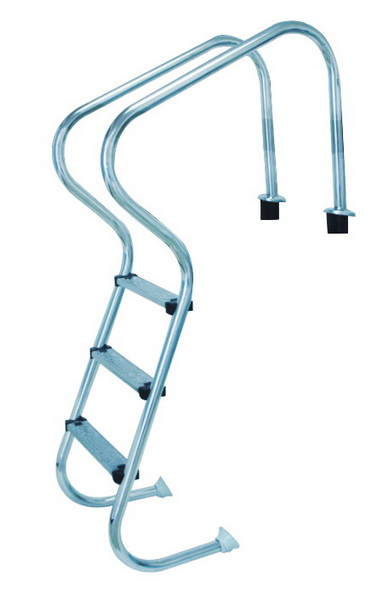
Yes. A ladder that only hangs loosely over the wall or rests without brackets is much more likely to shift, wobble, or scratch the liner. Proper brackets or deck anchors spread the weight safely and extend the life of both the pool and ladder.[2][5][1]
For above ground pools with an external A‑frame, the outer base should sit on level ground at least several feet away from sharp edges or obstacles so users can step off safely. Inside the pool, the feet should rest close to the wall but not cutting into it, with the tread angle matching the manufacturer's design.[2][1]
Many plastic step systems and ladders are naturally buoyant and must be filled with sand, gravel, or dedicated ballast to stay down. If your ladder is floating, recheck the manual for fill ports and add the recommended weight evenly on both sides.[5]
No. Placing a ladder over a vertical support or buttress can cause uneven load distribution and make the structure unstable or uncomfortable to use. Instead, position the ladder between supports on a straight wall section indicated as suitable by the pool manufacturer.[1]
Inspect the ladder at the beginning of every swimming season and then at least monthly while the pool is in use. Tightening bolts, checking for cracks, and confirming stability helps prevent accidents and extends the ladder's service life.[2][3][1]
In cold climates or areas with harsh sun, removing and storing the ladder indoors prevents UV damage, plastic brittleness, and corrosion of metal hardware. Many safety guidelines also recommend removing or locking the ladder during off‑season to prevent unauthorized access.[2][3]
[1](https://blog.watsons.com/blog/install-above-ground-pool-ladder)
[2](https://sternsbackyard.com.au/blogs/news/safety-tips-for-installing-and-using-above-ground-pool-ladders)
[3](https://www.poolfencediy.com/blogs/blog/pool-ladder-safety)
[4](https://www.familypoolfun.com/pdf/ne1222_manual.pdf)
[5](https://poolpartstogo.com/blogs/pool-equipment/how-to-fit-a-ladder-to-your-above-ground-pool-the-right-way)
[6](https://www.royalswimmingpools.com/NE1162manual.pdf)
[7](https://www.youtube.com/watch?v=JJkG7vsan1E)
[8](https://www.youtube.com/watch?v=qb_u48dTL0M)
[9](https://www.youtube.com/watch?v=AcVIHFSLCTY)
[10](https://www.youtube.com/watch?v=UOszx5_q0s4)
[11](https://www.poolkingfilter.com/top-10-pool-filter-manufacturers-in-china.html)
[12](https://www.facebook.com/groups/637529959937311/posts/2215068722183419/)
[13](https://www.made-in-china.com/manufacturers/sand-filter.html)
[14](https://laswimaqua.com/product/laswim-china-factory-odm-oem-sand-filters-pool-sand-filters-for-inground-swimming-pools/)
[15](https://www.facebook.com/groups/637529959937311/posts/2628704567486497/)


