


Content Menu
● Filtration Performance (Micron Rating)
● Main Parts of a DE Pool Filter
● DE vs Sand vs Cartridge Filters
● Advantages of a DE Pool Filter
● Disadvantages and Considerations
● How to Backwash and Recharge a DE Filter (Overview)
● When a DE Pool Filter Is a Good Choice
● OEM and System Integration Perspective
● Related Questions and Answers
>> 1. Is a DE pool filter better than a sand filter?
>> 2. How often should a DE filter be backwashed?
>> 3. Is DE powder safe to use?
>> 4. Can a DE filter run without DE powder?
>> 5. How much DE powder does my filter need?
>> 6. Can I switch from a sand filter to a DE filter?
A DE pool filter is a high‑performance swimming pool filter that uses a fine white powder called diatomaceous earth to trap very small particles and keep water extremely clear. Among common pool filters, DE filters offer some of the finest filtration, often capturing particles as small as about 1–6 microns.[1][2][3]
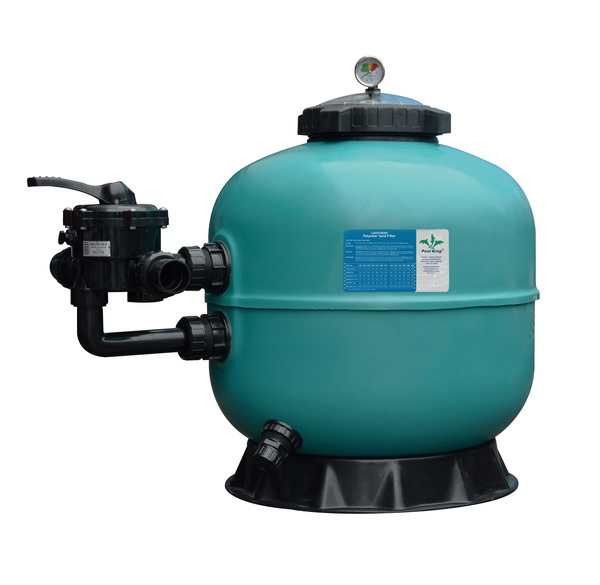
A DE pool filter uses diatomaceous earth, which is a naturally occurring powder made from fossilized microscopic organisms called diatoms. Under a microscope, each grain looks like a tiny porous sponge that lets water pass through while trapping fine dirt, algae, and other impurities.[3][4]
- The DE powder is not poured into the tank directly but is circulated from the skimmer and coats internal fabric‑covered grids or fingers in the filter.[5][1]
- Once coated, this “DE cake” becomes the main filtration layer that catches suspended debris as water flows through.[1][5]
In normal operation, pool water is pulled from the skimmer and main drain, pushed by the pump into the DE filter tank, and forced through the DE‑coated grids. As water passes the DE cake, dirt stays on the powder, while clean water exits through the manifold and returns to the pool.[5][1]
Key steps in the process:[1][5]
- Water enters the bottom of the filter tank and is directed around the grid assembly without immediately touching it.
- DE powder settles onto the fabric grids, building an even coating.
- Suspended dirt becomes trapped in the DE coating; clean water passes through the grid fabric and out to the return line.
DE filters are known for exceptionally fine filtration compared with sand and cartridge filters. This allows them to polish the water and help solve stubborn clarity issues like fine dust, pollen, and some types of algae.[2][3][1]
Typical micron ranges:[6][7][2][3][1]
- DE filter: about 1–6 microns, often quoted around 3–5 microns.
- Cartridge filter: commonly around 10–20 microns in normal operation.
- Sand filter: roughly 20–40 microns, sometimes higher right after backwashing.
Because of this fine capture range, DE filters can keep water noticeably brighter and “sparkling” in demanding environments, but they also require more careful operation and maintenance.[2][3]
Although brands and models vary, most pressure‑type DE pool filters share similar core components.[1][5]
Typical parts include:[5][1]
- Filter tank: Usually a vertical cylindrical tank in two halves, sealed by a clamp or ring and an O‑ring gasket.
- Grid assembly: Multiple fabric‑covered grids or “fingers” attached to a manifold that distributes water.[8][5]
- Manifold/collector: A top or bottom manifold collects filtered water and directs it to the return line.[8][5]
- Air relief valve: Mounted at the top of the tank to safely release trapped air before opening the filter.[5]
- Multiport or push‑pull valve: Controls modes such as Filter, Backwash, Rinse, and Waste for DE filters with backwash capability.[9][10]
- Pressure gauge: Indicates internal pressure and shows when the filter needs cleaning or backwashing.[5]
DE filters can be grouped by how they are installed and how the water flows through the system.[1][5]
Common types:[1][5]
- Pressure DE filters
- Located after the pump; pump pushes water into the tank under pressure.
- Most in‑ground pool DE systems use this configuration.
- Vertical grid tank vs finger‑style tank
- Many modern filters use full rectangular grids; some compact or older models use long “fingers.”[8][5]
- Backwashable vs non‑backwash models
- Backwashable DE filters include a multiport or slide valve and waste line for reversing flow.[10]
- Non‑backwash types may require full teardown and manual hose‑off of the grids when dirty.
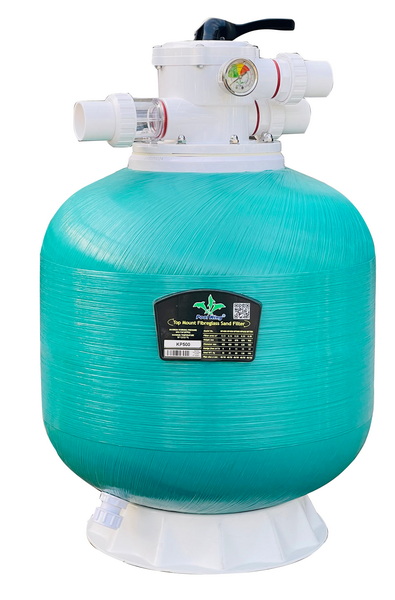
The table below summarizes key differences between DE, sand, and cartridge pool filters.[7][6][2][3][1]
| Feature | DE filter | Sand filter | Cartridge filter |
|---|---|---|---|
| Typical micron rating | About 1–6 microns, often around 3 microns.freshwatersystems+2 | Around 20–40 microns for most models.freshwatersystems+2 | Commonly about 10–20 microns.freshwatersystems+1 |
| Water clarity | Very bright, “polished” look, good for fine dust.seasonalstores+1 | Good for normal debris but less effective on very fine particles.bradyshottubsottawa+1 | Clear water for most residential pools.intheswim |
| Routine cleaning | Backwash, then add fresh DE powder via skimmer.freshwatersystems+2 | Backwash and sometimes occasional sand replacement.freshwatersystems+1 | Remove and hose cartridges; periodic deep cleaning.freshwatersystems+1 |
| Maintenance level | Higher; must handle DE safely and track correct dosage.swimmingpool+2 | Lower; sand can last years with minimal attention.reddit+1 | Moderate; no DE, but more hands‑on cartridge rinsing.intheswim |
| Upfront cost | Generally premium price among the three types.seasonalstores+1 | Typically lowest cost option.dicalite | Mid‑range cost.intheswim |
DE pool filters are popular for demanding residential and commercial applications because they deliver excellent clarity and fast cleanup of cloudy water.[2][3][1]
Key advantages:[4][2][3][1]
- Very fine filtration (down to about 1–6 microns) for exceptional water clarity.
- Effective at capturing fine dust, some algae, and small organic particles that can pass through sand systems.[2][3]
- Can restore water quality relatively quickly after heavy bather loads or environmental contamination when properly sized and maintained.
These benefits make DE filters attractive for premium pools, water features, and projects where crystal‑clear water is a high priority.[3][2]
Despite their strengths, DE filters are not perfect for every application and require more attention than simple sand systems.[13][2][5]
Main considerations:[14][10][13][2][5]
- Maintenance complexity
- Backwashing is followed by re‑adding a specific amount of DE powder to recharge the grids.[12][10][1]
- Grids need periodic teardown cleaning to remove stubborn DE and oils.[15][5]
- Operating care
- If you do not add enough DE after backwashing, dirt can attach directly to the fabric grids and be difficult to remove.[10][15]
- Incorrect valve operation or running without DE can damage the grids and manifold.[15][5]
- Handling and disposal
- DE powder must be handled carefully to avoid breathing dust and to follow local rules for waste discharge.[10][4]
Exact steps differ by brand, but most backwashable DE filters follow a similar pattern.[10][15][1]
Typical overview:[15][10][1]
1. Turn off the pump and confirm the system is safe to operate.
2. Attach and extend the backwash hose to an appropriate discharge area.[10][1]
3. Set the multiport valve to Backwash and restart the pump until sight glass water turns clear.[10][1]
4. Turn off the pump, set valve to Rinse, run briefly to settle the DE, then return to Filter.[10][1]
5. With the system running on Filter, mix the required DE amount with water in a bucket and pour slowly into the skimmer to re‑coat the grids.[12][15][1][10]
6. Monitor the pressure gauge to confirm the filter is operating at normal clean pressure.[15][10]
Many guides suggest adding roughly 1 lb of DE per 10 square feet of grid area when starting from clean, and a bit less when recharging after backwash, but always follow the label for the specific model.[14][12][15][10]
A DE filter is a strong candidate when the project demands very high water quality and the owner or service team can support slightly higher maintenance.[3][2]
Common situations where DE filters shine:[2][3][1]
- Premium residential pools where “hotel‑style” sparkle is important.
- Pools in areas with fine dust, pollen, or other small airborne contaminants.
- Commercial pools, spas, or water features that must maintain clear water under heavy use, subject to local regulations and best practices.
By pairing a DE filter with a properly sized pump and good circulation layout, pool professionals can create systems that stay clearer with fewer interventions once dialed‑in.[3][1]
For brands, wholesalers, and builders that work with OEM filtration systems, DE filters can be packaged with pumps, valves, and controls as premium solutions.[3][1]
From an integration viewpoint:[5][3][1]
- Selecting the right tank size, grid area, and flow range is critical to balance fine filtration with acceptable pressure and backwash frequency.
- Matching a DE filter with energy‑efficient pumps and properly sized piping helps maintain flow and performance even as the DE cake loads with debris.
- Providing clear operating instructions and training materials (photos, QR‑linked videos, label diagrams) reduces end‑user maintenance errors and warranty claims.[15][10]
A DE pool filter is a high‑efficiency filtration system that uses diatomaceous earth powder coated on internal grids to capture extremely small particles and deliver superior water clarity compared with most sand and cartridge filters. While DE filters require more careful maintenance, including regular backwashing and precise DE recharging, they remain a top choice for homeowners, commercial operators, and OEM brands that want the cleanest, brightest pool water possible.[4][2][10][5][3][1]
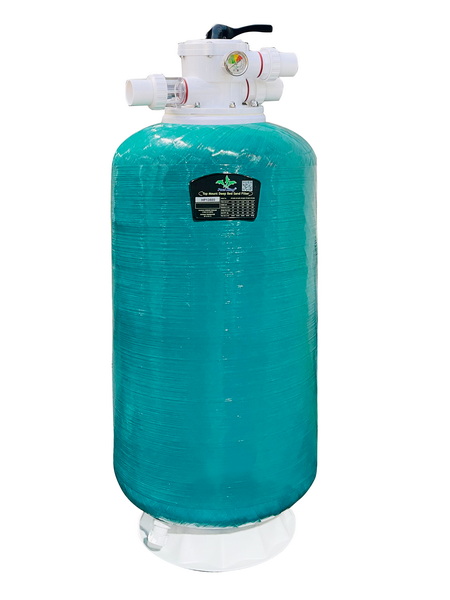
In terms of water clarity, DE filters are generally more effective than sand filters because they capture much smaller particles, often down to about 3–5 microns. However, sand filters are simpler to maintain, less expensive, and often preferred when low maintenance and long media life are more important than maximum clarity.[13][7][2][3][1]
Most DE filters are backwashed when the pressure rises about 7–10 psi above the normal clean reading on the gauge, which may be every few weeks in a typical residential pool, depending on debris load and usage. Operators should always follow the specific manufacturer's recommendations and avoid backwashing too often, which wastes water and DE unnecessarily.[10][5][1]
Food‑grade and pool‑grade DE are different products, and pool‑grade DE is specifically processed for filtration, not consumption. When handling DE powder, users should avoid breathing dust and follow label instructions and local regulations for disposal, but when used correctly inside a closed filter system it is considered safe for normal pool operation.[4][10]
Running a DE filter without DE powder is strongly discouraged because dirt will attach directly to the grid fabric and can permanently clog or damage the elements. After backwashing or a full teardown, the filter must be recharged with the correct amount of DE to protect the grids and maintain proper filtration.[14][12][5][15][10]
A common guideline is about 1 pound of DE per 10 square feet of filter grid area when starting from a fully cleaned or new filter, but each model has a rated charge printed on its label. After a routine backwash, many professionals add slightly less than the full start‑up amount because some DE remains on the grids.[12][14][15][10]
Upgrading from sand to DE usually requires replacing the entire filter tank with a model designed for DE grids, plus confirming that the pump, plumbing, and backwash line are correctly sized. Many installers recommend this upgrade only when users are ready to accept a bit more maintenance in exchange for higher clarity.[13][2][5][3][1]
[1](https://www.freshwatersystems.com/blogs/blog/how-does-a-pool-filter-work)
[2](https://seasonalstores.com/inground/which-filter-is-better-sand-de-or-cartridge/)
[3](https://www.allfilters.com/blog/pool-filter-types-compared-sand-de-cartridge)
[4](https://blog.epminerals.com/heres-why-diatomaceous-earth-de-swim-pool-filters-work-so-well)
[5](https://pooloperationmanagement.com/de-pool-filter-basics/)
[6](https://intheswim.com/blog/best-pool-filter-type-de-sand-or-cartridge.html)
[7](https://www.dicalite.com/2019/06/diatomaceous-earth-pool-filters-vs-sand-vs-catridge-filters/)
[8](https://pinchapenny.com/pool-life/swimming-pool-filter-buyers-guide)
[9](https://www.swimuniversity.com/de-filter/)
[10](https://www.swimmingpool.com/maintenance/pump&filter/how-to-backwash-de-pool-filter/)
[11](https://bradyshottubsottawa.com/blog/sand-cartridge-or-de-which-pool-filter-is-best/)
[12](https://www.inyopools.com/HowToPage/how-to-add-de-filter-powder.aspx?CommentPage=1)
[13](https://www.reddit.com/r/pools/comments/wymsml/some_advice_for_anyone_debating_between_a_sand/)
[14](https://www.reddit.com/r/pools/comments/156qr79/how_do_you_know_how_much_de_to_add_after/)
[15](https://www.youtube.com/watch?v=wAL2H6EE1l4)
[16](https://www.youtube.com/watch?v=rR27Oc03tkk)
[17](https://www.youtube.com/watch?v=G4Z21aoJI0g)
[18](https://www.youtube.com/watch?v=rJsNCqybmk0)
[19](https://www.reddit.com/r/swimmingpools/comments/13j0pcb/why_does_everyone_use_de_filters/)
[20](https://www.youtube.com/watch?v=90pnhM3nuFQ)


