
Views: 222 Author: Tina Publish Time: 2025-12-22 Origin: Site


Content Menu
● Identify Your Hayward Pump and Motor
● Tools, Parts, and OEM Upgrade Opportunities
● Step-by-Step Removal of the Old Hayward Motor
>> 2. Disconnect the electrical wiring
>> 3. Separate the motor assembly from the wet end
>> 4. Remove the impeller and seal plate
>> 5. Remove the old shaft seal
● Installing the New Shaft Seal and Motor
>> 1. Install the new shaft seal
>> 2. Mount the seal plate on the new motor
● Wiring the New Hayward Motor Correctly
>> 1. Confirm the correct voltage
>> 2. Connect power, ground, and bonding
>> 3. Double-check all settings
● Reassembly, Priming, and First Start-Up
>> 1. Reattach the motor to the pump housing
>> 3. First start-up and checks
● Troubleshooting Common Issues After Motor Replacement
● OEM and Professional Support Options
● FAQs About Replacing a Hayward Pool Pump Motor
>> 1. How do I know which replacement motor fits my Hayward pump?
>> 2. Do I really need to change the shaft seal when I change the motor?
>> 3. Can I switch from a single-speed to a variable-speed motor on a Hayward pump?
>> 4. Why does my new motor hum and then shut off?
>> 5. How long should a properly installed Hayward pool pump motor last?
Replacing a Hayward pool pump motor is a manageable project for experienced DIYers who respect electricity, follow safety rules, and carefully match the replacement motor to the existing pump. A proper replacement restores strong circulation, reduces noise, and can improve the overall efficiency and lifespan of the filtration system.[1][2]
As a professional Chinese factory specializing in premium sand filters, DE filters, cartridge filters, pool pumps, LED pool lights, and accessories, OEM support is provided for international brands, wholesalers, and manufacturers who want reliable filtration and circulation solutions matched to Hayward-style systems.
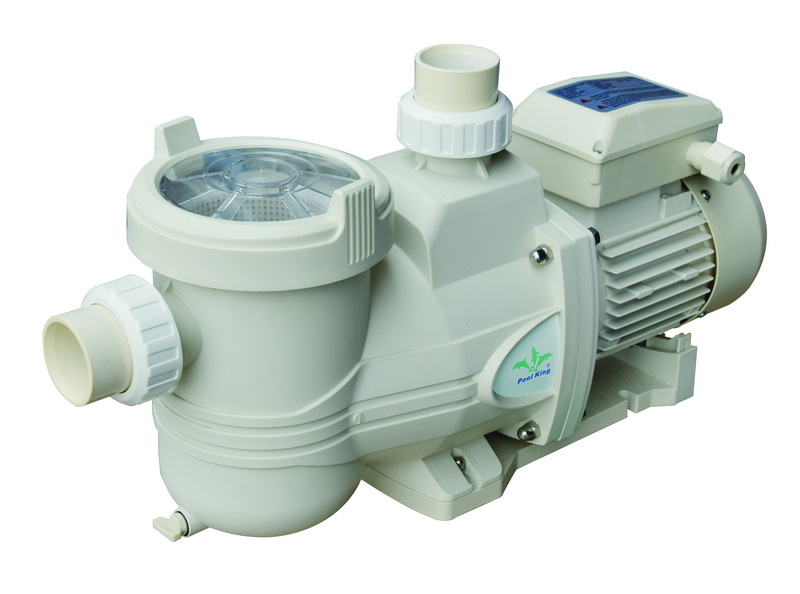
Working on a Hayward pump motor combines water, electricity, and rotating parts, so safety comes first. Before touching the pump, always shut off power at the breaker and verify that no voltage is present with a suitable tester.[3][2]
- Turn off the circuit breaker feeding the pool pump and lock or tag it out if possible.
- Confirm the pump is off using the time clock or automation system, and test with a non-contact voltage tester at the motor terminals.[2][3]
- Close suction and return valves if the equipment pad is below water level to prevent flooding when the pump is opened.[1]
- Wear safety glasses and insulated gloves, and keep the work area dry and well lit.
Before ordering or installing a new motor, identify the exact Hayward pump model and the motor nameplate specifications. Matching these correctly ensures that the new motor delivers the same (or better) performance and operates safely at the correct voltage and load.[4][5][3][2]
- Look for the pump model (e.g., Hayward Super Pump, Super II, Max‑Flo, TriStar) on the wet end housing near the basket lid or on a molded label.[6][2]
- Read the motor nameplate for key data: model number, horsepower (HP), service factor (SF), total HP (HP × SF), frame, RPM, voltage (115/230 or 230 only), and amps.[4][3]
- For many Hayward-style motors, total horsepower is what matters; for example, 0.75 HP with 1.25 SF has 0.94 total HP, so the replacement must match or exceed this.[3][4]
- Note whether the motor is single-speed, dual-speed, or variable-speed and whether the power supply is 115 V, 230 V, or reversible.[7][4]
Having the right tools and parts ready before disassembly will save time and reduce mistakes. It is also a perfect opportunity to upgrade seals and gaskets, or even to switch to a more efficient motor option with OEM‑style performance.[1][2]
- Basic tools:
- Wrenches and sockets (commonly 9/16" for Hayward Super Pump and Super II bolts).[8][1]
- Screwdrivers (flat and Phillips) for motor covers and terminal screws.[1]
- Pliers and channel locks for seal removal and fittings.[8]
- Non-contact voltage tester and multimeter if you need to confirm voltage.[7]
- Replacement parts:
- Correct Hayward‑compatible replacement motor (Century, AO Smith, or OEM‑style unit matching HP/SF/voltage).[9][2]
- New shaft seal and a pump tune‑up kit with main housing o‑ring, lid o‑ring, and lubricant.[2][1]
- New motor mounting hardware if bolts are corroded.[8]
- OEM upgrade ideas:
- Replace older, noisy single-speed motors with high‑efficiency single‑speed or variable‑speed options to reduce energy costs.
- For brands and wholesalers, consider private‑label motors and complete pump/filtration sets from a dedicated OEM factory, delivered with custom packaging and voltage configurations for local markets.
The removal process varies slightly between Hayward models, but key steps are similar across Super Pump, Super II, and comparable designs.[8][2][1]
- Confirm the power is OFF at the breaker and that valves are closed if necessary.[3][1]
- Remove the pump lid and drain plugs to relieve pressure and drain water from the pump housing.[1]
- Remove the motor wiring cover or end cap using a screwdriver to access the terminals.[2]
- Photograph the wiring connections so you can reconnect them exactly the same way later.[3][2]
- Loosen the terminal screws and disconnect the power wires and ground/bond wires, carefully moving them aside.[10][3]
- On common Hayward pumps, loosen the clamp band or remove the 4–6 bolts that connect the seal plate to the impeller housing (volute).[8][2][1]
- Pull the motor straight back; it will slide out as a complete “power end” with the seal plate and impeller attached.[8][1]
- Set the motor assembly on a firm workbench or blocks to protect the cooling vents and wiring compartment.[8]
- Take off the rear motor cover to expose the shaft end and capacitor if needed.[2][1]
- Hold the motor shaft with a wrench on the flats at the back of the shaft, or use a special shaft-holding tool.[1][2]
- Unscrew the impeller by hand, usually counter‑clockwise, while holding the shaft still; some Hayward designs may use a left‑hand thread, so always check the markings.[2][8][1]
- Slide off the seal plate and old shaft seal components from the shaft.[8][1]
- Use pliers or channel locks to gently twist and pull out the ceramic and carbon parts of the old seal from the impeller and seal plate.[1][8]
- Carefully clean the seal plate and impeller recesses, ensuring no fragments of the old seal remain.[8][1]
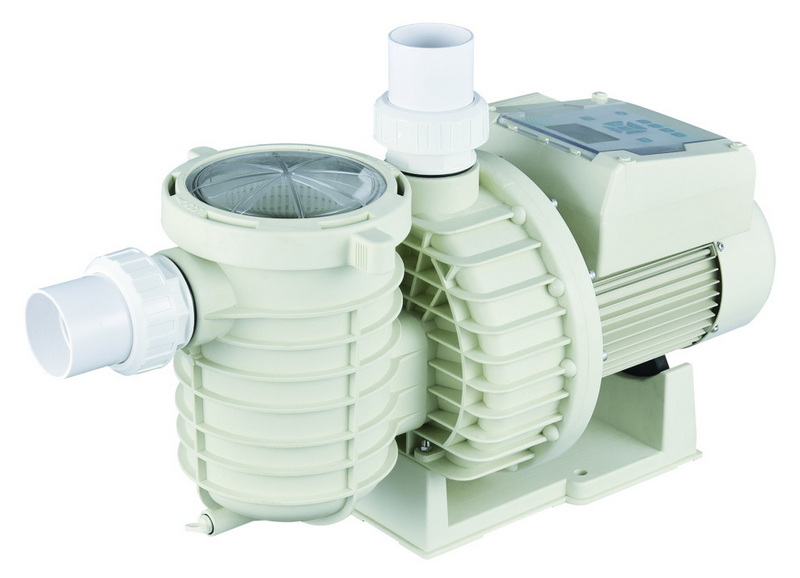
Using a new, correctly installed shaft seal is essential to prevent water leaking into the new motor and causing premature failure.[2][1]
- Press the new ceramic seal half into the seal plate with the polished face outward; avoid touching the polished faces with fingers.[1][2]
- Install the mating carbon piece into the back of the impeller, again keeping the faces clean and aligned.[8][1]
- Lubricate O‑rings lightly with a pool‑safe silicone lubricant, not petroleum grease.[1]
- Align the seal plate with the front of the new motor and install the mounting bolts, tightening them evenly with a 9/16" wrench.[8]
- If bolts are corroded or damaged, replace them to ensure a solid mechanical connection and prevent vibrations.[8]
- Hold the new motor shaft at the back with a suitable wrench just as in removal.[2][1]
- Thread the impeller onto the shaft by hand and tighten firmly but not excessively; over‑tightening can damage threads or the seal.[1][8]
- Reinstall any impeller eye rings or spacers designed for your Hayward model.[8]
Correct wiring is critical for safety and motor reliability; incorrect voltage or loose connections can overheat or destroy a new motor.[7][3][2]
- Check the motor nameplate for voltage options: many Hayward-compatible motors are 115/230 V “reversible” and ship set for 230 V by default.[4][7]
- If your system uses 115 V, follow the motor's wiring diagram to move the selector or jumper to the low‑voltage configuration before connecting wires.[4][7]
- Verify the breaker: a double‑pole breaker usually indicates a 230 V circuit.[7]
- Feed the conduit and power wires into the motor's wiring compartment and secure the conduit fitting.[10]
- Attach the ground wire to the green ground screw inside the compartment and connect the external bonding wire to the bonding lug on the motor frame.[10][3]
- Connect the line wires to the designated terminals labeled L1 and L2 (and neutral if required by the specific design), matching the diagram on the motor label.[10][3]
- Tighten terminal screws firmly and ensure no bare copper is exposed beyond the terminals.[10]
- Verify that the voltage selector matches the supply and that all terminal screws, ground, and bonding connections are secure.[7][10]
- Replace the motor wiring cover or end cap and tighten all screws to keep moisture out.[10][2]
Once the motor is wired and reassembled, the wet end must be properly sealed and the pump primed with water before starting.[2][1]
- Align the rear power unit (motor, seal plate, impeller) with the front wet end assembly and slide them together.[1][8]
- Install the clamp band or 4–6 bolts, tightening them evenly in a crisscross pattern to compress the housing O‑ring without warping the plastic.[1][8]
- Inspect and, if needed, replace the pump housing and lid O‑rings, adding a thin layer of silicone lubricant.[2][1]
- Reinstall the drain plugs at the bottom of the pump housing.[1]
- Open any suction and return valves that were closed.[1]
- Remove the pump lid and fill the strainer basket area with clean water until full, then close the lid firmly.[8][1]
- Restore power at the circuit breaker and then start the pump from the timer or switch.[3][2]
- Watch the pump for the first few minutes: confirm water begins flowing, the pump primes fully, and there are no leaks at the housing, lid, or drain plugs.[2][1]
- Listen for abnormal noises such as grinding or loud humming, which could indicate misalignment, blockage, or incorrect wiring.[13][2]
Even after a correct installation, some systems may show minor issues that are usually easy to diagnose.[13][2][1]
- Motor hums but does not start:
- Could be a locked rotor, debris in the impeller, or a failed start/run capacitor.[14][13]
- Always shut power off again, check the impeller for obstructions, and consider testing or replacing the capacitor rather than the whole motor.[14][13]
- Motor overheats and trips:
- May be incorrect voltage, undersized wiring, poor ventilation, or mismatched total HP (SF too low compared to the original motor).[4][7][3]
- Leaks appear under the pump:
- Usually due to a damaged or incorrectly seated shaft seal or housing O‑ring; disassemble and inspect the seal surfaces carefully.[8][1]
Not every pool owner should attempt a Hayward motor replacement; the complexity of wiring and local electrical codes often justifies hiring a professional. For brands, distributors, and pool builders, partnering with a specialized OEM factory can simplify after‑sales support and standardize replacement parts globally.[3][2]
- Hire a licensed electrician or pool professional if:
- Local code requires it, or you are not fully comfortable working with electrical equipment.
- The wiring from the panel is old, corroded, or undocumented.
- You are converting from one voltage or motor type to another (e.g., single-speed to variable-speed).[3][2]
- OEM cooperation benefits:
- Consistent performance across sand filters, cartridge filters, pumps, and LED lights designed to work together as a complete system.
- Custom labels, packaging, and manuals tailored to your brand and regional standards, reducing confusion for installers and end users.
Replacing a Hayward pool pump motor follows a clear sequence: confirm safety, identify the pump and motor specs, remove the old motor and shaft seal, install the new motor with a fresh seal kit, wire it correctly for the actual supply voltage, and prime and test the system carefully. When each stage is completed methodically, most DIY‑capable owners can restore strong, efficient circulation without replacing the entire pump, while brands and wholesalers can rely on OEM manufacturers for consistent, long‑life components that match Hayward‑style systems worldwide.[4][3][2][8][1]
The best way is to identify the pump model (Super Pump, Super II, Max‑Flo, etc.) on the housing and then match the motor's HP, service factor, voltage, frame, and RPM from the nameplate. Many online catalogs and technical support teams can cross‑reference this information to supply the correct Hayward‑compatible motor and seal kit.[5][4][2][1]
Yes, the shaft seal should almost always be replaced when the motor is replaced because a worn seal can leak water into the new motor, quickly causing bearing and winding failure. A small, low‑cost shaft seal or tune‑up kit is inexpensive insurance compared to the price of another new motor.[2][1]
In many cases it is possible to retrofit a variable-speed motor onto a compatible Hayward wet end, but you must check mechanical compatibility, electrical supply requirements, and programming needs. Upgrading to variable speed can significantly cut energy consumption and is attractive for brands and installers offering premium, efficient systems.[7][4][3][2]
A humming motor that clicks off after a few seconds often points to a bad start or run capacitor, seized bearings, or an impeller jam. If a new capacitor does not solve the issue and the impeller is clear, the motor windings may be damaged and the unit could need replacement or professional testing.[14][13][2]
Service life depends on usage, environment, and maintenance, but a correctly sized, well‑ventilated motor with clean electrical connections and no leaks often runs 5–10 years or more. Keeping filters clean, maintaining correct priming, and promptly fixing seal leaks can significantly extend motor life.[3][2][1]
[1](https://intheswim.com/blog/replacing-a-hayward-pump-motor.html)
[2](https://www.youtube.com/watch?v=mpJLp3oWDGU)
[3](https://www.inyopools.com/HowToPage/how_to_wire_a_pool_pump.aspx?CommentPage=11)
[4](https://intheswim.com/blog/how-to-read-a-pool-pump-motor-nameplate.html)
[5](https://www.inyopools.com/HowToPage/how_to_read_a_hayward_pool_motor_label_.aspx?CommentPage=1)
[6](https://www.inyopools.com/HowToPage/how-to-replace-a-hayward-super-ii-pool-pump-motor.aspx?CommentPage=1)
[7](https://www.youtube.com/watch?v=wxz9EadJLV8)
[8](http://coralspringspumprepair.com/cshowtochangemotoronsuper2.html)
[9](https://www.youtube.com/watch?v=xnsxZpTl2cU)
[10](https://www.youtube.com/watch?v=d2JFY_SrFjQ)
[11](https://www.youtube.com/watch?v=JifZC6tmFWA)
[12](https://www.youtube.com/watch?v=15HLRNJWmg4)
[13](https://www.youtube.com/watch?v=_YtW1EcL-8Q)
[14](https://www.youtube.com/watch?v=472XLJzaq2Q)
[15](https://www.youtube.com/watch?v=MAzrYDSCh58)
[16](https://www.youtube.com/watch?v=yThGfgov7gA)
[17](https://www.youtube.com/watch?v=7QsApy5WMm0)
[18](https://www.youtube.com/watch?v=f0muyTib-BM)
[19](https://www.reddit.com/r/pools/comments/17e0vhf/replacing_pool_pump_motor/)
[20](https://www.youtube.com/watch?v=ENA4kfdj1zE)


