
Views: 222 Author: Tina Publish Time: 2025-12-02 Origin: Site


Content Menu
● How to Remove a Stuck Inground Pool Ladder (Step‑by‑Step Guide)
● Why Inground Pool Ladders Get Stuck
● Safety Precautions Before You Start
● Tools and Materials You May Need
● Understanding Ladder Anchor Wedges
● Step‑by‑Step: How to Remove a Stuck Inground Pool Ladder
>> Step 1 – Loosen and Release the Wedge
>> Step 2 – Break the Mineral Bond
>> Step 3 – Use Controlled Force to Free the Rails
>> Step 4 – Advanced Technique: Bottle Jack Assist (For Very Stubborn Ladders)
>> Step 5 – Lift the Ladder Out and Inspect
● Cleaning and Protecting the Ladder and Anchors
● Preventing Your Pool Ladder from Getting Stuck Again
● When to Replace Anchors or Call a Professional
● OEM Pool Equipment and Better Ladder Solutions
● FAQs About Removing a Stuck Inground Pool Ladder
>> 1. Why won't my inground pool ladder come out even after I loosen the bolts?
>> 2. Can I use WD‑40 or penetrating oil in my pool ladder anchors?
>> 3. How do I prevent my ladder from getting stuck every winter?
>> 4. Is it safe to use a jack to push the ladder out of the anchors?
>> 5. When should I replace my pool ladder anchors instead of trying to save them?
>> 6. Do saltwater pools make ladders more likely to get stuck?
How to remove a stuck inground pool ladder safely usually involves releasing the internal wedge in the anchor sockets, breaking up mineral or rust buildup, and then carefully working the ladder rails free with controlled force and proper tools. With patience and the right technique, most homeowners can do this themselves while protecting the deck, anchor cups, and stainless rails.[1][2][3]
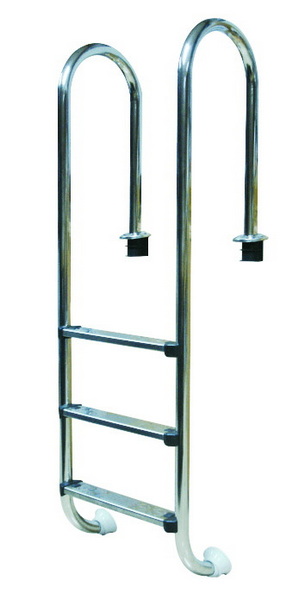
Inground pool ladders often seize in their anchors because calcium deposits, rust, or saltwater corrosion bond the stainless or aluminum rails to the metal cups in the deck. Understanding how the anchor wedge system works and how to dissolve or loosen these bonds is the key to safe, damage‑free removal.[2][4][3][1]
Several common factors cause inground pool ladders to become stubborn or “welded” into place over time.[4][2]
- Hard water and salt systems leave mineral deposits (calcium, sodium) that effectively glue the ladder legs inside the anchors as water evaporates.[2]
- Older aluminum anchors or rails can corrode and fuse together, especially after a saltwater conversion, making removal extremely difficult.[4]
- Dirt, sand, and organic debris accumulate in the anchor sockets, packing around the wedge and rail and blocking vertical movement.[2]
- Lack of regular removal, cleaning, and lubrication lets small buildups harden over multiple seasons until the ladder feels completely fixed in place.[5][2]
Before attacking a stuck inground pool ladder with heavy tools, take a few basic safety steps.[6][1]
- Wear work gloves and eye protection to guard against flying debris, rust flakes, and accidental slips with tools.[6]
- Clear the deck area so you have stable footing and nothing to trip over while rocking or lifting the ladder.[7]
- Avoid using open flames or extreme heat near vinyl liners, plastic parts, or flammable deck coatings, especially if chemical cleaners are present.[8]
- If the ladder or anchors are badly corroded or bent, plan for the possibility of replacing them rather than forcing them and cracking the deck.[8][4]
Having the right tools on hand makes a huge difference in how quickly and safely you can free a stuck inground ladder.[9][1]
- Socket wrench and correct socket (often 1/2 in or 3/8 in) for the anchor bolts.[3][1]
- Rubber mallet or small hammer to tap the wedge bolt and rails without marring the finish.[1][6]
- Penetrating oil or mineral/scale remover (such as a calcium, lime, and rust cleaner) to break up deposits in the anchor.[3][2]
- Pry wood block or short 2×4 to place under the rails if upward tapping is needed to avoid damaging the deck.[10][9]
- Optional: small bottle jack with wood pads for very stubborn ladders, plus nylon brush or Scotch‑Brite pad for cleaning rails afterward.[11][9][5]
Most inground pool ladders slide into metal anchor cups set in the deck; a wedge assembly inside each cup clamps against the ladder tube when you tighten the top bolt.[1][3]
- The bolt at the deck surface does not directly grip the rail—it compresses a wedge inside the cup, which expands and locks the rail in place.[3][1]
- Loosening the bolt alone usually isn't enough; you must also tap the bolt downward to push the wedge back down and release its grip on the ladder tube.[1][3]
Follow these steps in order, moving from gentle methods to more forceful options only if needed.[9][1]
Start by fully releasing the clamp pressure inside each anchor.
- Use your socket wrench to loosen each anchor bolt until the bolt head sits several millimeters or about half an inch above the deck.[12][1]
- With a rubber mallet or the end of the socket, tap straight down on the bolt to drive the internal wedge downward and away from the ladder rail.[3][1]
- Repeat the tapping a few times on each side, then try gently rocking the ladder rails front‑to‑back and side‑to‑side to feel if they begin to loosen.[1]
If the wedge releases but the ladder still feels glued in place, mineral buildup is likely holding it.[2]
- Pour a descaling solution or calcium‑lime‑rust remover carefully around the base of each rail into the anchors, following the product's safety and dilution instructions.[2]
- Allow the cleaner or penetrating oil to soak for 15–30 minutes so it can work into the gap between the rail and the anchor wall.[3][2]
- After soaking, rock and twist each rail again; small movements help the cleaner penetrate deeper and break the bond.[2]
Once the wedge is down and deposits are soft, increase force gradually.[10][9]
- Stand on the deck facing the pool, grip each rail firmly, and pull straight up while gently wiggling side‑to‑side; avoid sudden jerks that could bend the tubes.[9][1]
- If the ladder still will not budge, place a short 2×4 or wood block on the deck under one rail and lightly strike upward on the underside of the rail with a rubber mallet to nudge it free.[10][9]
- Alternate between rails as they begin to move, lifting a little on one side, then the other, to walk the ladder out evenly without twisting the anchors.[9]
When normal force is not enough, some homeowners use a small bottle jack with wood pads to push the ladder up.[9]
- Place a thick wood pad on top of the rail where the jack will contact it, and another pad under the jack base on the deck to spread the load and protect the surface.[9]
- Extend the jack slowly to apply upward pressure on one rail, watching carefully for any bending or cracking; stop immediately if the rail starts to distort.[9]
- Release the pressure periodically, tap the rails from the side with a rubber mallet, and repeat on the other rail until both sides begin to rise from the anchors.[9]
Because this method can bend rails if misused, it is best reserved for extreme cases or handled by a professional.[4][9]
Once both rails move freely, complete the removal and check the components for damage.[5][9]
- Pull the ladder straight up out of the anchors and lay it flat on a clean surface for inspection and cleaning.[9]
- Inspect the rails for deep corrosion, dents, or cracks, and examine the anchors for pitting, broken wedges, or severe rust that may require replacement.[8][4]
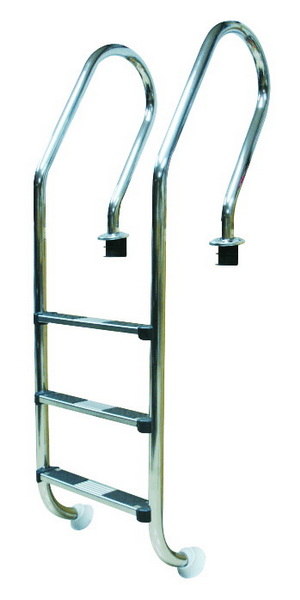
Proper cleaning and protection after removal will make next season's ladder removal much easier.[5][2]
- Scrub the rails with warm water, mild detergent, and a soft cloth; use a nylon brush or non‑aggressive Scotch‑Brite pad on stubborn stains and light rust.[11][5]
- Rinse thoroughly with fresh water and dry completely, then optionally apply a thin coat of high‑quality automotive wax to help protect stainless surfaces.[5]
- Vacuum or rinse debris out of the anchors, then coat the inside lightly with corrosion‑resistant lubricant or a silicone‑based pool‑safe grease before reinstalling the ladder.[3][2]
A few simple maintenance habits can prevent the hassle of a stuck ladder in the future.[5][2]
- Remove the ladder at least once per season (and at winter closing), clean the rails and anchors, and re‑lubricate contact areas.[5][2]
- If you have a saltwater pool or very hard water, consider switching to bronze or plastic anchors to reduce galvanic corrosion between metals.[4]
- Rinse stainless rails with fresh water regularly to remove salt and chemicals, especially after heavy pool use or shocking the water.[5]
- Keep the anchor bolt heads covered or protected when not in use to minimize dirt and water accumulation in the cups.[2]
Sometimes the safest option is to replace components or bring in a pool service technician.[8][4]
- If installers previously cut the ladder flush with the deck, leaving stubs inside the anchors, specialized drilling and extraction tools may be required.[8]
- Anchors that are severely corroded, cracked, or moving in the concrete should be cored out and replaced with new top‑quality units, then the deck patched properly.[4]
- If heavy jacking or hammering is needed and you are unsure about the structural integrity of your deck or railings, professional help reduces the risk of costly damage.[4][9]
Upgrading to high‑quality pool ladders, anchors, and accessories makes removal and maintenance far easier while improving safety and aesthetics.[4][5]
- Premium stainless or composite ladders with corrosion‑resistant anchors and properly designed wedges reduce seizing and extend service life in harsh water conditions.[4][5]
- For brands, wholesalers, and pool builders, working with an OEM manufacturer for sand filters, pumps, LED lights, and accessories allows customized solutions and matched equipment sets around the ladder area.[5]
- Smart, precisely manufactured filters and pumps keep water cleaner, reducing scale and corrosion that contribute to stuck ladders and hardware problems.[13][2]
Removing a stuck inground pool ladder comes down to three essentials: releasing the internal wedge, dissolving or loosening mineral and rust buildup, and applying controlled force evenly to free the rails. With the right tools, patience, and seasonal maintenance—plus quality ladders, anchors, and filtration equipment—you can avoid damaged decks, bent rails, and future removal headaches while keeping your pool area safe and attractive.[1][2][5][9]
Most likely the internal wedge in the anchor is still gripping the rail, or mineral buildup has bonded the rail to the anchor wall. You need to tap the loosened bolt downward to push the wedge away, then use cleaner or penetrating oil to break up deposits before rocking and lifting the ladder.[1][3][2]
Penetrating oils can help loosen stuck metal parts, but they must be used sparingly and kept out of the pool water. If you use them, block the anchor from draining into the pool, wipe out residue thoroughly, and flush the anchors with clean water before reinstalling the ladder.[3]
Remove the ladder at least once per season, clean the rails with mild detergent, rinse and dry them, then apply a light protective wax. Also clean and flush the anchors, remove mineral deposits with a suitable cleaner, and apply a thin, pool‑safe lubricant inside the cups before putting the ladder back.[2][5]
A small bottle jack with protective wood pads can work for extremely stubborn ladders, but it must be used slowly and carefully. Stop immediately if you see bending in the rails or cracking in the deck, and consider hiring a professional if significant force is required.[4][9]
If anchors are heavily corroded, loose in the concrete, or cracked, replacement is usually the best long‑term solution. In some cases, installers will core out old anchors and install new bronze or plastic versions, restoring safety and making future ladder removal much easier.[8][4]
Yes, saltwater systems can accelerate corrosion and mineral buildup around metal rails and anchors, especially older aluminum components. Upgrading to more corrosion‑resistant anchors and practicing regular rinsing and cleaning greatly reduces the risk of stuck ladders in saltwater pools.[2][5][4]
[1](https://diy.inyopools.com/article/psc-ep-57-remove-stuck-inground-pool-ladder/)
[2](https://www.youtube.com/watch?v=jHL7mH-UdwA)
[3](https://forum.inyopools.com/t/stuck-ladder/2179)
[4](https://www.reddit.com/r/swimmingpools/comments/6obnee/pool_ladder_and_railing_were_both_removed/)
[5](https://www.srsmith.com/en-us/blog/archive/how-to-clean-your-pool-ladders-rails/)
[6](https://www.youtube.com/watch?v=pDNE-Tw9q0Y)
[7](https://blog.watsons.com/blog/remove-above-ground-pool-ladder)
[8](https://askthepoolguy.com/questions/question/ladder-anchors-stuck/)
[9](https://www.youtube.com/watch?v=O09H6tW9WAk)
[10](https://www.reddit.com/r/pools/comments/16z28qn/how_to_remove_ladder_for_winter/)
[11](https://www.reddit.com/r/swimmingpools/comments/f8rhkb/i_want_to_clean_the_rust_off_the_aluminum_pool/)
[12](https://www.poolspaforum.com/forum/index.php?%2Ftopic%2F13349-closing-the-pool-cant-get-the-ladder-out%2F)
[13](https://www.poolsaboveground.com/blog/rusty-swimming-pool-top-ledges-top-rails.html)
[14](https://www.youtube.com/watch?v=4JtT3B246oA)
[15](https://www.facebook.com/groups/637529959937311/posts/2241217456235212/)
[16](https://www.facebook.com/groups/637529959937311/posts/2688725681484385/)
[17](https://www.youtube.com/shorts/PehWfcRIpIQ)
[18](https://forums.sailboatowners.com/threads/rust-remove-from-swim-ladder.1249927180/)
[19](https://www.youtube.com/watch?v=z2tjyznDJek)
[20](https://www.facebook.com/groups/637529959937311/posts/2233402340350057/)


