


Content Menu
● Why Proper Ladder Installation Matters
● Types of Pool Ladders and Step Systems
● Safety Requirements Before You Start
● Tools and Materials You Will Need
● Step‑By‑Step: How to Put Up an Above‑Ground Pool Ladder
>> 2. Assemble the Ladder Frame
>> 4. Attach Handrails and Top Platform (If Included)
>> 5. Position the Ladder on the Pool
>> 6. Secure and Stabilize the Ladder
● Installing an In‑Ground Pool Ladder
● Making Your Pool Ladder More Stable
● Table: Above‑Ground vs In‑Ground Pool Ladders
● FAQ: How to Put Up a Pool Ladder
>> 1. How do I know if my pool ladder is compatible with my pool?
>> 2. How can I stop my above‑ground pool ladder from wobbling?
>> 3. Is it safe to leave the ladder in the pool all year?
>> 4. What safety features should a good pool ladder have?
>> 5. How often should I inspect my pool ladder?
>> 6. Can I install a pool ladder near my sand filter and pump?
Installing a pool ladder correctly is essential for safe, comfortable access to your swimming pool and to protect your pool wall and liner. This guide walks through every step of how to put up a pool ladder for both above‑ground and in‑ground pools, with practical tips, safety checks, and multimedia ideas you can use in your own pool setup.[1][2]
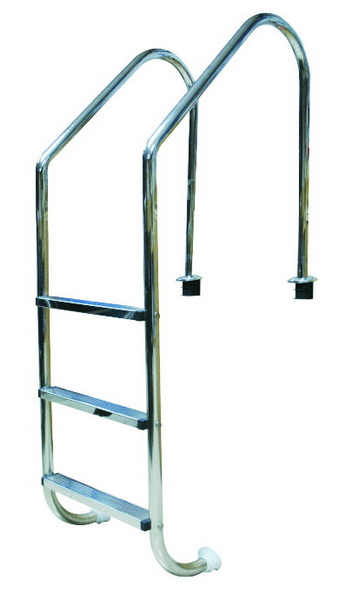
A poorly installed ladder can wobble, slip, or damage your pool wall and liner, increasing the risk of accidents and costly repairs. Correct installation ensures stable footing, secure handholds, and compliance with basic pool safety recommendations, especially when children or elderly users are involved.[3][2][4][1]
Proper ladders also improve user experience, making it easier to get in and out of the pool without stressing your sand filter, pump system, or pool walls. When combined with quality filtration (such as sand filters, cartridge filters, or DE filters), a safe ladder becomes part of a complete, professional pool environment.[5][6][2][7]
Different pools require different ladder styles, and choosing the right one is the first step before you put it up.[2][1]
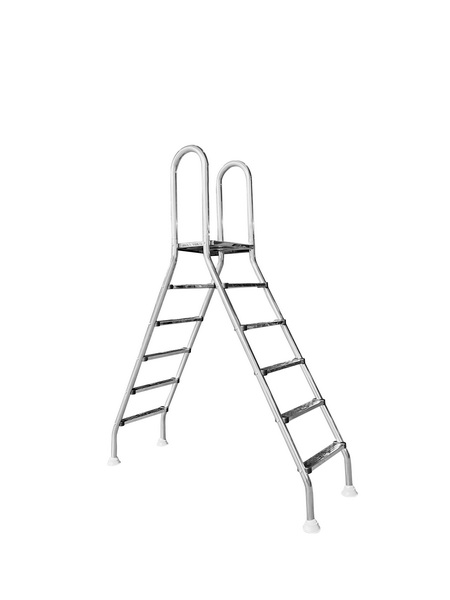
- Above‑ground A‑frame ladders: Stand on the ground outside and in the pool water inside, often with a flip‑up or removable outside section for safety.[8][2]
- Drop‑in steps and wedding‑cake steps: Large, stable step systems that sit on the pool floor, usually weighted with water or sand to keep them in place.[9][5]
- In‑ground ladders: Stainless‑steel or resin rails with built‑in treads that anchor into deck cups or anchors set in concrete.[10][1]
When buying, check compatibility with pool wall height, wall type, and deck configuration to avoid installation problems later.[1][2]
Before putting up a pool ladder, confirm that it meets basic safety recommendations and that your pool area follows local regulations.[11][3]
Key safety points to check:
- Steps at least a few inches deep with non‑slip surfaces to reduce slipping on wet plastic or metal.[3][2]
- Handrails on both sides that are easy for children and adults to grip firmly.[3]
- No sharp edges or exposed bolts that could cut bare feet or hands.[3]
- For above‑ground pools, a system to prevent unsupervised access, such as a removable, locking, or flip‑up outer ladder.[2][3]
You should also plan complementary safety equipment such as fencing, gates, rescue hooks, and clear lighting around the ladder area.[4][11]
Most modern pool ladders are designed for straightforward assembly with basic hand tools.[12][8]
Typical tools and materials:
- Phillips or flat‑head screwdriver and small wrench or socket set for tightening hardware.[8]
- Rubber mallet (optional) to gently tap rails or treads into place without damaging plastic.[8]
- Protective caps or bumpers for ladder feet to protect liners and pool finish.[1][8]
- Weights, sand, or water ballast for drop‑in step systems to prevent floating or drifting.[5][9]
Always read the manufacturer's manual and follow its part naming and orientation diagrams carefully.[12][8]
For an above‑ground A‑frame ladder, the installation usually involves assembling the two ladder sides, attaching the steps, and then hanging the assembled ladder over the pool wall.[13][12]
Clear the pool wall and surrounding ground where the ladder will sit, and make sure the ground is level and firm. Avoid placing the ladder directly over hoses from your sand filter or pump, and leave enough space so users do not kick hoses or fittings when climbing.[6][14][1]
If your pool uses a soft‑sided frame design, verify that the wall tube or top rail can support the ladder location recommended by the manufacturer.[12]
Lay out all side rails, steps, braces, and hardware on a flat surface and match them with the diagram in the instruction sheet. Many above‑ground ladders have “J‑shaped” legs that must point outward or in a specific direction before the steps are installed.[12][8]
Attach the lower braces and connectors to form the two main ladder sides, but do not fully tighten screws until all steps are in place; this allows minor adjustments to keep the ladder square and level.[13][8]
Most plastic steps slide into notched clips or molded pockets in the ladder legs from the top down. Insert each step fully into its clips on both sides, then secure with the supplied screws through pre‑marked or pre‑drilled openings on the step connectors.[13][8]
Apply downward pressure to every step to verify it is fully seated and will not pop out when someone puts weight on it.[12]
Attach the top platform or top step according to the manual and then fix the handrails onto the upper portions of the ladder legs. Tighten all handle bolts securely, checking for movement or twisting when you shake the rails from side to side.[13][12]
If the ladder has a flip‑up outer section or locking feature, install the hinge and locking mechanism at this stage, and test the flip‑up motion several times.[2][8]
Lift the assembled ladder and place it so one side sits inside the pool and the other outside, resting over the pool wall or top rail. The inside feet should sit flat on the floor or liner, and the outside feet should sit on level ground or a small pad if the soil is soft.[1][12]
Adjust the leg extension (if the ladder is height‑adjustable) so that the steps remain level and both sides of the ladder carry weight evenly.[8]
Some ladders bolt directly to the pool top rails or to a small deck using included brackets; others rely on weight and friction only. If brackets are included, attach them following the manual, taking care not to overtighten against resin or steel pool rails.[2][12]
For additional stability, many owners add custom weights (such as weighted PVC tubes) or anchor straps to keep the ladder from floating or shifting, especially on the inside of above‑ground pools.[15][4]
Once the ladder is up, perform a full safety check before allowing swimmers to use it.[4][3]
- Press down firmly on each step and bounce slightly to confirm it does not flex excessively or creak.[4][12]
- Shake the handrails from side to side and front to back to ensure there is no wobble at the attachment points.[3][2]
- Confirm that any locking or flip‑up feature works smoothly and can be secured when the pool is not in use.[2][3]
In‑ground ladders attach to permanent deck anchors or ladder cups built into the concrete around the pool.[10][1]
Typical procedure:
- Clean out ladder cups or anchors on the deck, removing debris and old water.[1]
- Adjust wedges or internal clamps inside the cups so they sit clean against the cup wall.[1]
- Insert the ladder rails into the cups and then tighten wedges or clamp hardware until the rails are secure and do not move.[16][1]
Manufacturers may also recommend adding small rubber bumpers to the ladder ends to protect the pool wall and finish.[10][1]
Even after correct installation, periodic stability checks help keep your ladder safe through regular use and seasonal opening and closing.[4]
Recommended practices:
- Confirm that all bolts, screws, and clamps are tight at least monthly, especially after heavy pool use.[4]
- For above‑ground ladders, consider adding approved weights, ballast kits, or stabilizer pads at the base to reduce rocking.[15][4]
- Replace worn rubber feet, caps, or step treads as soon as they show cracking or loss of grip.[4]
You can also combine ladder safety with other protections such as full‑height fencing, self‑closing gates, and clear safety rules for all swimmers.[11][4]
| Feature | Above‑Ground Ladder | In‑Ground Ladder |
|---|---|---|
| Typical structure | A‑frame or step system spanning inside and outside wall thepoolfactory | Fixed rails with treads anchored into deck cups youtubelinerworld |
| Installation location | Hooks over pool wall or frame intexsales | Inserts into pre‑set deck anchors or cups linerworldyoutube |
| Access control | Often has flip‑up or lockable outer section thepoolfactory | Usually combined with exterior fencing and gates knowledgebase.royalswimmingpools |
| Stability adjustment | Height‑adjustable legs, ballast, or anti‑float kits watsons | Tightened wedges or clamps in cups linerworld |
| Liner/wall protection | Requires soft feet or pads on liner linerworld | Uses bumpers at wall contact points youtubelinerworld |
Long‑term safety and comfort depend on simple, consistent ladder maintenance.[4]
- Inspect hardware monthly for rust, loosening, or cracks in plastic around screws or joints.[4]
- Rinse ladders after heavy use or after adding chemicals to reduce corrosion and discoloration.[4]
- At seasonal closing, remove removable ladders, dry them, and store them away from UV light and extreme temperatures.[4]
If you replace your pump and filter system, verify that new hose routing does not interfere with ladder placement or block exits in an emergency.[14][6]
Putting up a pool ladder is more than simple assembly; it is a safety‑critical process that protects swimmers and your pool investment. By choosing the right ladder type, following a clear step‑by‑step installation, and performing regular inspections, you create a secure access point that works smoothly with your filtration system and overall pool design. Always follow the manufacturer's specific instructions in addition to these general guidelines, and upgrade to higher‑quality ladders and accessories when needed to match premium sand filters, pumps, and lighting systems.[6][12][3][1][4]
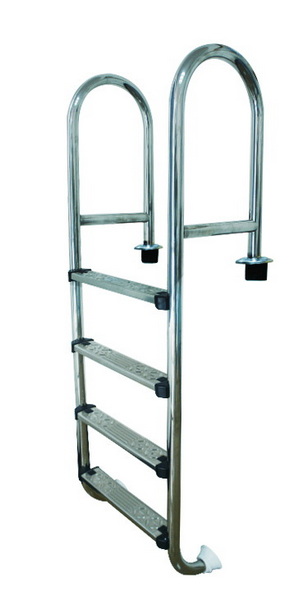
Check the ladder's specified wall height range, pool type (above‑ground or in‑ground), and weight capacity against your pool's dimensions and structure. For above‑ground models, confirm that the ladder can straddle your wall thickness and that its inside legs will sit safely on the liner or floor without damaging it.[1][2]
First, verify all bolts and screws are tight and that the ground under the outside feet is level and firm. If the ladder still moves, add stabilizing pads, ballast weights, or approved anti‑float kits at the base and, when possible, secure the top to the pool rail or deck using brackets.[15][8][4]
Many ladders can stay in the water during the swimming season, but seasonal removal is usually recommended in freezing climates or when closing the pool. Removing and storing the ladder protects plastic parts, hardware, and bumpers from UV damage, ice, and chemical over‑exposure.[4]
Look for non‑slip treads, handrails on both sides, covered or recessed hardware, and adequate weight capacity for expected users. For above‑ground pools, a ladder with a removable or lockable outer section is strongly recommended to prevent unsupervised access by children.[11][3][2]
A quick visual check before each swim session combined with a more detailed monthly inspection works well for most home pools. During the monthly check, test each step, tighten hardware, and look for cracks, rust, or worn feet and replace damaged parts immediately.[4]
Yes, but always leave clear walking space and ensure swimmers will not step on hoses or fittings when entering or exiting the pool. Position the ladder so that emergency exits remain unobstructed and maintenance access to the pump and filter is not blocked.[7][14][6]
[1](https://blog.linerworld.com/2011/01/14/swimming-pool-ladder-installation/)
[2](https://www.thepoolfactory.com/blogs/equipment/scaling-new-heights-above-ground-pool-ladders)
[3](https://www.poolfencediy.com/blogs/blog/pool-ladder-safety)
[4](https://blog.watsons.com/blog/make-above-ground-pool-ladder-stable)
[5](https://www.mavaquadoc.com/blogs/pool-maintenance-blog/installing-pool-steps-a-step-by-step-guide)
[6](https://www.youtube.com/watch?v=S0-KKPjz9i8)
[7](https://www.inyopools.com/HowToPage/how_to_install_a_sand_filter.aspx?CommentPage=1)
[8](https://www.familypoolfun.com/pdf/ne1222_manual.pdf)
[9](https://www.youtube.com/watch?v=qpJDdgZaclQ)
[10](https://www.youtube.com/watch?v=kBZZrt8Gop4)
[11](https://knowledgebase.royalswimmingpools.com/en/above-ground-pool-safety-read-before-installation)
[12](https://www.intexsales.com/b2cmnl/B2CMNLServlet?instantiate=B2cMnldownloadApp&action=pub_mnl&filnam=330IO_A0_1805_EN.pdf)
[13](https://www.youtube.com/watch?v=AcVIHFSLCTY)
[14](https://www.youtube.com/watch?v=Z_C7Mcu83iQ)
[15](https://www.facebook.com/groups/637529959937311/posts/2203700393320252/)
[16](https://www.youtube.com/watch?v=6lg8kCHO0m0)
[17](https://www.youtube.com/watch?v=JJkG7vsan1E)
[18](https://www.facebook.com/groups/637529959937311/posts/2656993104657643/)
[19](https://www.youtube.com/watch?v=-t5t95IGFSk)
[20](https://www.svadonpoolcn.com/best-pool-ladder-in-ground-features-safety-installation-guide/)


