
Views: 222 Author: Tina Publish Time: 2025-12-02 Origin: Site


Content Menu
● What Makes Vinyl Works Ladders Special
● Understanding Ladder Types: Steps vs A-Frame
● Step 1: Sort and Identify Parts
● Step 2: Build the Step Assemblies
● Step 3: Add Ballast or Fill Chambers
● Step 4: Attach Handrails and Top Platform
● Step 5: Mount the Ladder to Pool Wall or Deck
● Step 6: Install the Gate, Hinges, and Latch (If Equipped)
● Step 7: Final Safety Checks and Adjustments
● Maintenance Tips and Best Practices
● FAQs
>> 1. How long does it usually take to assemble a Vinyl Works pool ladder?
>> 2. Can one person assemble and install the ladder alone?
>> 3. Do I really need ballast or a step pad?
>> 4. How often should I check hardware and safety features?
>> 5. Can the ladder be left in the pool over winter?
Vinyl Works pool ladders are popular for above-ground pools because they combine strong resin construction, non-slip steps, and built-in safety features like handrails and gated entries. Assembling the ladder correctly is critical for both safety and comfort when entering or leaving the pool. This complete guide walks through tools, preparation, step-by-step assembly, installation, and maintenance, and then finishes with a single conclusion and FAQ section.
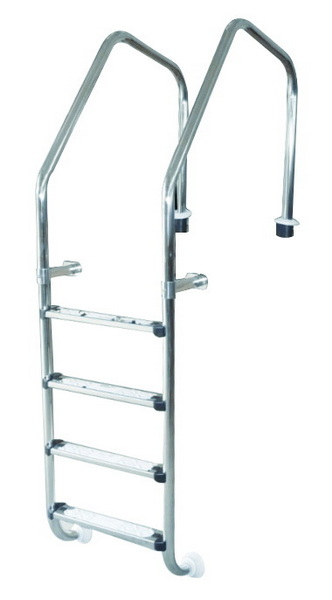
Vinyl Works ladders and step systems are usually made from UV-resistant, maintenance-free resin, with wide, textured treads designed to reduce slipping when wet. Many models support around 300 lb user weight, and their adjustable design works with common above-ground pool wall heights. Some versions include a gate or lockable entry feature on the outer side to help restrict access when the pool is not supervised.
Key benefits include:
- Corrosion-free resin material that doesn't rust like metal.
- Double handrails or side walls that provide stable support for children and adults.
- Wide treads and risers that feel more like stairs than a narrow ladder.
- Optional gates and lockable access on certain models.
Before assembly, choose a clean, flat work area near the pool and ensure there is enough space to lay out all components. Having everything organized at the start makes the build faster and reduces mistakes.
Basic tools you will usually need:
- Phillips screwdriver
- 7/16" or similar nut driver/socket and small adjustable wrench
- Measuring tape and a level
- Drill with common bits (for mounting to deck or pool top rail)
- Utility knife or scissors
- Rubber mallet (useful for gently seating treads)
- Optional: step or ladder pad to protect the pool liner
Typical parts found in a Vinyl Works-style pool ladder kit:
- Left and right stringers/side rails for the in-pool section
- Left and right stringers/side rails for the outside section (A-frame designs)
- Treads and risers (step pieces)
- Top platform or bridge section
- Handrails (upper and lower, interior and exterior)
- Gate parts (if included): gate panel, hinges, stop, latch
- Hardware: bolts, washers, nuts, self-tapping screws, plastic pins or snap-locks, caps
Before starting, carefully check the parts list in the printed instructions against all items in the box. If possible, group components by location: “inside pool side,” “outside/yard side,” “top platform,” and “gate.”
Vinyl Works makes different styles of above-ground pool entry systems, but assembly concepts are similar:
- In-pool step system:
- Resembles stairs that sit entirely inside the pool and connect to an external deck.
- Uses ballast (water or gravel) inside hollow step bodies or side rails to prevent floating.
- Usually includes a large top step and wider foot-print inside the pool.
- A-frame ladder with gate:
- Has an inside section (pool side) and an outside section (yard side) connected at the top.
- Outside section may flip up or lock when not in use.
- A self-closing, self-latching gate is often included for additional safety.
Identify your model (for example, SLA, SLD, SCL, CE, AF, etc.) on the label or manual. The details may differ (shape of treads, type of gate), but the overall assembly structure remains similar: assemble step frames, connect top platform, then install gate and secure to pool.
1) Spread all parts on the ground and separate left and right components. Some rails are stamped or stickered with “A/B,” “L/R,” “IN/OUT,” or similar.
2) Match treads to the correct rail side. Many steps are moulded with “A” and “B” marks that must align with rails marked “A” and “B.”
3) Group hardware by size. Put long bolts in one container, shorter screws in another, nuts in a small cup, and plastic pins or caps in a third.
Most Vinyl Works ladders build from the bottom step upward. The inside and outside step assemblies are usually similar, with slight variations.
Typical process:
1) Lay the first rail flat on the ground with the tread openings facing inward.
2) Take the bottom step and orient it so that the textured surface faces upward and any drain holes face downward.
3) Slide the bottom step tabs or edges into the rail openings. Press down evenly until it “clicks” or seats fully. A rubber mallet can help seat the step without damaging the resin.
4) Repeat the same process for the other rail. Make sure the step label side A goes into rail A and side B into rail B, if applicable.
5) Add the remaining steps, working from bottom to top. Ensure each step is pressed or tapped fully into place so it sits flat and does not rock.
6) For designs where only the top step gets screws, secure it with the specified self‑tapping screws once everything is aligned.
Common mistakes:
- Mixing left and right rails, causing misaligned holes at the top.
- Not seating steps fully, leaving a visible gap between rail and tread.
- Blocking drain or ballast holes at the bottom of a step with debris.
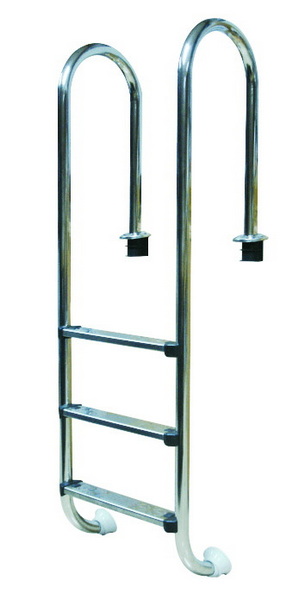
Many Vinyl Works-style step systems have hollow risers or side tubes that must be filled so the ladder does not float:
- Some models are designed to be filled with water directly through openings.
- Others specify adding gravel or sand inside hollow side rails or riser cavities.
General ideas:
1) Place the step assembly upright.
2) Remove any factory caps or plugs from ballast openings.
3) Insert a funnel and pour in the recommended amount of clean, rounded gravel or sand. Avoid sharp rock that could damage plastic from the inside.
4) Replace plugs or caps firmly to keep material inside.
5) If your model is water-filled, set the step in shallow water and allow it to fill slowly. Small drilled holes in risers help the step fill and sink evenly.
Once the step sections for inside and outside are built, you can link them with the handrails and top platform:
1) Dry-fit upper handrails:
- Insert the top of each rail into the side openings of the platform piece (if the design uses a separate platform).
- Align bolt holes but do not tighten yet. You may need to slide the platform up and down a little to adjust height for your specific pool wall.
2) Connect handrails to the step assemblies:
- Slide the rails down over the top of the step sides until the lower holes line up with rail mounting points.
- Insert bolts with washers through the rail and step body.
- Add nuts but keep slightly loose until both sides are assembled.
3) Align and tighten:
- Once all bolts are in place, check that each step is level and that both sides of the ladder stand straight.
- Tighten all nuts gradually, alternating sides so you do not twist the frame.
4) Add lower rails or “feet”:
- Some ladders include lower support rails or adjustable feet that clamp around the bottom of the side rails.
- Adjust them so the ladder stands flat on the pool floor and ground.
Proper mounting is essential. An unanchored ladder can rock, stress the pool wall, or even tip.
For a deck‑mounted step system:
1) Position the top platform on the deck edge so that the inside step section runs straight down into the water.
2) Measure the gap between the bottom step and the pool floor. Adjust platform height or foot length so the bottom step rests firmly on the floor.
3) Mark the mounting holes on the deck using the holes provided in the platform or deck flanges.
4) Drill holes in the deck matching the hardware size.
5) Use bolts, washers, and nuts (or lag screws, depending on deck material) to secure the platform firmly.
6) Re-check that the pool side steps are tight to the pool wall and that there is no pinch point where a swimmer could get trapped.
For an A‑frame ladder over the pool wall:
1) Lift the assembled ladder so one side is inside the pool and the other outside.
2) Center it on a stable section of the top rail, away from skimmer openings or weak spots.
3) Adjust the legs using movable feet or pre-marked cut lines so both inside and outside sections stand firmly on the ground and pool floor.
4) Use brackets or clamp kits to anchor the top platform to the pool's top rail according to the manual.
If your Vinyl Works ladder has a safety gate or roll-guard:
1) Identify the gate side:
- The gate usually installs on the outside section to block access.
- There will be pre-formed hinge holes or flat hinge mounting areas on the outer rail.
2) Install hinges:
- Attach the lower hinge halves to the rail with bolts and nuts.
- Attach matching hinge halves to the gate panel.
- Connect the hinge halves and check that the gate swings freely and square.
3) Add gate stop and latch:
- Mount a gate stop on the opposite rail or between rails so the gate stops at the correct closed position.
- Install the latch or roll-guard catch so that it automatically engages when the gate closes.
- Adjust the latch height and depth until it catches reliably but opens easily with intentional use.
4) Add lock provision:
- Many ladders have a hole for a padlock through the latch mechanism.
- Use a weather-resistant lock when the pool is unsupervised.
Before regular use, perform a complete safety inspection:
- Stability:
- Push and pull the ladder from several directions. There should be minimal movement.
- Check that all legs and feet make solid contact with the ground or pool floor.
- Hardware:
- Inspect every bolt and nut. None should be missing, and all should be snug but not overtightened.
- Confirm that plastic caps or covers are installed over exposed bolt ends where the manufacturer provides them.
- Clearances:
- Ensure there is no gap where a head, arm, or leg could become trapped between the steps and the pool wall.
- Verify that the space under the bottom step is consistent with safety guidelines for your region.
- Gate or flip-up section:
- Open and close the gate several times to be sure it self‑closes and latches.
- If the outer steps flip up, check that they lock in the up position securely.
Routine pre-season check:
- At the beginning of each swimming season, re‑inspect the ladder for UV damage, cracks, or loose hardware.
- Replace any damaged component using original or manufacturer-approved parts.
Proper care keeps the ladder safe and attractive for years:
- Cleaning:
- Rinse the ladder regularly to remove sunscreen, oils, and algae.
- Use a soft brush and mild pool-compatible cleaner on treads and handrails to maintain grip.
- Winter storage:
- In cold climates, remove the ladder at the end of the season.
- Drain water from hollow parts if your model is water‑filled to prevent cracking from freezing.
- Store in a dry, shaded location away from heavy objects that could warp the rails.
- Chemical exposure:
- Avoid leaving the ladder sitting directly in undiluted chlorine or shock granules.
- Brush away any scale or residue from high-calcium water to reduce surface deterioration.
- Liner protection:
- Use a ladder or step pad under in-pool supports to prevent abrasion of the pool floor liner.
- Check that no sharp edges or debris are under the feet.
Putting together a Vinyl Works pool ladder is much easier when the process is broken into clear stages: sorting parts, assembling the steps, adding ballast, installing handrails and the top platform, mounting to the pool, and finally fitting the gate and latch. With careful alignment and secure mounting, the ladder becomes a stable, user-friendly entry system that enhances both safety and comfort around any above-ground pool. By combining step-by-step instructions with helpful images, videos, and regular maintenance habits, pool owners can enjoy a secure and durable ladder for many swimming seasons.
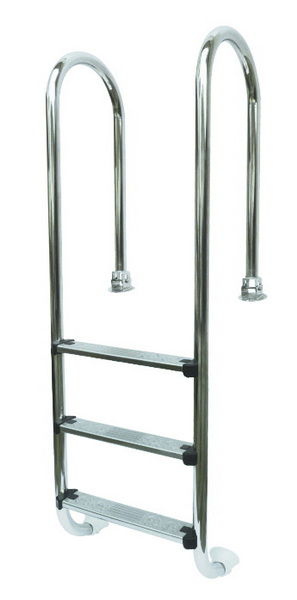
For someone with basic DIY skills and all tools prepared, assembly typically takes about 60–90 minutes, plus additional time for mounting and fine adjustments. Working with a helper shortens the process and makes lifting safer.
One person can usually assemble most of the steps and rails, but lifting and positioning the full ladder over the pool wall or onto a deck is safer with two people. Having a second person also helps check alignment and stability during final adjustments.
Yes. Ballast is important to prevent the in-pool steps from floating or shifting, especially when children climb on them. A step or ladder pad under the bottom supports helps protect the pool liner from wear and small movements over time.
It's a good idea to visually inspect the ladder every few weeks during the season and to perform a thorough check at the start and end of each swimming season. Pay attention to loose nuts, cracked plastic, and the operation of the gate or flip-up section.
In very mild climates, some owners leave the ladder in place, but it is generally better to remove, drain, and store it in a dry area over winter. This prevents damage from ice, snow, and strong winter sun, and extends the overall life of the resin and hardware.
[1](https://www.youtube.com/watch?v=JJkG7vsan1E)
[2](https://www.youtube.com/watch?v=ham2QiY9M7M)
[3](https://www.intexsales.com/b2cmnl/B2CMNLServlet?instantiate=B2cMnldownloadApp&action=pub_mnl&filnam=330IO_A0_1805_EN.pdf)
[4](https://www.familypoolfun.com/pdf/ne1222_manual.pdf)
[5](https://www.propools.com/Manuals/63043_20211268342.pdf)
[6](https://www.royalswimmingpools.com/NE1162manual.pdf)
[7](https://images.thdstatic.com/catalog/pdfImages/db/db34ae25-8daa-451a-8c9f-f25c27c97b44.pdf)
[8](https://www.youtube.com/watch?v=AcVIHFSLCTY)
[9](https://www.clubpiscine.ca/index.php?dispatch=attachments.getfile&attachment_id=5478)


