
Views: 222 Author: Tina Publish Time: 2025-07-22 Origin: Site


Content Menu
● Understanding Pool Ladder Types
● Step-by-Step Assembly Process
>> 1. Laying Out and Identifying Parts
>>> For A-Frame (Above-Ground) Ladders
>>> For Deck-Mounted/In-Pool Ladders
>> 4. Attaching Handrails and Top Braces
>> 5. Securing the Ladder to the Pool
>>> For Deck-Mounted/In-Pool Ladders
● Troubleshooting Common Problems
● Frequently Asked Questions (FAQ)
>> 1. How long does it take to assemble a pool ladder?
>> 2. Is it possible to assemble a pool ladder alone?
>> 3. How do I ensure my pool ladder is secure?
>> 4. Are sand or water ballast necessary?
>> 5. How should I remove the ladder for winter storage?
>> 6. Can every ladder fit all pool types?
A pool ladder is an essential accessory for any swimming pool, providing safe and easy access for users of all ages. Whether you're installing a new above-ground or in-ground pool ladder, or replacing an old one, assembling the ladder correctly is key to ensuring safety and longevity. This comprehensive guide walks you through every step of putting a pool ladder together, from identifying the parts to securing the final bolts, with detailed instructions, visuals, and troubleshooting tips. Dive in and make your poolside experience safer and more convenient!

Before you begin assembling your pool ladder, it's important to understand the major types available on the market:
| Ladder Type | Description | Common Use |
|---|---|---|
| A-Frame Ladders | Double-sided ladders with steps for both inside and outside the pool. | Above-ground pools |
| In-Pool Deck Ladders | Single-sided ladders fixed to the deck, with steps only on the pool side. | Above-ground and in-ground pools |
| Removable Ladders | Ladders designed to be easily detached when not in use for safety or winter storage. | Temporary setups, safety needs |
| Custom/Heavy-Duty Ladders | Reinforced stainless steel or other materials for high-traffic commercial pools. | Commercial or public pools |
- Phillips screwdriver
- Adjustable wrench
- Hammer (for fitting tight connections)
- Drill (for deck-mounted ladders)
- Tape measure
- Utility knife (for unpacking)
- Rubber mallet
Most pool ladders — regardless of brand — come with the following components:
- Two side rails or legs (A-frame = 4 rails)
- Ladder steps/treads (rungs)
- Top platform or braces
- Handrails
- Hardware kit: screws, bolts, nuts, washers, anchoring brackets
- Rubber feet or end caps
- (Optional) Anti-entrapment barriers
- Instruction manual
Before starting assembly, lay out all the components and check against the instructions. Missing hardware or mismatched parts are a leading cause of faulty assembly and unsafe ladders.
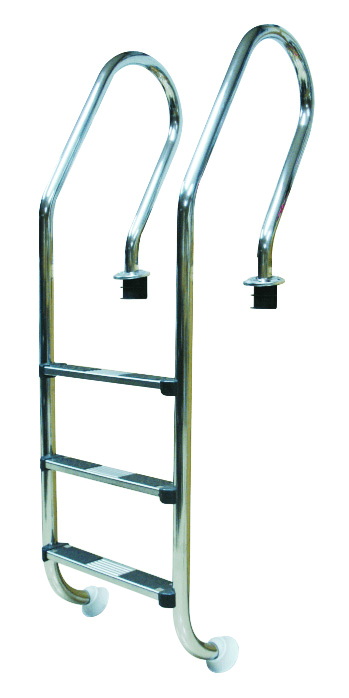
Begin by taking all parts from the packaging and organizing them by type: rails, steps, hardware, etc. Double-check quantities against the instruction manual to ensure nothing is missing before you begin.
- Identify “A” and “B” side rails if labeled, or left/right as noted.
- Group screws, bolts, and brackets by size and type for easy access during assembly.
- Stand the two pairs of side rails upright on a flat surface with the feet downward.
- Attach the bottom step by sliding it into designated notches or bracing points on each leg. Some models snap steps in place; others require screws or bolts for a secure fit.
- Confirm all steps fit tightly in their respective slots, working your way up from bottom to top. Incorrect step placement can impair safety and ladder stability.
- Position the two main rails parallel on the pool deck, aligning mounting holes with your planned deck spacing.
- Fit the steps by snapping, sliding, or bolting them into place according to the manual. Pay attention to the direction of treads for proper footing.
- Attach steps one at a time, starting from the bottom and moving upward.
- For ladders with “A” and “B” designations, ensure each step is on its correct side.
- Use the provided screws or bolts, securing firmly with a screwdriver or wrench.
- Press each step gently after installation; it should be firmly locked without any wiggle.
- Repeat on both sides for A-frame ladders, or for each rail in deck ladders.
- Position handrails at the top of each ladder rail. Some ladders require you to attach a connecting plate (top brace) between the rails first for added stability.
- Insert bolts or screws through the pre-drilled holes and hand-tighten initially.
- Before fully tightening, ensure handrails are level and aligned correctly.
- Once alignment is confirmed, fully tighten all fastening hardware securely.
- Position the ladder so that one side rests inside the pool and the other remains outside.
- Some ladders feature hollow bottom legs for ballast — fill them with sand or water to add weight and enhance stability, especially important if children will use the ladder.
- Attach any anti-entrapment barriers provided. These safety devices reduce the risk of limbs or clothing getting caught under the steps and are highly recommended for all above-ground ladders.
- Set the ladder over the pool edge with feet firmly resting on the pool floor.
- Secure the handrails to the deck using mounting brackets and bolts.
- Mark drill holes if necessary and drill accordingly for deck anchors.
- Ensure the ladder is firmly mounted and stable. If adjustable, reposition base treads to achieve full contact with the pool floor and prevent wobbling.
- Check all bolts and nuts weekly during swimming season; pool vibration and use can loosen hardware over time.
- Always limit ladder use to one person at a time, unless specified otherwise by the manufacturer.
- Remove the ladder or store it safely when the pool is not in use—especially during winter—to prevent weather damage or unauthorized access.
- Inspect for signs of wear such as cracks in plastic parts, rusting of metal components, or loosening of rubber feet.
- Clean resin or plastic ladder parts regularly with mild soap and water to avoid damage from chlorine or salt residues.
| Problem | Possible Cause | Solution |
|---|---|---|
| Steps won’t stay in place | Misaligned notches, missing screws | Re-align steps, verify and tighten all hardware |
| Ladder is wobbly or uneven | Unstable base, underfilled legs | Fill ballast legs or adjust feet to ensure floor contact |
| Hardware doesn’t fit | Wrong bolts or misplaced parts | Check parts and hardware against manual; request replacements if needed |
| Handrails not level | Misaligned mounting holes | Loosen and re-tighten bolts after realignment |
| Rust on hardware | Corrosion from pool chemicals | Replace rusty parts and treat with anti-rust lubricant |
Assembling a pool ladder may seem daunting at first, but following a systematic approach makes the process straightforward, safe, and reliable. Carefully identify all parts, follow your product's step-by-step instructions, and secure all hardware firmly. Regular inspection and maintenance during the swimming season are essential to keep your ladder safe and extend its service life. Whether you're a homeowner or a pool professional, a well-assembled ladder provides a secure and convenient gateway to your pool, protecting yourself and your loved ones during every swim.

Most pool ladders can be assembled within 30 to 60 minutes, depending on model complexity and your familiarity with the tools and steps.
Yes, many lighter ladders can be assembled solo, but having a partner is recommended, especially when aligning large rails or securing heavier components.
Test each step by applying weight and gently shaking the ladder before use. If anything seems loose or unstable, re-tighten hardware and adjust footing as necessary.
For some above-ground models, filling the lower legs with sand or water increases stability and prevents the ladder from shifting or floating.
Reverse the assembly process: drain ballast, unbolt mounting hardware, and store the ladder in a dry, protected space to prevent damage from cold and moisture.
No. Always select a ladder appropriate for your pool's depth, wall thickness, and design to ensure safe installation.


