
Views: 222 Author: Tina Publish Time: 2025-10-25 Origin: Site


Content Menu
● How to Disassemble a Pool Ladder
● Safety first: planning and prerequisites
● Tools and safety checks you'll need
● Step-by-step disassembly process
>> Step 2 – Lower water level and drain as needed
>> Step 3 – Detach barrier protection and access points
>> Step 4 – Loosen mounting hardware
>> Step 5 – Detach the base and separate from the pool
>> Step 6 – Disassemble individual components (steps, rails, brackets)
>> Step 7 – Yon maintenance while disassembled
● OEM considerations for your Shenzhen factory
● Conclusion and call to action
● FAQ
>> 1. What are the essential tools for pool ladder disassembly?
>> 2. Should the pool be drained before disassembly?
>> 3. How do you detach deck-mounted pool ladders?
>> 4. Can disassembly damage the pool wall or liner?
>> 5. How should components be stored post-disassembly?
Across residential and commercial pool settings, the pool ladder is a critical access point that blends safety, convenience, and structural design. When the time comes to disassemble a pool ladder—whether for off-season storage, maintenance, fixture updates, or OEM reconfiguration for international brands—the process should be performed with attention to safety, precision, and documentation. This guide provides a thorough, step-by-step procedure, enriched with media-ready suggestions, practical OEM insights for a Shenzhen-based manufacturing partner, and post-disassembly care. The goal is to enable technicians, pool maintenance professionals, and OEM engineers to perform clean, damage-free disassembly while preserving ladder integrity for reuse or repurposing.
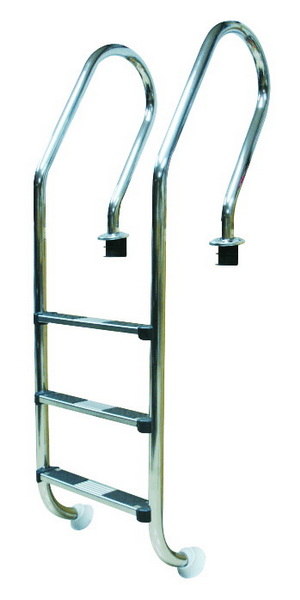
Before touching any hardware, establish a safe working environment. A well-lit, dry, and organized workspace reduces the risk of slips, dropped components, or unintentional damage to pool walls or liners. If the pool is in use or still holding water, plan for a partial drainage only to the level necessary to access submerged mounting points. This minimizes weight and buoyancy forces on mounting brackets during removal.
- Check local regulations and manufacturer guidelines. Many pool ladders come with installation manuals that specify mounting styles, weight limits, and recommended maintenance intervals. Adhering to these guidelines reduces liability and ensures warranty compatibility for OEM clients.
- Gather tools and protective gear. A screwdriver set, adjustable wrench, pliers, hex keys, a rubber mallet, a utility knife (for tape or protective films), and a clean, dry cloth are typical necessities. Wearing gloves and eye protection improves safety during prying, cutting, and handling metal components.
- Prepare the area around the ladder. Move furniture, toys, and pool accessories away from the ladder to create a clear working zone. If the ladder is near a deck or wall, place protective mats to prevent scuffs on surfaces.
- Plan for component-specific risks. Some ladders use stainless steel rails, plastic steps, or aluminum inserts that may corrode or become brittle with age. Recognize brittle plastic, rounded fasteners, or corroded anchors as indicators to slow down the procedure and consider replacing fasteners with corrosion-resistant variants.
- Tools: Phillips and flathead screwdrivers, adjustable wrench, set of hex keys, pliers, rubber mallet, wire brush, utility knife, and a small bucket for debris.
- PPE: safety glasses, cut-resistant gloves, and sturdy footwear.
- Safety checks: ensure all power sources are off if the ladder shares structural components with pool pumps or lighting; verify that the area underneath the ladder is clear of people to avoid injuries if the base shifts during disassembly.
The following steps assume a typical residential pool ladder mounted to a deck or pool wall, with modular components that can be disassembled from top to bottom. Some models use quick-release clips or plastic fasteners; others rely on traditional bolts and brackets. Adapt steps to the exact configuration, but maintain the core logic: detach external barriers, relieve load, separate base, then dismantle individual components.
- Remove any safety barriers or gates designed to prevent access to the ladder when the pool is in use. These barriers protect both users and the ladder's mounting hardware from accidental damage.
- Inspect the ladder and mounting area for signs of wear, corrosion, or cracks. Documenting the condition with photos helps with later reassembly or OEM design optimization.
- If the ladder is connected to a pool wall or deck with water exposure, consider laying down a protective sheet or mat to prevent slipping and to catch debris during removal.
- If parts of the ladder are submerged or partially submerged, reduce the water level to improve visibility and access to hardware. Lowering the water by a modest amount—commonly 6 to 12 inches (15–30 cm), depending on the model—often suffices to free submerged fasteners.
- If the pool is equipped with a drainage system, use it to minimize splash and keep the work area dry. A dry environment reduces the risk of slipping and helps protect metal components from corrosion during handling.
- Remove protective caps, end caps, or decorative covers that conceal mounting hardware. This step helps prevent tool slippage and protects the caps from damage during disassembly.
- If the ladder features a deck-mounted or wall-mounted security gate, disengage or remove it according to the manufacturer's guidance. Retain these pieces for reuse or replacement in OEM configurations.
- Identify all fasteners securing the ladder to the pool wall, deck, or frame. Common fasteners include stainless steel bolts, nuts, washers, and plastic pins.
- Use the appropriate driver or wrench to loosen nuts, screws, or clamps. Do not remove them completely yet; first loosen to relieve stress and check for hidden fasteners behind decorative covers.
- If fasteners are stubborn due to corrosion, apply a penetrant or lubricant suitable for outdoor metal hardware and allow it to sit for a few minutes before reattempting. Use a rubber mallet to gently coax corroded components apart, avoiding brute force that could crack plastic parts or bend rails.
- After the primary fasteners are loosened, carefully lift the base away from the wall or deck. Depending on the model, you may need to tilt or pivot the base to clear mounting lips or brackets.
- For heavy bases or weighted legs, remove any ballast (sand or water) that was added to improve stability before transport. Keep ballast components intact for OEM records or future reconfiguration.
- Place the base on a flat, stable surface to prevent bending or warping during the remainder of the disassembly.
- If the ladder uses modular steps, carefully separate each step from the rail by releasing snap-fits, screws, or clips as designed. Work from the topmost step downward to avoid losing alignment pieces.
- For one-piece rail sections, detach rails from brackets by unscrewing or prying loose with minimal force. Protect the rail surfaces with a cloth or padding to prevent scratching.
- Inspect connectors, joints, and fasteners as you go. If a fastener shows signs of wear or corrosion, replace it with a compatible, corrosion-resistant alternative to ensure safe reassembly in future use or OEM configurations.
- When disassembly is complete, group components by type (rails, steps, brackets) and label them if possible to streamline reassembly or repurposing for new brands.
- Clean all components to remove dirt, algae, or old lubricants. A mild soap solution and a soft brush are usually sufficient; avoid abrasive cleaners that may scratch surfaces.
- Dry components thoroughly to prevent rust and degradation during storage. If possible, apply a light, compatible lubricant to moving metal parts to protect against moisture.
- Conduct a quick inspection of every part. Check for cracks in plastic steps, corrosion on metal hardware, and integrity of mounting brackets. Document any issues and plan for replacements or upgrades in OEM plans.
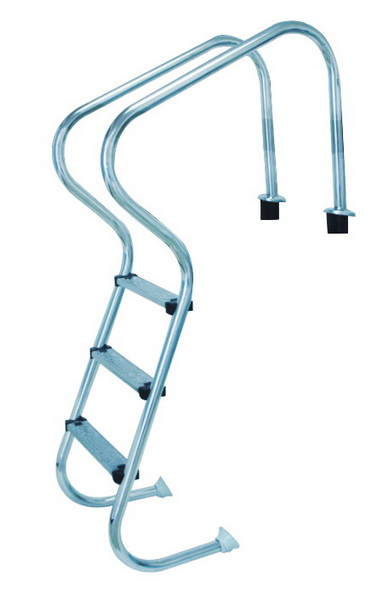
Once the ladder is fully disassembled, adopt a storage strategy that preserves component integrity and facilitates future reassembly or repurposing. For OEM contexts, maintaining a clear bill of materials and a standardized disassembly protocol supports quality, traceability, and faster production cycles.
- Storage environment: store components in a dry, temperature-controlled area away from direct sunlight to prevent UV damage and material fatigue. Use labeled bins or racks to minimize misplacement.
- Component condition reporting: maintain a simple check-list for each disassembled part (e.g., “Step 3: plastic clip intact,” “Rail A: minor corrosion detected at bracket contact”). For international clients, this documentation supports warranty claims and product lifecycle analysis.
- Cleaning and protection: after cleaning, apply protective coatings to metal parts if compatible with the material, to reduce future corrosion when stored or used in harsher environments.
Your factory's OEM capabilities can be highlighted through a detailed, reader-friendly section that demonstrates how your equipment and processes align with international brand requirements.
- Customization options
- Offer modular ladder configurations with adjustable numbers of steps, different rail materials (stainless steel, aluminum, or coated aluminum), and various mounting styles (deck, wall, or pool coping).
- Provide branding opportunities on fasteners, brackets, or end caps—helpful for private-label programs and premium OEM partnerships.
- Quality assurance and traceability
- Implement in-line inspections for critical joints, fasteners, corrosion resistance, and fit accuracy. Laser-etch serial numbers or batch codes for traceability.
- Maintain a standardized protocol for disassembly and reassembly to enable reliable spare-parts planning and predictable maintenance cycles for international clients.
- Manufacturing efficiency
- Invest in modular fixtures and jigs that accommodate multiple ladder designs with minimal tooling changes, reducing changeover times and supporting faster OEM production runs.
- Document a repeatable disassembly protocol that can be turned into field-maintenance guides for customers, adding value in after-sales service.
- Safety, compliance, and certifications
- Align materials and finishes with applicable outdoor-use standards and regional certifications (for example, ASTM or EN standards, plus any region-specific pool-safety requirements).
- Ensure packaging protects components during international shipping, with clear labeling for mass handling, warranty, and care instructions.
Disassembling a pool ladder with care protects the pool environment, preserves ladder integrity for reuse, and strengthens OEM positioning for international clients. By following a structured, safety-first approach—supported by high-quality media, precise documentation, and a clear OEM framework—technicians can achieve reliable results that translate into durable products and satisfied buyers. For manufacturers, adopting standardized disassembly protocols and media-rich educational content accelerates after-sales support, reduces damage risk, and showcases the company's commitment to quality and customer-centric design.
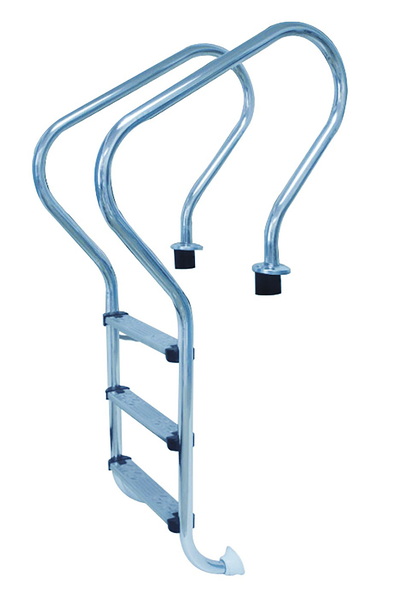
A screwdriver set, adjustable wrench, pliers, a rubber mallet, and a cloth for protection are typically sufficient.[1]
Lower the water level enough to access submerged hardware and gain space to maneuver, but avoid fully draining unless required by the model or safety guidelines.[10]
Remove any barriers, loosen mounting hardware, and carefully separate the ladder from the mounting surface, supporting the base to prevent damage.[2]
Yes, improper leverage can damage walls or liners; gentle prying and protective pads minimize risk.[11]
Clean and dry all parts, store in a cool, dry area, and label components to facilitate future reassembly or OEM reconfiguration.[12]
[1](https://blog.watsons.com/blog/remove-above-ground-pool-ladder)
[2](https://www.poolkingfilter.com/how-to-take-apart-a-pool-ladder.html)
[3](https://www.poolkingfilter.com/how-to-take-apart-pool-ladder.html)
[4](https://www.youtube.com/watch?v=4JtT3B246oA)
[5](https://images.thdstatic.com/catalog/pdfImages/84/84e8528b-b5e0-4efe-8b32-df809eb190ee.pdf)
[6](https://www.intexdevelopment.com/support/downloadmnl?filename=331PO_R1_1912_EN.pdf)
[7](https://www.tiktok.com/@sawdustengineer/video/7516647504822242602)
[8](https://idealsources.com.au/wp-content/uploads/2022/06/Pool-ladder-manual.pdf)
[9](https://getwecycle.com/blogs/above-ground-pool-removal)
[10](https://patents.google.com/patent/CN216778162U/zh)
[11](https://www.archiexpo.cn/cat/chi-shui-liao-spa/chi-guo-lu-qi-JB-1955-_2.html)
[12](https://www.youtube.com/watch?v=z2tjyznDJek)


