
Views: 222 Author: Tina Publish Time: 2026-01-23 Origin: Site


Content Menu
● Why Child Proof a Pool Ladder
● Choosing a Safer Pool Ladder
● Types of Pool Ladders and Child‑Proof Potential
● Securing or Removing the Pool Ladder When Not in Use
● Adding Barriers Around the Pool Ladder
● Using Child‑Safe Latches and Locks
● Stabilizing and Maintaining the Pool Ladder
● Inspection and Maintenance Schedule for a Pool Ladder
● Cleaning and Surface Safety for the Pool Ladder
● Layering Pool Safety Around the Ladder
● Teaching Children Safe Pool Ladder Habits
● Example Safe Setup With a Pool Ladder
● Integrating Professional Equipment and OEM Solutions
● Daily and Seasonal Checklist for a Child‑Proof Pool Ladder
● FAQ
>> 1. How do I block access to a pool ladder?
>> 2. What features should a child‑safe pool ladder have?
>> 3. Do I still need a fence if my pool ladder locks?
>> 4. How often should I inspect my pool ladder?
>> 5. What maintenance helps a pool ladder last longer and stay safe?
Child proofing a pool ladder is one of the most effective ways to reduce drowning risk and prevent young children from reaching the water without supervision. A careful plan that combines equipment, layout, and family rules turns your pool area into a safer, more controlled environment for kids and guests.
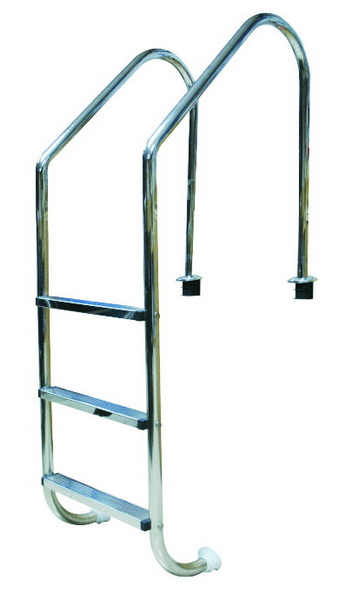
A pool ladder is usually the easiest access point to the water, especially for above‑ground and backyard pools with decks. Toddlers are naturally curious, and they can climb steps or rungs far more quickly than most adults expect, even if they do not know how to swim.
Beyond the risk of getting into the water, an unstable or slippery pool ladder also increases the chances of falls, head injuries, and panic situations on the pool edge. Child proofing a pool ladder, therefore, protects children both from unintentional entry into the pool and from accidents as they climb up or down.
Selecting the right pool ladder is the foundation of a child‑proof setup. When you buy new equipment or upgrade an older ladder, focus on models that combine comfort, strength, and built‑in safety features.
Look for a pool ladder with:
- Wide, non‑slip steps that provide solid footing and reduce the chances of slipping.
- Handrails on both sides, sized so even small hands can grip securely while climbing.
- Entrapment barriers that block large gaps beneath or behind the steps, so children cannot become stuck or sneak through.
- High weight capacity and robust construction so the pool ladder stays stable under adult use as well as heavy daily traffic.
Many modern products are specifically marketed as safety pool ladders. These often include flip‑up or lockable outer sections, integrated step enclosures, or roll‑down guards that block the outside portion of the pool ladder when swimming time is over.
Different pool layouts use different ladder styles, and each type needs its own child‑proof strategy.
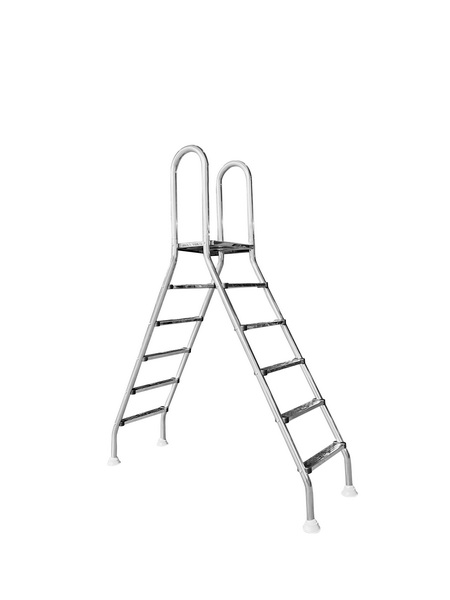
- A‑frame pool ladder: Common on above‑ground pools without a full deck. The outside side of the ladder is the main risk, so choose a model with a removable outer section, a flip‑up design, or a built‑in gate that locks.
- In‑pool steps with handrails: Often used where a deck meets the pool edge. Here, child proofing focuses more on fences and gates around the deck than on removing the pool ladder itself.
- Built‑in or wall‑mounted ladder: Typical of many in‑ground pools. These are hard to remove, so the pool area must rely on proper barriers, self‑closing gates, and alarms, while the ladder itself should be slip‑resistant and structurally sound.
Whichever style you use, the child‑proof goal is always the same: make sure children cannot reach or climb the pool ladder when an adult is not actively supervising.
A child‑proof pool ladder should never remain freely accessible during non‑swim times. Once everyone is out of the water, adult supervision ends, or the day is over, the pool ladder should either be removed, folded away, or physically blocked.
Practical options include:
- Removing the outer section of an A‑frame pool ladder and storing it in a locked shed or garage.
- Flipping up a specially designed pool ladder so the rungs sit out of reach and a locking pin or latch keeps it in the upright position.
- Adding a gate or enclosure around the steps, either as a dedicated ladder cage or as part of a deck‑mounted barrier system.
When you secure your pool ladder, always check that locks, pins, or straps are placed high enough that small children cannot easily reach or release them.
A barrier is a second line of defense that slows down a child and gives adults time to notice and react. Even if your pool ladder can be removed or locked, a perimeter barrier greatly improves safety.
Key concepts for barriers around a pool ladder:
- Use a four‑sided fence or dedicated enclosure that separates the pool and pool ladder area from the yard and house, rather than relying only on a fence along the property line.
- Choose a fence height of at least around 1.2–1.5 meters (4–5 feet), with vertical slats close enough that children cannot squeeze through or easily climb.
- Make sure there are no large openings near the pool ladder where a child could crawl underneath or between rails.
For pools with decks, it is common to install a gate at the top of the pool ladder or at the deck entrance, creating a controlled access point instead of an open, continuous edge.
A barrier is only as effective as its locking hardware. To truly child proof the pool ladder area, use latches and locks designed for pools and child safety rather than generic door hardware.
Effective hardware choices include:
- Magnetic safety latches that require a stronger pull or special motion to open and automatically pull the gate closed.
- Self‑closing hinges so the gate swings shut and latches on its own after someone passes through.
- Latches mounted high on the fence or gate, preferably on the pool side, so toddlers cannot easily reach or manipulate them.
For doors and sliders inside the home that lead toward the pool ladder, add high‑mounted secondary locks or devices that require adult strength or coordination. This way, children cannot simply open the path to the pool ladder without anyone noticing.
Child proofing is not just about blocking access. A well‑maintained, stable pool ladder is safer for children when they are allowed to swim under supervision. Poor maintenance can turn the pool ladder itself into a hazard.
Important steps include:
- Weighing down the base of the pool ladder when recommended by the manufacturer, often using sandbags, water weights, or integrated ballast compartments, so the ladder does not float or shift.
- Ensuring the feet of the pool ladder sit flat and firmly on the pool floor or deck, with non‑marring caps and no exposed bolts or sharp edges.
- Checking that all handrails, steps, and connection points are tight, free from wobble, and capable of supporting adult weight without movement.
Regular maintenance prevents corrosion, cracks, and loose connections that could cause a child or adult to fall while using the pool ladder.
Consistent inspection keeps your pool ladder safe over the long term. A simple schedule can be built into your normal pool care routine.
- At the start of each swimming season, perform a full inspection of the pool ladder, including fasteners, rails, steps, and locking devices.
- Every month during the swim season, visually inspect for rust, cracks, bent rails, and signs of movement where the pool ladder attaches to the wall or deck.
- After storms, heavy use, or when the pool ladder has been removed and reinstalled, test the stability by applying firm pressure on each side and step.
If any damage is found, repair or replace parts immediately. When structural damage is severe or the pool ladder feels unreliable, it is better to replace the entire unit with a new, compliant model.
A dirty or slippery pool ladder can be just as dangerous as an unsecured one. Proper cleaning keeps surfaces grippy and helps prevent algae or residue buildup that can cause falls.
Recommended practices:
- Wash the pool ladder regularly using mild soap and fresh water to remove dirt, sunscreen, and chemical film.
- Use a soft cloth or non‑abrasive sponge to clean treads, handrails, and frames, then rinse thoroughly and allow the ladder to dry.
- Inspect for slick spots or algae growth on the steps and handle these immediately, especially in shaded or less circulated areas of the pool.
For removable pool ladders stored over winter, make sure they are cleaned, dried, and, if needed, lightly lubricated on metal joints before storage to reduce rust and extend service life.
Child proofing a pool ladder should be part of a multi‑layer safety strategy. Each layer backs up the others, making it much less likely that a single mistake will lead to an accident.
Useful safety layers include:
- A proper fence and gate system that separates the pool ladder and water from living and play areas.
- Door and window alarms that alert adults when someone heads toward the pool area from the house.
- Surface, gate, or perimeter alarms that detect unusual movement near the pool or pool ladder, especially at night or during quiet times.
When these layers work together with a secure pool ladder, unsupervised entry becomes much more difficult and adults gain more time to respond if a child slips away.
Even with strong physical protections, children also need clear, consistent rules for how to use a pool ladder safely. Education helps them understand boundaries and reduces risky behavior.
Key rules to teach children:
- Never use the pool ladder or enter the pool unless a responsible adult is present and has given permission.
- Always climb the pool ladder slowly, facing the steps, with both hands on the handrails and one foot at a time.
- Do not jump or dive from the pool ladder, hang from the rails, or push other children while climbing.
- Stay off the pool ladder when an adult is locking, folding, or removing it, and keep toys away from the rungs so nobody trips.
Reinforce these rules every swimming session, and ensure babysitters, relatives, and older children know the same expectations.
To visualize a complete, child‑proof configuration, imagine the following setup around a typical above‑ground pool with an A‑frame pool ladder:
- During swim time, the pool ladder stands firm with wide, non‑slip steps and strong handrails, and the base is properly weighted so it does not wobble. Adults supervise in the pool area, watching children as they climb and swim.
- Around the pool, a four‑sided fence with a self‑closing, self‑latching gate surrounds the pool ladder and water, separating them from the rest of the yard. The latch is mounted high and on the pool side of the gate.
- After swimming, adults have a routine: children leave the water, the pool ladder's outer section is flipped up or removed, the ladder's locking guard is engaged, the gate closes and latches automatically, and all doors leading from the house to the pool area are checked and alarms are armed.
This kind of system makes the pool ladder usable and convenient during supervised hours yet highly restricted during the rest of the day.
For homeowners, brands, and professional pool builders, investing in high‑quality, factory‑produced equipment makes it easier to create a truly child‑proof pool ladder system. Smart manufacturing and advanced molding technology can produce pool ladders, steps, and safety accessories that are strong, smooth, and easy to maintain.
When selecting equipment or sourcing products as a brand or wholesaler, consider:
- Pool ladders and step systems that support add‑on gates, safety doors, and roll‑down guards without complicated modifications.
- Compatible handrails, safety barriers, and mounting kits designed to work together, so the pool ladder, fence, and deck system form one integrated safety solution.
- Pumps, filters, lighting, and accessories that complement your pool ladder by keeping the water clear, the deck well lit, and trip hazards to a minimum.
With the right factory partner, it is possible to build a complete pool equipment line where the pool ladder is not just an access point, but a central part of the overall safety design.
A simple checklist helps pool owners apply all the ideas in this guide consistently, turning good intentions into daily habits.
Daily or after each swim session:
- Confirm the pool ladder is stable and the steps are clear of toys or obstacles.
- When swimming ends, remove or lock the outer section of the pool ladder and secure any built‑in guards or gates.
- Make sure the pool fence gate closes and latches properly and that any alarms leading to the pool area are active.
Weekly:
- Clean the pool ladder surfaces to remove buildup and keep the steps non‑slippery.
- Check for small signs of wear, such as minor rust, loose bolts, or hairline cracks on steps and rails.
Seasonally:
- Perform a full structural inspection of the pool ladder, hardware, mounting points, and safety accessories.
- Replace any worn components and consider upgrading to newer safety models if your current pool ladder does not support modern child‑proof features.
By combining this checklist with the other strategies in this article, you can keep your pool ladder safe and child‑proof season after season.
Child proofing a pool ladder is one of the most important steps in creating a safe swimming environment for children. By choosing a safer ladder design, securing or removing the ladder when not in use, adding strong barriers and child‑resistant latches, and maintaining the ladder in good condition, you significantly reduce the risk of accidental access and falls. When these physical protections are combined with alarms, clear family rules, and consistent supervision, the pool ladder becomes a controlled gateway to fun rather than a hidden danger.
Contact us to get more information!
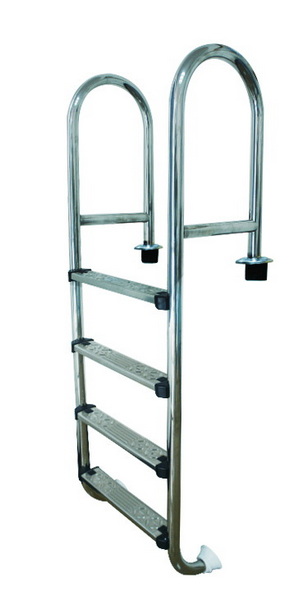
The most direct method is to remove the outer section of an A‑frame pool ladder and store it away from the pool whenever no adult is supervising. If the ladder cannot be removed, use a model with a flip‑up design, a locking guard, or a dedicated step enclosure that covers the rungs and prevents children from climbing.
A child‑safe pool ladder should offer wide, non‑slip steps, strong handrails on both sides, and a stable frame that can be properly anchored or weighted. It should also have a way to be locked, folded up, removed, or enclosed when the pool is not in supervised use.
Yes. A locking pool ladder is only one layer of protection and should always be combined with a properly designed fence and self‑closing gate around the pool area. Multiple barriers greatly reduce the chances that a single mistake, such as forgetting to lock the ladder, will lead to an accident.
Inspect the pool ladder thoroughly at the start of each swimming season and perform quick checks regularly throughout the season. Any time you notice wobbling, rust, cracks, or loose hardware, stop using the ladder until the problem is repaired or the ladder is replaced.
Regular cleaning with mild soap and fresh water, routine inspection of bolts and joints, and prompt treatment of rust or minor damage all extend the life of a pool ladder. For removable models, drying and properly storing the ladder during off‑season months helps prevent corrosion and keeps it ready for safe use next year.
1. https://blog.watsons.com/blog/childproofing-above-ground-pool-safety
2. https://poolfence.com/pool-ladders-a-step-toward-safety/
3. https://www.poolfencediy.com/blogs/blog/pool-ladder-safety
4. https://www.swimmingpool.com/resources/safety-guides/safety-guidelines/
5. https://www.thepoolfactory.com/blogs/equipment/make-your-pool-safer-simple-steps
6. https://www.poolsafely.gov/wp-content/uploads/2016/04/Safety-Barrier-Guidelines-for-Residential-Pools.pdf
7. https://poolchemicalcalculator.com/news/caring-for-your-pool-ladders-a-comprehensive-guide-for-homeowners/
8. https://poolie.com/blog/general/enhance-pool-safety-with-handrail-and-ladder-installation/


