
Views: 222 Author: Tina Publish Time: 2025-12-26 Origin: Site


Content Menu
● What a Cartridge Filter Does
● When You Should Change Cartridges
>> Warning Signs It Is Time to Replace
● Tools and Materials You Will Need
>> Basic Tools
>> Replacement Parts and Cartridges
● Safety Steps Before You Start
● Step‑by‑Step: How to Change Pool Filter Cartridges
>> Step 1: Shut Down and Depressurize
>> Step 2: Open the Filter Housing
>> Step 3: Remove the Old Cartridge
>> Step 4: Inspect and Clean the Housing
>> Step 5: Prepare the New Cartridge
>> Step 6: Install the New Cartridge
>> Step 7: Reassemble and Seal the Filter
>> Step 8: Restart and Bleed Air
● Ongoing Maintenance After Cartridge Replacement
>> Water Chemistry and System Health
● OEM and Professional Supply Options
>> 1. How often should I change my pool filter cartridges?
>> 2. How do I know if my cartridge is worn out and not just dirty?
>> 3. Can I use a pressure washer to clean my cartridge?
>> 4. Do I need to replace the O‑ring when I change the cartridge?
>> 5. What size cartridge do I need for my pool?
>> 6. Can I upgrade from a smaller cartridge filter to a larger one?
Changing pool filter cartridges is one of the most important maintenance tasks for keeping swimming pool water clean, clear, and safe. When done correctly, it improves circulation, reduces chemical consumption, and extends the life of your entire filtration system.[1]
As a professional Chinese factory manufacturing premium sand filters, cartridge filters, DE filters, pool pumps, LED lights, and accessories, and providing OEM services for foreign brands, wholesalers, and manufacturers, this guide is designed to help pool owners and service professionals change cartridges easily and safely while also understanding when upgrades or replacements are needed.
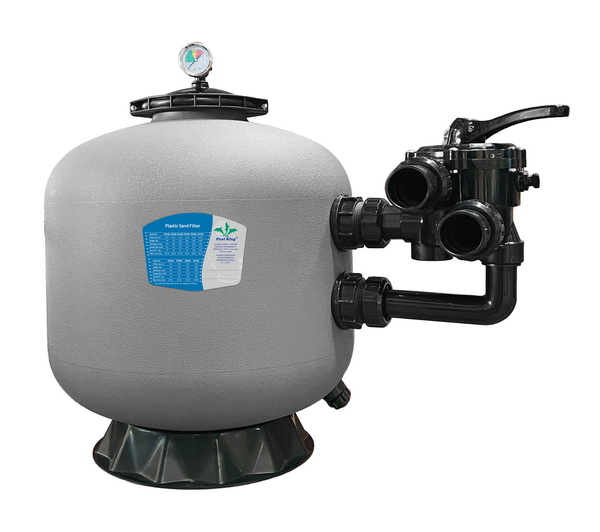
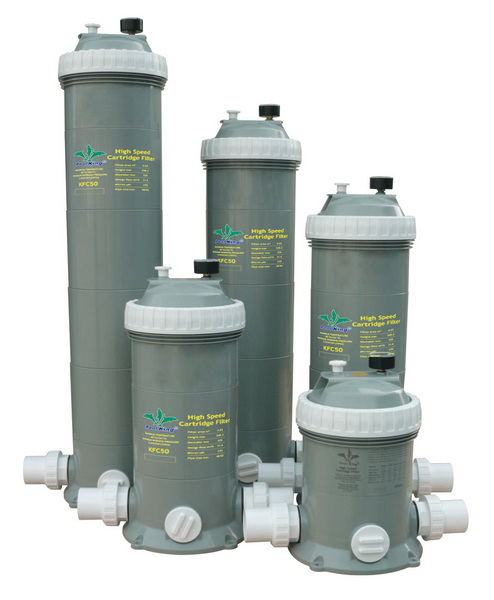
A cartridge filter uses a pleated polyester element to trap fine particles such as dust, pollen, body oils, and small debris as water passes through the pleats. This type of filtration is popular for both residential and commercial pools because it offers fine filtration with relatively low energy consumption and no need for backwashing.[1][2]
For OEM and professional buyers, high‑surface‑area cartridges matched with efficient pumps and well‑designed filter housings provide a balanced system that maintains clarity even in heavy‑use pools and water parks.[3]
- Typical micron rating: many cartridge filters capture particles in the 10–20 micron range, which is finer than many basic sand systems.[3]
- Best applications: residential in‑ground pools, above‑ground pools, spas, and light‑commercial installations where water clarity is critical and backwash water must be minimized.[1]
Cartridge filters do not last forever. Even with good cleaning, the fabric slowly clogs and wears out, reducing flow and filtration efficiency. Knowing the signs of a worn cartridge helps prevent cloudy water and strain on the pump.[4][2]
- Many pool owners replace cartridges every 1–3 years, depending on usage, bather load, and debris level.[4]
- Some service companies recommend 1–2 years in heavy‑use or very dirty environments, and up to 3–5 years in light‑use, low‑debris pools with large filter surface area.[5]
- Persistent cloudy water even after shocking and balancing chemicals.[2]
- Filter pressure that stays high soon after each cleaning, or a rise of around 8–10 PSI above normal operating pressure.[2]
- Visible tears, holes, worn or flattened pleats, or severely discolored fabric that will not clean up.[1]
- Needing to clean the cartridge much more frequently than before to maintain the same water quality.[3]
Preparing tools in advance makes the change faster and safer.
- Screwdriver (flathead or Phillips, depending on clamp or lid design).
- Adjustable wrench or socket set for clamp nuts or unions.[6]
- Garden hose with spray nozzle for rinsing housing and new cartridge.[7]
- Bucket to catch drain water from the bottom of the filter tank.
- Clean rags or towels for wiping surfaces and drying hands.
- Safety gloves and optionally safety glasses for chemical and mechanical protection.
- Correct replacement cartridge matched to filter model and dimensions; check part number, length, outside diameter, and end cap design.[1]
- New lid O‑ring or tank gasket if the old one is cracked, flattened, or leaking.[7]
- Silicone‑based lubricant for O‑rings to improve sealing and ease of future maintenance.[8]
For international OEM buyers and brand owners, cartridges can be customized for diameter, height, pleat count, and end‑cap design to fit specific filter housings and private‑label requirements.
Pool filters operate under pressure and are connected to electrical equipment, so safety is critical. Always take a few minutes to secure the system before opening the filter tank.[9][1]
- Turn off the pool pump at the timer or control panel, and then switch off the circuit breaker supplying the pump for extra safety.[7]
- Close any suction and return valves if installed so water does not flow while the filter is open.[10]
- Open the air relief valve on top of the filter (or the drain plug at the bottom, depending on the design) to release all pressure; the gauge should drop to zero.[8]
- Allow the tank to drain through the bottom plug into a bucket or onto a suitable drain area.[7]
This section walks through the full replacement process from shutdown to restart. Steps may vary slightly by brand and model, so always follow the manufacturer's instructions in addition to this general guide.[1]
- Confirm the pump is fully off and locked out if possible so it cannot start automatically.[7]
- Open the air relief valve until all air and pressure escape and the gauge reads zero.[8]
- Open the bottom drain plug and let most of the water run out of the filter tank.[7]
- Loosen the clamp band, bolts, or lid ring using a wrench or by hand depending on the design.[1]
- Carefully remove the clamp or unscrew the lid, then lift the top half of the filter tank straight up and set it aside on a clean surface.[11]
- Inspect the main tank O‑ring for cracks or deformation; replace if necessary.[7]
- Grip the top handle or top end of the cartridge and pull it straight up; it may feel heavy because it is full of water.[11]
- Note the orientation of the cartridge and any locator tabs, spigots, or keyed fittings in the bottom and top of the housing.[8]
- Place the old cartridge on a tarp or in a large bucket to drain.[10]
- Check the inside of the tank for sand, leaves, insects, scale, or plastic shavings and remove any large debris by hand.
- Spray the inside surfaces with a garden hose to flush out remaining dirt and fine debris.[10]
- Wipe the sealing surfaces and O‑ring grooves clean so the lid can reseal without leaks.[1]
If desired, the old cartridge can be rinsed and inspected for educational purposes to show customers the amount of dirt that was trapped.[8]
- Verify that the new cartridge matches the old one in length, diameter, and end‑cap style before installation.[1]
- Quick‑rinse the new cartridge with a hose to remove any dust from the manufacturing and packaging process.
- Check for any shipping damage such as cracked end caps or distorted cores.[1]
For OEM brand owners, label or print codes can be added to the cartridge end caps so service technicians can easily identify production batches in the field.
- Insert the new cartridge into the housing, making sure the bottom spigot or standpipe seats fully into the cartridge core.[10]
- Ensure the top of the cartridge is centered and aligned with any locating features or manifolds.[11]
- Double‑check that the cartridge is perfectly vertical so the lid will close evenly and seals will not be twisted.[1]
- Lightly lubricate the tank O‑ring with a silicone‑based lubricant; do not use petroleum grease.[8]
- Place the lid back on, ensuring alignment marks or arrows (if present) match correctly.[1]
- Reinstall the clamp band or lid ring and tighten evenly around the tank; do not overtighten one side.[6]
- Close the bottom drain plug securely.[7]
- With valves open, turn the pump power back on and watch the filter as it fills.[1]
- As the pump starts, open the air relief valve to release trapped air until a steady stream of water comes out, then close the valve.[7]
- Check the pressure gauge; it should settle at a lower, normal operating pressure compared with the clogged old cartridge.[4]
- Inspect around the clamp band, drain plug, and unions for leaks and correct them if needed.[1]
Good habits after replacement will keep the new cartridge working longer and reduce total cost of ownership.
- Rinse single‑cartridge systems with a hose about every 4–6 weeks, or whenever the pressure rises 8–10 PSI above clean‑starting pressure.[2]
- For multi‑cartridge systems, a thorough cleaning every few months may be enough in clean environments; heavy debris or pollen seasons require more frequent attention.[8]
- Periodically soak cartridges in a dedicated filter cleaner solution to remove body oils and fine particles embedded deep in the pleats.[1]
- If two sets of cartridges are available, rotate them so one set can soak and dry while the other is in service, improving lifespan and consistency.[3]
- Maintain proper pH, alkalinity, and sanitizer levels so the fabric is not attacked by corrosion or scale.[2]
- Ensure the pump is correctly sized and not overdriving the filter with excessive flow, which can damage pleats and shorten life.[4]
For brands, wholesalers, and pool equipment manufacturers, partnering with a specialized factory allows you to design cartridge filters and housings tailored to your market. High‑precision molds, smart production lines, and quality control ensure consistent dimensions, strong end caps, and durable pleat packs suitable for long‑term residential and commercial use.
Available OEM solutions can include cartridge filters, sand and DE filters, high‑efficiency pumps, LED pool lights, and matching accessories, all under your own brand with customized packaging and technical documentation.
Changing pool filter cartridges is a straightforward process once the safety steps, tools, and sequence are understood. From shutting down the pump and releasing pressure to removing the old cartridge, cleaning the housing, installing the new element, and restarting the system, each step protects both equipment and users while restoring strong, efficient filtration.[1]
With a regular cleaning schedule, timely replacement, and quality OEM cartridges matched to your filter housing, pool water stays clear, chemical use stabilizes, and pumps operate under less stress for longer life. For brand owners, distributors, and professional pool builders, partnering with a dedicated Chinese factory that manufactures sand, cartridge, and DE filters, pumps, LED lights, and accessories provides a reliable source of private‑label filtration solutions your customers can trust.[4]
Most residential pools need new cartridges every 1–3 years, depending on bather load, debris level, filter size, and cleaning habits. Heavy‑use pools or pools in dirty environments may require replacement closer to every 12–18 months, while large filters on light‑use pools can last longer.[5][4]
If the pressure rises quickly after each cleaning, the pleats are flattened, torn, or heavily discolored, or the pool stays cloudy even with proper chemistry, the cartridge is likely worn out. Needing to clean far more often than before to maintain the same water quality is another clear sign it is time to replace.[3][1]
No. High‑pressure washers can cut or split the pleats and loosen the fabric from the core, permanently damaging the cartridge. Use a regular garden hose with a moderate‑pressure nozzle, working from top to bottom and between the pleats to remove debris.[8][7]
Not every time, but the O‑ring should be inspected carefully whenever the tank is opened. If it is cracked, flattened, swollen, or no longer fits smoothly in the groove, replace it and use a silicone‑based lubricant to ensure a reliable seal.[8][7]
The correct cartridge size is determined by the filter housing model, pool volume, pump flow rate, and desired turnover time. Always match the manufacturer's part number or detailed dimensions, and when designing OEM systems, oversizing the filter surface area improves clarity and reduces cleaning frequency.[3][1]
Yes, many pool owners upgrade to larger‑surface‑area cartridge filters to gain longer cleaning intervals and better water quality. When installing a larger filter, ensure plumbing, base, and pump flow are compatible, and consult the manufacturer or OEM supplier for a properly matched system.[6][2]
[1](https://www.mavaquadoc.com/blogs/pool-maintenance-blog/how-to-replace-pool-filter-cartridges)
[2](https://poolscouts.com/when-to-clean-your-pool-filter-cartridge-vs-when-to-replace-it/)
[3](https://intheswim.com/blog/pool-filter-cartridges-when-to-clean-and-when-to-replace.html)
[4](https://shastapoolsupply.com/blogs/news/warning-signs-you-need-a-new-pool-filter-cartridge)
[5](https://www.pinnaclepoolusa.com/blog/how-often-should-you-replace-your-swimming-pool-filter-cartridge)
[6](https://www.instructables.com/InstallingReplacing-a-Cartridge--Pool-Filter/)
[7](https://www.youtube.com/watch?v=PvTA3YGqRLo)
[8](https://www.youtube.com/watch?v=hIchNEEb3To)
[9](https://www.pentair.com/en-us/pool-spa/education-support/professional-support/pool-and-spa-education/4-safety-tips-for-servicing-pool-filters.html)
[10](https://hurricane-pool-filters.com/blogs/insights/swimming-in-quality-how-often-to-replace-your-pool-filter-cartridge)
[11](https://www.youtube.com/watch?v=f4xja-rKYLU)
[12](https://www.perplexity.ai/search/7ee40226-271c-467d-a3cd-a1f471937e41)
[13](https://www.youtube.com/watch?v=b2NwAFCecn8)
[14](https://www.youtube.com/watch?v=dDNVkUtXeic)
[15](https://www.youtube.com/watch?v=YHt247GVMVQ)
[16](https://www.reddit.com/r/pools/comments/1jdgysj/how_often_do_you_and_should_you_change_a/)
[17](https://www.youtube.com/watch?v=XK14_FWsBc0)
[18](https://www.reddit.com/r/AboveGroundPools/comments/oafn6f/diy_pool_filter_cartridge_replacement_it_really/)
[19](https://www.reddit.com/r/pools/comments/168nydi/how_often_should_i_change_my_cartridge_filters/)
[20](https://www.reddit.com/r/pools/comments/xa1d0p/how_do_you_know_when_its_time_to_replace_filter/)
[21](https://lovegunitepool.com/how-to-change-pool-filter-cartridges/)


