
Views: 222 Author: Tina Publish Time: 2025-12-27 Origin: Site


Content Menu
● Why Your Liner Needs Protection
● Best Option: Dedicated Pool Ladder Pad
● Alternatives: DIY and Budget-Friendly Options
>> 1. Bath Mat With Suction Cups
>> 3. Shower Mats or Similar Vinyl Mats
● Extra Protection: Noodles, Tennis Balls, and Support Blocks
>> Pool Noodles on Ladder Contact Points
>> Tennis Balls on Ladder Legs
>> Plastic Bricks or Weight Blocks
● How to Install a Ladder Pad Correctly
● Features to Look For in a Good Ladder Pad
● Simple Safety and Maintenance Tips
● FAQs About Protecting the Liner Under a Pool Ladder
>> 1. Do I really need a ladder pad for my vinyl pool?
>> 2. What is the best material for a pool ladder pad?
>> 3. Can I use a regular bath mat instead of a ladder pad?
>> 4. How do I keep the ladder pad from moving or floating away?
>> 5. What size ladder pad should I choose?
>> 6. Will a ladder pad also improve safety?
Protecting the pool liner under your ladder is essential if you want to avoid premature wear, punctures, and expensive liner replacement. With the right pad or support under your ladder, your vinyl liner can stay smooth, safe, and attractive for many seasons.[1]
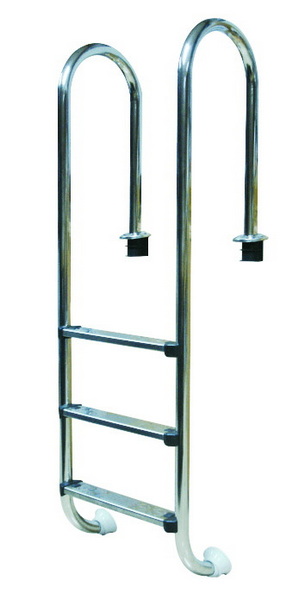
Vinyl liners are sensitive to point pressure, friction, and sharp edges where people repeatedly enter and exit the pool. The ladder area is one of the highest-traffic zones in any above-ground or in-ground vinyl pool.[1]
Key risks under an unprotected ladder:
- Continuous movement of the ladder feet can cause chafing and abrasion on the liner surface.[2][1]
- Concentrated weight from swimmers compresses the liner at the ladder contact points, which can eventually lead to cracks or punctures.[1]
- Small burrs, rough plastic, or metal edges on the ladder feet can act like cutting tools on soft vinyl.[3][2]
Adding a protective layer under the ladder distributes weight, reduces friction, and keeps those edges away from the liner.[3][1]
The most recommended solution is a dedicated pool ladder pad (also called a ladder mat or step pad).[3][1]
A pool ladder pad is a flat, flexible mat placed between the ladder feet and the pool liner. It acts as a sacrificial barrier that absorbs pressure and movement instead of your liner.[2][1]
Typical features:
- Made from thick, chemical‑resistant vinyl or similar material designed for pool environments.[1][3]
- Non‑slip top surface to help keep the ladder steady and provide traction for swimmers.[4][3]
- Smooth underside to sit flat on the liner and resist floating or shifting once weighed down by the ladder or steps.[5][4]
- Extends liner life by reducing wear, chafing, and cuts where the ladder rests.[2][1]
- Improves safety thanks to non‑skid surfaces that help prevent slips as swimmers climb in and out.[4][3]
- Relatively low‑cost accessory that can prevent much higher liner replacement expenses later.[3][1]
Ladder pads are sold in different sizes to match various ladder and step styles.[5][4]
- Smaller pads (around 9" x 24" or 12" x 36") for standard “candy cane” ladders or A‑frame ladders.[5]
- Larger step guards (e.g., 36" x 48" or 56" x 48") for big step systems and wedding‑cake style steps.[4][5]
- Universal mats like 20" x 24" or 24" x 36" that can be trimmed for a precise fit.[6][7]
While dedicated ladder mats are ideal, pool owners sometimes use creative alternatives. These can work, but they are not as purpose‑built as professional pads.[8][9][10]
Some owners place a heavy vinyl bath mat with suction cups beneath the ladder.[9][10]
- Provides cushioning and reduces friction on the liner.[10][9]
- Suction cups help the mat cling to the liner and stay in place under the ladder feet.[9]
However, standard bath mats are not designed for long‑term pool chemical exposure, so they may fade or degrade faster over time.[10]
Rubber anti‑fatigue mats (often used in kitchens or workshops) can be cut to size and placed under the ladder.[11]
- Offer good thickness and cushioning for weight distribution.[11]
- Textured surfaces can add some grip for the ladder.[11]
They must be heavy enough not to float and made of material that tolerates chlorinated water without breaking down quickly.[11]
Household shower mats are another improvised solution.[12][8]
- Can help prevent small holes and abrasions during the first seasons of use.[12][8]
- Generally cheap and easy to replace as they wear out.[12]
As with bath mats, durability in pool chemistry is the main concern.[10]
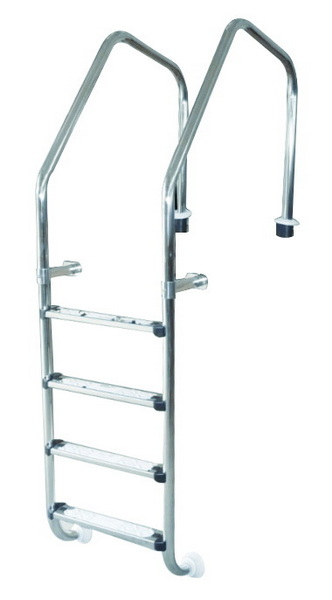
Besides what sits directly under the ladder feet, it also helps to cushion any parts of the ladder that lean on the pool wall or liner.[13]
Cut pool noodles and attach them with zip ties anywhere the ladder might push against the liner or wall.[13][12]
- Creates a soft buffer layer between hard ladder surfaces and the liner.[13]
- Inexpensive and easy to customize for different ladder shapes.[13]
Some owners cut tennis balls and fit them on the ladder legs, similar to what is done on walker legs.[13]
- Spreads the pressure over a larger, softer surface.[13]
- Helps prevent point pressure and sharp edges from contacting the vinyl.[13]
Plastic blocks that can be filled with sand and placed under the ladder are sometimes used to stabilize and support ladder systems.[13]
- Reduce shifting and movement, which can otherwise rub the liner.[13]
- Keep the ladder firmly seated on the floor instead of hanging against the pool wall.[13]
These solutions are best used together with a mat or pad rather than alone.
Proper installation is just as important as choosing the right pad.[1]
Step‑by‑step process:
1. Remove the ladder or steps from the pool
- Carefully lift the ladder out, following manufacturer instructions so you do not damage the liner or walls.[1]
2. Place the ladder pad on the pool floor
- Position the pad exactly where the ladder feet will rest.[4][1]
- Smooth it flat so there are no folds or trapped debris underneath.[1]
3. Reset the ladder on top of the pad
- Set each ladder leg firmly in the correct place on the pad so the load is evenly distributed.[5][4]
- Make sure the pad fully covers all contact points between ladder and liner.[1]
4. Check stability and alignment
- Confirm the ladder does not rock or slide, and that any handrails or steps still align properly with the deck or wall.[3][4]
- If needed, trim the pad to match your ladder's footprint while keeping full coverage under all legs.[6]
Always review any specific guidelines provided with your ladder pad, because each product may have slightly different instructions.[1]
When choosing a ladder pad to protect your liner, consider the following factors.[6][3][1]
- Material quality: Durable, chemical‑resistant vinyl or similar material that stands up to chlorine, UV, and water exposure.[3][1]
- Thickness and cushioning: A sufficiently thick pad (often about 1/16" or more) to absorb pressure and prevent cuts from sharp ladder edges.[7][4]
- Non‑slip texture: A textured or non‑skid finish that keeps the ladder feet from sliding and gives swimmers extra traction.[4][3]
- Correct size and shape: Dimensions that match your ladder type; many pads can be trimmed to fit unique footprints.[6][5]
- Does not float away: Pads designed to stay in place under the weight of the ladder and not drift around the pool.[9][6]
Investing in a quality pad is a small step that protects a much larger investment: your entire pool liner.[3][1]
Beyond what you put under the ladder, a few habits will further protect your liner.[9][1]
- Avoid letting kids jump from the ladder, which significantly increases impact on the liner around the feet.[9]
- Periodically lift the ladder to check the pad and liner for early signs of wear or debris trapped underneath.[1]
- Remove the ladder when the pool is not in use if recommended by the manufacturer, reducing constant pressure on one spot.[9][1]
- Inspect ladder feet and hardware for sharp burrs, cracks, or broken parts and repair them promptly.[13][1]
Combining a dedicated pad with good usage habits provides the best protection for your vinyl liner.
The best thing to put under a pool ladder to protect your liner is a purpose‑made ladder pad or step mat that cushions the ladder, reduces friction, and spreads out the load. Budget options like bath mats, shower mats, or rubber anti‑fatigue mats offer some protection, especially when combined with pool noodles, tennis balls, or support blocks on ladder contact points. Choosing the right pad size, high‑quality material, and proper installation will significantly extend the life of your vinyl liner and create a safer, more stable entry point for your pool.[2][10][12][11][6][4][3][13][1]
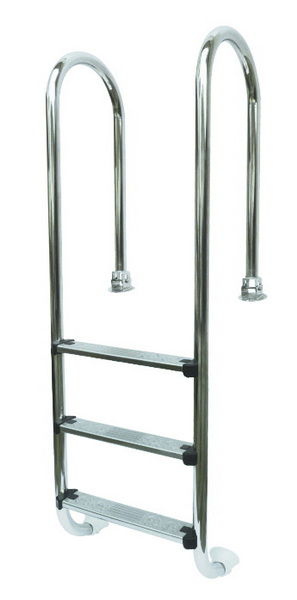
Yes, a ladder pad is strongly recommended because it prevents wear and tear from the ladder that can lead to costly liner repairs or premature replacement. It is a low‑cost accessory that provides long‑term protection in one of the highest‑stress areas of your pool.[3][1]
Most quality ladder pads use durable, chemical‑resistant vinyl designed for swimming pool environments. This material resists chlorine, UV exposure, and constant contact with water while providing cushioning and slip resistance.[3][1]
Many pool owners temporarily use heavy bath mats or shower mats with suction cups to protect the liner. However, they are not engineered for long‑term pool chemical exposure, so a dedicated pool ladder pad remains the more reliable and durable solution.[10][9][1]
Quality ladder pads are designed to stay in place when the ladder or steps rest on them and typically do not float away under normal use. Ensure the pad lies flat on the liner and the ladder is properly positioned so its weight holds the pad securely.[6][9][1]
Measure the footprint of your ladder or steps and select a pad that fully covers all contact points, with a bit of extra margin where possible. Many pads come in standard sizes and can be trimmed to match unique ladder shapes while still providing complete coverage.[6][5][4]
Yes, many ladder pads feature non‑slip surfaces that enhance traction and help keep the ladder from shifting during use. This improves safety for swimmers entering and exiting the pool while simultaneously protecting the liner.[4][3]
[1](https://blog.linerworld.com/2024/06/18/pool-ladder-pads-faq/)
[2](https://linerworld.com/products/ladder-pad-liner-protector)
[3](https://www.poolsupplies.com/shop/pool-ladder-mats-step-pads)
[4](https://www.youtube.com/watch?v=rdXADw286-s)
[5](https://www.youtube.com/watch?v=uDbSNO5Bl_8)
[6](https://www.thepoolfactory.com/products/swimline-ladder-mat-20x24)
[7](https://www.homedepot.com/p/Blue-Wave-2-ft-x-3-ft-In-Pool-Ladder-Step-Pad-for-Above-Ground-Pool-NA401/203414415)
[8](https://www.reddit.com/r/pools/comments/bnkg0q/suggestions_for_above_ground_pool_ladder/)
[9](https://www.reddit.com/r/AboveGroundPools/comments/1ll74eg/do_you_put_something_under_the_stairladder_legs/)
[10](http://www.poolforum.com/pf2/archive/index.php/t-4706.html)
[11](https://www.facebook.com/groups/637529959937311/posts/2195277527495872/)
[12](https://www.facebook.com/groups/637529959937311/posts/2289506661406291/)
[13](https://www.reddit.com/r/pools/comments/orfcbx/new_pool_ladder_is_hanging_and_damaging_pool_wall/)
[14](https://www.resiliabrands.com/products/swimming-pool-ladder-mat)
[15](https://greatbackyard.com/products/hydrotools-protective-pool-ladder-mat-and-pool-step-pad)
[16](https://yourpghlawyer.com/Swimming-Pool-Ladder-Mat-Non-Slip-Pool-Ladder-Pad-24x9-Inch-892489/)
[17](https://www.g-locbrakes.com/itm/Non-Slip-Pool-Ladder-Mat-36x24-quot-Protects-Liners/825516)


