
Views: 222 Author: Tina Publish Time: 2026-01-12 Origin: Site


Content Menu
● Check ladder type and compatibility
● Choosing the right replacement step
● Tools and materials you will need
● Safety precautions before you begin
● Step‑by‑step: adding or replacing a ladder step
>> Remove the ladder from the pool
>> Identify the position for the new step
>> Remove the damaged or temporary step (if necessary)
>> Install the new or additional step
>> Reinstall the ladder and check stability
>> Test the new step under load
● Safety and code considerations
● When to upgrade the entire ladder
● Maintenance tips for long‑lasting steps
>> 1. Can I add a step to any pool ladder?
>> 2. Do I need to drain my pool to add a step?
>> 3. What tools are essential for installing a new ladder step?
>> 4. How can I tell if my current steps are unsafe?
>> 5. Should I choose plastic or stainless‑steel replacement steps?
>> 6. When should I hire a professional instead of doing it myself?
How to add a step to my pool ladder is a simple DIY project as long as you choose a compatible replacement step, use corrosion‑resistant hardware, and follow basic pool‑ladder safety guidelines.
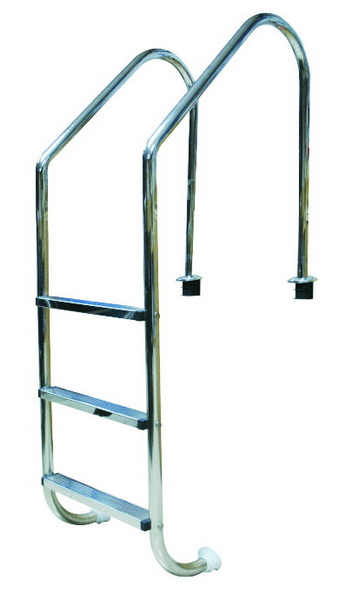
Adding a step is usually about safety, comfort, or adjusting for deck or water level changes. Common reasons include:[3][5]
- Reducing the gap between the deck and top step so users are not stretching or “jumping” down.[6][3]
- Making entry/exit easier for kids, older swimmers, or anyone with limited mobility by creating a gentler rise between steps.[7][3]
- Replacing a cracked, slippery, or missing tread before it causes injury.[5][1]
- Upgrading to wider, non‑slip steps for a more comfortable and secure foot surface.[3][5]
Before ordering any parts, identify what kind of pool and ladder you have because that determines the step style and mounting hardware. Key checks:[2][4]
- Pool type
- In‑ground pool ladders usually have stainless‑steel rails with bolt‑on plastic or stainless steps.[7][5]
- Above‑ground pools often use molded plastic ladders or full step systems that integrate steps and side supports.[8][9]
- Ladder style
- Traditional 2–4 step stainless ladders that hook into anchors set in the deck.[4][10]
- A‑frame ladders for above‑ground pools with inside/outside steps and sometimes a locking gate.[9][10]
- Drop‑in or “wedding cake” style stair systems where adding a “step module” means expanding the step unit itself.[2][8]
- Step mounting system
- Some steps slide into channels in the ladder rails and are held with bolts or clips.[11][1]
- Others bolt flat to pre‑drilled holes through the rails.[1][5]
Choosing a compatible step ensures that it fits mechanically and meets safety recommendations for pool ladders. When selecting a step or extra tread:[3][5]
- Match the brand and model when possible
- Many manufacturers sell direct replacement treads and hardware kits for specific ladders.[5][7]
- If exact OEM parts are unavailable, use “universal” replacement treads but carefully compare dimensions and hardware.[5]
- Confirm key dimensions
- Step width (side‑to‑side) must match your rail spacing so the step fits without spreading or compressing the rails.[11][5]
- Step depth and thickness affect how much room you have to place your foot and how far steps are spaced vertically.[3][5]
- Safety and durability features
- Non‑slip surface (ribbed or textured) to reduce slips when wet.[3][5]
- UV‑stable plastics or corrosion‑resistant stainless steel for longer life in chlorinated or saltwater environments.[10][5]
- Rounded edges and hardware that does not leave sharp projections.[3]
Most step‑replacement jobs need only basic hand tools, but having everything ready keeps the job quick and safe. Typical items:[4][1]
- Replacement step or tread kit (ideally with bolts, nuts, and spacers).
- Wrenches or deep sockets that match the ladder bolts (often metric sizes such as 14 mm).[1]
- Screwdriver if the ladder uses screw‑type fasteners or clips.[9][11]
- Non‑metallic mallet (optional) to gently tap the step into its seat if it uses channel‑style mounts.[11]
- Silicone‑based lubricant (optional) for stubborn bolts, not for step surfaces.
- Soft pads or towels to protect the deck and liner when you pull the ladder.[4][1]
Any time you change pool access equipment, safety comes first. Before working on your ladder:[4][3]
- Close or block access
- Keep swimmers out of the pool while the ladder is removed or partially disassembled.[4][3]
- If this is an above‑ground pool, raise or remove the outer ladder or lock the gate until work is finished.[9][3]
- Power and water considerations
- Turn off nearby pumps and lighting circuits if your work area is close to powered equipment or cabling.[12][3]
- Dry the deck area to reduce slip risks while you handle heavy, wet components.[4][3]
- Personal protection
- Wear non‑slip footwear and gloves when lifting metal ladders or handling corroded hardware.[3][4]
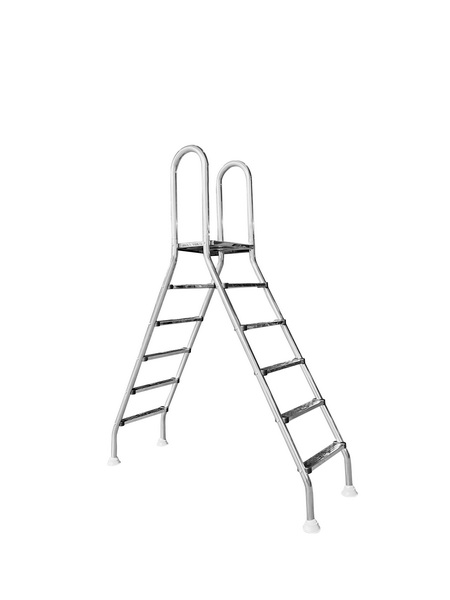
The exact process varies by ladder design, but most stainless and molded ladders follow a similar sequence. The outline below assumes a conventional ladder with removable treads.[11][1]
- Loosen anchor bolts or clamps at the deck and slide the rails out of the deck anchors for in‑ground pools.[7][4]
- For above‑ground pools, follow the manufacturer instructions to undo the top platform and pull the ladder or side you need to work on away from the pool.[10][9]
- Lay the ladder flat on a padded surface so the rails are parallel and supported.
Some users replace a broken step, while others add an extra tread between two existing steps to reduce the rise. To choose the position:[6][1]
- Measure the vertical gaps between existing steps and the distance from the top step to the deck.
- Aim for even spacing between all steps so each rise feels natural and consistent.[7][3]
- Mark the rail position if new mounting holes must be drilled (only for ladders designed to accept extra steps or universal treads).
A simple side‑profile diagram or infographic showing “Before” (large gap between top step and deck) and “After” (additional step inserted) can be very helpful here.[6][7]
If you are replacing a broken tread:
- Support both rails to prevent twisting when you remove the old step.
- Loosen and remove the nuts/bolts or clips holding the old step in place.[1][11]
- Slide or lift the step out of its channels, and retain any spacers if the new kit does not include them.[1]
How you install the new step depends on the attachment style.
- Channel‑style steps
- Slide one end of the step into the channel on one rail, then align with the other rail.[11]
- Ensure the molded notches or tabs seat fully into the rail recesses before tightening.[13][11]
- Through‑bolt steps
- Align the step's bolt holes with pre‑drilled holes on the rails.[5][1]
- Insert bolts from the outside of the rail toward the inside, add washers and nuts, then hand‑tighten.
- Torque and alignment
- Tighten bolts evenly so the step is level and does not distort the rails.[1][11]
- Avoid over‑tightening plastic steps, which can crack under excessive pressure.[5]
Once the new or additional step is mounted:
- Return the ladder to the pool
- For in‑ground pools, place protective bumpers or “bungs” on the ladder feet so they do not damage a vinyl liner.[1][4]
- Ease the ladder back into the water, guiding the rails into the deck anchors, then snug up anchor bolts.[4][1]
- For above‑ground pool ladders
- Adjust the ladder legs so they sit flat on the pool floor and outside ground, and ensure the platform rests evenly on the top rail.[8][9]
- Reinstall any safety panels or barriers between the ladder and pool wall to avoid entrapment zones.[9]
Before opening the pool for regular use:
- Carefully step onto the new tread while holding the handrails, starting with partial weight.[7][3]
- Check for flexing, movement at the hardware, creaking sounds, or contact with the pool wall or liner.[3][4]
- Have another adult test the ladder to confirm the step feels secure for users of different weights.
Good installation is only half the job; the ladder must also meet common safety recommendations to minimize accidents. Important details:[12][3]
- Step size and spacing
- Steps should be wide enough (many guidelines suggest at least a few inches of usable tread) and evenly spaced to avoid awkward movements.[5][3]
- All treads should be fully covered with non‑slip texture or pads, especially if used by children.[3][5]
- Handrails and edges
- Ladders should have graspable handrails on both sides so users can maintain three‑point contact (two hands, one foot, or two feet, one hand).[4][3]
- Cover or grind any sharp bolt ends or protrusions that could cut skin or snag swimsuits.[3]
- Access control
- For above‑ground pools, use a ladder with a lockable outside portion or removable steps to prevent unsupervised access.[9][3]
Sometimes adding a step is not enough, especially with very old or corroded ladders. Replace or upgrade the whole ladder if:[7][5]
- Multiple treads are cracked, discolored, or slick even after cleaning.[5]
- The rails show rust, pitting, or structural bending under normal use.[7][5]
- You need better accessibility, such as wider staircase‑style entry steps or integrated handrails for people with limited mobility.[10][7]
Modern step systems and ladder designs include wide‑tread stairs, corner steps, and modular “wedding cake” units that can be extended or combined with handrails and lighting. A
A well‑installed step can last for years with simple seasonal care. Build these habits into your pool maintenance routine:[5][4]
- Regular inspection
- Check for cracks, discoloration, and loss of non‑slip texture at least once per season.[5]
- Wiggle each step to make sure hardware is tight and rails are not flexing or wobbling.[4]
- Cleaning
- Brush steps to remove biofilm and scale that can make them slippery.[10][5]
- Avoid harsh abrasive pads or highly concentrated chemicals that can damage plastic surfaces.
- Winter storage
- For removable ladders in cold climates, take the ladder out of the pool for winter to reduce freeze damage and UV exposure.[10][4]
Adding a step to a pool ladder is a practical way to improve safety, comfort, and accessibility, especially when gaps between existing steps or between the top step and deck feel too large. By choosing a compatible replacement tread, following safe installation practices, and regularly inspecting the ladder and hardware, pool owners can enjoy a more secure entry and exit experience season after season.[6][1][3][5]
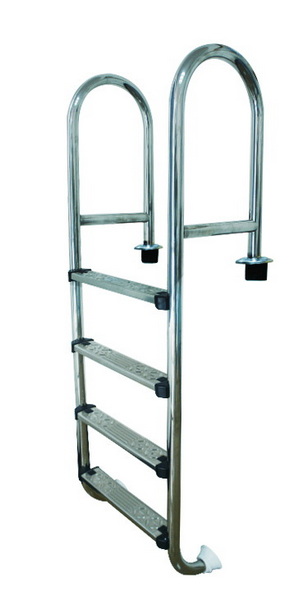
Not every ladder is designed to accept an extra step, so first check the manufacturer's documentation or look for pre‑drilled holes or channels that match available replacement treads. If the ladder is very old, heavily corroded, or structurally weak, it is safer to replace the entire ladder with a modern unit that meets current safety recommendations.[11][7][5]
Most standard step replacements do not require draining the pool because you can remove the ladder from the deck or top rail and work on it on land. Only in unusual cases—such as fixed ladders embedded in concrete or integrated step wells—might water level changes be needed, and those projects are usually better handled by professional installers.[14][2][1][4]
For most DIY jobs, a correctly sized wrench or socket set, replacement hardware, and a screwdriver are enough to remove and install ladder steps. A non‑metallic mallet and some soft padding to protect the deck or liner are helpful additions, especially when dealing with tight channels or heavy stainless‑steel rails.[1][11][4]
Warning signs include visible cracks, deep discoloration, excessive flexing under weight, or a smooth, slippery surface even after cleaning. Also watch for loose hardware, wobbling rails, or steps that have become unevenly spaced or tilted, which can cause missteps and falls.[3][4][5]
High‑quality plastic treads with non‑slip texture are popular for residential pools because they are comfortable under bare feet and resistant to most pool chemicals. Stainless‑steel steps and heavy‑duty commercial treads are better suited for high‑traffic or public pools where maximum durability and rigidity are priorities.[10][7][5]
If the ladder is built into concrete, attached to complex entry systems, or if you see serious corrosion around deck anchors or rail connections, professional evaluation is recommended. Hire a technician as well if you are not comfortable lifting heavy ladders, drilling new mounting holes, or verifying that the final installation meets local pool safety guidelines.[12][4][3]
[1](https://www.youtube.com/watch?v=z2tjyznDJek)
[2](https://www.mavaquadoc.com/blogs/pool-maintenance-blog/installing-pool-steps-a-step-by-step-guide)
[3](https://www.poolfencediy.com/blogs/blog/pool-ladder-safety)
[4](https://blog.linerworld.com/2011/01/14/swimming-pool-ladder-installation/)
[5](https://www.poolweb.com/collections/steps-and-treads)
[6](https://www.facebook.com/groups/637529959937311/posts/2229309194092705/)
[7](https://www.doheny.com/pool-supplies/inground/accessories/pool-steps)
[8](https://www.youtube.com/watch?v=kstTbJYtypE)
[9](https://www.youtube.com/watch?v=UOszx5_q0s4)
[10](https://intheswim.com/c/steps-ladders/)
[11](https://www.youtube.com/watch?v=JJkG7vsan1E)
[12](https://littledipperpools.com/need-a-pool-ladder-installation-heres-what-to-know-before-you-buy/)
[13](https://www.youtube.com/watch?v=qpJDdgZaclQ)
[14](https://www.reddit.com/r/pools/comments/1eobldp/adding_steps_to_old_in_ground_pool_plus/)
[15](https://www.youtube.com/watch?v=zBgR_gj8NGg)


