
Views: 222 Author: Tina Publish Time: 2026-01-28 Origin: Site


Content Menu
● Understanding DE and your Pool filter
● General rule: scoops of DE for a Pool filter
● How to read your Pool filter label
● Example DE scoop chart for common Pool filter sizes
● Knowing your DE scoop size for accurate dosing
● Step‑by‑step: adding DE scoops to a Pool filter
● What happens if you add too many scoops of DE
● What happens if you do not add enough DE scoops
● Using visual resources to teach Pool filter dosing
● OEM opportunities: labeling and packaging DE Pool filter systems
● Maintenance schedule for DE Pool filter systems
● Safety and environmental notes when handling DE
● Special situations affecting DE scoops in a Pool filter
● Practical example: calculating scoops for a residential Pool filter
● Choosing the right Pool filter type for your project
● OEM manufacturing and system integration for Pool filters
● FAQ
>> FAQ 1: How do I calculate how many scoops of DE my Pool filter needs?
>> FAQ 2: What is the difference between a 0.5‑lb and 1‑lb DE scoop for a Pool filter?
>> FAQ 4: Can I damage my Pool filter by adding too many scoops of DE?
>> FAQ 5: Is DE always the best choice, or should I use a sand or cartridge Pool filter instead?
Diatomaceous earth (DE) is a very fine white powder made from fossilized microscopic algae, and it is one of the most efficient media used in any Pool filter system. A DE Pool filter works by coating internal grids, fingers, or cartridges with a thin layer of DE powder that traps tiny particles down to just a few microns, far smaller than what you can see with the naked eye. When water passes through a DE‑coated Pool filter, dirt, sunscreen, body oils, and dead algae stick to the DE layer instead of going back into the pool.
Compared with a sand Pool filter or a cartridge Pool filter, a DE Pool filter usually delivers the sharpest, most sparkling water because the DE powder creates such a tight mechanical barrier for fine particles. That is why many commercial pools, waterparks, hotel pools, and high‑end residential installations choose a DE Pool filter when they need ultra‑clear water. The trade‑off is that a DE Pool filter must be dosed correctly, cleaned on schedule, and handled carefully so that the DE does not bridge, clump, or blow back into the pool.
For manufacturers and OEM partners, using a DE Pool filter in a complete filtration package can be a strong selling point. By combining a DE Pool filter with a well‑matched pump, valves, and LED lighting, brands can offer a premium system that keeps water clean and visually attractive while remaining energy efficient and reliable over many seasons.
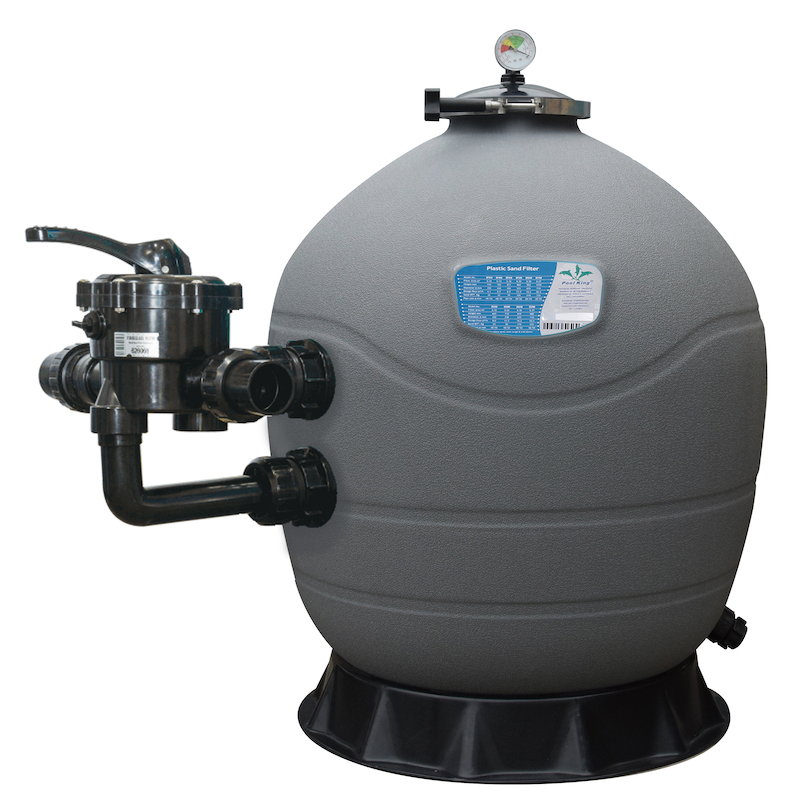
Most manufacturers and service guides recommend adding 1 pound of DE powder for every 10 square feet of Pool filter area after a full cleaning. Many residential Pool filter owners use a DE scoop that holds either 0.5 lb or 1 lb of DE, so you must know which type you have before you count scoops.
If your DE scoop is 1 lb, you divide the Pool filter area by 10 to find the number of scoops after a complete cleaning. If your DE scoop is 0.5 lb, you divide the Pool filter area by 5. A common quick rule that many Pool filter technicians use is “1 pound per 10 square feet” and then they convert that into scoops based on their scoop size. For example, a 60 sq ft DE Pool filter would take about 6 lb of DE, which is 6 one‑pound scoops or 12 half‑pound scoops after a complete breakdown cleaning.
In some commercial pool operations or specific local practices, you may see a stronger recommendation such as 1.25 lb of DE per 10 square feet of Pool filter area, especially for facilities with heavy bather loads. In that case, a 60 sq ft Pool filter could use up to 7.5 lb of DE for a full charge. Because these differences matter for both safety and clarity, you should always read the label on the Pool filter and follow the manufacturer's instructions rather than relying solely on generic rules.
Every DE Pool filter has a metal or plastic label, usually on the tank body, that lists the effective filter area in square feet. This label tells you the true filtration area of the internal grids or cartridges, not the physical size of the tank. To find how many scoops of DE your Pool filter needs, start with this square‑foot number and write it down for reference.
Typical DE Pool filter areas include 24, 36, 48, 60, and 72 sq ft for residential systems, while larger commercial Pool filter installations may use even bigger models. Once you know the area and your scoop size, you can calculate the proper DE scoops for your Pool filter using the 1 lb per 10 sq ft rule. If your label is missing or unreadable, you should look up the model number on the manufacturer website or in a printed manual before guessing the DE scoops, because overloading or underdosing DE can damage performance and may void warranty coverage.
Good OEM practice is to make the label on the Pool filter large, clear, and durable, with the area printed in bold, and to repeat the same information in the quick‑start guide. That way, both homeowners and service technicians can easily find the data they need during maintenance.
The following examples assume 1 lb of DE per 10 sq ft of Pool filter area, and a DE scoop that holds 0.5 lb of DE powder. This kind of chart can be printed in manuals or on packaging so that Pool filter users do not need to calculate every time.
For a full cleaning dose:
- 24 sq ft DE Pool filter: 2.4 lb ≈ 5 scoops (0.5 lb each).
- 36 sq ft DE Pool filter: 3.6 lb ≈ 7 scoops.
- 48 sq ft DE Pool filter: 4.8 lb ≈ 10 scoops.
- 60 sq ft DE Pool filter: 6.0 lb ≈ 12 scoops.
- 72 sq ft DE Pool filter: 7.2 lb ≈ 14 scoops.
When topping up after a simple backwash instead of a full strip‑down cleaning, many service guides recommend using about 80 percent of the full DE dose, because some DE remains on the Pool filter grids and still provides filtration. For those same Pool filter sizes, an 80 percent backwash dose would look like this:
- 24 sq ft: about 1.9 lb ≈ 3–4 scoops.
- 36 sq ft: about 2.8 lb ≈ 5 scoops.
- 48 sq ft: about 3.8 lb ≈ 7 scoops.
- 60 sq ft: about 4.8 lb ≈ 9 scoops.
- 72 sq ft: about 5.7 lb ≈ 11 scoops.
These examples show how a simple Pool filter dosing chart makes daily work easier for homeowners, pool service companies, and OEM brands that ship complete Pool filter systems with clear DE instructions.
Pool filter owners sometimes mis‑dose DE because they assume all scoops are the same size, but that is not true. Many branded DE scoops and aftermarket scoops are calibrated either at 0.5 lb or at 1 lb of DE powder, and some may vary slightly depending on how tightly the powder is packed. A classic blue or white scoop might be a half‑pound, while an orange or black scoop from a particular manufacturer may be calibrated at one pound.
To avoid confusion when charging a DE Pool filter, look at the markings on the scoop or at the packaging that came with it. If you are not sure, you can fill the scoop with DE and weigh it on a kitchen scale or digital luggage scale to confirm the actual DE weight. Once you know the scoop size, you can write a simple note directly on the Pool filter tank, such as “60 sq ft – 12 half‑pound scoops after full clean,” so that anyone servicing that Pool filter knows the correct number of scoops and does not need to recalculate.
For OEM and private‑label brands, including a calibrated DE scoop in the carton with each DE Pool filter is an easy way to reduce user error and create a more professional image. Clear printing on the scoop handle indicating “0.5 lb DE” or “1.0 lb DE” also supports consistent Pool filter dosing.
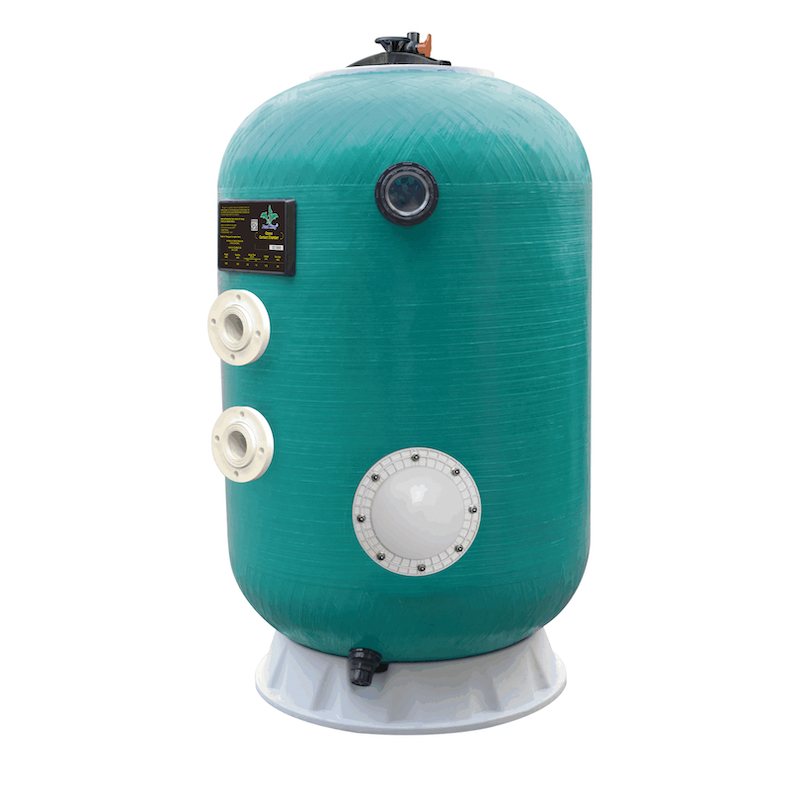
The basic procedure for adding DE scoops to a Pool filter is similar across most residential DE systems, and following a consistent procedure helps extend the life of the Pool filter equipment. A typical step‑by‑step process looks like this:
1. Turn off the pump and relieve pressure using the air relief valve on top of the Pool filter.
2. Backwash or fully clean the DE Pool filter, depending on whether you are only topping up or doing a full breakdown.
3. Open the Pool filter tank if you are doing a full clean, remove the grids or cartridges, and hose them off carefully. Inspect for tears, cracks, or broken manifold parts.
4. Reassemble the Pool filter, making sure all O‑rings, gaskets, and clamps are clean and properly seated, then close the tank securely.
5. Start the pump and make sure water is circulating through the Pool filter and back to the pool with no leaks.
6. In a bucket, add water first, then slowly add the measured DE scoops to make a smooth slurry. Stir to blend the DE evenly with the water.
7. Pour the slurry slowly into the pool skimmer while the pump is running, so the DE coats the Pool filter grids evenly.
8. Monitor the pressure gauge on the Pool filter over the next few minutes to ensure it rises moderately and stabilizes at a normal clean pressure.
Adding DE as a slurry into the skimmer helps prevent clouds of dry DE dust and improves how evenly the DE coats the Pool filter elements. This method also makes it easier for Pool filter technicians to control exactly how many scoops of DE are entering the system during each maintenance cycle.
Using more DE scoops than your Pool filter manufacturer recommends may seem like a good idea for clearer water, but it can actually cause several problems. Too much DE in a Pool filter can create a thick, heavy cake on the grids, which increases resistance and causes the pressure to spike rapidly. When the DE cakes too tightly, it can also bridge between grids, reducing the effective surface area and shortening the time between necessary cleanings.
Over‑dosing DE scoops in a Pool filter can also push DE back into the pool if the internal parts are stressed or damaged, leading to white powder on the pool floor and cloudy water. High internal pressure caused by excess DE can stress the tank clamps and O‑rings, increasing the risk of leaks or even dangerous failures if the tank is already weakened. For commercial pools, health codes and training manuals often emphasize strict dosing to avoid these issues and to maintain predictable filtration cycles.
Under‑dosing a DE Pool filter may seem safer, but running with too few scoops of DE also has downsides. When there is not enough DE on the Pool filter grids, more dirt bypasses the media and embeds directly in the fabric of the elements, which makes later cleanings harder and can shorten element life. You might notice that the pool water looks dull, hazy, or slightly cloudy even though the chemistry is correct.
A Pool filter with too little DE will usually run at a lower pressure at first, but that does not mean it is working efficiently. The Pool filter may clog in irregular patterns as dirt accumulates unevenly, and you may need to deep‑clean or replace parts more often. Using the proper number of DE scoops per the Pool filter label is the best way to balance clarity, pressure, and maintenance intervals, extending the lifetime of your DE elements and keeping operating costs under control.
For residential pool owners, visual learning resources are extremely helpful for understanding how many scoops of DE a Pool filter needs. Short instructional clips can demonstrate a technician reading the Pool filter label, calculating pounds of DE, and then measuring scoops with a calibrated DE scoop before adding the slurry through the skimmer. These videos can also show the difference between half‑pound and one‑pound scoops, helping owners avoid common mistakes.
High‑resolution diagrams and animations can show cutaway views of a DE Pool filter tank, highlighting the internal manifolds, fingers, and grids that carry the DE coating. Other visual assets can compare a DE Pool filter with a sand Pool filter and a cartridge Pool filter, helping end users select the most suitable filtration technology for different pool sizes, usage patterns, and budgets. For OEM brands and wholesalers selling complete Pool filter systems, pairing clear written dosing tables with labeled step‑by‑step visuals greatly reduces support calls and after‑sales complaints.
If you are an OEM brand or distributor, you can add value to your DE Pool filter packages by printing the DE dosing rule directly on the tank label and in the quick‑start guide. For example, next to the Pool filter area, you can show both the recommended pounds of DE and the typical number of scoops for 0.5‑lb and 1‑lb scoops. Service technicians appreciate having this data printed clearly on the Pool filter, so they do not need to search for manuals during busy service routes.
You can also supply a branded DE scoop inside each Pool filter carton and clearly state whether it is a half‑pound or one‑pound scoop. Combined with QR codes linking to short training videos that explain how many scoops of DE to use for each Pool filter model, this approach builds trust with professional installers and end users. For global export markets, multi‑language labels and online training portals ensure that Pool filter owners everywhere follow the same correct dosing procedures, no matter which country they come from.
A DE Pool filter requires a regular maintenance schedule that includes pressure checks, backwashing, and full breakdown cleanings. Many service guides recommend backwashing when the Pool filter pressure rises about 8–10 psi above the clean starting pressure, followed by an 80 percent DE re‑charge based on the Pool filter area. Once or twice per year, most residential DE Pool filter systems need a full teardown cleaning, during which you remove the grids or cartridges, hose them off thoroughly, inspect for damage, and then add a full DE dose.
For heavily used commercial pools, health code requirements or manufacturer recommendations may call for more frequent breakdowns, especially when the Pool filter handles high bather loads, lots of sunscreen and cosmetics, or frequent algae‑shock treatments. In every case, the correct number of DE scoops after each maintenance step is tied directly to the labeled Pool filter area, not to guesswork. A good practice is to log each backwash and breakdown in a service log, along with the starting and ending pressure and the number of DE scoops used.
DE used in a Pool filter is typically a specially processed grade suitable for water filtration, and it should not be inhaled or dumped directly into the environment. When measuring scoops for a Pool filter, handle DE in a well‑ventilated area and avoid creating dust clouds, especially around children or pets. Wearing a simple dust mask and safety glasses can add an extra level of protection when you are working close to the Pool filter and handling open containers of DE.
Waste DE removed during backwashing or filter cleaning should be discharged according to local rules, often into approved drainage systems rather than storm drains that lead directly to natural waterways. DE itself is a mineral, but the contaminants trapped in the Pool filter media can include algae, organic debris, and small amounts of pool chemicals, so responsible disposal is part of good Pool filter management. For commercial facilities, environmental regulations may require specific discharge practices that pool operators must understand and follow.
Certain special situations require careful Pool filter dosing with DE. After clearing a severe algae bloom, for instance, the Pool filter may clog quickly as it captures large amounts of dead algae, so you might backwash and recharge several times in a short period. In these cases, it is still best to stick to the usual “1 lb per 10 sq ft of Pool filter area” guideline, using partial doses only when you have just backwashed and know that some DE remains on the grids.
If you switch from DE powder to an alternative cellulose‑fiber media designed to replace DE, you must follow the specific dosing chart provided for that media, which may differ slightly from standard DE poundage per Pool filter area. A Pool filter manufacturer or media supplier may provide separate charts for full cleanings and for backwashing cycles. When in doubt, you should contact technical support or consult updated manuals instead of experimenting with random scoop counts, because incorrect dosages can weaken performance and shorten Pool filter life.
Imagine you have a 48 sq ft DE Pool filter in a typical family backyard pool. The Pool filter label indicates “48 sq ft effective filtration area,” and your DE scoop is marked as 0.5 lb. Using the 1 lb per 10 sq ft rule, the full dose after a complete teardown cleaning is 4.8 lb of DE, which equals about 10 half‑pound scoops for that Pool filter. That is the number you would add after cleaning and reassembling the filter.
Later in the season, when the Pool filter pressure rises and you perform a simple backwash instead of a full breakdown, you decide to add only 80 percent of the full DE dose. For the same Pool filter, that means about 3.8 lb of DE, or roughly 7 half‑pound scoops. You log this in your service book so that next time you service this Pool filter you already know the correct number of scoops for both full cleaning and backwashing. This simple example shows how a Pool filter owner can manage DE dosing precisely through the season with just a label, a scoop, and a calculator.
While this article focuses on DE scoops for a DE Pool filter, many projects involve comparing DE with sand and cartridge Pool filter options. A sand Pool filter is generally easier to use and requires less hands‑on dosing because the sand stays in the tank; you backwash to clean and rarely replace the sand. A cartridge Pool filter eliminates backwashing altogether and instead uses replaceable cartridges that you clean or swap as needed, which can save water in regions with strict water‑use rules.
However, a DE Pool filter remains the top choice when ultra‑clear water quality is the priority, especially in residential luxury pools, hotel pools, and water features where water polishing is essential. For OEM manufacturers that supply multiple technologies, offering sand, DE, and cartridge Pool filter models in the same product family makes it easier for distributors and installers to select the ideal solution for each project. By understanding exactly how many scoops of DE a Pool filter needs and by packaging that knowledge with clear instructions, manufacturers and installers can deliver Pool filter systems that are both high performance and easy to maintain.
Modern Pool filter factories can integrate smart production equipment, automated testing, and flexible assembly lines to produce sand, DE, and cartridge Pool filter systems with consistent quality. For DE models, key quality points include precise tank molding, strong internal manifolds, and carefully chosen grid fabrics that hold DE evenly without tearing. When an OEM factory controls these details, the Pool filter operates more smoothly and responds predictably to the correct number of DE scoops.
In addition to Pool filter tanks, many factories also produce compatible pumps, valves, LED lights, and accessories designed to match each Pool filter series. By integrating the Pool filter with a properly sized pump and plumbing kit, the system maintains the ideal flow rate and pressure range for DE coating and backwashing. This ensures that the recommended scoops of DE behave as intended inside the Pool filter, providing clear water and stable operation for end users and professional service companies.
The number of DE scoops you need for a Pool filter depends mainly on the filter's square‑foot area and the weight of each scoop, not on guesswork. The most widely accepted guideline is about 1 pound of DE for every 10 square feet of Pool filter area, converted into scoops using either 0.5‑lb or 1‑lb scoops. By reading the Pool filter label, identifying your scoop size, and following the manufacturer's instructions, you can keep your DE Pool filter working efficiently without bridging, clogging, blow‑back, or poor water clarity.
Backwashing cycles typically require only about 80 percent of the full DE dose because some DE remains on the Pool filter grids, while full teardown cleanings call for a complete recharge based on the Pool filter area. For OEM brands, wholesalers, and professional installers, providing clear charts, labeled scoops, and practical training materials around DE dosing can transform a high‑end DE Pool filter into a user‑friendly, low‑complaint product in markets around the world. When every Pool filter owner knows how many scoops of DE to use and how to apply them correctly, pool water stays cleaner, equipment lasts longer, and operating costs stay under control season after season.
Contact us to get more information!
You first read the effective filtration area on your Pool filter label, usually shown in square feet. Then you apply the common rule of 1 pound of DE per 10 square feet of Pool filter area and convert that weight into scoops based on whether your scoop is 0.5 lb or 1 lb. For example, a 60 sq ft DE Pool filter would typically use about 6 lb of DE, which is 6 one‑pound scoops or 12 half‑pound scoops after a full cleaning.
A 0.5‑lb DE scoop holds about half a pound of DE powder, while a 1‑lb scoop holds a full pound, so using the wrong assumption doubles or halves your Pool filter dose. Some popular scoops sold by pool supply brands are half‑pound scoops, while other OEM scoops are calibrated at one pound. Always check the markings on the scoop or weigh a full scoop of DE on a scale before deciding how many scoops to add to your Pool filter.
After a simple backwash, most guides recommend adding about 80 percent of the full DE dose because a portion of the DE remains on the Pool filter grids and continues to filter water. That means you calculate the full DE weight for your Pool filter, then multiply by 0.8 and convert that into scoops. For example, if your 48 sq ft Pool filter needs 10 half‑pound scoops after a full cleaning, you might add about 7 scoops after a backwash.
Yes, adding more DE scoops than recommended can cause the DE layer inside the Pool filter to become too thick, increasing resistance and causing the pressure to climb quickly. Excess DE can also bridge between grids, reduce effective surface area, and, in some cases, push DE into the pool if internal components fail. To protect your Pool filter and maintain warranty coverage, follow the dosing instructions on the label and in the manufacturer's manual.
A DE Pool filter offers the finest mechanical filtration and often the clearest water, but it requires regular DE dosing and careful maintenance. A sand Pool filter is simpler to operate and more forgiving, while a cartridge Pool filter offers good clarity with fewer backwashing steps and can save water. Your choice depends on how much time you want to spend on Pool filter care, local water quality, and whether you prioritize ultra‑polished water or lower routine maintenance.
1. https://diy.inyopools.com/article/how-much-de-to-add/
2. https://pooldepo.com/blogs/diy-pool-care/how-much-de-to-add-a-complete-guide-for-pool-owners
3. https://pinchapenny.com/pool-life/cleaning-de-filter
4. https://intheswim.com/eguides/de-pool-filters.html
5. https://cpoclass.com/how-much-de/
6. https://www.inyopools.com/HowToPage/how-to-add-de-filter-powder.aspx
7. https://jjbpoolsandspas.com/pool-company-tips-diy-de-filter-breakdown-for-crystal-clear-water/
8. https://valleypoolspa.com/product/hayward-d-e-scoop-measures-1-lb-of-diatomaceous-earth/
9. https://discountpoolmart.com/products/hayward-orange-de-scoop-1-pound-ec10-sc


