
Views: 222 Author: Tina Publish Time: 2026-01-28 Origin: Site


Content Menu
● What Your Pool Filter Actually Does
● Do You Really Need 24/7 Filtration?
● Recommended Daily Run Time for a Pool Filter
>> Temperature‑Based Example Schedule
● How to Calculate the Right Runtime for Your Pool Filter
>> Step 1: Estimate Pool Volume
>> Step 2: Determine Pump Flow Rate
>> Step 3: Calculate Turnover Time
● When It Makes Sense to Run the Pool Filter Longer
>> Situations That Need Extra Filtration
● Energy, Cost, and Equipment Life
>> Why 24/7 Filtration Is Usually Not Ideal
>> Cost‑Saving Strategies With Your Pool Filter
● How Filter Type Affects Runtime
>> Sample Runtime Table by Season
● Practical Filtration Schedules for Real Pools
● FAQ
>> 1. How many hours a day should I run my pool filter?
>> 2. Is it better to run my pool filter at night or during the day?
>> 3. Can I turn off my pool filter for a whole day?
>> 4. Does a bigger pool filter mean I can run it less?
>> 5. How do I know if I'm running my pool filter long enough?
Does a pool filter need to run 24/7? In most residential pools, the pool filter does not need to run all day and night, and a well‑planned schedule of 6–12 hours per day is usually enough if the system is properly sized and maintained. However, there are special situations—such as start‑up, algae problems, or very hot weather—when running the pool filter almost continuously for a short period can help restore water clarity and stability faster.

A pool filter works together with the pool pump to remove debris, suspended particles, and fine contaminants from the water so that sanitizers like chlorine can do their job effectively. As water passes through the pool filter, dirt and small particles are trapped in the filter media (sand, cartridge, or DE), and the cleaned water is pushed back into the swimming pool.
Filtration improves circulation as well as clarity because pool water continuously moves past the return inlets and surface skimmers, which helps distribute chemicals evenly and keeps the surface cleaner. Without enough daily circulation through the pool filter, “dead spots” can form in corners, steps, or behind ladders where algae and bacteria grow more easily. In these low‑flow areas, chlorine is consumed quickly and cannot maintain a stable residual, which makes water balance more difficult.
Pool professionals often talk about “turnover,” which means the amount of time it takes for the pump and pool filter to move a full volume of pool water through the filtration system once. Most industry guidelines recommend at least one full turnover per day, and many residential pools benefit from one to two turnovers in warmer conditions for reliably clear water.
In a normal, properly balanced residential pool, you do not need to run the pump and pool filter 24 hours a day. For many backyard pools, a schedule of about 8 hours of filtration per day in summer is enough to keep the water clear, as long as the pool filter and pump are correctly sized for the pool volume. Some service professionals recommend a slightly longer window of 10–12 hours per day in hot climates or for heavily used pools, but continuous 24/7 filtration is rarely necessary.
Running the pool filter all day and night is usually safe, but it is not cost‑effective for most homeowners. Continuous filtration increases electricity consumption, adds to noise, and causes more wear on the pump motor and pool filter valves and seals. Instead of running 24/7, a better strategy is to determine how long the pump and pool filter must run to achieve one or two turnovers per day and then adjust runtime slightly based on water clarity, bather load, and seasonal changes.
There is no single universal number of hours that works for every pool because ideal runtime depends on pool volume, pump size, filter type, climate, and how much debris and usage the pool receives. However, widely used guidelines provide a reliable starting point that you can refine for your own pool filter system.
- Many residential pools stay clear with about 8 hours of pump and pool filter operation per day in warm weather.
- In hotter regions or during peak swim season, service technicians often recommend 10–12 hours of daily filtration, especially for pools with many swimmers or lots of plant debris.
- In cooler seasons, when water temperature drops and sunlight intensity decreases, 4–6 hours per day can be enough for a correctly sized pump and pool filter.
- When water temperatures climb into the high 70s or 80s (°F) and the pool is used more often, daily runtime usually increases to 8–12 hours to prevent cloudiness and algae growth.
These ranges are not strict rules, but they offer a practical framework for finding the minimum pool filter runtime that still delivers consistently clear and safe water.
One simple way to plan runtime is to match daily pump and pool filter operation to water temperature. For many residential pools, an approximate schedule might look like this:
- 50–60 °F: 4–6 hours per day of circulation through the pool filter
- 60–70 °F: 6–8 hours per day of circulation through the pool filter
- 70–80 °F: 8–12 hours per day of circulation through the pool filter
- 80–90 °F: 12–18 hours per day of circulation through the pool filter
The warmer the water, the faster algae and bacteria can grow and the more quickly chlorine is consumed. This means the pool filter must run longer to maintain stable water quality. By combining a good sanitizer program with a smart filtration schedule, you can keep the pool sparkling while avoiding unnecessary energy usage.
Instead of guessing, you can calculate how long the pump and pool filter should run to achieve at least one full turnover of the pool each day. Turnover time depends on two basic factors: pool volume and the flow rate of water passing through the pool filter.
First, estimate the volume of your swimming pool in gallons or liters:
- For rectangular pools, multiply length × width × average depth × 7.5 to estimate gallons.
- For oval or free‑form pools, use shape‑specific formulas or online calculators, but remember that you only need a reasonably accurate estimate to size the pump and pool filter.
Accurate volume is important because both chemical dosages and pool filter sizing are based on the total amount of water in the pool.
Next, determine the pump's flow rate, which tells you how many gallons per minute (GPM) or gallons per hour (GPH) pass through the pool filter:
- Check the pump label or manufacturer's documentation for flow ratings at typical system pressure.
- Flow rate depends on plumbing design, filter condition, number of fittings, and elevation, so real‑world flow from pump to pool filter can differ from the maximum rating.
If an exact flow rate is hard to calculate, many pool owners use typical values for similar systems as a practical approximation.
Once you know pool volume and flow rate, you can estimate how long the pool filter must run for one full turnover:
- Turnover time (hours) ≈ Pool volume (gallons) ÷ Flow rate (GPH)
For example, imagine an 18,000‑gallon pool with a flow rate of about 2,300 gallons per hour through the pool filter. In this case, one turnover takes around 7.8 hours. If you want two turnovers per day, you would plan roughly 15–16 hours of daily pump and pool filter operation.
In practice, many owners run the system slightly longer than the calculated minimum to allow for real‑world variables like windy days, heavy pool use, or small inaccuracies in the estimated flow rate.
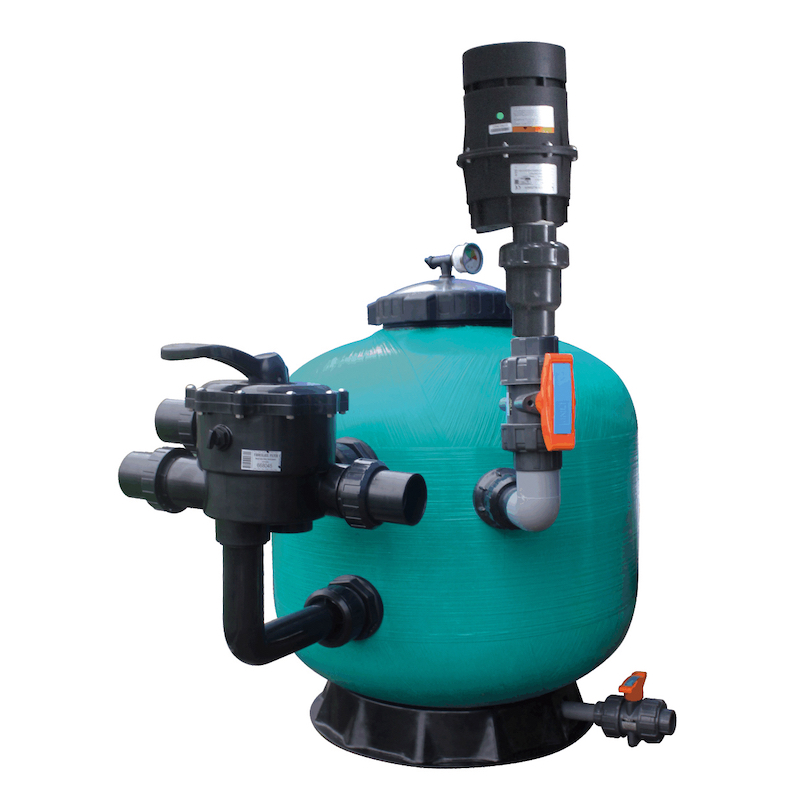
Even though 24/7 operation is not required every day, there are times when extended or near‑continuous filtration is a smart temporary strategy. These situations usually involve challenging water conditions where the pool filter must work harder to clear or stabilize the water.
- New pool start‑up: During initial start‑up of a new pool or after a major renovation, running the pump and pool filter almost continuously for several days helps distribute chemicals, clear construction dust, and stabilize the water.
- After opening or shocking: When opening a pool after winter or after a high‑dose shock treatment, extended filtration helps remove dead algae, cloudy residue, and fine debris, allowing the pool filter to restore clarity more quickly.
- Algae blooms or cloudy water: During an active algae outbreak or when the water turns cloudy, longer or even continuous run times (combined with proper chemical treatment) force more water through the pool filter and speed up cleanup.
- Very hot climates and heavy use: In extremely hot weather with intense sun and frequent swimmers, pools can require much more circulation through the pool filter to stay clear and sanitary, especially in shallow designs.
Once the water is clean and stable again, you can gradually reduce runtime until you find the shortest schedule that still maintains excellent water quality.
Every hour the pump and pool filter run, they consume electricity and add wear to mechanical components. For many owners, energy consumption is the single largest ongoing cost of pool operation, so reducing unnecessary runtime can lead to significant savings over the season.
- Higher electricity bills: Running the pool filter 24/7 can easily double or triple energy usage compared with a carefully tuned 8–12‑hour schedule.
- Increased wear on equipment: Continuous operation makes the pump motor, seals, and valves work nonstop, which can shorten service life and increase the frequency of repairs.
- Noise and convenience: Some pool pumps are noisy, and 24/7 operation can become annoying, especially at night, even if the pool filter is performing well.
Because of these disadvantages, the goal is to find the minimum amount of daily runtime that keeps the water safe and clear, instead of running the pool filter continuously “just in case.”
- Use a timer: A simple mechanical or digital timer ensures the pump and pool filter follow a precise schedule, so you avoid accidental all‑day operation.
- Run during off‑peak hours: If your energy provider offers cheaper off‑peak electricity, schedule most of your pool filter runtime during those hours to cut energy costs.
- Upgrade to variable‑speed pumps: Modern variable‑speed pumps can run longer at low speeds while using far less power, maintaining good circulation through the pool filter for a fraction of the energy.
- Keep the pool filter clean: Backwash a sand or DE pool filter when the pressure rises above normal, and rinse or replace cartridge elements as recommended to maintain strong flow at lower energy use.
- Combine efficient equipment: Pair an efficient pump with a well‑designed sand, cartridge, or DE pool filter and low‑wattage LED lighting to build a complete, energy‑saving circulation system.
Different pool filter technologies capture particles in different ways, and their efficiency influences how much runtime you may need each day. However, the fundamental requirement of achieving at least one full turnover remains similar for all pool filter types.
- Sand pool filter: A sand pool filter uses specially graded sand to trap particles as water passes through the sand bed. It is durable, easy to backwash, and ideal for large pools or commercial installations.
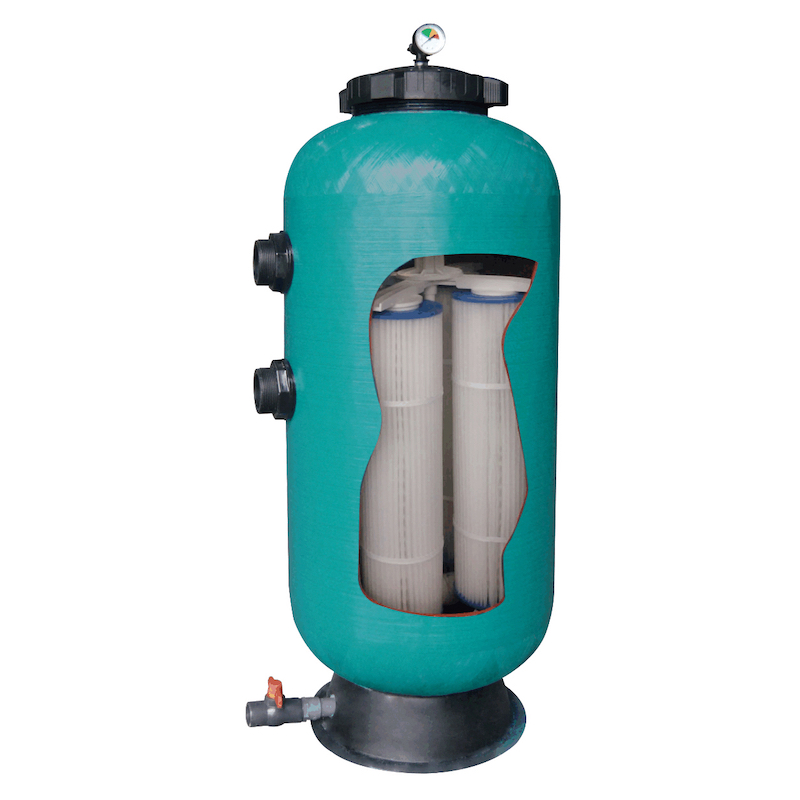
- Cartridge pool filter: A cartridge pool filter uses pleated filter cartridges to capture smaller particles than sand. Cartridge filters usually operate at lower pressure, support energy‑efficient low‑speed pumping, and require periodic rinsing or replacement.
- DE pool filter: A DE (diatomaceous earth) pool filter coats internal grids with DE powder to capture extremely fine particles, producing very clear water. These filters offer high performance but require more careful maintenance and handling of the DE media.
Because cartridge and DE pool filter systems can trap very fine particles, some pool owners achieve excellent clarity with slightly shorter daily runtime compared with basic sand systems. That said, oversized sand filters paired with smart hydraulics can also deliver very effective, energy‑efficient filtration.
The table below illustrates how a typical residential pool might schedule pump and pool filter operation over the year, assuming appropriate sizing and balanced chemistry:
| Season / Water temperature | Typical daily runtime through pool filter | Notes on pool filter operation |
|---|---|---|
| Cool (below 60 °F) | 4–6 hours per day | Low algae growth; reduced demand on the pool filter. |
| Mild (60–70 °F) | 6–8 hours per day | Monitor clarity and adjust pool filter hours as needed. |
| Warm (70–80 °F) | 8–12 hours per day | Higher sanitizer demand; more pool filter circulation required. |
| Hot (80–90 °F and sunny) | 12–18 hours per day | Near‑continuous pool filter use may be required in some pools. |
This example is not a strict rule but a starting point for tuning your own schedule.
In real‑world pools, homeowners and technicians often experiment with different pump and pool filter schedules to discover the efficient minimum. The water itself is the best indicator: if it stays consistently clear, free of algae, and easy to balance, the schedule is working.
- Daytime‑focused schedule: Run the pump and pool filter from mid‑morning to evening (for example, 9 a.m. to 9 p.m.) to support skimming, heating, and active swimming times.
- Split‑cycle schedule: Divide the total daily runtime into two chunks, such as 5–6 hours in the early morning and another 4–6 hours in the late afternoon or evening, to keep the pool filter working throughout the day.
- Night‑heavy schedule: In regions with cheaper off‑peak nighttime power, run the pool filter mostly at night while leaving some daytime hours for circulation when adding chemicals or running heating equipment.
Whichever pattern you choose, consistency matters more than the exact timing. As long as the pool filter processes enough water each day and you maintain proper sanitizer and pH levels, the pool can remain clear and inviting.
A pool filter does not need to run 24/7 in most residential pools. Instead, the key is to provide enough daily circulation and filtration to achieve at least one full turnover of the pool water, and often closer to two turnovers during hot weather or heavy use. For many pools, this means running the pump and pool filter for about 8–12 hours per day in summer and fewer hours when the water is colder.
Continuous, around‑the‑clock filtration is mainly useful in special situations, such as start‑up, algae blooms, or severe cloudiness, and even then it should be treated as a short‑term corrective measure rather than an everyday habit. Over the long term, running the pool filter 24/7 wastes energy, increases costs, and puts unnecessary wear on equipment. By calculating pool volume, estimating flow rate, and using simple rules based on temperature and usage, you can design a smart schedule that protects water quality while minimizing operating expenses.
Contact us to get more information!
Most residential pool owners run their pump and pool filter between 8 and 12 hours per day during warm months. This range is usually enough to achieve the one to two daily turnovers required for clear water, assuming the pool filter and pump are properly sized. In cooler seasons with lower water temperatures and less use, you can often reduce runtime to around 4–6 hours per day as long as the water remains clear and balanced.
From the perspective of water quality, it does not matter whether the pool filter runs at night or during the day, as long as you achieve the required turnover and circulate after adding chemicals. Many owners prefer to run most of their pool filter time at night or in early morning hours when electricity is cheaper and the noise is less bothersome. However, keeping some filtration during daytime helps skimmers capture surface debris and supports heating or solar systems.
Turning the pump and pool filter off for a single day will not automatically ruin a well‑maintained pool, especially in cooler weather. However, letting the pool sit with no filtration for several days—particularly in hot, sunny conditions—can lead to cloudiness, algae growth, and unstable chemistry. If you must shut the pool filter off temporarily, plan to run it longer than usual once it is turned back on, and check sanitizer and pH levels to ensure the water remains safe.
A larger or more efficient pool filter can improve water clarity and reduce how often you need to clean or backwash, but it does not completely remove the need for daily turnover. Even with a large sand filter, a multi‑cartridge filter, or a high‑performance DE pool filter, you still need enough runtime each day to circulate all the water through the system. In some cases, an oversized pool filter combined with a properly sized pump allows you to achieve the same water quality with slightly shorter runtime, but good circulation and chemical balance are still essential.
The best indicators are the water itself and your test kit. If the pool water remains consistently clear, free of algae, and easy to balance with stable chlorine and pH levels, your current pool filter schedule is likely sufficient. If you notice persistent cloudiness, recurring algae spots on walls or steps, or difficulty keeping sanitizer at the recommended level, you may need to increase daily filtration time, improve maintenance of the pool filter, or review pump sizing and circulation patterns. Adjust in small steps—such as adding one or two hours of runtime—and monitor changes over several days.
1. https://lesliespool.com/blog/how-to-calculate-pool-pump-run-time.html
2. https://southshorepoolsupply.com/tracys-tips-how-often-should-a-pool-filter-run/
3. https://www.californiapools.com/blog/california-pools-blog/pool-maintenance-care/how-long-should-you-run-your-pool-pump-/
4. https://mrpoolman.com.au/blogs/news/how-long-should-i-run-my-pool-pump-every-day
5. https://home.howstuffworks.com/swimming-pool-pumps-run-all-the-time.htm
6. https://pooloperationmanagement.com/pool-filtration-system-101/
7. https://poolie.com/blog/general/pool-care-strategy-for-2025/
8. https://intheswim.com/blog/how-long-to-run-pool-pump.html
9. https://southshorepoolsupply.com/blog/how-often-should-a-pool-filter-run/
10. https://www.riverpoolsandspas.com/blog/how-long-to-run-pool-pump


