
Views: 222 Author: Tina Publish Time: 2026-01-28 Origin: Site


Content Menu
● What Does Shocking a Pool Actually Do?
● Why Filter Runtime Matters After Shock
● General Rule: How Long to Run Pool Filter After Shocking
>> 1. Routine Maintenance Shock (Clear or Slightly Cloudy Pool)
>> 2. Heavy Algae Blooms or Very Cloudy Water
>> 3. Non‑Chlorine Shock (Oxidizing Shock)
>> 4. Opening a Pool or Filling a New Pool
● How Filter Type Affects Post‑Shock Runtime
>> DE (Diatomaceous Earth) Pool Filter
● Pool Size, Pump Flow, and Turnover Time
● Practical Steps for Running Your Pool Filter After Shocking
● OEM and Professional Equipment Considerations
● Frequently Asked Questions (FAQ)
>> 1. How long should I run my pool filter after shocking?
>> 2. Can I swim while the pool filter is still running after shock?
>> 3. Do non‑chlorine shocks require the same pool filter runtime?
>> 4. How do I know if I should keep the filter running longer after shocking?
>> 5. Can running the pool filter too long damage the equipment?
Maintaining clear, safe, and inviting pool water depends on a balanced combination of sanitation, circulation, and filtration. One of the most common questions pool owners and service companies ask is: how long to run pool filter after shocking? Getting this timing right directly affects water clarity, swimmer safety, and the life of your pool equipment.
In this article, we will explain the ideal pool filter run time after shock in different scenarios, how filter type and pool size influence your decision, and how professional‑grade systems (sand filters, DE filters, cartridge filters, pumps, and accessories) can make post‑shock maintenance much easier. The content is designed both for end‑users and for OEM brands, wholesalers, and manufacturers providing complete filtration solutions.

“Shocking” a pool means raising the oxidizing or chlorine level high enough to destroy contaminants that normal daily sanitation cannot handle. When you shock the pool, you:
- Eliminate algae and algae spores.
- Oxidize organic contaminants such as sweat, sunscreen, body oils, and leaves.
- Break down chloramines (combined chlorine), which cause eye irritation and bad odor.
- Restore free chlorine to an effective sanitizing level.
Shocking is usually done with high‑strength chlorine products (like calcium hypochlorite) or with non‑chlorine oxidizers. Regardless of which product you choose, your pool filter and pump must circulate the water so the shock can reach every part of the pool and so dead contaminants can be physically removed from the water.
Adding shock alone does not clean the pool. The chemicals kill and oxidize contaminants, but the pool filter is the component that traps and removes the resulting particles and debris. The pump and pool filter together:
- Distribute the shock evenly throughout the water.
- Pull water through the filter media, trapping dead algae, bacteria, and fine particles.
- Help restore visual clarity and prevent the pool from staying dull or cloudy.
- Protect the pool surface by preventing highly concentrated pockets of chemicals from sitting in one place.
If you shock the pool and then shut the system off too early, the treatment will be less effective, and you may find yourself dealing with recurring algae and persistent cloudiness. Correct pool filter run time after shocking is not just a recommendation—it is a core part of the treatment.
For most residential pools using standard chlorine shock, a widely accepted guideline is:
- Run the pool filter for at least 8 hours after shocking.
- In more demanding situations (algae, very cloudy water, heavy bather load), run the pool filter continuously for 24 hours or even longer.
- For minor treatments or non‑chlorine shocks, a shorter runtime may be suitable, but you should still aim for one full circulation of the pool volume, which often means several hours of pump and filter operation.
Many pool care professionals program systems so the pump and pool filter run overnight after shock. This avoids sunlight‑driven chlorine loss, takes advantage of off‑peak electricity rates in some areas, and ensures that by morning the water has passed through the pool filter many times.
Not every shocking scenario is the same. The type of shock, condition of the water, and type of pool filter all influence how long you should run your system.
If you are performing a routine maintenance shock on a pool that is already fairly clear and does not have visible algae, you can usually follow these guidelines:
- Run your pool filter for at least 8–12 hours after adding shock.
- Make sure the water passes through the filter multiple times (at least one complete turnover; two or more is better).
- Check chlorine and pH the next day and keep the pool filter on normal daily schedule afterward.
For many homeowners, this simply means setting the pump to run overnight after the shock treatment, then switching back to their usual daily filter cycle.
A green, dark, or extremely cloudy pool after rain, neglect, or heavy usage requires more aggressive filtration:
- Shock the pool according to product directions (often multiple bags or doses).
- Brush walls and floor to free algae from surfaces.
- Run the pool filter continuously for 24 hours, and in severe cases up to 48–72 hours, checking pressure on the filter regularly.
- Backwash sand or DE filters, or rinse cartridges as needed to restore flow.
In these conditions, your pool filter is under maximum stress. For OEM and professional equipment brands, this is precisely where high‑capacity sand filters, oversized cartridges, and high‑efficiency pumps show their value. Larger filter surface area and durable filter tanks keep water moving even in high‑debris situations.
Non‑chlorine oxidizing shocks (like potassium monopersulfate) are designed to oxidize contaminants without significantly raising free chlorine. They are often used:
- Before heavy weekend usage.
- Between normal chlorination cycles.
- When you need to quickly remove chloramines but reopen the pool soon.
Typical guidance in this case:
- Run the pool filter for approximately 6–8 hours to fully circulate the oxidizer and capture oxidized particles.
- Swimming may be allowed much sooner (sometimes within 15–60 minutes, depending on the product and label directions), but you still should let the pool filter run for several hours to finish the cleaning process.
Non‑chlorine shock is popular in indoor pools, high‑end spas, and situations where water clarity and comfort are crucial but downtime must be minimized. For these installations, high‑efficiency pool filter systems with quiet pumps and smart controls are especially attractive.
When you open a seasonal pool or fill a brand‑new pool, you typically:
- Add initial shock at higher doses to sanitize the fresh water.
- Adjust pH, alkalinity, and calcium hardness.
- Remove construction dust, pollen, or organic debris.
In this scenario:
- Run the pool filter and pump continuously for at least 12–24 hours after shocking.
- Expect to backwash or clean the filter more than once, because so much fine debris and dust will be captured.
- Continue running the pool filter for extended daily cycles during the first week of operation to stabilize the water.
Commercial installations—such as hotel pools or community pools—often specify 24 hours of continuous filtration after the first shock or opening treatment to ensure both clarity and safety from the start of the season.
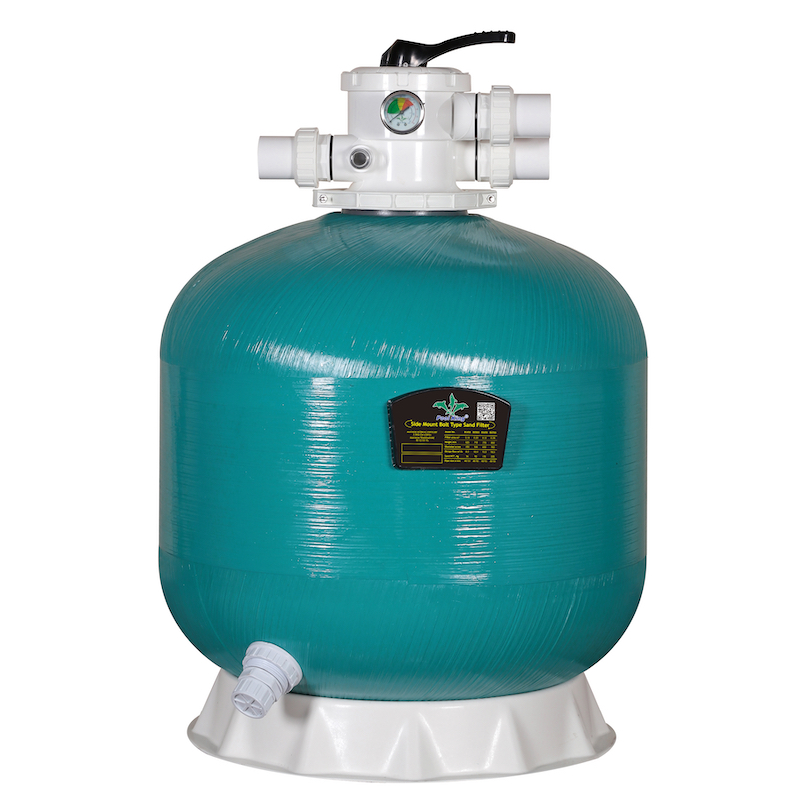
Although the basic principle (run the pool filter long enough to circulate and clean the water) is the same for all filter types, there are practical differences:
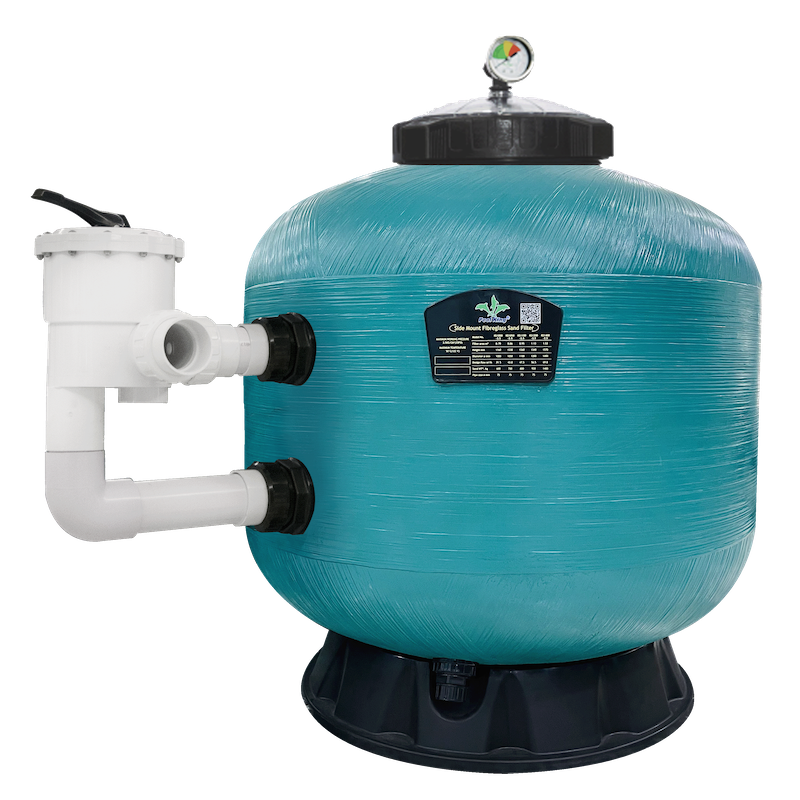
- Uses graded sand to catch particles, typically down to about 20–40 microns with standard sand or finer with specialized media.
- Very robust and able to handle long periods of continuous operation.
- Ideal post‑shock practice:
- Run continuously for 8–24 hours, depending on water condition.
- Watch pressure gauge; when pressure rises 8–10 psi above clean starting pressure, backwash to restore flow.
- After backwashing, some operators run the pool filter for several more hours to polish the water.
Sand filters are popular for large residential pools and commercial pools because they are durable and relatively easy to maintain.
- Uses diatomaceous earth powder coated on internal grids.
- Can filter much finer particles (often as small as 2–5 microns), so it excels at clearing cloudy water after shock.
- Ideal post‑shock practice:
- Run the pool filter continuously for 8–24 hours after shocking.
- Monitor pressure: if it climbs rapidly, shut the system down, clean or bump the filter (depending on design), add new DE, then restart.
- Use DE systems when “crystal clear” water is a top priority, such as high‑end residential pools and resort pools.
Because DE is such a fine filtration method, it may clog faster during a heavy algae cleanup, but it also produces the fastest, most impressive clarity.
- Uses one or more pleated cartridges to capture debris.
- No backwashing is required; instead, you remove the cartridge to hose it off or replace it.
- Ideal post‑shock practice:
- Run the pool filter continuously for 8–24 hours.
- Inspect the cartridge when pressure rises significantly; rinse thoroughly with a hose to remove sand, silt, and dead algae.
- Consider extra‑large cartridges or multi‑cartridge systems if you frequently handle heavy post‑shock loads.
Cartridge filters are very common in small to medium pools, compact installations, and pools where water conservation (no backwash wastage) is important.
The correct answer to “how long to run pool filter after shocking” also depends on how long it takes your pump to circulate the entire volume of water. This is called turnover time.
A simplified way to think about it:
- Turnover time is the number of hours it takes for the pump and pool filter to process a volume of water equal to the pool.
- For example, if your pump and pool filter can move 10,000 liters of water in 8 hours, and your pool holds 10,000 liters, then one turnover takes 8 hours.
- For effective shocking and cleanup, many professionals aim for at least 1–3 full turnovers in the first night or day after treatment.
Smaller pools with oversized pumps and filters may achieve several turnovers in 8 hours; larger commercial pools may need 24 hours of continuous filtration to achieve the same effect. This is why public pools often run large pool filter systems almost around the clock after heavy use, storms, or contamination events.
To get the best results, follow a practical step‑by‑step approach each time you shock the pool:
1. Test and balance the water first
Adjust pH to 7.2–7.8 and total alkalinity to the recommended range. Balanced water allows the shock to work more efficiently and helps protect the pool filter equipment from scale or corrosion.
2. Clean or check the filter before you start
- For sand and DE filters, backwash if the pressure is already high.
- For cartridge filters, hose off any obvious dirt.
Starting with a clean pool filter gives you better flow and longer runtime before you need another cleaning.
3. Run the pump and set valves for full circulation
Ensure suction and return valves are open to both the main drain and skimmers so the shock spreads evenly. Good circulation makes the most of each hour the pool filter is running.
4. Add shock gradually while the system is running
Broadcast shock around the perimeter or in front of return jets, following product instructions. Never add shock while the system is off, because it can settle and damage surfaces.
5. Let the pool filter run uninterrupted
- For routine shock: at least 8–12 hours.
- For algae or heavy cloudiness: 24 hours or more.
Avoid turning the pump on and off repeatedly; a continuous run is more effective than several short cycles.
6. Recheck water chemistry and filter pressure
After the main run period, test free chlorine, pH, and clarity. If the pool is clear and chlorine has returned to a safe range, you can resume normal daily filter cycles. If it is still cloudy, continue running the pool filter, clean or backwash as necessary, and consider adding a clarifier.
Many pool owners do not achieve the full benefit of a shock treatment because of basic errors. Avoid these common mistakes:
- Turning off the pump too soon
Stopping circulation after only a couple of hours leaves dead algae suspended and can cause staining or “hot spots” of concentrated chemicals on the floor or liner.
- Ignoring filter pressure
If your pool filter is clogged and pressure is very high, the flow rate is low. That means even a 24‑hour run may not give you the real turnover you expect. Always backwash or clean when pressure is excessively high.
- Shocking with extremely unbalanced water
Very low pH or very high stabilizer can reduce the effectiveness of the shock, forcing you to repeat treatments and run the pool filter many extra hours.
- Under‑dosing the shock
Using too little product leaves surviving algae and contaminants in the water, which can rebound quickly. Then even long filter runtimes cannot maintain clear water.
- Not brushing the pool
Shock and filtration are more effective when you brush walls, steps, and floor to remove biofilm and expose algae to sanitizing chemicals.
For manufacturers, OEM brands, and wholesalers supplying complete filtration systems, the “how long to run pool filter after shocking” question is an opportunity to highlight advanced product features:
- High‑efficiency sand filters with optimized internal design for lower resistance and better backwashing during long post‑shock cleanups.
- DE filters with robust grids that maintain performance across repeated high‑load cycles.
- Large‑capacity cartridge filters that extend the time between cleanings and maintain stable flow when the pool is full of fine debris.
- Energy‑efficient variable‑speed pumps that can be programmed to run at higher speeds immediately after shocking, then drop to economical speeds once the pool is clear.
- Smart control systems that automate schedules for post‑shock filtration, send alerts when filter pressure is high, and integrate with digital water‑testing data.
By presenting systems as “shock‑ready” or “algae‑recovery optimized,” equipment brands provide real value to service technicians, commercial operators, and end‑users who want reliable, easy‑to‑follow solutions.
Knowing how long to run pool filter after shocking is one of the most important aspects of pool care. In most ordinary situations, running the pool filter for at least 8 hours after a routine shock provides enough circulation to distribute chemicals and remove dead contaminants. In more serious cases—such as green water, heavy bather load, storms, or contamination events—continuous filtration for 24 hours or longer is often necessary to restore clear, safe water.
The correct runtime also depends on pool size, pump capacity, and filter type. Sand, DE, and cartridge pool filter systems can all handle post‑shock cleanup effectively when properly sized and maintained. Before shocking, always check and clean the filter, balance the water, and ensure good circulation. After shocking, let the system run long enough to achieve at least one or two full turnovers, monitor pressure and clarity, and adjust runtime as needed.
For OEM manufacturers and professional brands, designing energy‑efficient, high‑capacity pool filter solutions with smart control options makes it easier for end‑users and commercial operators to follow best practices. By combining correct chemical treatment with proper filter runtime, you ensure the pool stays not only visually beautiful, but also hygienic and comfortable for every swimmer.
Contact us to get more information!
In a normal maintenance situation with clear or slightly cloudy water, you should run your pool filter for at least 8–12 hours after adding a chlorine shock. This makes sure the shock is fully distributed and that the water has passed through the filter several times. For severe algae problems or very cloudy water, it is wise to run the filter continuously for 24 hours or more until clarity improves and chlorine levels return to a safe range.
Yes, you can swim with the pool filter running, but only after the water chemistry is safe. For chlorine shock, you must wait until free chlorine drops back into the normal recommended range and the shock manufacturer's waiting period has passed. For non‑chlorine oxidizer shocks, the waiting time is usually shorter, but you should always follow the instructions on the label and confirm that the water is properly balanced.
Non‑chlorine shocks do not usually require as long a downtime before you can swim, but they still benefit from several hours of filtration. A common practice is to run the pool filter for around 6–8 hours after using a non‑chlorine oxidizer so the oxidized contaminants can be removed and water clarity can be restored. Even if swimmers can return sooner, the filter should remain operating to complete the cleaning process.
If the water is still cloudy, the pressure on the pool filter has risen significantly, or you still see signs of algae after your initial runtime, you should continue running the system. Clean or backwash the filter to restore flow, test the water, and keep the pump on until you see clear improvement. In some difficult cases, you may need a second dose of shock and additional filtration to fully resolve the problem.
Modern pumps and pool filter systems are designed to run for many hours per day. Running the filter a bit longer than usual after shocking will not normally cause damage if the equipment is properly sized, installed, and maintained. Problems arise when filters are allowed to clog badly, when pumps run dry or with low water level, or when valves are set incorrectly. As long as you check water level, monitor pressure, and service the filter media when required, extended post‑shock runtime is safe and beneficial.
1. https://poolpartstogo.com/blogs/articles/how-long-should-you-run-your-filter-after-shocking-your-pool
2. https://beatbot.com/blogs/pool-care-solutions/understanding-pool-shock-timing-when-to-swim-and-run-pumps
3. https://www.oreateai.com/blog/how-long-to-run-pool-pump-after-shocking/2db25c85008e8dc90f0dbda60cea9b42
4. https://www.carltonpools.com/how-much-shock-to-open-a-pool/
5. https://www.poolkingfilter.com/how-long-to-run-pool-pump-after-shocking.html
6. https://www.poolmaxx.co/blog/dos-and-donts-of-pool-shocking-tips-for-a-clean-and-clear-pool
7. https://lesliespool.com/blog/how-to-shock-a-pool.html
8. https://lesliespool.com/blog/whats-the-best-time-to-run-your-pool-pump.html
9. https://www.facebook.com/swimuniversity/posts/how-long-should-you-run-a-filter-after-shocking-a-pool-run-your-pool-pump-and-fi/1
10. https://www.youtube.com/watch?v=THvoKS3Snl0
11. https://www.reddit.com/r/pools/comments/20/how_long_do_i_have_to_run_filter_after_adding_a/


