
Views: 222 Author: Tina Publish Time: 2025-12-16 Origin: Site


Content Menu
● How Long to Run the Pool Pump
● Key Factors That Decide Pump Runtime
>> Pool Volume and Turnover Rate
>> Pump Flow Rate and Filter Sizing
>> Climate, Season, and Sunlight
● Basic Rules of Thumb for Daily Runtime
>> Standard Single‑Speed Pump Guidelines
>> Variable‑Speed Pump Runtime
● How to Calculate Exact Pool Pump Runtime
>> Step 1 – Determine Pool Volume
>> Step 2 – Find Pump Flow Rate
>> Step 3 – Turnover Time Formula
>> Example Runtime Calculation
● Single‑Speed vs Variable‑Speed vs Two‑Speed Pumps
>> Single‑Speed Pump Runtime Strategy
>> Variable‑Speed Pump Runtime Strategy
>> Two‑Speed Pump Considerations
● Filter Type and Required Runtime
>> Sand Filters
>> DE Filters
● Seasonal and Regional Adjustments
>> Winter and Off‑Season Runtimes
>> Summer and Peak‑Use Runtimes
>> Special Conditions: Storms and Algae
● Energy‑Saving Tips for Pump Runtime
>> Use Off‑Peak Electricity Periods
>> Keep the Filter and Basket Clean
>> Upgrade to Efficient Pumps and Filters
● OEM‑Ready Filtration Solutions for Global Buyers
● Practical Runtime Examples Table
>> 1. Is it okay to run my pool pump 24 hours a day?
>> 2. Can I run my pool pump at night only?
>> 3. How do I know if I am not running my pump long enough?
>> 4. Does a bigger pump mean I can run it for fewer hours?
>> 5. How long should I run my pump after adding chemicals?
>> 6. Will a pool cover reduce the hours I need to run the pump?
Running your pool pump the right number of hours per day keeps water clear, safe, and pleasant to swim in while avoiding unnecessary electricity costs. This guide explains how to calculate pump runtime, adapt it for different climates and seasons, and optimize efficiency with modern sand, cartridge, and DE filtration systems.[4][1]
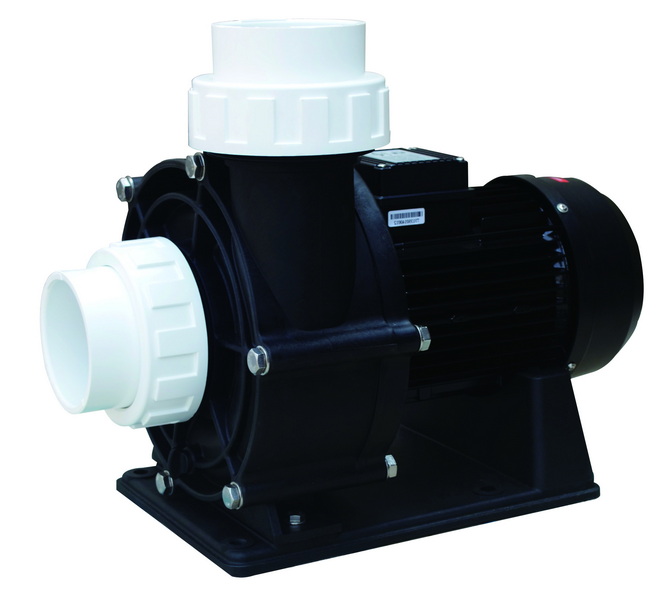
This article focuses on the question “how long to run the pool pump” for typical residential pools using sand, DE, or cartridge filters paired with modern single‑speed or variable‑speed pumps. The guidance also applies to small commercial or villa pools where water quality and energy efficiency are both critical.[2][1]
Several technical and environmental factors decide how many hours per day the pump should run. Understanding these factors allows you to move away from a fixed “one‑size‑fits‑all 8 hours” rule and toward a more precise calculation.[2][4]
The starting point is the pool's water volume and the target turnover rate. Turnover rate is the number of hours the pump needs to circulate an amount of water equal to the entire pool volume through the filtration system once.[3][2]
- Many industry references recommend at least one full turnover per day for residential pools as a minimum target.[1][4]
- Some commercial standards aim for more frequent turnover, but for private backyard pools, one to two turnovers per 24 hours is generally enough when chemistry is well managed.[5][2]
Your daily runtime depends heavily on the actual flow rate (gallons per minute or liters per minute) of the pump and what the filter can handle. A correctly sized system can achieve full turnover in roughly 6–10 hours, while an undersized pump may require more than 10 hours.[6][3]
- If your pump is oversized relative to the filter, you may reach turnover quickly but risk filter channeling, higher pressure, and wasted energy.
- If your pump is undersized, you might need to run it close to 24 hours in peak season just to maintain water clarity.[7][6]
Warm temperatures and intense sunlight accelerate algae growth and chlorine loss, so pump runtime usually increases in summer and decreases in winter.[8][4]
- Some service guides suggest around 8 hours per day in cooler seasons and 12–16 hours per day in hot summer for standard single‑speed systems.[8]
- Very hot climates or heavily used pools may need more, especially when water temperature exceeds roughly 28–30 °C.
A quiet, covered pool with few swimmers may stay clear with shorter runtimes, whereas a busy family pool with children, pets, and trees nearby often needs longer circulation each day.[9][10]
- High bather load introduces body oils, cosmetics, and contaminants that require more filtration.
- Heavy leaf fall or dust storms increase filter workload and may require more hours at higher speed to maintain clarity.
Although exact calculation is ideal, several practical rules of thumb can give pool owners a quick starting point. These can be refined later using turnover formulas and water clarity observations.[10][1]
For properly sized pools with single‑speed pumps and standard sand, cartridge, or DE filters:
- Many experts recommend 8–12 hours per day to achieve at least one turnover and maintain acceptable clarity.[10][1]
- In cooler seasons, runtimes can often drop closer to 6–8 hours if chemistry is stable and the pool is covered.[8]
If the pool becomes cloudy or you see early algae growth, increasing runtime by 2–4 hours per day is a simple first troubleshooting step.
Variable‑speed (VS) pumps run at lower RPMs for long periods, reducing energy use while maintaining circulation. Because flow is lower, total runtime usually increases.[11][3]
- Many owners run VS pumps for 12 or more hours per day, combining several hours at higher speed (for skimming and cleaners) with long stretches at lower speed for filtration.[11][3]
- Some efficiency programs even suggest 18–22 hours per day at low RPM for maximum energy savings and water quality.[12]
Despite the long hours, energy consumption can be significantly lower than a single‑speed pump because power usage drops dramatically at lower RPM.
Pump runtime does not need to be continuous. Many professionals recommend splitting the daily runtime into two or three blocks to match off‑peak electricity rates or periods of highest sunlight.[1][11]
- Example: run 3–4 hours in the morning, 4–5 hours in the afternoon, and a short block in the evening.
- The key is total runtime per 24 hours, not a single uninterrupted block.
Instead of guessing, pool owners and commercial buyers can calculate a more precise runtime based on pool volume and pump performance. This approach is particularly useful when designing new systems or selecting OEM pumps and filters.
First, calculate or estimate your pool's water volume (in gallons or liters) based on length, width, average depth, and shape. Many online calculators and manufacturer guides help with this step.[6][3]
- Rectangular pools: length × width × average depth × shape factor.
- Irregular shapes: divide into sections or use a conservative estimate to avoid under‑circulation.
Next, find the pump's flow rate in gallons per minute (GPM) or liters per minute (LPM). This may come from:
- The pump curve in the product manual (flow at a given head pressure).
- A flow meter installed on the return line.
- A professional's measurement during commissioning.[4][7]
Remember that real‑world flow is often lower than the theoretical maximum on the box, especially when using multiport valves, long pipe runs, or restrictive fittings.
Once pool volume and flow rate are known, turnover time can be estimated using a simple formula:

Where pump flow rate in gallons per hour equals GPM × 60.[3][2]
- If your calculation gives 7 hours, setting a daily runtime of about 8 hours provides a safety margin.
- For very dirty or busy pools, aim for 1.5–2 turnovers per day, which might mean 12–14 hours or more.
Imagine a 50,000‑liter pool with a pump delivering 12,000 liters per hour under working conditions.
- Turnover time = 50,000 ÷ 12,000 ≈ 4.2 hours.
- One turnover per day would require about 4–5 hours; 1.5 turnovers would need about 6–7 hours.
If your pool stays crystal clear at 6 hours and chemical use is stable, you may not need to run it longer. If you see cloudiness after heavy use or hot weather, extending runtime to 8–10 hours can stabilize the system.[6][1]
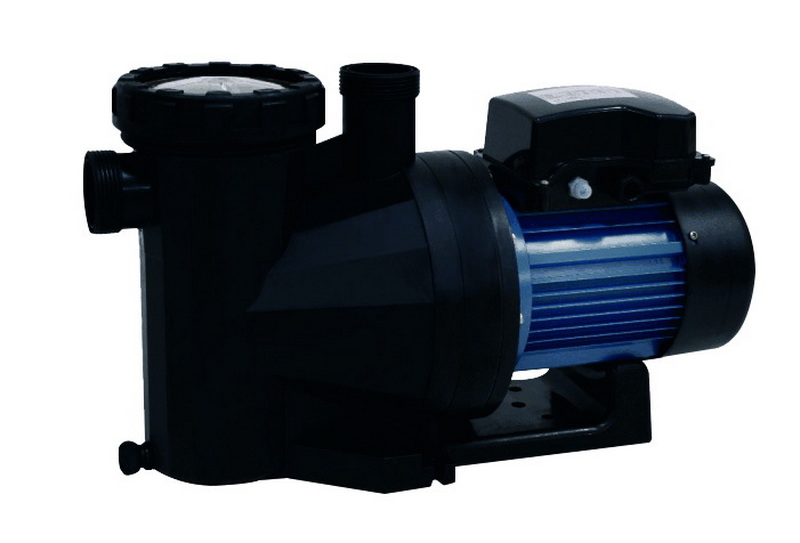
Different pump technologies affect runtime strategy and energy consumption. Understanding these differences helps pool owners and OEM buyers choose the most cost‑effective option.
Single‑speed pumps run at one fixed RPM, often 2,850–3,450 RPM, which means high flow and relatively high energy consumption whenever they are on.[13][3]
- Typical daily runtime is 8–12 hours depending on climate and pool load.[10][1]
- Running 24/7 is usually unnecessary and can dramatically increase electricity bills without proportional water‑quality benefits.
Variable‑speed pumps allow precise control over RPM and are now widely recommended because they can reduce energy use by 50–80% or more when properly programmed.[12][11]
- Many guides suggest 3–4 hours at higher speed (for skimming, cleaning, heating) and 8–12 hours at low or medium speeds for filtration and chlorination.[11][3]
- Some energy‑efficiency programs advocate up to 18–22 hours per day at low speed to maintain continuous circulation and maximize savings.[14][12]
Two‑speed pumps run at high or low speed. The usual rule is to set daily runtime so that low speed provides the majority of turnover, with high speed used briefly for vacuuming or surface cleaning.[13][11]
- A common strategy is to double the single‑speed runtime when using low speed to achieve similar turnover.[13]
- Owners then add 2–4 hours at higher speed to ensure proper skimming and cleaner performance.
Although runtime is largely driven by pool volume and flow, different filter media (sand, DE, cartridge) can influence how long the system should run for best results.
Sand filters are durable, easy to backwash, and widely used in residential and commercial pools. They typically filter down to a coarser particle size than cartridge or DE but offer robust, low‑maintenance operation.[15][16]
- Many sand‑filtered pools operate successfully with 8–12 hours of runtime per day under normal conditions.
- High‑quality sand filter designs with optimized internals can improve flow distribution and reduce pressure, helping maintain clarity even at energy‑saving flow rates.
Cartridge filters trap finer particles and do not require backwashing, making them popular where water conservation is important. They usually run at lower pressure, which can improve system efficiency.[16][15]
- When paired with a well‑sized pump, cartridge systems often achieve excellent clarity with similar or slightly shorter runtimes than sand filters.
- Cartridges must be cleaned regularly; a dirty cartridge increases head loss and may require more pump runtime to achieve the same turnover.
DE (diatomaceous earth) filters provide the finest filtration and are often used where very high water clarity is required.[15][16]
- With DE filters, some pools can maintain outstanding clarity at the lower end of the typical runtime range (e.g., 6–8 hours), assuming the system is correctly sized and chemistry is stable.
- However, DE filters require careful maintenance and periodic recharging of DE media to keep flow and performance consistent.
No single daily runtime works all year for every region. Adjusting runtime by season and local conditions helps maintain clarity without wasting energy.
In cooler seasons, when water temperature is low and UV intensity is reduced, algae growth slows and chlorine demand drops.[4][8]
- Many pools can reduce pump runtime to 4–8 hours per day in winter while still maintaining good clarity, especially when using covers.
- In extremely cold climates where pools are closed, pumps may be shut down completely after winterization.
During summer and in tropical or arid climates, pools work much harder. Higher temperatures, sun exposure, and bather loads all increase the need for circulation and filtration.[8][4]
- Many service companies recommend 12–16 hours of runtime per day in hot summer for standard residential pools, especially with single‑speed pumps.[8]
- Variable‑speed systems may run 18–24 hours at low RPM, maintaining constant circulation while keeping energy use under control.[14][12]
After heavy rain, sandstorms, or visible algae growth, temporarily increasing runtime helps the filter capture extra debris and restore clarity faster.[5][1]
- Many owners shift to near‑continuous operation (20–24 hours per day) for a few days during intensive cleanup.
- Once water returns to clear and chemically balanced, runtime can be reduced to the normal seasonal schedule.
Optimizing runtime is not only about hours; it is also about when and how the pump operates. Smart scheduling can significantly reduce electricity bills without sacrificing water quality.
Many utility companies offer cheaper electricity at night or outside peak daytime hours. Running the pump during these periods can lower operating costs.[12][1]
- A common strategy is to keep most runtime during off‑peak hours and only run additional hours during the day when necessary for heating or heavy use.
- Some controllers allow automated schedules aligned with the local tariff structure.
A dirty filter or clogged pump basket increases system pressure and reduces flow, which effectively lengthens turnover time and forces longer runtimes.[3][5]
- Regular backwashing of sand and DE filters or cleaning of cartridge elements restores flow and can allow shorter daily runtimes for the same water clarity.
- Emptying the strainer basket and skimmer baskets improves circulation and reduces pump strain.
Modern variable‑speed pumps, hydraulically optimized filters, and low‑resistance valves can significantly reduce the energy required per turnover.[11][12]
- For new installations or retrofits, selecting a pump and filter combination that matches pool volume and intended runtime is crucial.
- For OEM buyers and distributors, offering complete, matched pump‑and‑filter packages simplifies sizing and ensures end users achieve recommended turnover within reasonable energy budgets.
Professional sand, cartridge, and DE filters combined with energy‑efficient pumps help foreign brands, wholesalers, and pool equipment manufacturers deliver reliable water quality to end users worldwide.
A Chinese factory equipped with advanced intelligent machinery can produce complete filtration sets—sand tank filters, DE filters, cartridge filters, circulation pumps, and LED pool lights—customized with OEM branding, packaging, and documentation tailored to different markets. Such OEM partnerships allow international buyers to offer turnkey pump‑and‑filter solutions with recommended runtime guidelines based on global best practices.
The following examples show how different combinations of pool size, climate, and pump type translate into typical daily runtimes. These are illustrative values that owners and OEM partners can adapt using the turnover formula and local conditions.
| Scenario description | Pool size & type | Pump & filter configuration | Typical daily runtime | Notes |
|---|---|---|---|---|
| Temperate residential pool, single‑speed | 40,000 L, in‑ground, sand filter | 1‑speed pump sized for ~8‑hour turnover | 8–10 hours per daymrpoolman+1 | Increase to ~12 hours during very hot weeks or high bather load. |
| Hot‑climate summer pool | 50,000 L, in‑ground, sand or cartridge | 1‑speed pump, standard flow | 12–16 hours per dayriverbendsandler+1 | Long runtime combats algae and high UV exposure. |
| Variable‑speed efficiency setup | 45,000 L, in‑ground, cartridge | VS pump, low RPM most of day | 14–20 hours per day at mixed speedspoolpartstogo+1 | Low RPM greatly reduces kWh even with long runtime. |
| Light‑use winter pool | 35,000 L, covered, any filter | 1‑speed or VS pump | 4–8 hours per dayriverbendsandler+1 | Adjust down if water stays clear and chemistry stable. |
| Commercial or very busy villa pool | 60,000+ L, heavy bather load | Oversized filtration system, often sand + VS pump | 16–24 hours per daylotuspools+1 | Multiple turnovers per day often required by codes or practical need. |
Determining how long to run the pool pump each day starts with a clear goal: achieve at least one full turnover of pool water every 24 hours while keeping electricity costs under control. Using pool volume and pump flow rate to calculate turnover time provides a technical foundation, which can then be fine‑tuned by monitoring water clarity, bather load, and seasonal changes.[2][4]
For most residential pools, 8–12 hours per day is a reasonable starting point with single‑speed pumps, while variable‑speed systems often run longer at lower speeds to maximize efficiency. Owners and professional buyers should also consider filter type, climate, and local grid tariffs when setting schedules. By combining accurate sizing, modern energy‑efficient pumps, and high‑performance sand, cartridge, or DE filters, you can maintain clear, healthy water and predictable operating costs—whether you are managing a single backyard pool or specifying OEM filtration systems for global markets.[1][3]
Yes, it is generally safe to run a pool pump 24/7 as long as the system is properly installed and ventilated, but it is rarely necessary and usually increases energy costs significantly for single‑speed models. Variable‑speed pumps are designed for long runtimes and can sometimes run nearly continuously at low speed while still saving energy compared with older pumps.[7][1]
You can run your pool pump at night only, especially if electricity is cheaper during off‑peak hours, as long as total daily runtime is sufficient to achieve at least one full turnover. However, some experts prefer running at least part of the schedule during the day to aid skimming and chemical distribution when UV exposure and bather load are highest.[12][1]
Signs of insufficient runtime include cloudy water, recurring algae spots, poor skimming, and unstable chlorine levels even when chemicals are dosed correctly. If these symptoms appear, increase daily runtime by 2–4 hours, check that the filter is clean, and verify water balance before assuming equipment failure.[5][1]
A larger pump can move more water per hour, but it may also consume more energy and may not be compatible with your filter's design flow rate. Oversizing the pump without optimizing the rest of the system can create high pressure, noisy operation, and inefficiency; correctly matching pump size, filter capacity, and runtime is usually more effective.[7][6]
After adding chlorine, shock, algaecide, or pH‑adjusting chemicals, the pump should typically run for several hours to distribute and mix them thoroughly, often 4–8 hours depending on pool size. Many pool owners schedule chemical additions just before or during a longer pump runtime block to ensure even distribution and prevent localized over‑ or under‑dosing.[4][1]
A good pool cover reduces debris, evaporation, and some heat loss, which often allows shorter runtimes because the filter has less dirt to handle and chemical demand is lower. Even with a cover, at least one turnover per day is still recommended to maintain water quality and prevent stagnation.[5][4]
[1](https://www.swimuniversity.com/run-pool-pump/)
[2](https://lotuspools.com/blog/pool-turnover-rate/)
[3](https://lesliespool.com/blog/how-to-calculate-pool-pump-run-time.html)
[4](https://liquiduspools.com/blog/run-your-pool-pump/)
[5](https://clearcomfort.com/why-is-swimming-pool-circulation-important/)
[6](https://mrpoolman.com.au/blogs/news/how-long-should-i-run-my-pool-pump-every-day)
[7](https://www.fluidra.com/commercial-solutions/inspiration/blog/turnover-rate/)
[8](https://www.riverbendsandler.com/help-advice/pool-school-how-often-should-a-pool-pump-run-in-the-summer/)
[9](https://www.reddit.com/r/pools/comments/153sq0a/should_my_pool_pump_be_on_8_hoursday/)
[10](https://www.pstpoolsupplies.com/blogs/articles/optimize-your-swimming-pool-with-variable-speed-pool-pump-recommended-settings)
[11](https://poolpartstogo.com/blogs/articles/ideal-schedule-for-your-variable-speed-pool-pump)
[12](https://efficiencymb.ca/articles/programming-your-variable-speed-pool-pump/)
[13](https://www.youtube.com/watch?v=5SbEB44THW4)
[14](https://www.youtube.com/watch?v=i44bmptMGgU)
[15](https://www.1stdirectpools.com/blog/post/when-run-pool-pump-ultimate-guide)
[16](https://www.swimmingpool.com/maintenance/pump&filter/how-long-to-run-pool-pump/)
[17](https://www.reddit.com/r/pools/comments/pbcz27/how_long_should_i_run_my_pool_pump_each_day_i/)
[18](https://www.reddit.com/r/pools/comments/csj0s1/rule_of_thumb_for_pool_turnover_8hrs_10hrs_1_day/)
[19](https://www.reddit.com/r/pools/comments/15ysu79/new_pool_owner_here_how_long_do_you_run_your_pump/)
[20](https://www.youtube.com/watch?v=u4ExnupI26o)


